Home Maintenance Tips and Troubleshooting: When to Repair vs. Upgrade to Top HVAC Brands
Is That Burning Dust Smell Normal for a First Fall Startup?
Are you wondering why your house suddenly smells like a dusty campfire? Navigating home maintenance tips and troubleshooting can feel overwhelming, especially when you flip your thermostat to 'heat' on a chilly mid-fall October morning in Mountain View and are immediately greeted by a harsh, burning odor. You are not alone in this experience. For many homeowners, the first heating cycle of the season triggers immediate panic, sending them rushing to the thermostat to shut the system down before something catches fire.
Need professional help right away? Explore our Air Conditioning solutions or learn more about Furnace Installation for your home.
The transition from summer cooling to fall heating brings a unique set of challenges for your HVAC system. After months of sitting idle, your furnace is suddenly called upon to produce intense heat. This sudden shift often produces alarming smells and unusual noises. The core decision point you face in this moment is determining whether your system just needs to burn off a layer of settled dust, or if it requires immediate professional intervention to prevent a critical failure.
Objective, safety-first troubleshooting can prevent unnecessary stress and keep your home safe. The key is understanding how your system behaves after a long period of dormancy. By learning to distinguish between a harmless seasonal quirk and a serious mechanical red flag, you can make informed decisions about your family's comfort. Let us explore exactly what is happening inside your ductwork and furnace cabinet during that initial seasonal startup.
How Long, Dry Bay Area Summers Impact Your Heating System
To understand why your furnace behaves the way it does in the fall, you have to look at what it was doing all summer. The local Mediterranean climate cycle in the Bay Area features long, dry, mild summers followed by a sudden shift to cooler temperatures. While the mild summers in the broader Silicon Valley require versatile HVAC systems to manage afternoon heat, they also lead to prolonged furnace inactivity.
The Dormancy Period
In many parts of the country with highly variable, year-round weather patterns, heating elements might kick on periodically even during the summer months to manage sudden temperature drops. However, a furnace in Mountain View often sits completely dormant for four to six months. During this extended downtime, the air in your home continues to circulate through the ductwork (if you are running your air conditioner or just the system fan), carrying microscopic particles with it.
The Dust Accumulation Factor
This extended dormancy allows significant amounts of household dust, pet dander, and airborne debris to settle directly onto the heat exchanger and the burner assembly. Because the heating elements are cold, this debris simply accumulates layer by layer. When that mid-fall October chill finally arrives and you activate the heating cycle, those components rapidly heat up to hundreds of degrees.
Our team at Plum HVAC has extensive local expertise diagnosing these specific seasonal startup issues in the Bay Area. We consistently see that this heavy dust accumulation makes the first seasonal startup particularly noticeable. The sudden incineration of months' worth of settled dust produces a distinct, sometimes pungent odor that flows through your vents and fills your living spaces. While startling, understanding this regional climate context helps explain why the first startup is always the most dramatic.
Normal Seasonal Burn-Off vs. Critical Furnace Smells
Distinguishing between harmless dust burning and dangerous mechanical or electrical failures is a critical skill for any homeowner. A clear understanding of these differences helps you maintain a safe boundary, knowing exactly when to turn off the thermostat immediately and avoid dangerous DIY inspections.
The quick fix: If you smell burning dust, open a few windows to ventilate your home and monitor the system for the first heating cycle. However, if the smell changes character, you must take immediate action.
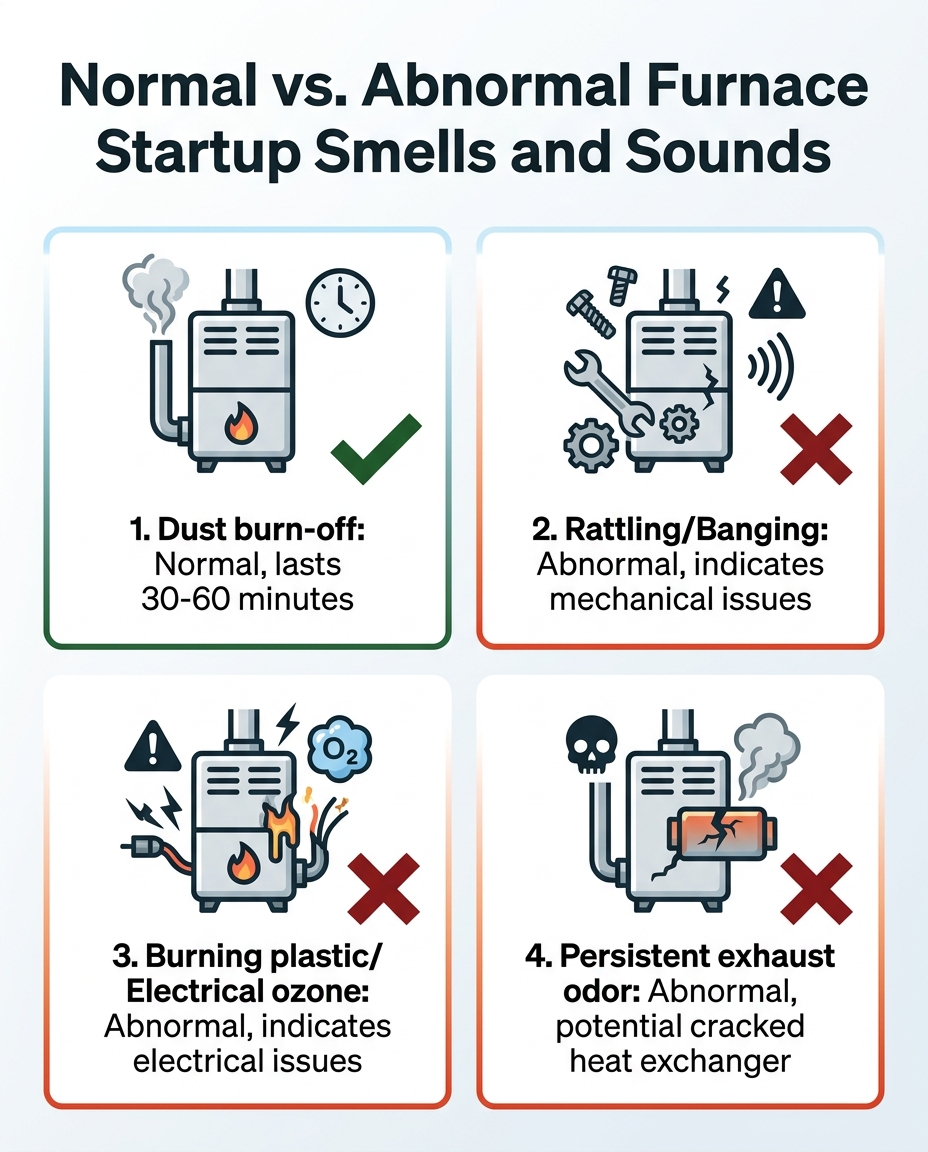
• Burning Dust / Musty — Common Cause: Incineration of settled debris on the heat exchanger. — Expected Duration: 30 to 60 minutes during the first cycle. — Required Action: Monitor closely. Ventilate the home. Normal operation.
• Burning Plastic / Rubber — Common Cause: Melting wire insulation or a foreign object in the ductwork. — Expected Duration: Persistent; does not fade. — Required Action: Shut off system immediately. Call a licensed professional.
• Electrical Ozone / Metallic — Common Cause: Overheating blower motor or failing electrical components. — Expected Duration: Persistent; worsens as the system runs. — Required Action: Shut off system at the breaker. Require professional diagnostic.
• Sharp Exhaust / Formaldehyde — Common Cause: Combustion gases leaking from a cracked heat exchanger. — Expected Duration: Persistent; accompanied by physical symptoms (headaches). — Required Action: Evacuate if CO alarms sound. Shut off system. Emergency repair.
The Environmental Protection Agency (EPA) strongly recommends annual pre-season inspections to prevent carbon monoxide risks and catch failing components before they create hazardous situations. Relying on a professional to verify that your system is venting properly is the safest way to approach the heating season.
Decoding Rattling Noises: Minor Quirk or Failing Blower Motor?
While a brief dust smell is often harmless, rattling or banging noises are rarely a 'normal' seasonal burn-off quirk. When your system kicks on during a cool mid-fall October evening, it should operate with a smooth, consistent hum. If your furnace sounds like a dryer with a pair of sneakers tumbling inside, you have a mechanical problem that requires attention.
Common Causes of Startup Noises
• Unbalanced Blower Wheels: Over the summer, heavy dust can accumulate unevenly on the blades of your blower fan. When the wheel spins at high speeds, this imbalance causes a violent vibration that rattles the entire furnace cabinet.
• Loose Access Panels: Sometimes, the vibration of the system simply loosens the screws holding the exterior panels in place. While this is a minor issue, it still requires a professional to ensure the cabinet is properly sealed for safe airflow.
• Failing Motor Bearings: A high-pitched squeal that transitions into a grinding or rattling sound usually means the bearings in your blower motor are failing due to a lack of lubrication or age.
Diagnosing these mechanical issues requires a licensed professional. Opening the furnace cabinet exposes you to high-voltage electrical components and delicate moving parts. Proactive seasonal upkeep is the most effective way to catch loose components or failing bearings before they cause a mid-winter breakdown. Enrolling in a comprehensive HVAC Maintenance Plan ensures that a technician inspects, cleans, and tightens all moving parts long before you actually need to rely on the heat.
When to Stop Troubleshooting and Upgrade to Top HVAC Brands
There comes a point in every homeowner's journey where troubleshooting an aging system is no longer practical. If your furnace exhibits persistent electrical smells, loud mechanical banging, or fails to keep your home comfortable, you face a critical choice. This decision point is a cornerstone of effective home maintenance tips and troubleshooting: knowing when to repair versus when it is time to upgrade.
The Repair vs. Replacement Framework
How do you decide? A typical pattern we see is that homeowners pour resources into repairing a system that is fundamentally at the end of its lifespan. If your furnace is over 15 years old, requires frequent repairs, or if the cost of a single repair approaches half the value of a new system, replacement is generally the wiser investment. Older systems also struggle with efficiency, meaning you pay more in utility costs to generate the same amount of heat.
The Benefits of High-Efficiency Upgrades
Discussing the benefits of upgrading to high-efficiency equipment is vital. Modern systems are designed to handle moderate temperature swings efficiently. By upgrading to top HVAC brands, you gain access to variable-speed blower motors and multi-stage heating. These features allow the system to run at lower speeds for longer periods, providing even heating without the harsh blasts of hot air characteristic of older, single-stage units.
Certain manufacturers stand out because they offer reliable performance specifically suited to the California climate, alongside strong local parts availability in the Mountain View area. For homeowners looking to maximize efficiency and transition away from traditional gas heating, exploring Heat Pump Systems is an excellent alternative. Heat pumps provide both heating and cooling from a single unit and perform exceptionally well in mild winter climates. Furthermore, general energy rebates or utility incentive programs may apply to qualifying high-efficiency installations. We always advise verifying current programs with a tax professional or your local utility provider to maximize your investment.
Safety First: Understanding Heat Exchanger Risks and Warranties
The most severe cause of startup smells—and the most dangerous—is a cracked heat exchanger. Deepening your understanding of this component is essential for protecting your home. The heat exchanger is the metal shield that separates the toxic combustion gases (created by burning fuel) from the clean air that is blown through your ductwork. It is the literal barrier keeping your breathing air safe.
The Carbon Monoxide Risk
Over years of operation, the metal of the heat exchanger expands as it heats up and contracts as it cools down. This constant thermal stress can eventually cause the metal to fatigue and crack. When a crack forms, carbon monoxide and other exhaust gases can leak directly into your living spaces. This is why a sharp, persistent exhaust odor during a mid-fall October startup is a massive red flag. Inspecting a heat exchanger requires specialized tools, such as infrared cameras and combustion analyzers. It must be performed by a licensed professional and cannot be a DIY project.
Navigating Manufacturer Support
If a technician condemns your heat exchanger, the repair is extensive. However, understanding your coverage can ease the burden. Manufacturer warranty support specific to the Bay Area can mitigate the cost of major part failures. Most top brands offer extended warranties on heat exchangers, sometimes up to 20 years or even a lifetime for the original registered owner.
Real-world experience with parts availability is crucial when relying on warranty claims. While the manufacturer may provide the part at no cost, the labor required to dismantle the furnace and install the new heat exchanger is highly specialized. For a deeper dive into how these coverages work, reading up on HVAC Manufacturer Warranties can help you understand the distinction between parts coverage and labor responsibilities.
Frequently Asked Questions About Fall Furnace Startups
Why does my heater smell like burning dust when I turn it on?
Dust settles on the heat exchanger during the summer when the system is dormant. The first heating cycle burns this dust off harmlessly. Because the metal components reach high temperatures quickly, the sudden incineration of this accumulated debris creates a noticeable, temporary odor.
How long should a furnace smell when first turned on?
Typically, the burning dust smell lasts between 30 to 60 minutes during the initial heating cycle. If the odor persists longer than an hour, or if it changes from a dusty smell to an electrical or plastic scent, shut the system down immediately and call a professional.
What does a cracked heat exchanger smell like?
A cracked heat exchanger often smells like formaldehyde or produces a sharp, unpleasant exhaust odor similar to a running vehicle. This requires immediate professional diagnosis due to the severe carbon monoxide risks it poses to your household.
Why is my furnace making a rattling noise?
Rattling usually indicates loose access panels, an unbalanced blower wheel, or failing motor bearings. Unlike a brief dust smell, loud mechanical noises are not a normal seasonal quirk and require a professional inspection to prevent further damage to the unit.
Can I inspect my own heat exchanger for cracks?
No, this requires specialized tools like combustion analyzers and inspection cameras, and must be done by a licensed professional. DIY inspections are extremely dangerous, often fail to spot hairline fractures, and can void your manufacturer warranties.
Secure Your Peace of Mind Before Winter Arrives
Mastering home maintenance tips and troubleshooting means knowing when to observe and when to act. While a brief burning dust smell on a mid-fall October morning is a normal part of the seasonal transition, persistent odors, electrical smells, and loud rattling noises are not. Protecting your home means taking these warning signs seriously rather than hoping they disappear on their own.
We encourage you to prioritize your family's safety by scheduling a professional pre-winter inspection before the coldest weather sets in. A licensed technician can verify that your heat exchanger is intact, your blower motor is balanced, and your system is operating efficiently. If your current system is aging, unsafe, or beyond repair, exploring reliable replacement options ensures you will not be left in the cold. Take control of your comfort and secure your peace of mind today.
hear what our satisfied clients have to say

.svg)
Service areas
.avif)