Fall HVAC Troubleshooting: Comparing Normal Heating Startup Quirks vs. Service Hazards
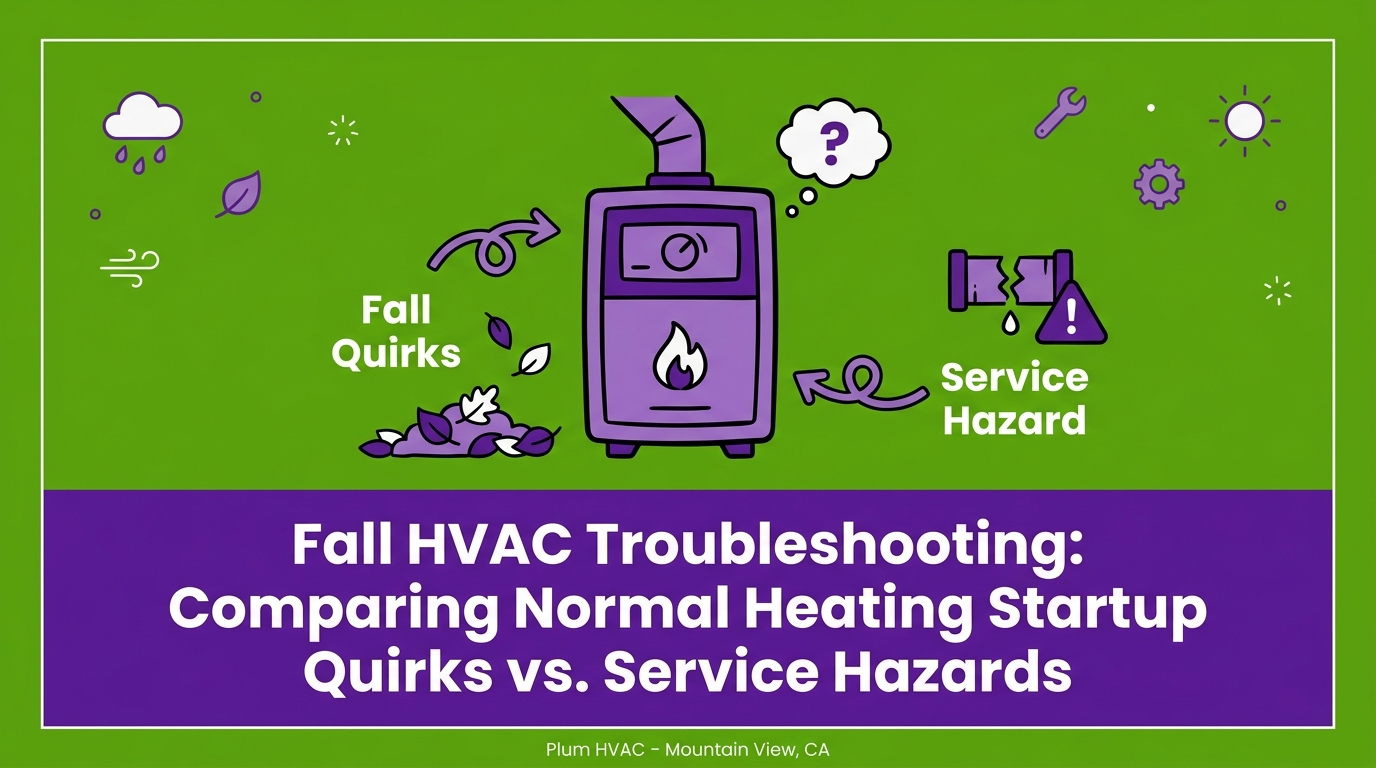
Is That Burning Smell Normal? Navigating Your First Fall Heating Startup
Why does your house suddenly smell like a dusty campfire when all you did was turn up the thermostat? Navigating basic home maintenance tips and troubleshooting for your HVAC system becomes a pressing reality the moment you activate your heater for the first time in months. After relying on your air conditioning all summer, making the switch to heating often comes with a moment of hesitation. You hear a clunk, you smell something odd, and you immediately wonder if your equipment is safe to operate.
At Plum HVAC, we field dozens of calls about this every October. The core decision you face during an October fall heating-startup is simple but critical: determining whether these initial symptoms are harmless seasonal quirks or early warning signs of a failing system. Ignoring a genuine malfunction can lead to a complete breakdown in the middle of winter, while panicking over a normal dust burn-off creates unnecessary stress. Proper assessment right now prevents freezing nights and emergency repairs later.
If you are currently evaluating the safety of your heating systems or considering modern furnace installation options, getting a professional assessment early is the smartest move you can make before winter truly arrives.
The Mechanics of the Seasonal Switch
To understand why your system acts strangely in the fall, you have to look at what it has been doing since spring. For months, your heating components have been sitting completely dormant in a dark, often damp environment. While the blower motor worked hard to circulate cooled air, the burners, heat exchangers, and ignition systems were inactive. Spiders build webs, dust settles thick on the metal surfaces, and moisture can cause minor surface oxidation.
When you finally send that first call for heat from your thermostat, you are demanding that these dormant components wake up and operate at maximum capacity instantly. The sudden introduction of high heat causes metal parts to expand rapidly. This expansion is responsible for many of the initial pops, pings, and smells that alarm homeowners. Learning to listen to your system during this specific window of time is the first step in proactive home management.
How Rapid Temperature Drops Impact Your Heating Equipment
The local microclimate plays a massive role in how your equipment handles the transition between seasons. In our experience servicing the Mountain View / Bay Area region, late-fall weather patterns are notoriously deceptive. You might enjoy a mild, comfortable afternoon, only to watch the temperature plummet sharply as soon as the sun goes down. This rapid shift forces your heating equipment to go from zero to one hundred percent effort with no gradual warm-up phase.
This sudden, heavy demand is exactly what uncovers the hidden wear and tear from previous years. A blower motor capacitor that is slightly degraded might handle a slow, warm morning just fine, but it will struggle and potentially fail when forced to combat a sudden 20-degree evening temperature drop. The abrupt thermal expansion puts immense stress on older heat exchangers, and any minor cracks or weaknesses are likely to expand under the sudden pressure.
The Stress of the Evening Chill
Thermal Shock on Components: When cold metal is rapidly heated by gas burners or electric strips, it expands. If this happens too quickly due to a sudden thermostat adjustment on a freezing night, the stress on the system multiplies. This is why so many breakdowns occur during the first true cold snap of the year.
Airflow Demands: As the outside temperature drops rapidly, your home loses heat faster. Your system must run longer cycles to keep up. If your ductwork is cold, the initial air pushed into your living space will feel drafty, forcing the system to work even harder to overcome the ambient chill in the vents.
Because these sudden shifts are so common here, having access to reliable, rapid-response Mountain View HVAC service is critical. Our technicians at Plum HVAC notice that when mild days trick homeowners into delaying their pre-winter tune-ups, the first freezing night results in a massive spike in emergency repair calls across the region.
Decoding HVAC Odors: Harmless Dust Burn-Off vs. Electrical Hazards
Smell is often the very first indicator that something is happening inside your ductwork. Because your duct system touches every room in the house, an odor originating in the utility closet will spread to your bedroom in a matter of seconds. Knowing the difference between a harmless smell and a dangerous one is a critical skill for any October fall heating-startup.
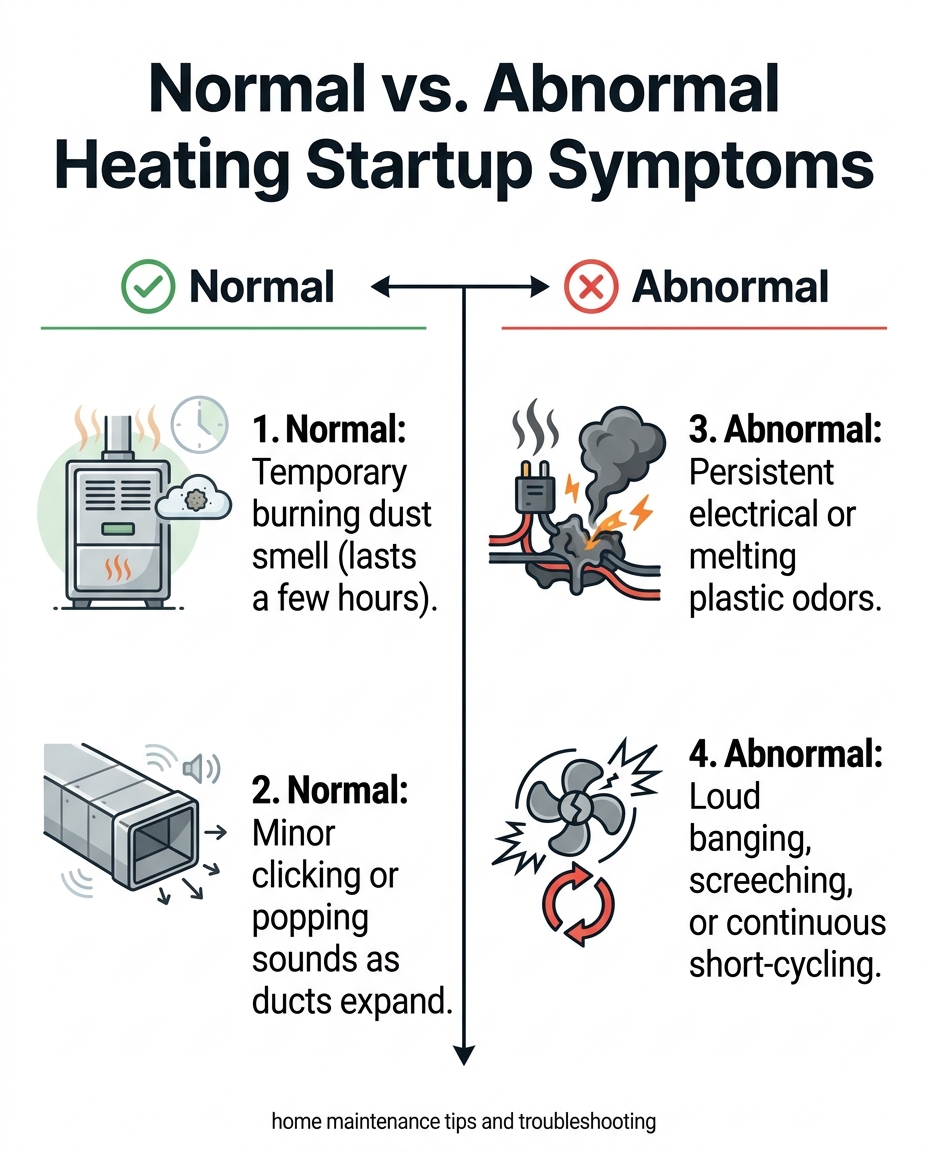
Our team typically sees the classic "burning dust" smell as the most common culprit. Throughout the summer, household dust, pet dander, and airborne particles settle on your furnace's heat exchanger or your heat pump's auxiliary heating strips. When these components heat up for the first time, that layer of dust literally incinerates. It smells slightly smoky, dry, and distinctly dusty.
On the other hand, acrid, chemical, or electrical odors are never normal. If you smell melting plastic, burning rubber, or a sharp ozone scent, you are likely dealing with failing wire insulation, an overheating blower motor, or a seized bearing. These electrical hazards require immediate attention.
Symptom Comparison Guide
Use the following breakdown to evaluate what you are smelling and hearing during your system's initial cycles.
• Odors — Harmless Quirks (Normal): Dusty, dry burning smell that fades within 1 to 3 hours of the first cycle. — Service Hazards (Abnormal): Sharp electrical, melting plastic, or sulfur/rotten egg (gas leak) smells that persist.
• Sounds — Harmless Quirks (Normal): Minor clicking during ignition, soft popping as metal ductwork expands. — Service Hazards (Abnormal): Loud banging, metallic screeching, grinding, or rapid repetitive clicking.
• Airflow — Harmless Quirks (Normal): Briefly cool air for the first 30 seconds as cold air is pushed out of the ducts. — Service Hazards (Abnormal): Weak airflow, entirely cold air after 5 minutes, or zero air moving at all.
If you experience any of the abnormal symptoms listed above, the safest course of action is to turn the system off at the thermostat immediately. Do not wait to see if an electrical smell goes away on its own. Shut down the equipment and contact a licensed professional to inspect the wiring and motors.
Addressing Cold Spots and Uneven Heating Without Unsafe DIY: Home Maintenance Tips and Troubleshooting
One of the most frustrating experiences we hear about during the Mountain View / Bay Area winter is walking from a perfectly warm living room into a freezing bedroom. Uneven heating and stubborn cold spots are incredibly common, but they rarely mean your equipment is completely broken. More often, they point to neglected maintenance that is severely restricting your system's airflow.
Your HVAC system breathes just like you do. It must pull in a specific volume of air, heat it, and push that exact same volume back out. If anything chokes off that airflow, the air won't have enough pressure to reach the furthest rooms in your house. While it is tempting to start taking panels off your furnace to find the problem, opening up equipment that contains high voltage and combustible gas is highly dangerous. Instead, stick to safe, external checks.
Safe Diagnostic Steps for Homeowners
1. Verify the thermostat settings: Ensure the system is actually set to "Heat" and the fan is set to "Auto." If the fan is set to "On," it will blow continuously, circulating unheated air between heating cycles, which feels like a cold draft.
2. Check all room vents: Walk through every room and make sure the supply registers (where air comes out) and return grilles (where air goes in) are fully open and unblocked. A common myth suggests closing vents in unused rooms saves energy. In reality, it increases static pressure, strains the blower motor, and disrupts the airflow balance, leading to worse cold spots.
3. Replace the air filter: According to the Department of Energy, a clogged, dirty air filter is a leading cause of system inefficiency and failure. A dirty filter acts like a brick wall, stopping return air from reaching the heat exchanger. Check your filter monthly during the heating season and replace it if it looks gray or opaque.
4. Clear the perimeter: Ensure furniture, thick rugs, and heavy curtains are placed at least two feet away from all vents and grilles.
If you have completed these safe checks and the cold spots remain, the issue lies deeper within the system. Problems with blower motor speeds, slipped belts, degraded ductwork, or faulty gas valves require a licensed professional. Never attempt to bypass safety switches or adjust internal combustion components yourself.
Why Is My Heater Short-Cycling? Recognizing System Strain
A pattern we see often at Plum HVAC is a system turning on, running for just a few minutes, and then shutting off before the house actually gets warm. You are experiencing a phenomenon known as short-cycling. This is one of the most damaging things your equipment can do during an October fall heating-startup, and it is a clear sign that the system is under extreme distress.
Short-cycling is essentially your system's emergency abort sequence. Modern heating equipment is packed with safety sensors designed to prevent catastrophic failure. When one of these sensors detects an unsafe condition, it immediately cuts the power to the burners or the compressor.
The Problem, Cause, and Solution
The Problem: The system rapidly turns on and off, failing to reach the temperature set on the thermostat. The house remains chilly, but your energy bills skyrocket because the system is constantly drawing massive amounts of startup power.
The Cause: Short-cycling can stem from a few different sources. The simplest cause is severe airflow restriction (like a completely blocked filter) causing the heat exchanger to overheat and trip the high-limit safety switch. A more complex cause is a dirty flame sensor. If the sensor is coated in carbon buildup, it cannot detect the burner flame. For safety, it shuts the gas valve off immediately to prevent raw gas from flooding your home. Finally, short-cycling can be caused by oversized equipment that blasts too much heat too quickly, satisfying the thermostat before completing a full, healthy cycle.
The Solution: Aside from changing your air filter, short-cycling always requires professional intervention. A technician must clean the delicate sensors, test the safety limit switches, and evaluate the static pressure. If you are dealing with improperly sized equipment, you may need to start comparing high-end vs. budget residential HVAC units to find a properly sized replacement that delivers long, efficient heating cycles.
Evaluating System Performance: When to Consider an Upgrade
There comes a point in every homeowner's journey where seasonal maintenance is no longer enough to keep an aging system reliable. As equipment passes the 10-to-15-year mark, components begin to degrade simultaneously. Evaluating your system's performance objectively helps you decide whether to invest in another repair or put that money toward a modern, efficient upgrade.
If your system requires frequent repairs, struggles to maintain a consistent temperature, or causes your utility bills to spike noticeably compared to previous years, it is showing its age. The "50% rule" is a helpful guideline: if the cost of a repair approaches 50% of the value of a new system, replacement is usually the better financial decision.
Repair vs. Replacement Factors
Pros of Upgrading: Modern systems feature variable-speed technology that operates at lower capacities for longer periods. This provides incredibly even heating, eliminates cold spots, and operates almost silently. Furthermore, upgrading to high-efficiency equipment often qualifies homeowners for various energy rebates or federal tax credits. While you should always consult your local utility provider or a tax professional for current, specific program details, these incentives can significantly offset the initial investment.
Cons of Delaying: Sticking with a failing system means risking a complete breakdown on the coldest night of the year. It also means continuing to pay inflated energy bills as the worn-out equipment consumes more electricity or gas to produce the same amount of heat.
For the Mountain View / Bay Area climate, our team frequently recommends versatile solutions like heat pump systems. Because our region requires both robust cooling in the summer and reliable, efficient heating in the winter, a heat pump handles both tasks seamlessly without relying on fossil fuels. A professional assessment will help you weigh the pros and cons of your specific home footprint.
Essential Pre-Winter Maintenance Observations for Homeowners
Before the true winter chill sets in, proactive observation is your best defense against unexpected breakdowns. While you should never attempt internal repairs, your eyes and ears are invaluable diagnostic tools during the October fall heating-startup period. By monitoring your system closely now, you can catch minor issues before they escalate into expensive emergencies.
Taking a few minutes to inspect the perimeter of your home and listen to your equipment provides our Plum HVAC technicians with vital clues when we arrive for your seasonal tune-up.
Your Fall Observation Checklist
• Clear the outdoor unit: If you have a heat pump, go outside and inspect the compressor cabinet. Clear away all autumn leaves, overgrown bushes, and debris. The unit needs at least two feet of clear space on all sides to pull in air efficiently.
• Listen to the startup sequence: Stand near your indoor unit when it kicks on. Note any unusual sounds. A rattling noise often indicates a loose panel, while a high-pitched squeal usually points to a failing blower motor bearing or a worn-out fan belt.
• Monitor the thermostat behavior: Watch to see if the room temperature drops significantly before the system kicks on, or if the system runs far past the target temperature. This could indicate a poorly calibrated thermostat.
• Document all quirks: Keep a notepad near the thermostat and write down any strange smells, sounds, or cold spots you notice. Share this list with your technician.
• Schedule early: Book your professional pre-winter maintenance now. Once the first freeze hits, wait times for emergency repairs increase dramatically.
Frequently Asked Questions About Fall Heating Transitions
Why does my heater smell like burning dust when I turn it on?
This is a completely normal symptom of an October fall heating-startup. Over the summer, dust and particles settle on your heat exchanger. When the burners ignite for the first time, this dust layer burns off, creating a dry, smoky odor that should dissipate within a few hours of operation.
How do I know if my heating system needs professional maintenance?
You should schedule professional maintenance if you notice persistent unusual odors (like electrical burning), loud banging or grinding noises, uneven heating across different rooms, or if the system turns on and off rapidly. Additionally, an annual tune-up is highly recommended even if the system appears to be running fine, to ensure safe combustion and efficiency.
Why is my heater short-cycling during the fall?
Short-cycling happens when a safety sensor forces the system to shut down prematurely. This is often caused by a severely clogged air filter causing the system to overheat, a dirty flame sensor failing to detect the burner flame, or an oversized unit that heats the space too quickly. It requires professional diagnosis to prevent long-term damage.
What is basic HVAC maintenance for the transition season?
Basic homeowner maintenance includes replacing your indoor air filter, ensuring all room vents are open and unblocked by furniture, checking the thermostat settings, and clearing fallen leaves and debris away from the outdoor heat pump unit. All internal component checks must be left to a licensed professional.
Can a dirty air filter cause my furnace to blow cold air?
Yes, a severely clogged air filter restricts return airflow, which can cause the heat exchanger to overheat. When this happens, the system's high-limit safety switch will shut off the burners to prevent a fire, but the blower fan may continue to run to cool the equipment down, resulting in cold air coming from your vents.
Ensure Reliable Warmth All Winter With Professional Maintenance
Distinguishing between normal seasonal quirks and actual hazards is the key to maintaining a comfortable, safe home. While a brief dusty smell on the first chilly evening is nothing to worry about, persistent electrical odors, short-cycling, and stubborn cold spots are clear signals that your equipment needs attention. Navigating home maintenance tips and troubleshooting effectively means knowing exactly where your safe observation ends and a professional's expertise begins.
Relying on a licensed expert to handle the internal diagnostics, combustion checks, and electrical testing ensures that your system operates safely throughout the demanding Mountain View / Bay Area winter. Don't wait until a minor strain turns into a major breakdown on a freezing night. Schedule your professional assessment today to guarantee reliable, efficient warmth all season long.
hear what our satisfied clients have to say

.svg)
Service areas
.avif)