
High-End vs. Budget Residential HVAC Brands: Where the Extra Money Actually Goes
Is It Worth Upgrading? Evaluating HVAC Tiers at the End of Summer
Are you staring down a sudden system failure right in the middle of the August late-summer cooling season, wondering if a premium replacement is truly worth the investment? At Plum HVAC, High-End vs. Budget Residential HVAC Brands: Where the Extra Money Actually Goes is a topic our team discusses during nearly every replacement consultation we conduct in Mountain View. It is easy to look at two metal boxes that appear identical on the outside and question why one costs significantly more than the other. The answer lies entirely beneath the surface. Evaluating the physical build differences—specifically the quality of the internal components, the thickness of the materials, and the sophistication of the technology—is the only way to determine true long-term value.
Homeowners often struggle to choose between basic and premium equipment while their current system fails. The decision point ultimately comes down to whether the physical component upgrades justify the investment for superior durability, enhanced comfort, and significant noise reduction. A basic unit will certainly cool your home, but a premium unit alters how that cooling is delivered and how long the machinery will survive the intense demands of the local climate. For homeowners planning a Mountain View AC installation, establishing a baseline understanding of these physical differences is the most critical step in evaluating air conditioning systems.
Looking Past the Marketing: What 'Builder-Grade' Actually Means
To understand what makes a premium unit superior, our technicians always explain the baseline first. In the heating and cooling industry, most manufacturers organize their equipment into a standard "Good, Better, Best" tier system. The entry-level tier is commonly referred to as "builder-grade." These units are specifically designed to meet the minimum efficiency guidelines set by the Department of Energy (DOE) using standard, cost-effective materials. They are fully functional and safe, but they are built with the primary goal of keeping upfront manufacturing costs as low as possible.
The Physical Reality of the Baseline
Builder-grade equipment relies on standard single-stage technology, thinner metals, and minimal insulation. When you move up to the premium tiers, you are not simply paying for a higher SEER (Seasonal Energy Efficiency Ratio) rating or a recognizable logo on the cabinet. You are paying for fundamentally different physical construction. The internal architecture of a high-end unit is engineered to handle extreme environmental stress, reduce mechanical friction, and protect the most sensitive components from premature wear.
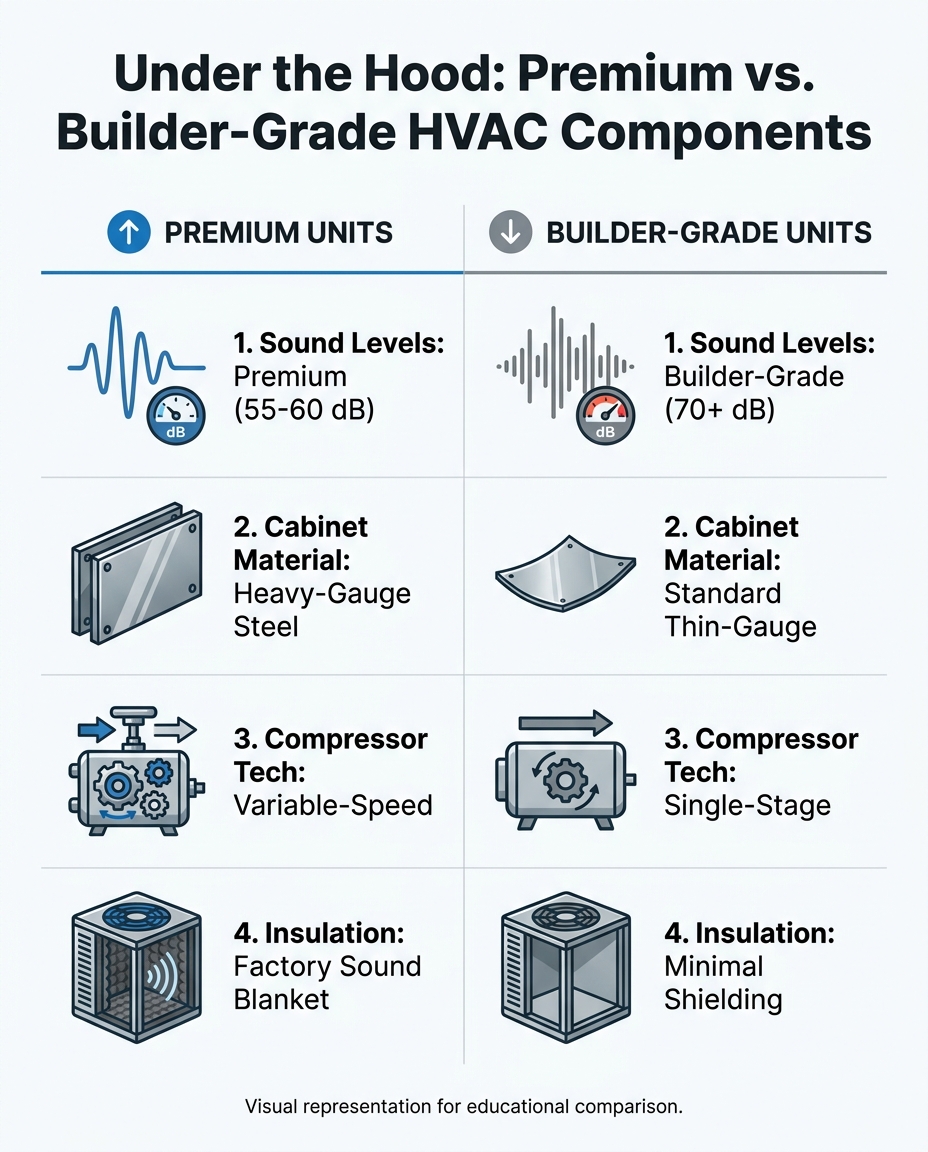
• Compressor Type — Builder-Grade (Budget) Standard: Single-stage (always runs at 100% capacity) — Premium (High-End) Standard: Variable-speed or two-stage (adjusts capacity dynamically)
• Sound Insulation — Builder-Grade (Budget) Standard: Minimal to none; exposed internal machinery — Premium (High-End) Standard: Factory-installed, high-density sound blankets
• Cabinet Material — Builder-Grade (Budget) Standard: Standard thin-gauge stamped metal — Premium (High-End) Standard: Heavy-gauge, vibration-resistant steel
• Exterior Finish — Builder-Grade (Budget) Standard: Basic painted finish susceptible to weathering — Premium (High-End) Standard: Baked-on powder-coat finish for rust prevention
Understanding these physical differences helps clarify why certain systems outlast others under identical weather conditions. If you want a broader overview of the manufacturers themselves before diving deeper into these physical components, it is helpful to review the top residential HVAC brands to see how different companies structure their specific product lines.
The Noise Factor: Sound Dampening and Acoustic Insulation
One of the most immediate and noticeable differences between budget and premium equipment is the acoustic profile. Builder-grade units are notoriously loud. Because they lack specialized insulation and run at full capacity every time they cycle on, we routinely measure them exceeding 70 to 75 decibels (dB). For context, 70 dB is roughly the equivalent of running a vacuum cleaner or standing next to a busy highway. When an air conditioner is placed near a patio, a bedroom window, or a property boundary, this constant mechanical roar severely impacts outdoor living spaces and overall home comfort.
The Engineering of Quiet Operation
Premium units are engineered specifically for acoustic suppression. High-end models routinely operate at decibel levels as low as 55 to 60 dB, which is comparable to the hum of a quiet refrigerator or a normal conversational tone. This drastic reduction in noise is achieved through several specific physical upgrades:
• Factory-Installed Sound Blankets: Premium units feature high-density acoustic wraps that encase the compressor, absorbing the high-frequency mechanical whining before it escapes the cabinet.
• Specialized Compressor Mounts: High-end systems utilize heavy-duty rubber or composite isolation mounts that prevent the compressor's vibration from transferring to the metal exterior housing.
• Swept-Wing Fan Blades: Advanced aerodynamic fan blade designs slice through the air with far less turbulence, drastically reducing the rushing wind sound common in budget units.
In many Mountain View CA residential properties, homes are built in close proximity to one another. Our installation teams know that tight property lines in Bay Area residential neighborhoods make premium sound dampening a necessity for neighborly peace. We frequently hear from clients that a roaring budget unit has become a nuisance to the house next door. These advanced sound-dampening features are not just limited to traditional air conditioners; they are also critical considerations when evaluating heat pump options for the home, as heat pumps run year-round for both heating and cooling.
Exterior Durability: Cabinet Gauge and Weather Resistance
The exterior cabinet of an air conditioner does much more than just hold the internal parts together; it acts as the primary line of defense against the elements and mechanical vibration. When our team evaluates builder-grade vs. premium cabinet gauge and sound blankets, the physical differences become immediately apparent the moment you touch the equipment. Budget units typically utilize standard, thin-gauge sheet metal. While this meets basic safety requirements, thin metal is highly susceptible to flexing, denting, and vibrating.
Why Metal Thickness Matters
Premium units are constructed using heavy-gauge, galvanized steel. This thicker material provides incredible structural rigidity. Why does rigidity matter? Every time an air conditioner turns on, the internal compressor generates intense kinetic energy. In a thin-gauge cabinet, this energy translates into rattling and harmonic vibration, which slowly loosens electrical connections and causes micro-abrasions on copper refrigerant lines over time. A heavy-gauge cabinet absorbs and neutralizes this vibration, protecting the delicate internal ecosystem.
Furthermore, the exterior finish on a premium unit is vastly superior. After years of servicing systems in the Bay Area, we've seen how standard spray-painted finishes on budget units can easily scratch, chip, and eventually rust after just a few seasons of exposure to sun and rain. Premium cabinets undergo a rigorous finishing process:
• Baked-On Powder Coating: The metal is electrostatically coated with a dry powder and then baked in an oven, creating an incredibly tough, uniform shell.
• UV Resistance: The premium coating resists fading and chalking caused by intense ultraviolet light.
• Corrosion Protection: Heavy-duty louvered side panels protect the fragile aluminum coil fins from physical impacts, such as flying lawn debris or hail, while the powder coat prevents moisture from oxidizing the steel.
Ultimately, the physical cabinet is the armor that protects the sensitive internal components from environmental stress. Investing in heavy-gauge steel ensures that the system's structural integrity remains intact for the lifespan of the machinery.
Under the Hood: Compressor Technology and Shielding
The compressor is the heart of any air conditioning system. It is the component responsible for pumping refrigerant through the lines and facilitating the heat transfer process. It is also the most expensive part of the system to replace. Our service technicians see first-hand how the technological gap between a budget compressor and a premium compressor directly dictates how comfortable your home will feel.
The Problem with Single-Stage Cooling
Builder-grade units rely almost exclusively on single-stage compressors. A single-stage compressor has only one speed: 100% capacity. When the thermostat calls for cooling, the system blasts on at full power, rapidly cools the house, and then shuts off. This constant on-and-off cycling is incredibly inefficient and physically jarring to the machinery. The startup phase is when an HVAC unit draws the most electrical current and experiences the most intense mechanical friction. Hot, dry late-summer afternoons in Silicon Valley cause peak temperature swings that heavily tax single-stage compressors. We regularly replace budget compressors that have been forced to cycle on and off dozens of times a day just to keep up.
The Variable-Speed Solution
Premium units utilize variable-speed or two-stage compressors. Instead of slamming on at 100% capacity, a variable-speed compressor can adjust its output in tiny increments—sometimes running at just 30% or 40% capacity. This allows the system to run continuously at a low, steady speed. The benefits of this technology are profound:
• Drastically Reduced Wear and Tear: By eliminating the violent start-and-stop cycles, the mechanical friction on the compressor bearings is minimized, extending the life of the unit.
• Superior Humidity Control: Because the system runs longer at lower speeds, the evaporator coil has more time to pull moisture out of the indoor air, keeping the house feeling crisp rather than clammy.
• Advanced Thermal Shielding: Premium compressors are housed within specialized internal shielding that protects the electronics from the extreme heat generated during the compression process, preventing thermal overload.
Premium variable-capacity components are highly beneficial in environments that experience rapid temperature fluctuations, providing a smooth, consistent blanket of comfort rather than the blast-and-pause cycle of a budget unit.

Long-Term Wear and Tear vs. Immediate Savings
When reviewing installation quotes with our Mountain View customers, the upfront savings of a builder-grade unit can be highly tempting. However, evaluating the long-term physical durability of the components paints a very different picture of the total cost of ownership. The true test of an air conditioner does not happen on a mild spring day; it happens during periods of relentless, unbroken heat.
The Steep Degradation Curve
During the late-summer cooling season in August, as families transition into back-to-school routines, our emergency dispatch board frequently lights up. This constant end-of-season operation exposes the weaknesses in budget components and minimal insulation. Because builder-grade systems lack heavy-duty vibration dampening and thermal shielding, the internal parts degrade at a much faster rate. The constant rattling and intense heat exposure frequently lead to premature failure of smaller, critical components. Contactors become pitted and burned out from the high electrical draw of constant single-stage startups. Capacitors swell and fail under the trapped heat of an unshielded cabinet. Fan motors burn out faster due to the lack of aerodynamic efficiency.
While a builder-grade unit undeniably saves money today, the physical degradation curve is far steeper than that of a premium unit. Homeowners often find themselves paying for emergency repairs and replacement parts just a few years after installation, rapidly eating into those initial savings. Conversely, the robust build quality of a premium unit resists this wear, maintaining its efficiency and reliability much longer into its lifespan.
It is important to emphasize that regardless of the equipment tier chosen, ongoing AC maintenance is absolutely non-negotiable for preserving the physical components. Even the most advanced variable-speed compressor will fail prematurely if the coils are suffocated by dirt or the refrigerant charge is neglected.
The Great Equalizer: Why Installation Matters More Than Materials
You can purchase the most expensive, heavily insulated, variable-speed air conditioner on the market, but if it is installed incorrectly, our repair teams will eventually be called out to fix it. Premium physical components require expert, meticulous installation to actually deliver their promised benefits. The installation process is the great equalizer in the HVAC industry.
The Risks of Poor Workmanship
Consider the heavy-gauge cabinet and the factory-installed sound blanket. These features are designed to eliminate vibration. However, if the concrete equipment pad is not perfectly leveled during installation, the entire unit will sit at an angle. The compressor will fight gravity, the fan will wobble off-axis, and the heavy-gauge cabinet will rattle loudly, completely negating the acoustic engineering. Similarly, a variable-speed compressor relies on precise static pressure and airflow calculations. If the ductwork is undersized or the indoor blower is not calibrated correctly, the variable-speed technology cannot function as intended, leading to frozen coils and system lockouts.
This is where local expertise becomes the most valuable component of all. Leveraging Plum HVAC's local experience in evaluating which premium features actually deliver long-term ROI and durability guides homeowners away from overpriced hype and cheap, unreliable alternatives. Our highly trained installation team ensures that every sound blanket is secure, every electrical connection is torqued correctly, and the airflow is balanced to let the premium technology operate exactly as the engineers intended.
Frequently Asked Questions
What is the difference between builder grade and premium HVAC?
The primary difference lies in the physical materials and internal technology used during manufacturing. Builder-grade units utilize standard thin-gauge metal, single-stage compressors, and minimal insulation to keep upfront costs low. Premium units feature heavy-gauge steel cabinets, advanced variable-speed compressors, and specialized acoustic insulation to maximize durability, comfort, and efficiency over a longer lifespan.
Do high-end AC units run quieter?
Yes, high-end AC units are significantly quieter than standard models. Premium units often operate at 55 to 60 decibels, while budget units frequently exceed 70 decibels. This dramatic reduction in noise is achieved through factory-installed sound blankets, heavy-duty compressor isolation mounts, and aerodynamic fan blades that reduce air turbulence.
Is it worth upgrading from a builder-grade AC?
Upgrading is highly recommended if you plan to stay in your home long-term and value consistent comfort. The physical component upgrades in a premium unit justify the investment by providing superior humidity control, quieter operation, and a much slower rate of mechanical degradation. However, if you are strictly focused on the lowest possible upfront cost, a basic unit will still meet standard cooling requirements.
How long do builder grade AC units last?
In our experience, with strict, professional maintenance, a builder-grade AC unit can last 10 to 15 years. However, because they use thinner materials and experience more aggressive start-and-stop wear from single-stage compressors, they generally require more frequent part replacements—such as capacitors and contactors—as they age compared to heavily reinforced premium units.
Are premium HVAC cabinets actually thicker?
Yes, premium HVAC cabinets are constructed from significantly thicker, heavy-gauge galvanized steel. This added thickness is crucial because it resists the intense mechanical vibration generated by the compressor, preventing the cabinet from rattling and protecting the internal copper lines from friction damage.
Does a variable-speed compressor save on physical wear and tear?
Absolutely. A variable-speed compressor runs for longer cycles at much lower capacities, which drastically reduces the violent mechanical stress of constantly turning on and off at 100% power. This smooth, continuous operation minimizes friction on internal bearings and heavily reduces the electrical and thermal stress on the system's components.
Making the Right Choice for Your Home
Evaluating the physical build differences between equipment tiers is the only reliable way to ensure you are making a sound investment when replacing an aging system during the late-summer heat. By looking past the marketing jargon and focusing on tangible upgrades—like heavy-gauge cabinets, robust compressor shielding, and advanced sound dampening—you can select a system that provides lasting value. Additionally, upgrading to high-efficiency premium equipment may qualify you for federal tax credits or local utility incentive programs (we always recommend verifying current programs with your utility provider or a tax professional). A clear understanding of these premium components ensures that your new installation from Plum HVAC will deliver the daily comfort, quiet operation, and long-term durability your home deserves.
hear what our satisfied clients have to say

.svg)
Service areas
.avif)