Why Even Top HVAC Brands Smell Like Burning During Fall Startup
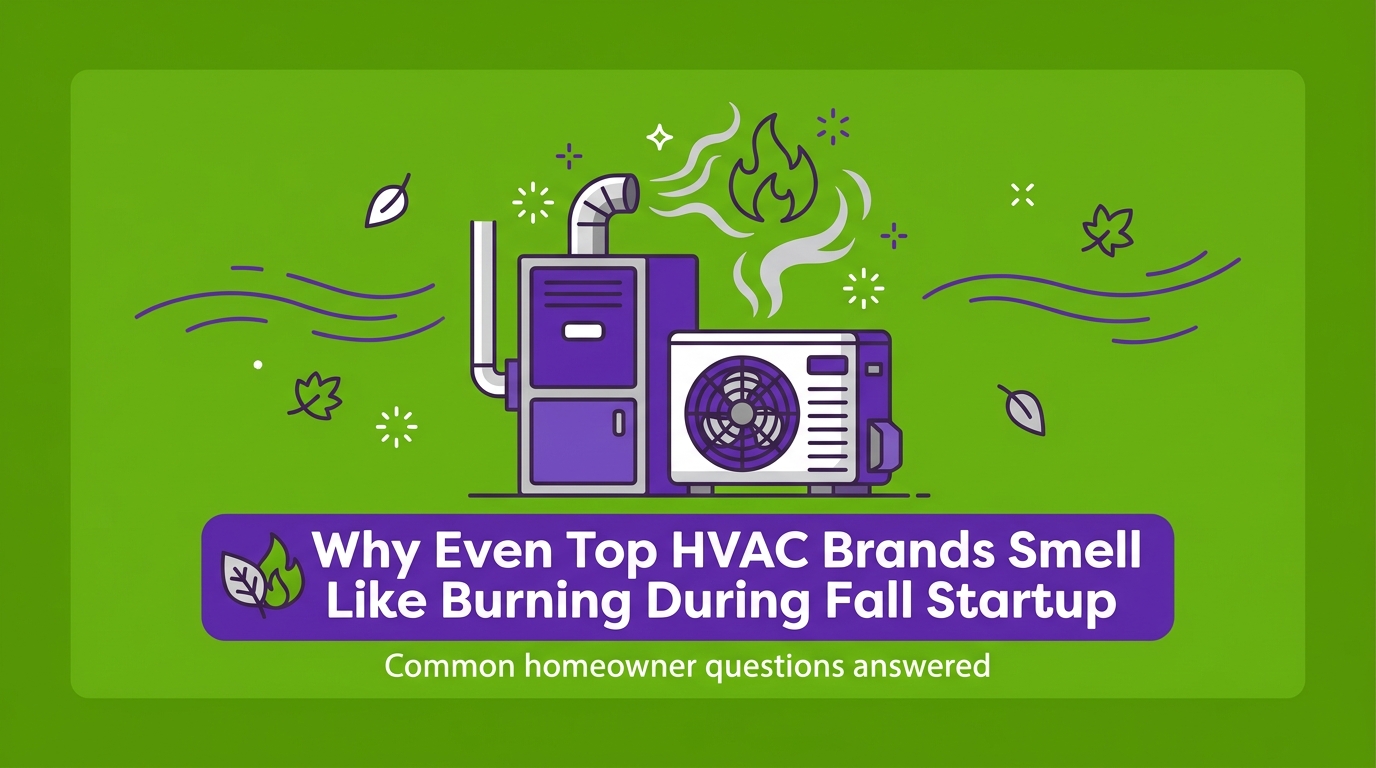
That Sudden Burning Smell When You Turn on the Heat
One of the most common homeowner questions answered by our team at Plum HVAC during the autumn transition is why a perfectly good heating system suddenly smells like it is catching fire. You walk over to your thermostat, switch it from cooling to heating for the first chilly evening of the year, and within minutes, a harsh, acrid odor begins pouring out of your vents. It is an alarming experience that immediately triggers a sense of panic. Your first instinct is likely to assume that something inside the unit is actively burning, melting, or critically failing.
This sudden sensory alarm presents an immediate decision point for any homeowner: do you wait it out and see if the smell dissipates, or do you sprint to the thermostat to shut the entire system down before a fire starts? The good news is that, in our experience servicing Mountain View homes, this odor is a completely normal, harmless physical reaction in the vast majority of cases. It is an extremely common occurrence during the first fall heating startup in October, a time when millions of heating systems are waking up from a long summer hibernation.
Understanding what is happening inside your ductwork and furnace cabinet is the key to maintaining a calm, safety-first approach. Throughout the summer months, while you were relying entirely on your air conditioning systems to keep your home comfortable, the heating components of your HVAC setup sat completely dormant in the dark. By setting a neutral, expert baseline for how these systems operate, we can help you easily learn to distinguish between a routine seasonal nuisance and a genuine electrical emergency that requires professional intervention.
The Science Behind Seasonal Dust Burn-Off
To truly understand why your vents are emitting that troubling smell, our technicians like to explain the basic science of how forced-air heating systems operate after a long period of inactivity. The odor is not a sign of mechanical failure; rather, it is a simple matter of physics and environmental accumulation.
The Problem: Months of Dormancy
From late spring through early autumn, the heating elements and heat exchangers inside your furnace or air handler sit completely idle. While the blower motor might still run to circulate cooled air, the actual combustion chambers and electric heating strips remain cold. During these months of inactivity, fine particulate matter naturally settles on these internal components. Our team sees this constantly, especially given Mountain View's dry summer climate, which significantly increases the amount of fine dust, pollen, and airborne particulate that settles in idle heating systems between May and September. Every time your system pulled air through the return vents during the summer, microscopic dust bypassed the filter and lightly coated the cold heat exchanger.
The Cause: Rapid Incineration
When you finally adjust your thermostat for the first fall heating startup in October, those dormant components are suddenly subjected to intense, rapid temperature increases. A gas furnace heat exchanger can reach hundreds of degrees within moments. As the metal heats up, the thin layer of accumulated summer dust has nowhere to go. It is instantly incinerated. The blower motor then pushes the air across these hot components, picking up the smell of the incinerated particulate and distributing it throughout every room in your house.
The Solution: Recognizing the Scent
The resulting odor is highly distinct. It typically smells like heavily toasted dust, warm dirt, or a slightly metallic burning scent. We always clarify for our customers that this resulting odor is a distinct "dusty" smell, which is quite different from the sharp, toxic scent of melting plastic or burning rubber. If you are a resident looking for Mountain View HVAC services, understanding this scientific process is your first line of defense against unnecessary panic.
The 15-30 Minute Rule for Normal Heating Odors
When you are faced with a house that smells like burning dust, you need a clear, time-bound diagnostic framework to evaluate the situation safely. We reassure our customers that you do not need to be a mechanical engineer to assess whether your system is behaving normally or exhibiting signs of a dangerous fault. You simply need a watch and a bit of patience.
1. Ensure proper ventilation: Before you begin observing the system, open a few windows or doors to allow fresh air to circulate. This prevents the initial burst of burnt dust from becoming overwhelming and allows you to accurately gauge if the smell is fading or intensifying.
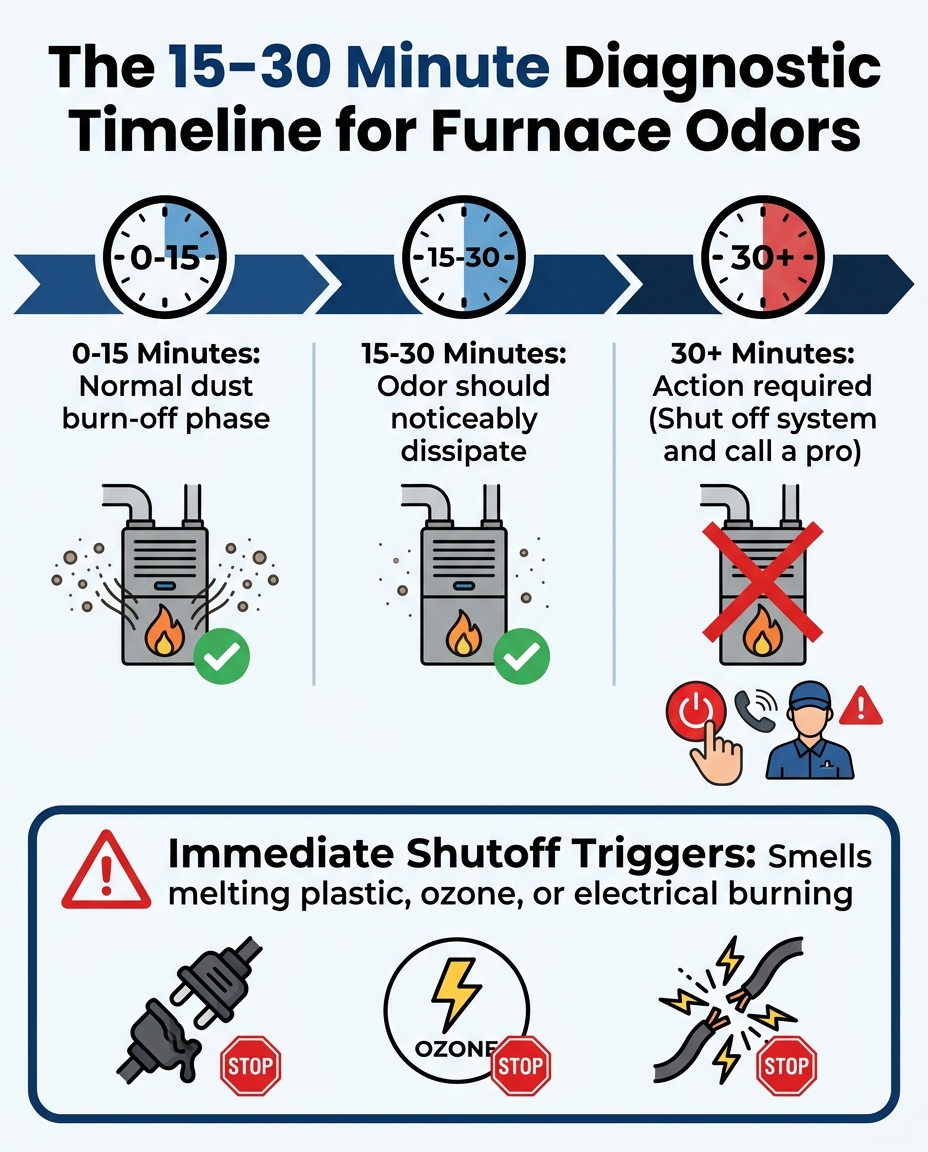
2. Start the clock: Note the exact time your heating system cycles on. The standard diagnostic timeframe dictates that normal dust burn-off typically dissipates within 15-30 minutes of initial run time.
3. Observe the air quality: Walk away from the direct path of the vents and return a few minutes later. As the system continues to run, the layer of dust on the heat exchanger will fully incinerate, and the smell should noticeably weaken with each passing minute.
4. Enforce the 30-minute limit: State clearly to yourself and your family that if the smell persists beyond 30 minutes, it escalates from a normal seasonal nuisance to a potential hazard. A smell that grows stronger, sharper, or refuses to fade is a red flag.
5. Keep the cabinet closed: We emphasize that this observation period requires no tools whatsoever. You should never attempt to open the equipment, remove access panels, or inspect the internal components yourself. Your only job is to monitor the time and the scent from the safety of your living room.
Recognizing Dangerous Electrical and Mechanical Odors
While burning dust is harmless and temporary, there are specific odors our experts warn about that indicate a severe mechanical failure or an active electrical hazard. Contrasting harmless dust with dangerous electrical smells is critical for your safety. If you detect any of the following scents, you must abandon the waiting period and take immediate action.
• Warm, toasted dust or dirt — Likely Cause: Normal seasonal accumulation burning off the heat exchanger. — Required Action: Monitor for 15-30 minutes. Ensure good ventilation.
• Acrid, melting plastic — Likely Cause: Failing electrical components, melted wire casing, or a foreign object in the ductwork. — Required Action: Immediate system shutoff at the thermostat. Do not wait.
• Sharp, metallic ozone — Likely Cause: Overheating blower motor, severe electrical arcing, or failing capacitors. — Required Action: Immediate system shutoff at the thermostat. Call for emergency service.
• Fishy or urine-like smell — Likely Cause: Overheating electrical wiring or melting polymer insulation inside the walls or cabinet. — Required Action: Immediate system shutoff at the thermostat. This is a severe fire hazard.
It is vital to understand that an overheating blower motor, a failing capacitor, or faulty wiring will not naturally resolve after 15-30 minutes of initial run time. In fact, allowing the system to continue running while emitting a plastic or electrical smell actively increases the risk of a house fire. The heat generated by a failing electrical load will only compound until a breaker trips or a component catches fire.
Our team at Plum HVAC provides explicit warnings against opening the furnace cabinet to check wiring or test components yourself. The interior of a modern furnace houses high-voltage electrical connections, sharp sheet metal, and highly sensitive safety switches. Poking around inside the cabinet while the system is energized is incredibly dangerous. If you smell plastic, ozone, or fishy electrical odors, instruct your family to stay away from the unit and execute an immediate system shutoff at the thermostat.
Why Even Top HVAC Brands Experience Startup Odors
A pattern we see often is the misconception among homeowners that a premium, highly rated heating system should operate completely odor-free from day one. It is easy to assume that if you invested heavily in top-tier equipment, you should be immune to these seasonal nuisances. However, top HVAC brands are not immune to environmental dust accumulation. The laws of physics apply equally to every piece of equipment, regardless of the badge on the front panel.
When comparing high-end vs. budget HVAC units, you will find that premium models often feature high-efficiency heat exchangers made of heavy-duty stainless steel or specialized alloys. These materials are designed to transfer heat rapidly and efficiently. Because these high-efficiency heat exchangers still reach temperatures high enough to incinerate dust instantly, they will produce the exact same burning smell as a budget model. The internal temperatures required to heat a home simply leave no room for dust to survive.
Regardless of the brand's extensive warranty, its high SEER2 or AFUE reliability rating, or its advanced variable-speed blowers, physics dictates a smell during the first fall heating startup in October. We want to strongly reassure homeowners that this odor is not an indicator that their premium system is failing, breaking down, or operating below its engineered standards. It is simply doing exactly what it was designed to do: getting hot enough to keep you warm.
How Professionals Safely Diagnose Persistent Heating Smells
If your heating system fails the diagnostic timeline—meaning the dusty odor lingers well beyond the expected window, or you immediately detect the scent of electrical failure—it is time to bring in professional help. Explaining our professional diagnostic process helps build trust and strongly deters dangerous DIY attempts that could result in injury or voided warranties.
When our licensed technicians arrive at your home, they do not rely on guesswork or simply sniffing the air. They bring an arsenal of advanced diagnostic tools designed to test the system safely. Technicians use digital multimeters to safely check electrical loads, measure voltage drops, and test capacitor microfarads without exposing themselves to raw electrical current. They utilize thermal imaging cameras to identify overheating wires or failing blower motor bearings before they cause a complete system shutdown. Leveraging Plum HVAC's local technician experience means you have trained experts who know exactly how to safely diagnose electrical faults that homeowners absolutely shouldn't touch.
Beyond the electrical components, professionals must carefully inspect the heat exchanger. This is the metal barrier that separates the toxic combustion gases (like carbon monoxide) from the breathable air circulating into your home. Our technicians use specialized combustion analyzers and flexible inspection cameras to look for microscopic hairline cracks in the metal that homeowners cannot safely access or see. A cracked heat exchanger can sometimes produce unusual odors, but more importantly, it is a life-threatening hazard.
We must reiterate the strict rule that homeowners should never attempt these diagnostic steps themselves. Opening the blower compartment bypasses vital safety interlocks and exposes you to live 120V or 240V electricity. A professional check is the only safe route if the odor lasts longer than 15-30 minutes of initial run time. If you are concerned about the cost of an unexpected repair or a necessary system replacement following a failed inspection, exploring HVAC financing options can provide peace of mind while keeping your family safe.
Frequently Asked Questions About Fall Furnace Odors
When the weather turns cold, homeowners predictably turn to search engines to figure out why their house smells like a campfire. Below, our team answers the most common queries concisely in a direct, authoritative tone to reinforce the safety guidelines we follow in the field.
How long should a furnace smell like burning?
The smell should typically last 15 to 30 minutes during the first seasonal use. As the accumulated summer dust burns off the internal heating components, the odor will peak early and then steadily fade. If the smell remains strong after a half-hour of continuous operation, you should turn the system off and contact a professional.
What does an electrical fire in a furnace smell like?
An electrical issue smells distinctly like melting plastic, fishy odors, or sharp, metallic ozone, which is entirely distinct from the dry scent of burning dust. These odors indicate that wire insulation is melting or a motor is actively overheating. If you detect any of these acrid, chemical smells, do not wait for them to clear; shut the system down immediately.
When should I turn off my furnace if it smells?
You should turn off your furnace immediately if you smell plastic, rubber, or ozone at any point. Additionally, if a normal dust smell persists past 30 minutes, or if the smell makes you feel lightheaded or nauseous, shut the system down at the thermostat. Our technicians always advise that it is better to err on the side of caution when dealing with combustion equipment.
Can a dirty air filter cause a burning smell?
Yes, severe filter clogs can cause the blower motor to overwork, overheat, and emit an electrical burning odor. When a filter is completely blocked by months of pet hair and debris, the system cannot pull enough air to cool its own internal components. We highly recommend starting the heating season with a brand-new, clean air filter to prevent this dangerous strain on the system.
Should I open the furnace to find the source of the smell?
No, opening the cabinet exposes you to high voltage, moving blower wheels, and potentially raw gas; you must leave this to professionals. Modern heating systems have complex safety switches and delicate sensors that are easily damaged by untrained hands. Opening the unit will not help you diagnose the smell safely and actively puts you at risk of injury.
Stay Safe and Warm This Heating Season
As the temperatures drop and we transition into the colder months, a little bit of knowledge goes a long way in keeping your household comfortable and secure. While the first fall heating startup in October often brings harmless, temporary smells caused by settling dust, prioritizing safety is always the right call. You now have the tools to distinguish between a routine burn-off and a serious mechanical issue.
Always remember to reiterate the wait-and-see rule for dusty smells versus the immediate shutoff triggers for chemical or electrical odors. Give your system that brief 15-to-30-minute window to clear its throat, but never ignore the sharp scent of melting plastic or ozone. If you are ever uncomfortable, unsure about the smells coming from your vents, or if the odor simply refuses to dissipate, we strongly encourage you to schedule a professional inspection with our team. Whether you need a simple tune-up or a comprehensive heat pump installation (which may even qualify for generic federal tax credits or utility incentives) to replace a failing unit, relying on trained experts ensures your home remains a safe, warm haven all winter long.
hear what our satisfied clients have to say

.svg)
Service areas
.avif)