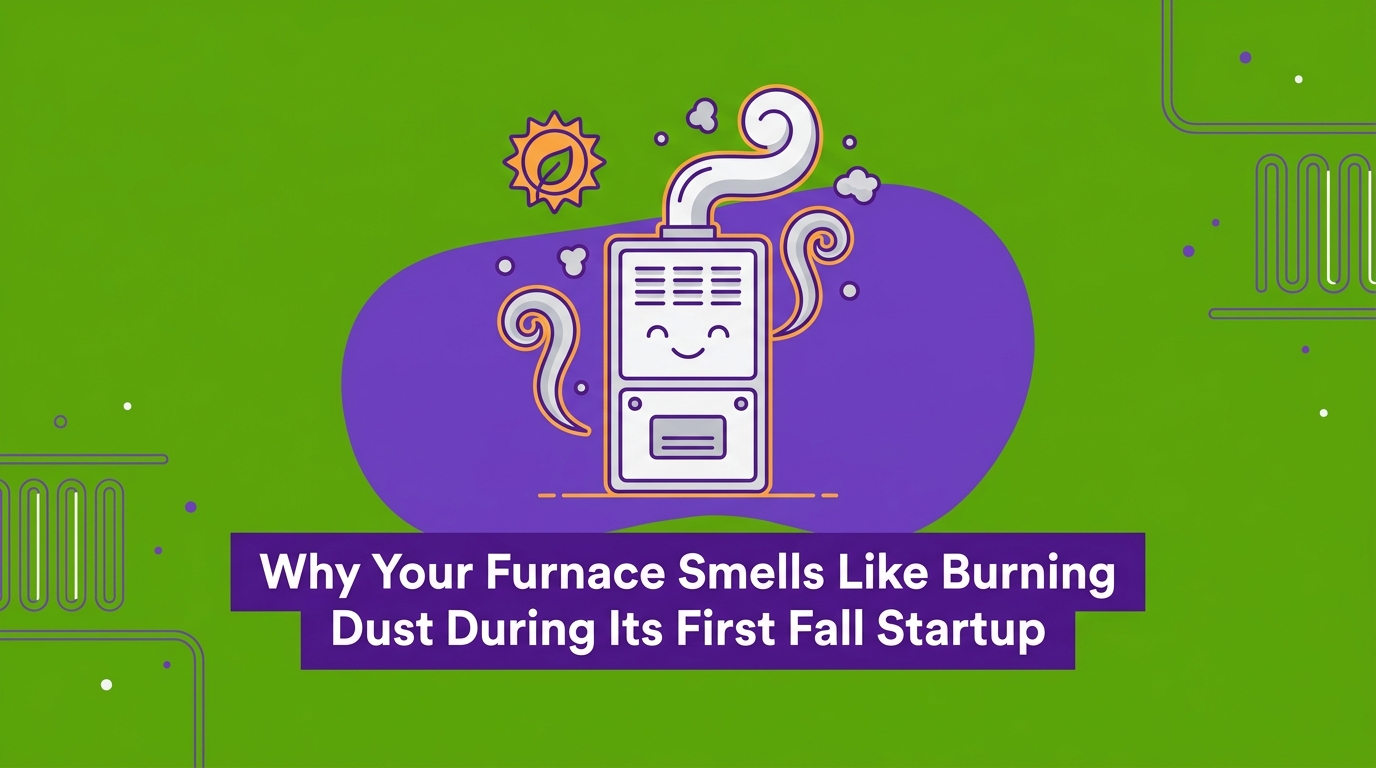
Why Your Furnace Smells Like Burning Dust During Its First Fall Startup
The Chilly Morning Wake-Up Call: Decoding That First-Startup Odor
As you look for reliable home maintenance tips and troubleshooting guidance this fall, preparing your heating system for its first run is likely at the top of your list. Here at Plum HVAC, our team fields dozens of calls every October from homeowners across the region experiencing this familiar mid-fall heating startup ritual. You walk to the thermostat on that first genuinely brisk morning, switch the system from cool to heat, and wait for the warm air to flow. But instead of just cozy warmth, your vents suddenly blast an unsettling, smoky scent that smells exactly like burning dust. It is a moment that immediately puts you on high alert.
Your immediate concern as a homeowner is completely understandable. We regularly hear from customers wondering if the system is unsafe, if something is catching fire inside the ductwork, or if it is simply burning off seasonal buildup. Knowing the difference between a harmless seasonal quirk and a serious mechanical hazard is essential for your peace of mind. This guide will help you distinguish between normal seasonal behavior and warning signs that require a professional pre-winter inspection. Over the long summer months, dormant heating systems act like magnets for household particulates, setting the stage for this exact scenario.
If you need immediate assistance evaluating your system's safety, exploring professional heating services is the best way to ensure your home is ready for the cold.
The Science Behind the Scent: Why Dust Accumulates on Your Heat Exchanger
To understand why your house suddenly smells like a dusty campfire, you have to look at the mechanics of your heating system. The core component responsible for warming your home is the heat exchanger. This is a series of metal coils or tubes that get extremely hot when the furnace ignites. The system's blower motor then pushes indoor air over these hot metal surfaces, warming the air before distributing it through your vents.
The Problem of Dormancy
For more than half the year, your heat exchanger sits completely cold and unused. During this downtime, household dust, pet dander, lint, and other airborne particulates naturally settle directly onto these internal heating components. In our years servicing Mountain View and the Peninsula, we see how our long, dry summer conditions significantly increase the amount of airborne particulates in the environment. These dry particles are pulled into your ductwork and naturally settle inside your dormant HVAC system long before the damp fall weather arrives.
The Cause of the Odor
When you finally initiate that first heating cycle, the heat exchanger rapidly climbs to high temperatures. The sudden, intense heat instantly incinerates the layer of accumulated debris resting on the metal. Because the blower is simultaneously pushing air over those same components, the smell of that incinerated dust is carried directly into your living spaces.
The Solution and Reassurance
The most important thing our technicians emphasize is that this is a common, localized mechanical reaction. It is not a systemic failure of your equipment. The smell is simply the physical byproduct of organic matter flashing off a hot surface. While it can be alarming to experience, it is a standard part of the transition into the heating season for systems that have not been professionally cleaned beforehand.
Timing is Everything: How Long Should the Odor Last?
Knowing that the smell is mechanically normal is only half the battle; knowing how long it should stick around is what truly provides peace of mind. Providing clear, data-backed expectations for how long the smell should persist can help you decide your next steps.
The Normal Burn-Off Window
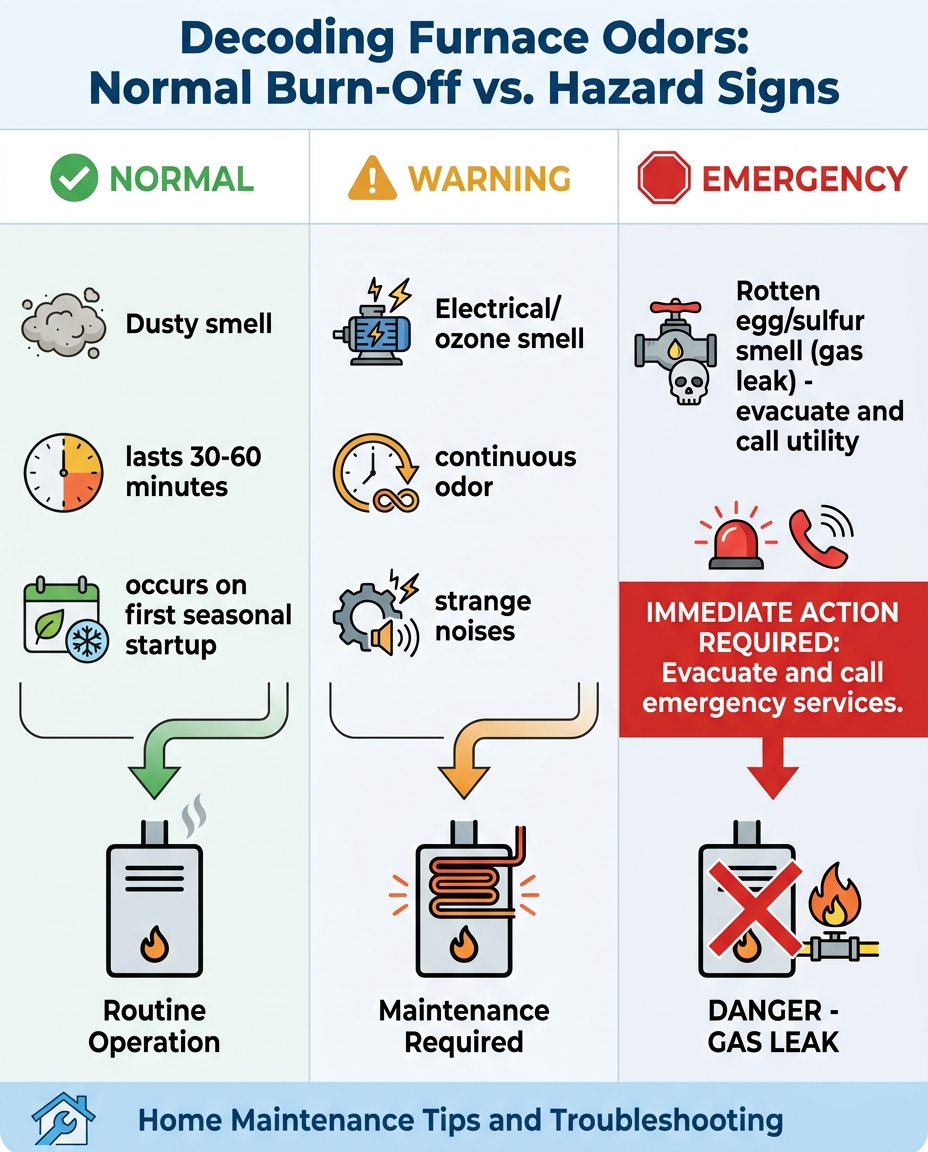
Based on the hundreds of heating startups our team monitors each fall, a normal burning dust smell should dissipate within 30 to 60 minutes of the first heating cycle. Because the layer of dust on the heat exchanger is incredibly thin, it does not take long for it to completely burn away. Once the metal is clean, the source of the odor is gone, and the smell will fade.
Speeding Up the Process
If the weather allows during your mid-fall October heating startup, opening a few windows slightly during this initial burn-off period can help clear the odor from the home much faster. Turning on ceiling fans to improve cross-ventilation will also dilute the dusty smell, making the first hour of operation much more comfortable for your family.
When to Take Action
If the smell persists beyond the first hour, or if it disappears but returns strongly during subsequent heating cycles later in the day, it elevates from a normal occurrence to a potential issue. You should never ignore prolonged odors. A smell that refuses to go away indicates continuous burning rather than a brief seasonal burn-off. This could mean a thicker blockage of debris, a failing filter, or an internal component overheating, all of which require immediate professional attention.
Decoding the Danger: Burning Dust vs. Electrical Hazards
While burning dust is harmless, other burning smells are severe warning signs. It is critical to differentiate between the organic smell of seasonal burn-off and dangerous odors that require you to immediately shut down the system.
The smell of incinerating dust is organic, slightly musty, and smells somewhat like a hot clothes dryer. It is unpleasant but generally subtle. In contrast, dangerous smells are sharp, acrid, and immediately offensive to the senses. If you smell melting plastic or burning rubber, you are likely dealing with a foreign object that has fallen into the ductwork, or internal wire insulation that is melting due to excessive heat.
An electrical burning smell, often likened to the scent of ozone or overheating wires, is a major red flag. This indicates a failing blower motor, frayed electrical wiring, or a seized bearing that is causing mechanical friction. Additionally, the smell of rotten eggs or sulfur is an immediate, critical warning sign of a natural gas leak. If you detect sulfur, you must evacuate the home immediately and call your local utility provider.
The Golden Rule: If the smell is sharp, chemical, or persists for more than an hour, turn off the unit immediately at the thermostat.
Common Odor Profiles and What They Mean
Residents across Mountain View and the Peninsula should familiarize themselves with these distinct odor profiles to keep their households safe.
• Dusty / Musty / Hot Lint — Likely Cause: Normal seasonal burn-off or dirty air filters. — Required Action: Monitor for 30-60 minutes; change filter if needed.
• Electrical / Metallic / Ozone — Likely Cause: Overheating blower motor, failing capacitor, or wiring issues. — Required Action: Turn off system immediately and call a professional.
• Plastic / Burning Rubber — Likely Cause: Foreign objects in the ductwork or melting wire insulation. — Required Action: Turn off system immediately to prevent fire risks.
• Rotten Eggs / Sulfur — Likely Cause: Natural gas leak from the furnace or supply line. — Required Action: Evacuate the home and call the gas company or 911.
Breathing Easy: How First-Startup Odors Impact Your Home's Air Quality
The initial startup smell is not just a nuisance; it is also a valid indoor air quality (IAQ) and fall allergy concern. Looking at the problem holistically helps explain why preventative care is so important for your family's respiratory health.
The Circulation of Particulates
When that mid-fall October heating startup occurs, the same dust burning off the heat exchanger is also being circulated through the ductwork and pushed into your living spaces. The blower motor does not discriminate; it moves the air, and whatever microscopic debris is in that air, directly into the rooms where you sleep, work, and relax.
Exacerbating Fall Allergies
Poor indoor air quality and dirty HVAC components can severely exacerbate fall allergies and respiratory sensitivities. During the autumn months, outdoor allergens are already high. When you add a blast of incinerated indoor dust, pet dander, and stagnant lint to the mix, anyone in the home with asthma or seasonal allergies is likely to experience increased symptoms like coughing, sneezing, and watery eyes.
The Role of Filtration and Purification
We consistently advise our customers that a clean, high-quality air filter plays a massive role in mitigating the circulation of these particulates. Replacing your standard filter with one that has a higher MERV rating ensures that less dust makes it to the heat exchanger in the first place, and less ash makes it out into the home. For homeowners looking for a long-term strategy to keep the system clean year-round, exploring dedicated indoor air quality solutions like whole-home air purifiers or UV lamps can dramatically reduce the amount of dust that settles on internal components.
Proactive Prevention: Bypassing the Odor with Pre-Winter Care
The most effective way to handle the first-startup smell is to prevent it from happening entirely. Linking this symptom directly to proactive, plan-based maintenance reveals the ultimate preventative solution for your home comfort system.
We've seen firsthand how a comprehensive pre-season cleaning performed by a licensed technician removes the accumulated dust from the heat exchanger before the system is ever turned on. By physically cleaning the burners, the heat exchanger, and the blower assembly, the technician eliminates the fuel source for the odor. When you finally turn on the heat, there is nothing left to burn, allowing you to bypass the smell entirely.
There is a massive difference between a reactive fix—waiting for something to smell bad or break down before calling for help—and ongoing, structured maintenance that protects the system's longevity. Regular professional cleaning ensures optimal airflow, helps the system run at peak energy efficiency, and guarantees safe combustion. Furthermore, consistent annual maintenance is often explicitly required by manufacturers to keep your equipment warranties valid. Skipping these tune-ups can leave you financially responsible for major part failures down the road.
Leveraging Plum HVAC's local Silicon Valley expertise is the smartest way to protect your equipment. Enrolling in a structured program is highly recommended; understanding the benefits of an annual maintenance plan, like the Premium Plum Maintenance Plan, shows exactly how you can prevent startup issues, protect your indoor air quality, and enjoy priority service across Mountain View and the Peninsula all season long.
When to Step Back: Signs It's Time for Professional Intervention
While it is empowering to understand how your system works, it is equally important to know where to draw the line. Providing clear guidelines on what a homeowner can safely check versus what requires a licensed technician keeps you and your property safe.
What You Can Safely Do:
1. Change the Air Filter: Homeowners should absolutely replace their air filters before the mid-fall October heating startup. A fresh filter improves airflow and reduces strain on the blower motor.
2. Unblock the Vents: Walk through your home and ensure that rugs, furniture, or curtains are not blocking the supply or return registers. Proper airflow is critical for the system to breathe.
3. Clear the Area: Ensure the space immediately surrounding your indoor unit is free of clutter, highly flammable liquids, or stored boxes.
What You Should Never Do:
As local professionals, we always advise that homeowners should never attempt to open the sealed combustion chamber, clean the heat exchanger, or adjust internal gas valves. These components require specialized tools and training. Mishandling them can lead to carbon monoxide leaks, fire hazards, or permanent damage to the unit.
Warning Signs to Call a Pro:
You need a licensed expert to inspect the system if you notice odors lasting more than an hour, strange grinding or squealing noises, or a system that short-cycles (turns on and off rapidly without heating the home). Proper inspection ensures safe combustion and adequate ventilation of exhaust gases.
If your older system requires frequent repairs and struggles to run safely, it might be nearing the end of its lifespan. Upgrading to a high-efficiency model might qualify for generic energy rebates or federal tax credits, helping offset the investment. We advise consulting a tax professional or your local utility provider to verify current generic programs.
If you observe any of these warning signs, reaching out to experienced Mountain View heating technicians is the most reliable way to restore your home's safety and comfort.
Frequently Asked Questions About Furnace Startup Odors
How long does burning smell last when you turn on heater?
A normal burning dust smell typically lasts between 30 and 60 minutes during the first startup of the season. Because the layer of dust on the heat exchanger is quite thin, it incinerates rapidly once the system reaches its operating temperature. If the smell persists beyond the first hour, it is time to turn the unit off and investigate further, as this indicates an ongoing issue rather than a brief seasonal burn-off.
Is it dangerous if my furnace smells like burning dust?
No, a smell that is strictly burning dust is not inherently dangerous; it is a normal mechanical byproduct of summer dormancy. However, you must be certain it is only dust. If the odor resembles melting plastic, burning rubber, electrical ozone, or sulfur, it is highly dangerous. Our Plum HVAC team always advises residents in Mountain View and the Peninsula to err on the side of caution and call a professional if the smell is sharp or chemical.
Why does my house smell like a burning dusty heater?
Your house smells this way because the blower motor is distributing the scent of incinerated particles through your ductwork. Over the summer, household dust, pet dander, and lint settle on the cold internal heating components. When the system ignites in the fall, those components get extremely hot, instantly burning off the settled debris and pushing that odor out of your vents.
What to do if furnace smells like it's burning?
First, identify the type of burning smell. If it smells like a dusty radiator, monitor it for 30 to 60 minutes and open a few windows to ventilate the home. If the smell is electrical, acrid, or smells like rotten eggs, turn the system off immediately at the thermostat. Evacuate if you suspect a gas leak, and call a licensed HVAC technician to inspect the system safely.
Can a burning dust smell trigger fall allergies?
Yes, the process of burning off dust and circulating it through the home can absolutely trigger respiratory sensitivities. The ash and microscopic particulates pushed into your living spaces can exacerbate asthma, cause sneezing, and irritate the eyes. Ensuring your system has a fresh, high-quality air filter installed before startup is the best way to trap these allergens.
How can I prevent my heater from smelling when I first turn it on?
The only guaranteed way to prevent the startup smell is to schedule a professional pre-season heating tune-up. A licensed technician will physically clean the heat exchanger, burners, and blower motor, removing the accumulated dust before the system is ever ignited. This proactive maintenance completely removes the fuel source for the odor, ensuring a clean, odorless startup.
Enjoy a Comfortable, Odor-Free Home This Fall
Understanding how your home comfort equipment operates removes the stress from seasonal transitions. A brief burning dust smell is a completely normal rite of passage for the first chilly morning of the year, caused simply by summer dust meeting hot metal. However, knowing that prolonged, chemical, or electrical odors are not normal is what keeps your household safe and secure.
By learning to recognize these signs, you can confidently navigate your mid-fall October heating startup without unnecessary panic. Proactive maintenance remains your best defense against both nuisance odors and unexpected breakdowns. If you have any doubts about your system's performance, safety, or air quality impact, do not wait for the true winter cold to arrive. Schedule a professional inspection with Plum HVAC today to ensure your furnace systems are operating at peak efficiency, keeping your family warm, safe, and breathing easy all season long.
hear what our satisfied clients have to say

.svg)
Service areas
.avif)