
Heat Pump vs. Gas Furnace: Making the Switch Before Winter in Palo Alto
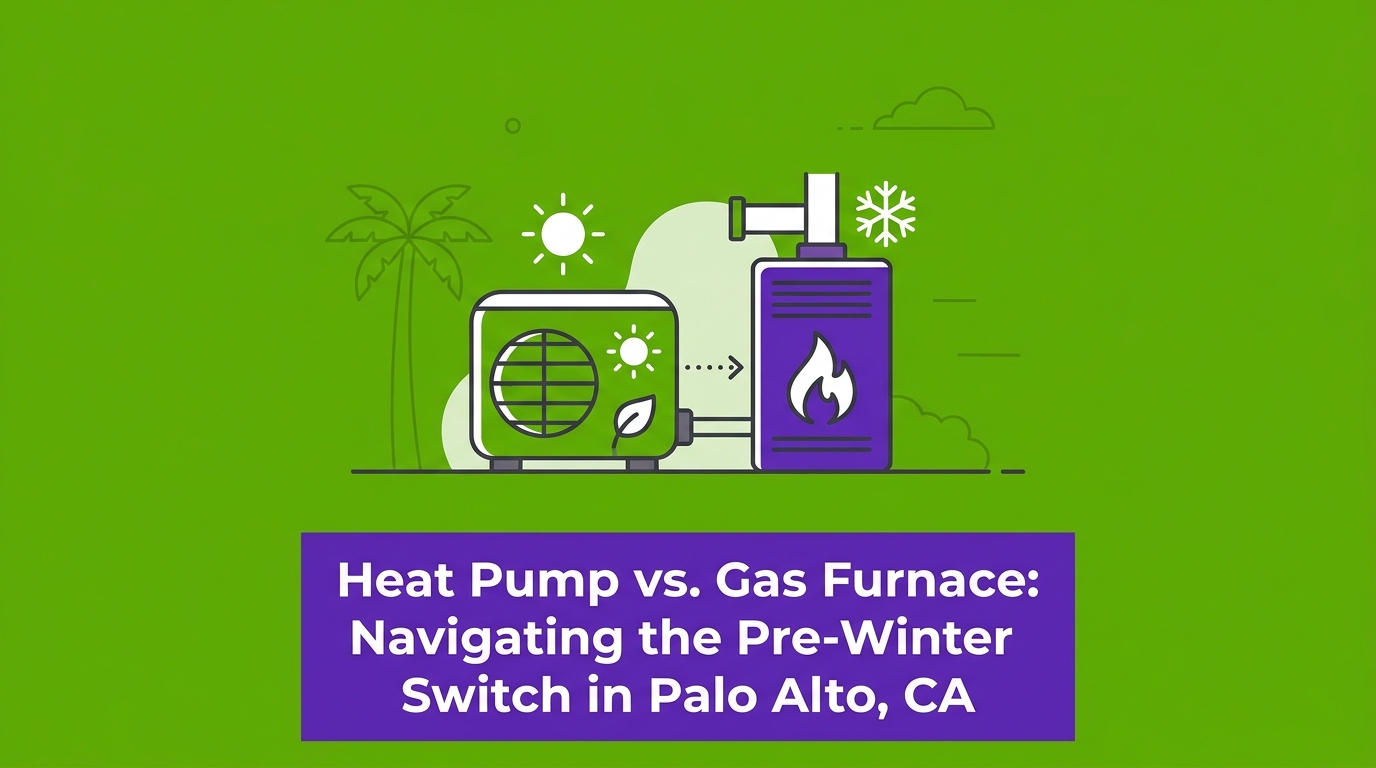
The September Rush: Deciding Between a Heat Pump and Gas Furnace Before Winter
The September pre-heating season is officially here, and while the afternoons still carry a bit of warmth, those crisp evenings are a clear signal that winter is approaching fast. If your current heating system has been struggling, you are likely facing a major choice: Heat Pump vs. Gas Furnace: Making the Switch Before Winter in Palo Alto. Here at Plum HVAC, our team has helped countless homeowners across Mountain View and the Peninsula navigate this exact transition. Addressing an aging unit now, rather than waiting for it to fail on the coldest night of the year, gives you the breathing room to make an informed, strategic upgrade.
To help you explore your options, assessing your current heating solutions is the first step toward a more comfortable home. Homeowners across the region are currently weighing a significant dilemma: replacing a failing unit with another traditional gas combustion system, or transitioning to advanced, eco-friendly electric heating. In our experience, this is not a decision you want to rush through while a repair technician is standing in your freezing living room in mid-December.
Making this choice early in the fall allows you to avoid the intense stress of emergency replacements. When a furnace breaks down during the peak winter rush, we often see homeowners settle for whatever equipment is immediately available in the warehouse, rather than what is best for their home's long-term efficiency. By acting during the September pre-heating season, you retain full control over your equipment selection, installation timeline, and energy strategy.
This early window also sets the stage for a regionally specific comparison. The climate in the Bay Area demands a different approach to home comfort than the snowy Northeast or the freezing Midwest. Understanding how local weather patterns dictate equipment performance is the key to choosing a system that will deliver reliable, efficient warmth for the next decade or more.
Why the Peninsula's Mild Winters Maximize Heat Pump Efficiency
If you need Palo Alto HVAC services, knowing your specific climate advantage is incredibly important. Over our years of servicing local homes, we've seen firsthand how the Mediterranean climate of Palo Alto and the Peninsula rarely sees sub-freezing temperatures, which creates the absolute perfect environment for modern electric heating technology to thrive.
To understand why, you have to look at the mechanics of an air-source heat pump. Unlike a combustion furnace that burns fossil fuels to generate heat, a heat pump uses electricity and advanced refrigerants to transfer heat from one place to another. Even when it feels chilly outside, there is still ambient thermal energy in the outdoor air. The system captures this heat, compresses the refrigerant to increase its temperature, and moves that warmth inside your home. Because moving heat requires significantly less energy than creating it, these systems can deliver up to three times more heat energy than the electrical energy they consume.
The Climate Advantage:
• No extreme freezing: In harsh winter regions, temperatures frequently drop below zero, forcing heat pumps to work much harder and often rely on auxiliary electric resistance strips to keep up.
• Optimal operating range: The mild, damp winters of the Bay Area keep outdoor temperatures well within the optimal operating range for air-source technology.
• Consistent performance: Because our local temperatures rarely plummet into the deep freeze, our technicians note that Peninsula homeowners completely avoid the cold-weather efficiency drops that historically plagued older electric heating systems in other parts of the country.
This distinct regional advantage makes the transition to electric heating highly practical and efficient for local homeowners. You get all the environmental benefits of electrification without sacrificing the rapid, reliable warmth you expect on a cold January morning.
Head-to-Head: Heat Pump vs. Traditional Gas Furnace Performance
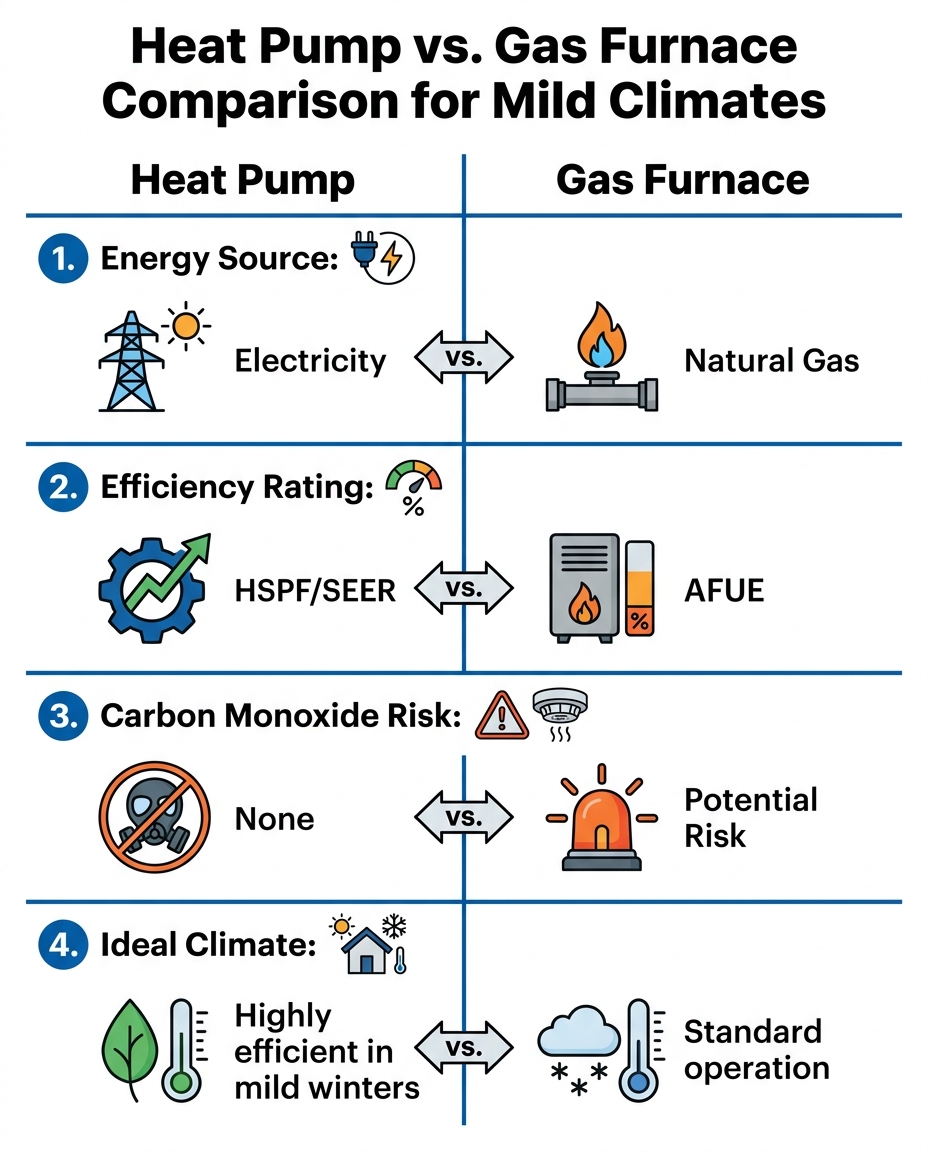
When comparing these two technologies, our team at Plum HVAC always recommends a direct, side-by-side evaluation to help clarify which system aligns with your household goals. While traditional gas furnaces have been the standard for decades, modern electric alternatives offer compelling advantages for homes in Palo Alto and the Peninsula.
• Energy Source — Air-Source Heat Pump: Electricity (highly efficient transfer) — Traditional Gas Furnace: Natural Gas (combustion)
• Ideal Climate — Air-Source Heat Pump: Highly efficient in mild Bay Area winters — Traditional Gas Furnace: Standard operation regardless of climate
• Carbon Monoxide Risk — Air-Source Heat Pump: None (zero combustion) — Traditional Gas Furnace: Potential risk (requires monitoring)
• Functionality — Air-Source Heat Pump: Provides both heating and cooling — Traditional Gas Furnace: Provides heating only
• Lifespan Expectancy — Air-Source Heat Pump: Average 12–15 years (runs year-round) — Traditional Gas Furnace: Average 15–20 years (runs seasonally)
Environmental Impact and Indoor Air Quality
One of the most significant differences between these systems lies in their environmental footprint and their impact on the air you breathe inside your home. Gas furnaces produce combustion byproducts, including carbon monoxide, nitrogen dioxide, and trace amounts of sulfur dioxide. While a properly maintained furnace safely vents these gases outdoors, as systems age, the risk of a cracked heat exchanger leaking these byproducts into your living space increases—a safety hazard our technicians specifically inspect for during every fall tune-up.
Electric heating eliminates this risk entirely. Because there is no combustion process, there is zero risk of an indoor carbon monoxide leak. Furthermore, this transition aligns perfectly with regional pushes for decarbonization. As California continues to green its electrical grid, running an electric system inherently reduces your household's overall carbon footprint, contributing to better outdoor air quality across the local community.

Evaluating Equipment Efficiency and Long-Term Value
Understanding how efficiency is measured is crucial for evaluating long-term operational value. Similar to comparing Daikin systems to traditional units, we often explain to our customers that navigating the different efficiency ratings helps you project future energy usage.
Gas furnaces are measured by Annual Fuel Utilization Efficiency (AFUE). An older furnace might have an AFUE of 80%, meaning 80% of the fuel is converted to heat while 20% is lost as exhaust. High-efficiency modern furnaces can reach up to 98% AFUE. Heat pumps, however, are measured by Heating Seasonal Performance Factor (HSPF) for heating, and Seasonal Energy Efficiency Ratio (SEER) for cooling. Because they move heat rather than create it, their effective efficiency can exceed 300% when compared to the energy they consume.
Key factors in long-term value:
• Year-round utility: An electric heat pump provides both heating and cooling. By upgrading one system, you are essentially replacing both your aging furnace and your aging air conditioner simultaneously.
• Consistent comfort: Modern variable-speed technology allows these systems to run continuously at lower capacities, eliminating the harsh temperature swings associated with older, single-stage equipment turning on and off.
• Offsetting the transition: While moving away from gas requires an upfront commitment, the long-term efficiency gains and reduced reliance on fluctuating fossil fuel markets help offset the initial transition investment over the lifespan of the equipment.
By tackling this evaluation during the September pre-heating season, you give yourself the time to properly calculate these long-term returns before making a final commitment.
Navigating Silicon Valley Electrification Codes and Permits
Switching from gas to electric isn't just a matter of swapping out a metal box; it involves navigating specific regulatory and permitting requirements. Palo Alto and the Peninsula have established robust local electrification trends and municipal goals that directly impact home heating upgrades.
When you transition away from a combustion furnace, your home's electrical infrastructure must be able to support the new system. This often requires municipal permits and a thorough evaluation of your main electrical panel. Navigating these local codes requires specialized knowledge. In our experience handling municipal permits across Silicon Valley, working with a local team that holds deep expertise means your electrification permits are handled smoothly, without the usual bureaucratic headaches.
The typical compliance process our Plum HVAC installation team manages involves:
1. Load Calculation: Assessing your home's square footage and insulation to determine the exact size of the equipment needed.
2. Panel Evaluation: Having an expert inspect your electrical panel to ensure it has the capacity to support a dedicated 240-volt circuit for the new system.
3. Permit Submission: Filing the necessary paperwork with the local municipal building department to ensure the transition meets all current safety and energy codes.
4. Final Inspection: Coordinating with city inspectors post-installation to verify the work was completed safely and legally.
Why Early Fall Timing is Critical for Compliance
Municipal permit approval times can fluctuate wildly depending on the backlog at the city building department. If you wait until November to start this process, you may find yourself stuck in a queue while the temperatures drop. Securing your permits and finalizing the paperwork during early fall ensures uninterrupted comfort when the winter rush finally begins.
Balancing the Initial Investment with Generic Rebates and Tax Credits
Transitioning to advanced electric heating does require a thoughtful initial investment. This encompasses not just the advanced heating and cooling equipment itself, but also the potential electrical upgrades required to bring an older home up to modern code.
However, the long-term energy efficiency and reduced reliance on fossil fuels provide ongoing value that makes the transition highly attractive. To help offset the upfront costs of electrification, numerous generic federal tax credits and local utility incentive programs may apply to qualifying high-efficiency installations during the September pre-heating season.
State and federal energy initiatives are heavily focused on encouraging homeowners to adopt high-efficiency electric appliances. While specific program availability fluctuates, these incentives are designed to make the transition more accessible for the average household. Because personal tax situations and local utility offerings vary widely, we always advise our customers to consult with a qualified tax professional or reach out directly to their local utility provider to verify which currently available programs apply to their specific home upgrade.
Frequently Asked Questions About Heating Upgrades in the Bay Area
Is a heat pump better than a gas furnace in California?
In our professional experience, the short answer is that for most California homes, especially near the coast, heat pumps offer superior year-round efficiency. Because they handle both heating and cooling, they eliminate the need for separate systems. Additionally, they align with the state's long-term environmental goals and eliminate indoor combustion risks entirely.
Should I replace my gas furnace with a heat pump?
If your current furnace is over 15 years old, requires frequent repairs, or struggles to maintain consistent temperatures, replacing it with electric heating is a smart move we highly recommend. The transition requires evaluating your electrical panel, but the long-term gains in energy efficiency and indoor air quality make it a highly worthwhile upgrade for modernizing your home.
Do heat pumps work well in mild winters?
Mild winters are actually the ideal environment for this technology. In Palo Alto and the Peninsula, temperatures rarely drop below freezing, which means the system never has to struggle to extract ambient heat from the outdoor air. This allows the equipment to operate at peak efficiency throughout the entire season without relying on backup resistance heating—a pattern we see consistently in the systems we install locally.
What are the benefits of switching from gas to electric heating?
Switching to electric heating provides zero indoor carbon monoxide risk, significantly lower carbon emissions, and highly efficient operation. Furthermore, modern variable-speed electric systems provide incredibly consistent indoor temperatures, eliminating the hot and cold spots often caused by traditional single-stage combustion furnaces.
Is it worth switching from gas to a heat pump in the Bay Area?
Yes, the Bay Area's specific climate makes the switch highly advantageous. Because you rarely face extreme freezing conditions, you get maximum performance from the equipment. When you factor in the combined heating and cooling capabilities, the long-term operational value easily justifies the initial transition investment.
How long does it take to secure local electrification permits for a new heating system?
Permit timelines vary by municipality, but they can take anywhere from a few days to several weeks depending on the city's current backlog. This is exactly why we stress starting the process in early fall. Securing your approvals before the peak winter season guarantees your installation won't be delayed by bureaucratic bottlenecks.
Finalize Your Pre-Winter Heating Strategy Today
Navigating your heating options doesn't have to be overwhelming when you understand your local climate advantage. A regionally specific approach makes electric heating highly advantageous for homes in Palo Alto and the Peninsula, offering incredible efficiency, enhanced safety, and year-round comfort.
Acting during the September pre-heating season gives you the critical time needed to properly evaluate your electrical panel, navigate local municipal permits, and secure your equipment before the winter rush depletes inventory. Don't wait for the first freezing night to discover your old furnace has finally failed. Let the experts at Plum HVAC help you; schedule a comprehensive assessment for your heat pump installation today, and step into the winter season with total confidence in your home's comfort and efficiency.
hear what our satisfied clients have to say

.svg)
Service areas
.avif)