

Troubleshooting the First Fall Heating Startup: Normal Odors vs. Warning Signs
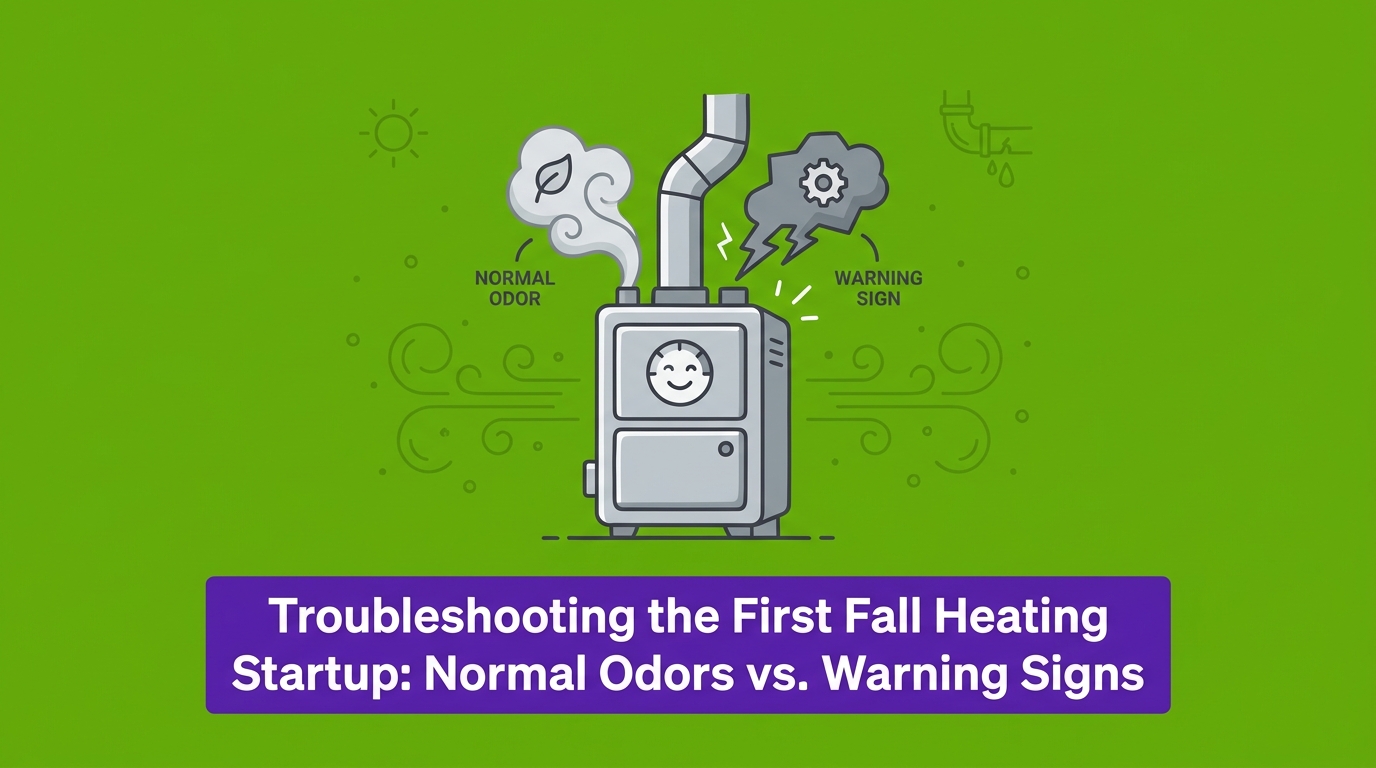
Is That Burning Odor Normal When Turning on the Heat?
Why does it smell like something is burning the moment your heater kicks on for the season? It is a question that crosses the minds of countless homeowners when the weather finally turns. You adjust the thermostat on that first chilly October morning, hear the familiar click of the furnace engaging, and moments later, a distinct, toasted odor fills the hallway. Naturally, your first instinct is to worry about fire hazards or broken equipment. Transitioning your home from summer cooling to fall heating can sometimes bring unexpected surprises, especially when your equipment has been sitting dormant for months.
If you are looking for reliable home maintenance tips and troubleshooting advice, knowing how to interpret these seasonal smells is incredibly valuable. Whether your home has relied heavily on air conditioning systems all summer or you are exploring highly efficient heat pump options for the future, initial seasonal startups frequently produce unfamiliar odors. The core decision you face as a homeowner is determining whether this smell is a harmless, temporary mechanical reality, or a genuine warning sign that requires immediate professional intervention.
The Science Behind the Autumn Heating Odor
To understand why your heating system smells like it is burning, you have to look at what happens inside the unit during its offseason. For months, your furnace has been entirely inactive while the cooling side of your HVAC system did all the heavy lifting. During this extended downtime, the internal components of your heating system—specifically the heat exchanger and the burner assembly—become a resting place for airborne particulates.
Here on the Peninsula, our long, dry summers create the perfect environment for excessive dust accumulation. From May through September, as the local landscape dries out, microscopic airborne dust, pollen, and household debris circulate through your ductwork. Even with a good air filter in place, a fine layer of this dust inevitably settles directly onto the cold metal surfaces of your furnace's heat exchanger.
Why Summer Inactivity Leads to Fall Odors
The mechanics of the autumn odor are actually quite straightforward. When you finally call for heat, the burners ignite, and the heat exchanger rapidly climbs to temperatures exceeding several hundred degrees. The settled dust cannot withstand this sudden, intense heat.
• Immediate Combustion: The fine layer of dust on the heat exchanger literally burns off within the first few minutes of operation.
• Airflow Distribution: The blower motor then pushes air over this hot, freshly cleaned metal, picking up the smoky, toasted scent and distributing it through your supply vents.
• Safe Containment: This entire process happens safely inside the heavily insulated furnace cabinet, designed specifically to contain high heat and combustion safely away from your living spaces.
This is a typical mechanical reality for almost all forced-air heating systems. Because this burn-off process is contained within the engineered safety limits of the unit, it does not require you to open the cabinet or attempt to clean the internal components yourself.
Side-by-Side: Normal Dust Burn-Off vs. Hazardous Smells
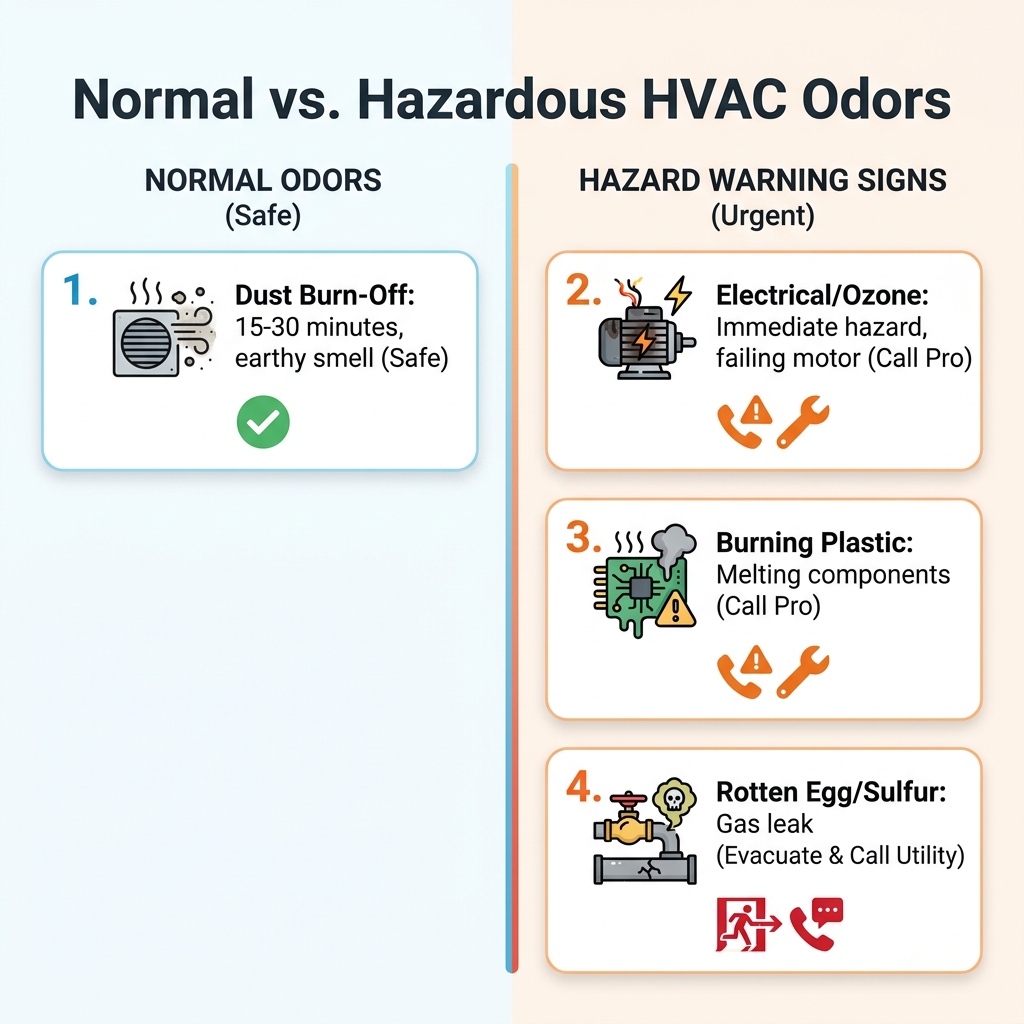
While a brief burning dust smell is a standard part of autumn home maintenance tips and troubleshooting, other odors are major red flags. Knowing the difference between a harmless seasonal quirk and a dangerous mechanical failure can save your equipment and protect your home. Use this objective comparison to evaluate your specific situation safely.
• Earthy, Toasted Dust — Typical Duration: 15 to 30 minutes on the first startup. — Likely Cause: Accumulated summer dust burning off the heat exchanger. — Required Action: Monitor safely; this is normal operation.
• Ozone or Burning Wire — Typical Duration: Persistent; worsens as the system runs. — Likely Cause: Electrical short circuits, failing blower motors, or frayed wiring. — Required Action: Turn off the system immediately at the thermostat and call a professional.
• Melting Plastic or Rubber — Typical Duration: Persistent; highly acrid and irritating to breathe. — Likely Cause: Melting electrical components or foreign objects dropped into ductwork. — Required Action: Turn off the system immediately and schedule an emergency inspection.
• Sulfur or Rotten Eggs — Typical Duration: Constant; noticeable even when the system is off. — Likely Cause: A natural gas leak near the furnace or gas line. — Required Action: Evacuate the home immediately and call your local utility company.
By categorizing the smell you are experiencing, you can take the appropriate next steps without putting yourself or your property at risk. Always trust your instincts—if a smell seems uniquely toxic or chemical in nature, it is never just dust.
Safe Troubleshooting Steps for Homeowners
When you encounter an unfamiliar smell during the heating transition, there are several non-invasive checks you can perform. Empowering yourself with safe troubleshooting habits ensures your system runs efficiently without crossing the line into dangerous do-it-yourself territory.
What You Can Do Safely
Before assuming your system is broken, run through this basic checklist to rule out common airflow and filtration issues.
• Filter Replacement: Check and replace your air filter before the first startup. A dirty filter from the summer will restrict airflow, causing the furnace to run hotter than necessary and recirculating old dust throughout the house.
• Clearing Vent Obstructions: Walk through every room and ensure all supply and return vents are fully open. During the summer, it is common to accidentally block floor or low-wall registers with rugs, heavy curtains, or relocated furniture. Blocked vents increase static pressure and strain the blower motor.
• Thermostat Verification: Ensure your thermostat is firmly set to "Heat" and that the fan is set to "Auto" rather than "On," so the blower only runs when the furnace is actively heating.
• Monitor the Duration: Set a timer for 30 minutes. Open a few windows to allow the initial dusty air to escape. If the smell dissipates before the timer goes off, your system has successfully cleared its heat exchanger.
STRICT WARNING: Never open the furnace cabinet, attempt to unscrew panels, or try to wipe down the heat exchanger yourself. The interior of a furnace contains high-voltage electrical components, delicate sensors, and combustion chambers that can leak deadly carbon monoxide if improperly handled. Internal cleaning and diagnostics strictly require a licensed professional. If you need assistance, reaching out for Mountain View HVAC services is the safest way to resolve internal cabinet issues.
Protecting Your Indoor Air Quality This Autumn
The burning dust smell you notice on startup is just one visible (or rather, smellable) indicator of a broader issue: indoor air quality. When the weather cools down, we instinctively close our windows and seal up our homes to keep the chill out. While this is great for energy efficiency and comfort, it has a significant downside for the air you breathe.
According to the EPA, indoor air can frequently be two to five times more polluted than outdoor air. When you seal your home for the fall, you are actively trapping seasonal allergens inside. Ragweed, late-season mold spores, pet dander, and standard household dust get locked into a continuous cycle, running through your return ducts, passing through your HVAC system, and blowing right back into your living spaces.
The quick fix: Upgrading your filtration strategy. Moving from a basic fiberglass filter to a pleated filter with a MERV 11 or MERV 13 rating can drastically reduce the amount of recirculated particulate matter in your home. These higher-efficiency filters are dense enough to trap microscopic allergens before they reach the heat exchanger, which not only improves the air you breathe but also minimizes that burning dust smell next season. Proper filtration is the cornerstone of excellent indoor air quality and a critical step in preparing your home for the long months of closed-window living.
When to Call a Professional for Heating Maintenance
While a brief 30-minute odor is normal, certain symptoms indicate that your heating system is struggling and requires expert intervention. Transitioning from learning about your system to taking action is vital when safety is on the line. If you notice any of the following thresholds being crossed, it is time to bring in a technician.
1. The Odor Persists: If the burning smell continues strongly after 30 to 45 minutes of continuous operation, or if it returns every single time the furnace cycles on over multiple days, the system is not just burning off surface dust. It may be overheating.
2. Unusual Noises Accompany the Smell: Listen closely to your equipment. If the burning odor is paired with loud banging (which can indicate delayed gas ignition), metal-on-metal scraping (often a failing blower wheel), or high-pitched whistling (severe airflow restriction), shut the system down.
3. Short-Cycling Occurs: If the furnace turns on, runs for three minutes, shuts off, and immediately turns back on without reaching your desired room temperature, it is short-cycling. This is often caused by a tripped high-limit safety switch due to overheating.
4. The System is Aging Rapidly: If your furnace is over 12 to 15 years old, constantly produces strange smells, and requires frequent repairs just to make it through the winter, it may be time to evaluate replacement options rather than pouring money into a failing unit.
Plum HVAC's local expertise means we know exactly how to evaluate system safety for Bay Area homes. We prioritize understanding the specific demands of this region, which is a major factor in how we evaluate HVAC brands for Silicon Valley. We focus on manufacturers with strong, reliable parts availability so that if your system does need a repair, you are never left waiting in the cold for weeks on end.
The Long-Term Benefits of Pre-Winter Inspections
The most effective way to avoid the anxiety of mysterious startup smells is to adopt a proactive approach to your home comfort. Scheduling a comprehensive pre-winter inspection before the truly cold weather arrives offers benefits that go far beyond just eliminating a temporary dusty odor.
During a professional tune-up, a licensed technician will safely open the cabinet and perform a thorough cleaning of the internal components. They will carefully remove the accumulated summer dust from the burner assembly and heat exchanger, meaning that when you finally turn the system on, there is nothing left to burn off. You get clean, odorless heat from day one.
Beyond cleanliness, routine maintenance ensures that your equipment operates at peak energy efficiency. A technician will check electrical connections, measure motor amperage, test safety limit switches, and calibrate the thermostat. This level of detailed attention reduces the workload on the system, which lowers your monthly energy consumption and actively prolongs the operational lifespan of the equipment.
Furthermore, if an inspection reveals that your current heating setup is unsafe or severely inefficient, being proactive gives you time to explore upgrades. It is worth noting that various federal tax credits and generic utility rebate programs may apply to qualifying high-efficiency system installations, helping to offset the initial investment of replacing an outdated, hazardous furnace or heat pump.
Breathe Easier This Fall with Expert Support
Navigating the seasonal transition does not have to be a stressful experience. While a brief, earthy smell on that first chilly October morning is usually just normal dust burn-off, your family's safety and indoor air quality should never be left to guesswork. Proper home maintenance tips and troubleshooting always prioritize caution and professional verification over risky assumptions.
Investing in routine maintenance provides the ultimate reassurance. By having your system professionally cleaned, inspected, and optimized, you eliminate the mystery odors, improve your home's air quality, and ensure reliable warmth all winter long. Do not wait for a minor symptom to become a major breakdown—schedule your pre-winter inspection today and enjoy a safe, comfortable season.
Frequently Asked Questions
Why does my heater smell like burning dust?
Your heater smells like burning dust because airborne particles settle on the heat exchanger during the long summer months of inactivity. When you turn the furnace on for the first time in the fall, the heat exchanger gets extremely hot and instantly incinerates this thin layer of accumulated dust. The blower motor then pushes that toasted scent through your ductwork and into your living spaces. It is a normal mechanical process that happens safely inside the sealed cabinet.
How long does the heater burning smell last?
A normal dust burn-off smell should only last between 15 and 30 minutes after the initial startup. Once the settled dust is entirely incinerated off the heat exchanger, the odor will dissipate on its own. If the smell persists for several hours, or if it returns strongly every time the system cycles on over the next few days, it indicates a deeper issue that requires professional attention.
Is it safe to run my furnace if it smells like burning?
It is generally safe to run your furnace if the smell is strictly an earthy, dusty odor that fades within half an hour. However, if the air smells like burning plastic, melting rubber, electrical ozone, or sulfur, it is absolutely not safe to continue running the system. Turn the equipment off immediately at the thermostat and contact a licensed professional to diagnose the hazard.
How do I prepare my HVAC for fall?
The best way to prepare your HVAC for fall is to start by replacing your air filter to ensure maximum airflow and better indoor air quality. Next, walk through your home and verify that all supply and return vents are open and unobstructed by furniture or rugs. Finally, schedule a professional pre-winter tune-up so a technician can safely clean the internal components, test the safety switches, and verify efficient operation before the cold weather sets in.
What MERV rating is best for fall allergens?
For tackling fall allergens, a filter with a MERV 11 or MERV 13 rating is generally considered the best choice for residential HVAC systems. These highly pleated filters are dense enough to capture microscopic particles like ragweed pollen, mold spores, and fine pet dander that get trapped inside when windows are closed. Always check your system's manual first, as older blower motors may struggle to push air through filters rated higher than MERV 13.
When should I call a professional for an HVAC smell?
You should call a professional if the burning smell lasts longer than 45 minutes, or if it is accompanied by strange noises like grinding, banging, or whistling. Additionally, any odor resembling electrical wire, melting plastic, or rotten eggs requires immediate expert intervention. A licensed technician can safely open the cabinet, diagnose the root cause, and prevent a minor malfunction from turning into a dangerous and expensive system failure.
hear what our satisfied clients have to say

.svg)
Service areas
.avif)