Is It Normal for a Heater to Smell Like Burning Dust? Common Homeowner Questions Answered
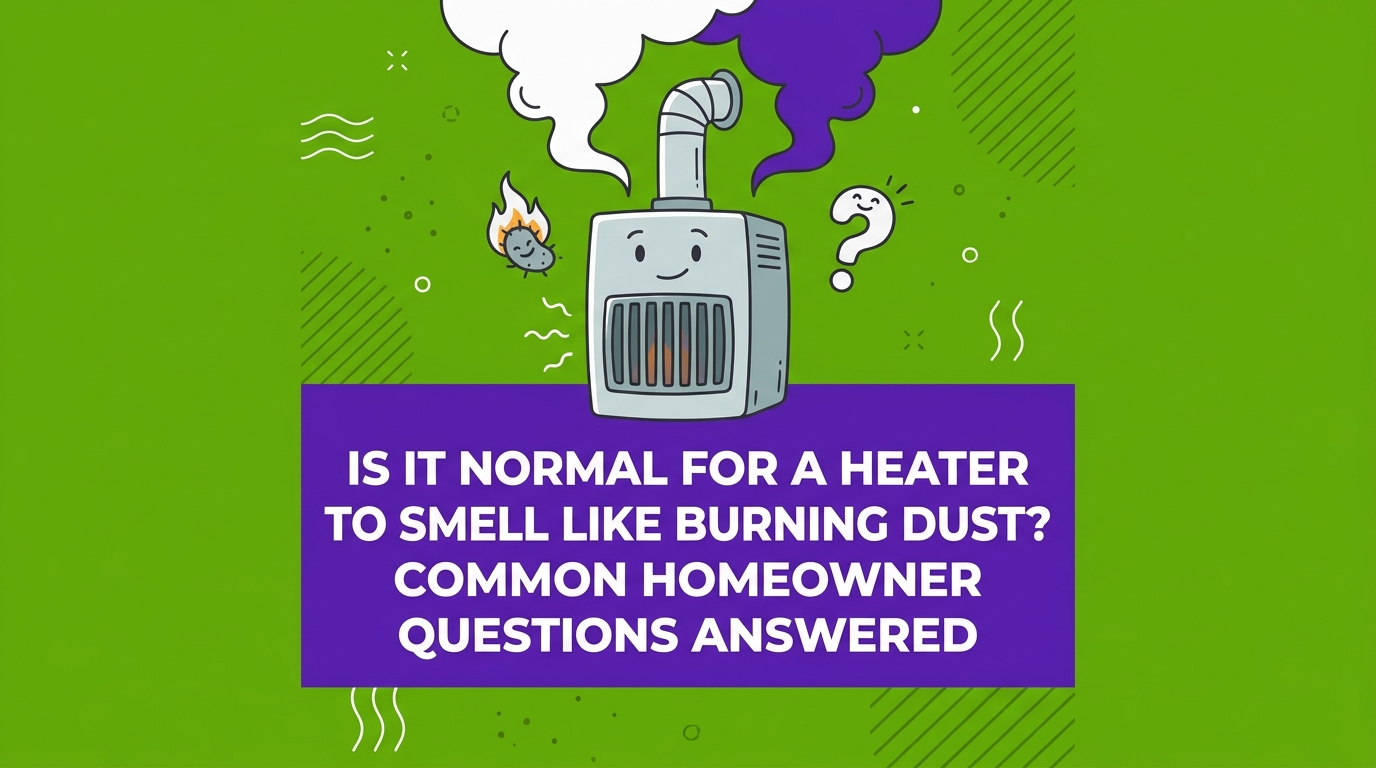
Why Your First October Heating Startup Might Smell Like Burning Dust
Are you wondering why your house suddenly smells like a toasted radiator the moment you adjust your thermostat? You are not alone. As temperatures begin to drop and systems switch over, this is one of the most common homeowner questions answered by our Plum HVAC technicians. That first chilly night often brings a wave of anxiety when the vents start blowing warm air accompanied by a distinct, unpleasant odor. Before you panic and assume your equipment is failing, it helps to understand exactly what happens inside your system after months of inactivity.
For comprehensive support transitioning your system between seasons, learn more about our Air Conditioning Services and how proper summer care impacts fall performance.
During an October heating startup, your system is waking up from a long hibernation. Throughout the summer, while your air conditioner was running or the system sat entirely idle, microscopic airborne particles were constantly circulating through your ductwork. Even with a good filter in place, a fine layer of household dust, pet dander, and environmental particulates inevitably settles directly onto the heat exchanger—the metal component that gets exceptionally hot to warm your air.
When the burners ignite for the first time in months, that settled layer of debris instantly bakes. The resulting odor is simply the smell of those organic particles burning off the metal surface. The critical decision point for any homeowner is knowing how to distinguish between this harmless, temporary process and a genuine safety hazard that requires immediate professional intervention. By understanding the mechanical behavior of your system, you can make safe, informed decisions about when to wait it out and when to shut it down.
Is It Normal for a Heater to Smell Like Burning Dust?
The short answer is yes: it is completely normal for a heater to smell like burning dust during its first use of the season. This specific odor occurs because the dust that accumulated on the heat exchanger over the summer is reacting to sudden, intense heat. As the metal warms up, the debris carbonizes and is pushed through your ductwork, filling the home with a scent similar to a hot clothes iron or a dusty space heater.
If you are experiencing persistent issues or your system is aging beyond repair, it might be time to explore professional Furnace Installation to ensure safe, odor-free operation.
The 30-to-60 Minute Rule for Harmless Odors
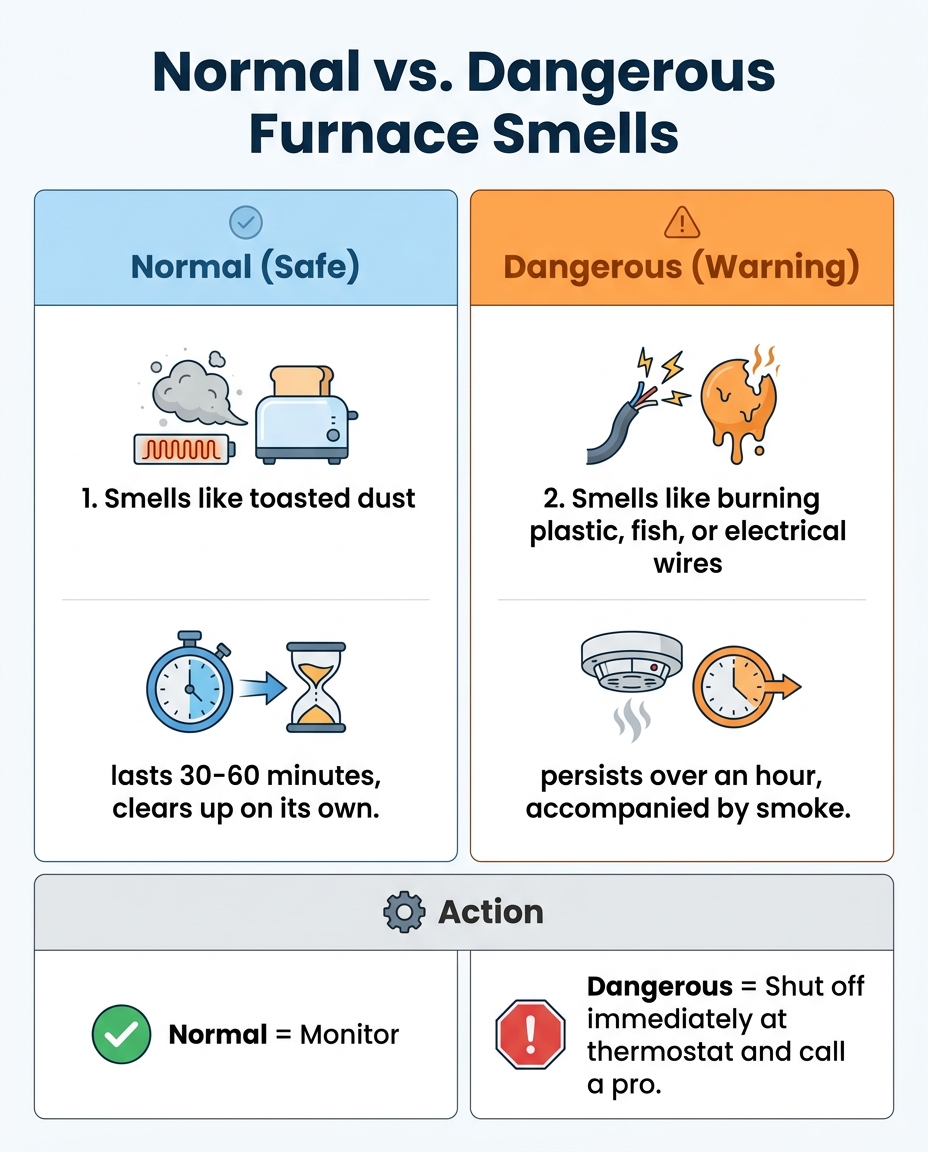
While the smell of burning dust is a standard part of fall maintenance, it should never last indefinitely. The normal dust burn-off process should fully dissipate within 30 to 60 minutes of continuous operation. If you search online asking "is it normal for heater to smell like burning dust," you will find that industry standards strictly limit this window. Once the initial layer of settled debris has baked off the heat exchanger, the air coming from your vents should return to smelling neutral and clean.
To help manage this brief period, you can temporarily open a few windows to allow cross-ventilation, which will quickly clear the harmless odor from your living spaces. However, if the smell persists beyond one hour, grows stronger, or is accompanied by any visible smoke, you are no longer dealing with simple dust. Persistent smells require immediate professional intervention, not a waiting game.
• Toasted dust, hot metal, similar to a space heater — Likely Cause: Normal accumulation burning off the heat exchanger — Action Required: Monitor for 30-60 minutes. Open windows to ventilate.
• Acrid, burning plastic, melting insulation — Likely Cause: Failing electrical components or melted wire casing — Action Required: Shut off immediately at thermostat. Call a professional.
• Rotten eggs or sulfur — Likely Cause: Natural gas leak near the burner assembly — Action Required: Evacuate home, call gas company and HVAC emergency line.
• Musty, dirty sock smell — Likely Cause: Microbial growth on the indoor evaporator coil — Action Required: Schedule a professional cleaning and inspection.
Why Is My Heat Pump Blowing Weak Air in the Fall?
Another common symptom during an October heating startup is unexpectedly weak airflow coming from the registers. You turn the thermostat up, the system engages, but the air trickling out barely reaches the center of the room. This issue is almost always connected to the same idle-season accumulation that causes the burning dust smell, but it manifests in the system's respiratory components rather than the heating elements.
This is especially true for Heat Pump Systems, which operate year-round and demand completely unobstructed airflow to transfer thermal energy effectively.
The Role of Your Air Filter in Airflow
Your air filter works tirelessly all summer long, trapping pollen, wildfire smoke, and household dust while the air conditioner runs. By the time fall arrives, that filter is often completely saturated. Starting the heating cycle with a dirty, clogged filter severely chokes the system. The blower motor has to work twice as hard to pull air through the restricted media, which drops the static pressure and results in weak output at the vents.
Furthermore, if the filter was neglected over the summer, dust has likely bypassed the media and coated the blower motor fan blades. When debris builds up on these cupped blades, they lose their aerodynamic ability to scoop and push air efficiently. This creates a dangerous compounding effect: reduced airflow causes the internal components to run hotter, which in turn makes the burning dust smell much stronger and increases the risk of the system overheating and shutting down on a high-limit safety fault.
The safe troubleshooting checklist for weak airflow:
• Check the filter: Pull the filter out and hold it up to a light. If you cannot see light passing through, replace it immediately.
• Verify vent dampers: Ensure all supply and return vents in the home are fully open and unblocked by furniture or rugs.
• Listen to the motor: If you hear a humming or straining sound but feel weak air, the motor may be failing. Shut the system off and call for service.
How the Mountain View Climate Affects Your Idle Heating System
The environment around your home plays a massive role in how your equipment behaves when the seasons change. In our years of serving the Mountain View and Bay Area communities, our Plum HVAC team has seen firsthand how our mild, temperate climate means heating systems here sit completely idle for six to eight months out of the year. Unlike regions with harsh, year-round temperature swings where systems are constantly cycling, local furnaces have an exceptionally long off-season.
For local residents, our Mountain View HVAC Services are specifically tailored to address the unique wear and tear caused by this regional weather pattern.
Dampness, Dust, and Idle Furnaces
The combination of coastal moisture, morning marine layers, and settled dust creates a unique challenge for Bay Area homeowners. During the long summer idle period, our technicians frequently observe that the natural dampness in the air can cause household dust and microscopic particulates to stick much more stubbornly to the heat exchanger and blower components. Instead of a loose layer of dry dust, you often get a slightly hardened, bonded layer of debris.
Additionally, late summer and early fall in California frequently bring wildfire smoke. These ultra-fine particulates infiltrate homes and settle deep inside ductwork and furnace cabinets. Because the system sits idle for so long, this stubborn layer requires more time to burn off during that first chilly night. The extended idle period makes the initial October startup odors significantly more pronounced here than they might be in a drier, colder climate. This is exactly why a pre-winter inspection is so critical—a technician can safely clean away this bonded debris before it bakes onto the components.
When to Call a Professional Instead of Inspecting the Furnace Cabinet
When faced with strange smells or weak airflow, the temptation to grab a screwdriver and open the furnace cabinet can be strong. However, modern heating equipment contains high-voltage electrical components, pressurized gas lines, and rapidly moving parts. Opening the cabinet to investigate a smell is incredibly dangerous and can void your manufacturer warranty.
Leveraging our deep local Silicon Valley expertise at Plum HVAC, our team has a proven track record of safely diagnosing complex electrical versus dust issues. A pattern we see often is well-meaning homeowners attempting to investigate odors themselves, which can accidentally damage sensitive flame sensors or wiring. We strongly advise homeowners to keep the cabinet doors firmly shut and rely on licensed technicians to handle internal inspections.
Electrical Smells vs. Dust Smells
Knowing the difference between a harmless nuisance and a critical failure is vital. As established, dust smells like a hot radiator or toasted debris. In contrast, electrical failure smells strongly of burning plastic, melting rubber, or even a distinct fishy odor. These acrid smells indicate that wire insulation is melting or a motor is burning out. If you detect an electrical smell, you must execute an immediate shutdown at the thermostat and call for emergency service.
The National Fire Protection Association (NFPA) strictly recommends annual professional heating equipment inspections to prevent fire hazards. When a licensed technician performs a pre-winter inspection, they do not just look at the system; they perform a comprehensive safety audit.
What a professional safety inspection actually includes:
• Heat exchanger scoping: Using specialized cameras to check for microscopic cracks that could leak carbon monoxide.
• Amp draw testing: Measuring the electrical current of the blower motor to ensure it is not overworking or at risk of an electrical short.
• Burner alignment: Verifying that the flames are burning blue and not producing excess soot or dangerous gases.
• Safety switch verification: Testing the high-limit switches and flame sensors to ensure the system will shut itself down in an emergency.
Do Certain HVAC Brands Handle Idle Seasons Better?
When homeowners experience a particularly bad startup odor or frequent blower motor issues, they often ask our team if upgrading their equipment would solve the problem. The reality we share with our customers is that the quality of your equipment heavily impacts how it handles the long, idle summer months. Higher-tier HVAC brands are engineered with tighter tolerances and better materials that actively resist dust intrusion and environmental wear.
To see how different systems stack up in terms of build quality and longevity, read our guide on Comparing Top Residential HVAC Brands.
Cabinet Sealing and Filtration Features
Premium systems handle idle seasons better primarily due to superior cabinet sealing. A well-sealed, insulated furnace cabinet acts like a vault, protecting the sensitive internal components from the ambient dust and coastal moisture that circulates through the garage, attic, or crawlspace during the long Bay Area summer. Builder-grade models often have loose-fitting doors and uninsulated panels that allow dust to freely coat the heat exchanger all summer long.
Furthermore, advanced systems often feature variable-speed blower motors paired with deep media filter cabinets. These advanced filtration setups capture a much higher percentage of dust, pet dander, and wildfire smoke before it ever reaches the motor or the heat exchanger. While no brand is completely immune to the laws of physics—every system will accumulate some dust and require professional fall maintenance—we recommend investing in a system with sealed combustion and advanced filtration because it dramatically reduces the severity of those first-startup odors.
Frequently Asked Questions About Fall Heating Startup
How long does a furnace smell when first turned on?
A furnace will typically smell for 30 to 60 minutes during its first use of the season. This is the time it takes for the layer of dust that settled on the heat exchanger over the summer to completely burn off. If the smell persists beyond an hour, you should shut the system down and contact a professional to investigate.
Can a burning smell from a heater be dangerous?
Yes, while a dusty smell is normal, an acrid, plastic, or electrical burning smell is highly dangerous. These odors indicate melting wire insulation, a failing blower motor, or an electrical short. If you smell burning plastic or see any smoke, turn off the system immediately at the thermostat to prevent a potential fire hazard.
Why is my heater blowing weak air on the first use?
Weak airflow on the first use is almost always caused by a severely clogged air filter that spent the entire summer capturing dust and allergens. It can also be caused by dust accumulation weighing down the blower motor fan blades. Changing your air filter is the first and most important step to restoring proper airflow.
What thermostat settings are best for Bay Area fall weather?
During the mild Bay Area fall, setting your thermostat between 68 and 70 degrees Fahrenheit balances comfort and efficiency. Because temperatures can fluctuate drastically between warm afternoons and chilly nights, keeping the fan setting to "Auto" ensures the system only runs when actively heating, preventing cold drafts.
How often should I schedule a professional pre-winter inspection?
The National Fire Protection Association and all major equipment manufacturers recommend scheduling a professional inspection once a year, ideally in the early fall. Annual maintenance ensures the heat exchanger is intact, the burners are clean, and all electrical safety switches are functioning correctly before the heavy winter workload begins.
Schedule Your Pre-Winter Heating Inspection Today
While a brief, 30-minute smell of burning dust is a normal part of the season, true comfort comes from knowing your system is operating safely and efficiently. Guessing whether an odor is harmless dust or a failing electrical component is a risk no homeowner should take. By adhering to NFPA safety guidelines and prioritizing annual maintenance, you protect your home from unexpected mid-winter breakdowns and potential safety hazards.
If you are preparing for the first chilly night of the year, do not leave your indoor air quality and safety to chance. Schedule your professional pre-winter inspection with our expert Plum HVAC technicians today. We will thoroughly clean your components, verify your safety switches, and ensure your system is ready to deliver clean, reliable warmth all season long.
hear what our satisfied clients have to say

.svg)
Service areas
.avif)