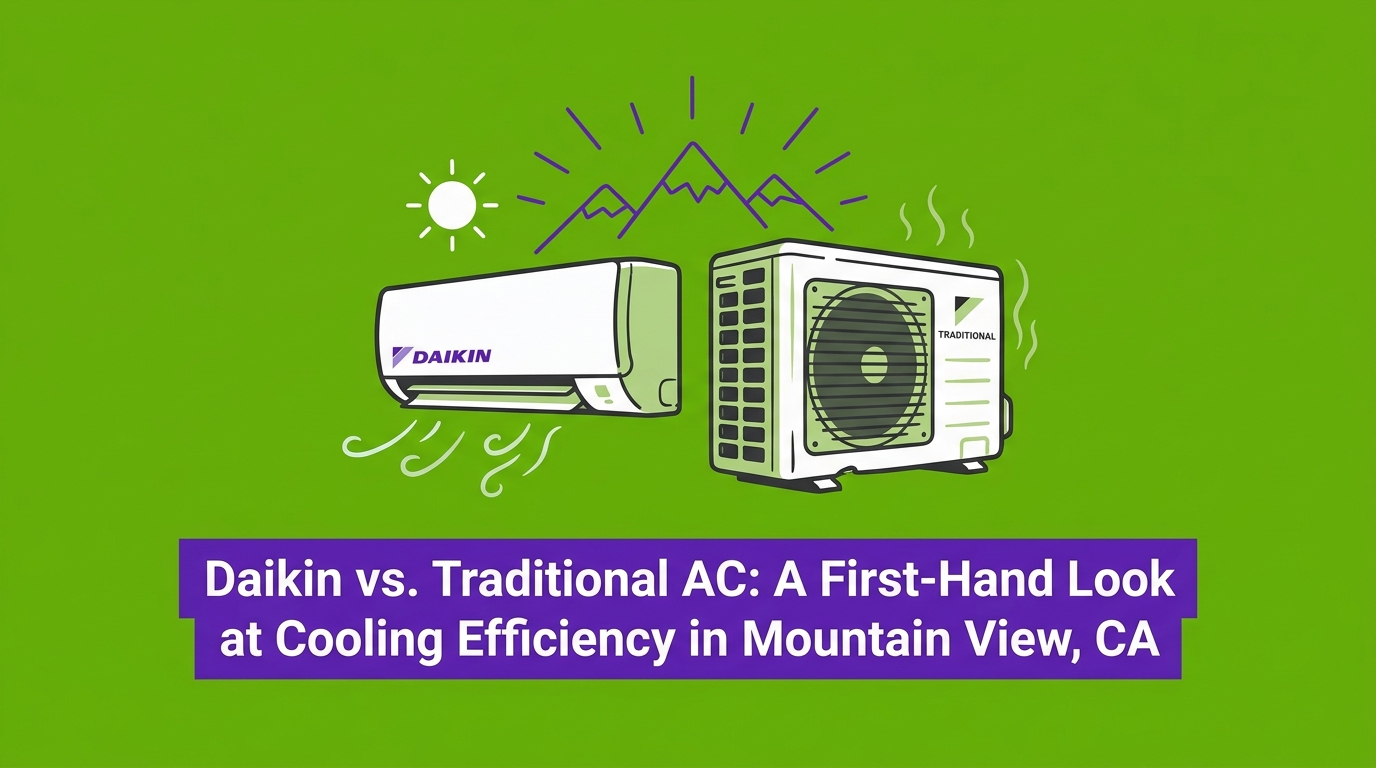
Daikin vs. Traditional AC: A First-Hand Look at Cooling Efficiency in Mountain View
Surviving Peak Summer: Is Your Current AC Keeping Up?
July is here, and the afternoon sun is already baking the pavement across the Bay Area. When dry summer heatwaves settle over the region, they put maximum strain on older cooling equipment. You might notice your current air conditioner working overtime, yet your home still feels uncomfortable. The system blasts freezing air for twenty minutes, shuts down abruptly, and leaves you sweating as the indoor temperature creeps right back up. This constant cycle of freezing and sweating is a clear sign that your equipment is struggling to manage the environmental demand.
Handling July peak summer heat loads requires equipment that can adapt to changing conditions rather than just throwing raw power at the problem. If your older unit is failing to keep you comfortable, you are likely at a major decision point: deciding whether to replace that aging, single-stage system with an advanced inverter-driven Daikin unit designed to handle extended summer heat loads efficiently.
If you are tired of battling inconsistent indoor temperatures and need immediate guidance on your Air Conditioning options, reaching out for professional AC installation in Mountain View is the smartest next step.
The Mechanics of Traditional Single-Stage Air Conditioners
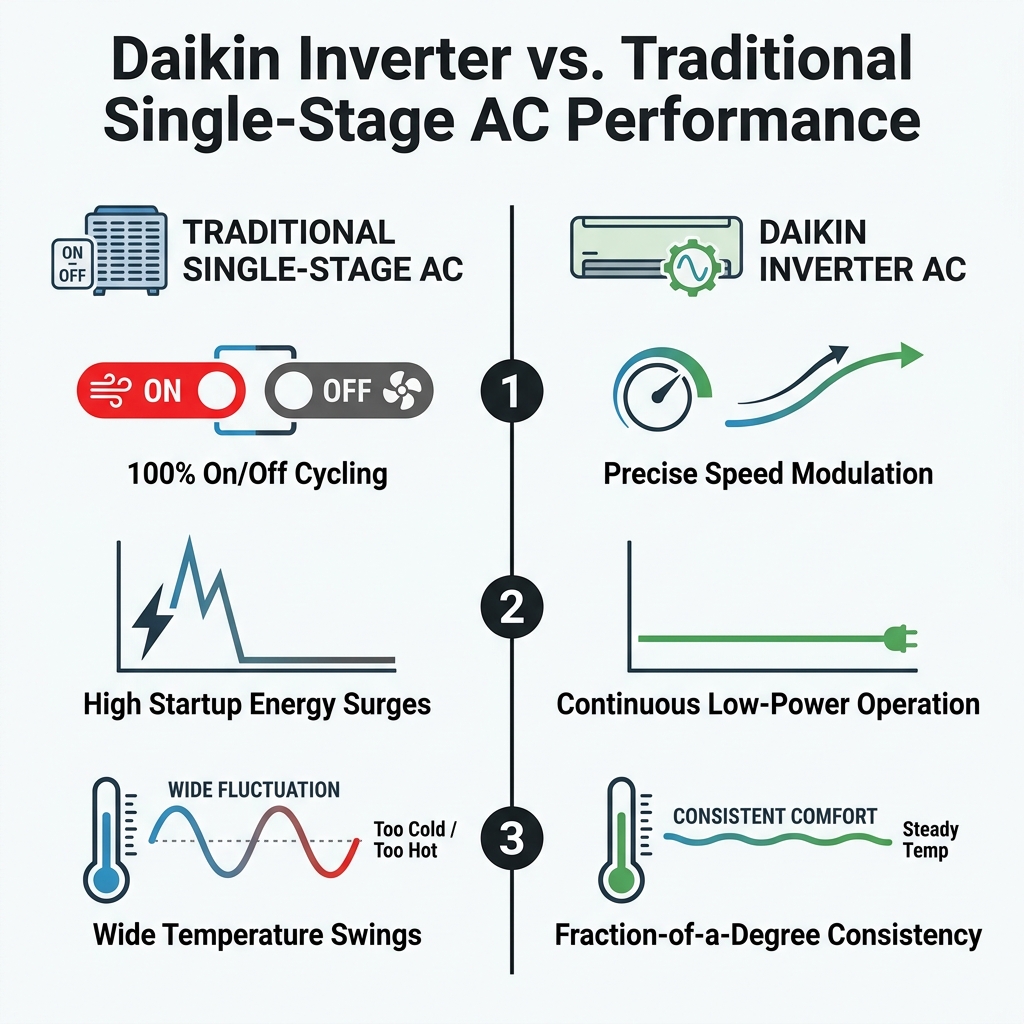
To understand why older systems struggle during a heatwave, we have to look at how they operate. A traditional single-stage air conditioner has exactly two settings: one hundred percent capacity, or completely off. There is no middle ground. When your thermostat detects that the house has gotten too warm, it sends a signal to the AC unit to turn on. The compressor roars to life, drawing a massive surge of electricity, and begins pumping maximum cooling power into your ductwork.
Once the thermostat registers the target temperature, the system shuts down completely. This "blast and shut-off" cycle is the root cause of the noticeable temperature swings you feel in your home. The air stagnates, heat begins infiltrating through your windows and walls, and you slowly grow uncomfortable again until the thermostat finally triggers the next heavy-duty cycle. When comparing an Inverter-driven Daikin vs. standard single-stage setup, this rigid, all-or-nothing operation is the most glaring limitation of older technology.
The Hidden Cost of Frequent Cycling
The startup phase of a standard air conditioner draws significantly more electricity than running the unit continuously. Think of it like driving a car in stop-and-go traffic. Accelerating from a dead stop requires a heavy foot on the gas pedal, burning excess fuel. Doing this dozens of times a day places immense wear and tear on the compressor, the electrical contacts, and the blower motor.
Furthermore, frequent on-and-off cycles fail to adequately manage continuous afternoon heat loads. Because the system spends so much time turned off, it cannot actively filter your indoor air or continuously remove the subtle heat that builds up over the course of a long, hot afternoon.
The Daikin Inverter Advantage: Continuous, Modulated Cooling
Variable-speed technology completely changes the way a home is cooled. Instead of relying on a rigid on/off cycle, an inverter-driven compressor acts more like the accelerator pedal on a car cruising down the highway. It modulates its speed to precisely match the specific heat load of your home at any given moment. If the afternoon sun is beating down on your roof, the compressor ramps up smoothly to meet the demand. As the sun sets and the house requires less cooling, the system dials back its output, running at a lower, highly efficient speed.
This continuous, modulated cooling prevents the massive energy spikes associated with single-stage units starting up. Because the system runs longer at a lower capacity, it constantly circulates the air. This eliminates the frustrating hot and cold spots in your home, maintaining your desired indoor climate within a fraction of a degree. When looking at an Inverter-driven Daikin vs. standard single-stage system, this precise control is what delivers a superior level of comfort.
If you are currently comparing top residential HVAC brands, you will find that inverter technology is a major differentiator for long-term performance. It is also worth noting that general energy efficiency rebates and federal tax credits may be available for qualifying high-efficiency variable-speed upgrades, making this advanced technology more accessible for homeowners looking to modernize their cooling setup.
Head-to-Head Comparison: Daikin Inverter vs. Single-Stage Systems
Making an informed decision requires looking at the direct differences between these two technologies. While single-stage systems have been the industry standard for decades, inverter technology addresses almost all of their inherent flaws.
• Energy Efficiency (SEER2) — Traditional Single-Stage AC: Lower ratings; wastes energy through constant stop-and-go cycling. — Daikin Inverter AC: High ratings; optimizes power usage by running continuously at lower speeds.
• Temperature Consistency — Traditional Single-Stage AC: Noticeable swings; home feels too cold, then too warm. — Daikin Inverter AC: Precise control; maintains temperature within a fraction of a degree.
• Noise Levels — Traditional Single-Stage AC: Loud, jarring startup noises every time the compressor kicks on. — Daikin Inverter AC: Whisper-quiet operation; smooth ramping up and down.
• Electrical Grid Impact — Traditional Single-Stage AC: High startup surges strain the grid during peak afternoon hours. — Daikin Inverter AC: Smooth modulation eliminates heavy electrical spikes.
When you review an Inverter-driven Daikin vs. standard single-stage unit side-by-side, the operational differences are stark. The traditional unit treats cooling like a blunt instrument, whereas the inverter system treats it like a precision tool. This precision translates directly into lower daily operating strain and a significantly more comfortable living space.
Managing Energy Consumption During Mountain View Heatwaves
California's energy grid faces massive demand spikes during the summer, particularly in the late afternoon when everyone arrives home and turns down their thermostats. During these July peak summer heat loads, traditional air conditioners all across the region are kicking on simultaneously, pulling massive startup surges and straining the local grid. This is where inverter technology provides a massive localized advantage.
Because an inverter system ramps up smoothly and often runs continuously at a very low power draw, it bypasses those heavy electrical spikes entirely. You are actively optimizing your energy usage even when the system is running constantly during the hottest part of the day. The dry summer heatwaves in Mountain View require this kind of dynamic adaptation. Instead of fighting the heat with brute force, the system gently and continuously removes thermal energy from your home.
To ensure these advanced systems continue to operate at peak efficiency, regular upkeep is highly recommended. Keeping variable-speed systems well-tuned through professional AC maintenance guarantees that the complex electronics and modulating motors retain their efficiency advantages year after year, protecting your investment.
Tangible Comfort Upgrades for Local Homeowners
Technical specifications and SEER2 ratings are important, but what really matters is how the equipment makes your home feel. Upgrading to a modern modulating system translates into real-world comfort that you can feel the moment you walk through the front door. Because the air is constantly circulating, you no longer have to deal with a freezing living room and a sweltering upstairs bedroom. The temperature remains balanced throughout the entire house.
Another major benefit is the dramatic reduction in noise. Traditional compressors announce their presence with a loud "clunk" and a heavy hum every time they start. Inverter systems ramp up so quietly that you often have to stand right next to the outdoor unit to know it is running. This is ideal for tight property lines or homes with outdoor living spaces right next to the equipment pad.
Based on our first-hand local expertise installing and servicing both Daikin inverter systems and traditional AC units specifically in Mountain View CA homes, we see a profound shift in daily comfort. Homeowners who make the switch frequently remark that they no longer have to constantly adjust the thermostat to stay comfortable—the system simply handles the heavy lifting quietly in the background.
Frequently Asked Questions
Why do single-stage air conditioners use more energy?
The short answer is that starting a heavy motor takes a massive amount of electricity. Single-stage air conditioners operate by turning on at 100% capacity, running until the house cools, and then shutting off completely. Every time they cycle back on, they pull a large surge of power to get the compressor moving again. Over the course of a hot day, these constant startup surges consume significantly more energy than a system that runs steadily at a lower speed.
How does a Daikin inverter system maintain consistent temperatures?
An inverter system modulates its cooling output to match the exact heat load of your home. Instead of blasting cold air and then shutting off, it acts like a dimmer switch, adjusting the compressor speed up or down in small increments. By running continuously at lower capacities, it prevents the indoor temperature from drifting, keeping your rooms comfortable within a fraction of a degree of your thermostat setting.
Do inverter air conditioners run all the time?
Yes, they are designed to run for much longer cycles than traditional units. While it might seem counterintuitive, running continuously at a very low speed uses less electricity than frequently starting and stopping a heavy motor. This continuous operation also provides superior air filtration and humidity removal, as the indoor fan is constantly circulating air through your ductwork and filter.
Is upgrading to a Daikin inverter AC worth the investment?
For homeowners dealing with severe summer heat and high utility demands, the upgrade offers substantial long-term value. The elimination of temperature swings drastically improves daily comfort, while the optimized energy usage helps manage heavy summer electrical consumption. Additionally, the reduced wear and tear from smooth compressor operation often leads to a longer lifespan for the equipment compared to traditional single-stage units.
How does a single-stage AC compare to an inverter during a heatwave?
A single-stage AC will struggle to keep up, often running non-stop at maximum capacity while still leaving hot spots in the home. Because it cannot adjust its output, it simply tries to overpower the heatwave. An inverter system, however, dynamically adapts to the rising outdoor temperatures, smoothly increasing its cooling capacity to match the afternoon heat load without the harsh, noisy startup cycles that strain older equipment.
Ready to Upgrade Your Home's Comfort?
Dealing with an outdated, inefficient cooling system during a long summer heatwave is a frustrating experience. If you are tired of uncomfortable temperature swings and noisy equipment, upgrading to advanced modulating technology provides a clear, practical solution. Reach out to our team today to explore how a modern inverter system can transform your home's comfort and optimize your energy efficiency.
hear what our satisfied clients have to say

.svg)
Service areas
.avif)