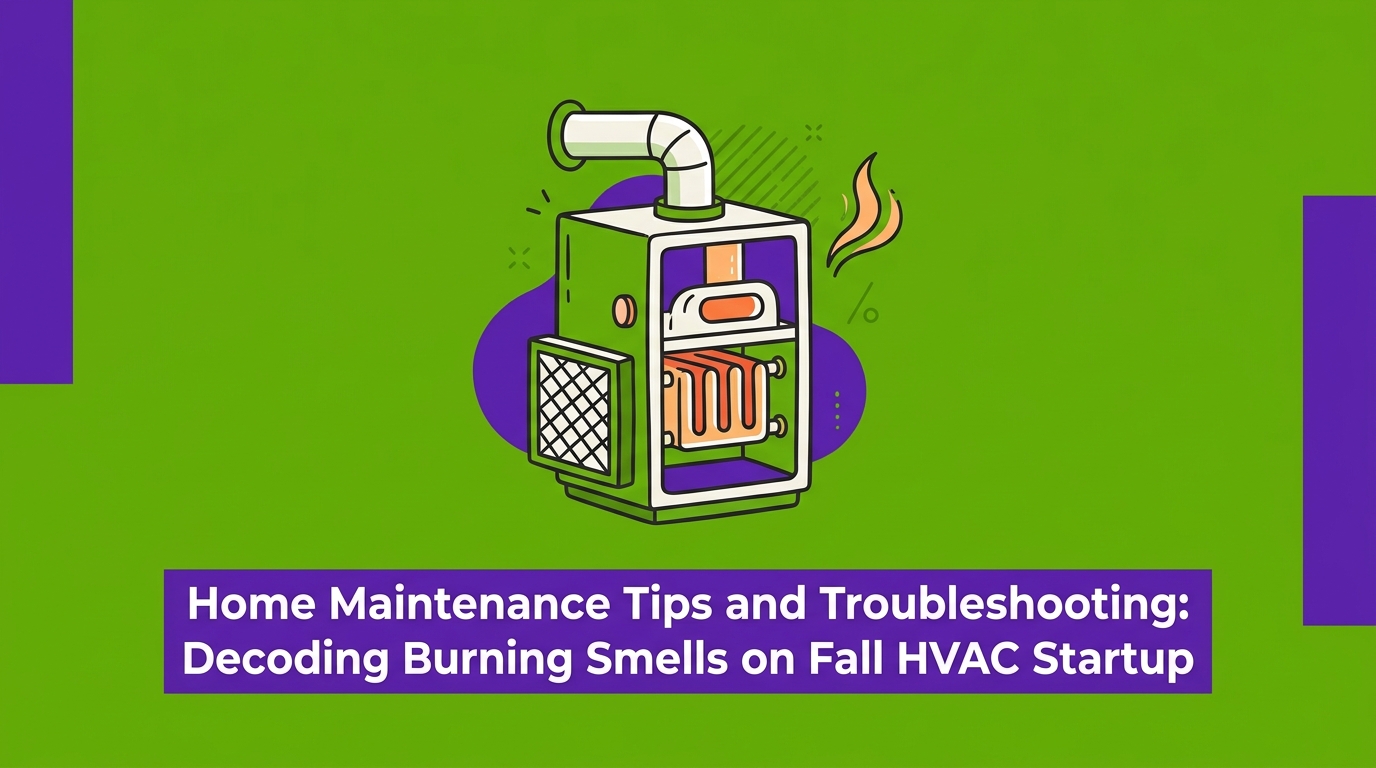
Home Maintenance Tips and Troubleshooting: Decoding Burning Smells on Fall HVAC Startup
Why Does My Heater Smell Like Burning Dust on the First Chilly October Night?
Are you searching for reliable home maintenance tips and troubleshooting advice because you just turned your heat on and your house suddenly smells like a dusty campfire? You are certainly not alone. It is a startling experience to bump up the thermostat after months of warm weather, only to be greeted by an alarming, acrid odor wafting through your vents. That initial panic is completely understandable. When you expect warm, comforting air and instead get a nose full of burning dust, your first instinct is usually to shut the entire system down and worry about fire hazards.
To help you navigate this common seasonal issue, we recommend exploring our professional Heating Services to ensure your system is operating safely and efficiently all winter long.
The Reality of the First Fall Startup
Here is the thing: initial startup odors are incredibly common, especially when your equipment has been sitting completely dormant for over half the year. During the spring and summer months, your heating components remain inactive. While your air conditioner might be running, the heat exchanger inside your furnace is simply acting as a resting place for airborne particles. Pet dander, microscopic lint, and everyday household dust settle onto these cold metal surfaces week after week.
When that first chilly October night finally arrives and you call for heat, those burners ignite. The metal heat exchanger rapidly heats up to hundreds of degrees. All of that accumulated dust does not just blow away—it instantly incinerates. The result is a distinct, warm, burning smell that gets pushed directly into your ductwork and distributed into every room of your house.
Making the Crucial Decision: Safe or Hazardous?
The core decision you face in this moment is distinguishing between harmless settling dust and an actual safety hazard. While a temporary dust burn-off is a natural consequence of seasonal transitions, a persistent burning smell can indicate electrical failing, melting wire insulation, or a cracked heat exchanger. Setting the right expectations is vital. Most normal dust odors will dissipate shortly after the system reaches its operating temperature, but knowing exactly when to step back and seek professional guidance can save you from catastrophic system failures down the road.
The 6-to-8 Month Dormancy: Why Bay Area Systems Accumulate Dust
To understand why this startup smell is so pronounced, you have to look at our specific regional weather patterns. Mountain View's mild winters and warm, dry summers create a highly unique operating schedule for residential climate control systems. Unlike regions with harsh, prolonged winters where a heater might only be turned off for three or four months, local systems experience a massive 6-to-8 month idle period. This extended dormancy fundamentally changes how dust accumulates inside the cabinet.
The Lifecycle of System Dust Accumulation
The process of dust buildup in Mountain View / Peninsula homes follows a predictable seasonal pattern. Understanding this sequence helps explain why that first startup is so jarring:
1. The Spring Deactivation: Sometime in March or April, your heating system cycles off for what will be the last time in months. The metal components cool down, and the internal cabinet becomes a dark, quiet, and static environment.
2. The Summer Particle Settling: Throughout the summer, your blower motor continues to push air through the system for cooling. Even with high-quality air filters in place, microscopic dust, pollen from local flora, and indoor pollutants bypass the filter media and settle directly onto the cold heat exchanger and burner assemblies. Because the heat is off, this layer simply thickens over the course of 200+ days.
3. The Humidity Factor: Coastal fog and temperate morning humidity can cause this settled dust to adhere more stubbornly to the metal components, creating a slight crust of particulate matter that clings tightly to the heat exchanger.
4. The Autumn Ignition: When the temperature drops and the thermostat triggers the heating cycle, the system fires up at full capacity. Six to eight months of bonded dust is subjected to intense, immediate heat, causing a rapid burn-off that floods the home with a concentrated odor.
In colder climates, heating systems are used more frequently, meaning dust never gets the chance to build up to this degree. The shorter the off-season, the less dramatic the burn-off. If you are noticing this heavy smell and realizing your aging system might be struggling with more than just dust, it may be time to consider a professional Furnace Installation to ensure safe, reliable performance.
Harmless Odors vs. Dangerous Smells: A Side-by-Side Comparison
Most homeowners do not realize that the specific type of smell coming from their vents tells a highly detailed story about the health of their equipment. Not all burning smells are created equal. While you should never ignore a persistent odor, learning to identify the subtle differences between burning dust and melting components is a critical part of homeownership.
Decoding the Scent of Your HVAC System
A harmless dust burn-off has a very specific profile. It smells remarkably like a warm, dusty attic or a space heater that has just been plugged in. The most important characteristic of this harmless odor is its duration. It should begin fading within 10 to 15 minutes of the system running, and it should be completely gone by the time the system completes its first or second heating cycle on that first chilly October night.
On the other hand, dangerous smells are sharp, acrid, and persistent. If you smell burning plastic, this often indicates that wire casing is melting due to an electrical short or an overheating motor. A fishy smell is a notorious indicator of burning electrical components, specifically melting circuit boards or failing relays. An odor resembling sulfur or rotten eggs is the universal warning sign of a natural gas leak, which requires immediate evacuation.
When to Shut the System Down
The rule of thumb is simple: if the smell burns your eyes, smells like chemicals, or lasts longer than 30 minutes, turn the system off immediately at the thermostat. Do not wait to see if it improves. Continuing to run a system that is actively melting electrical components or leaking exhaust gases will only escalate a repair into a complete replacement—or worse, a house fire.
• Warm, dry dust — Likely Cause: Accumulated debris burning off the heat exchanger — Danger Level: Low — Required Action: Monitor for 15-30 minutes; should dissipate naturally.
• Burning plastic or rubber — Likely Cause: Melting wire insulation or a slipping fan belt — Danger Level: High — Required Action: Turn off system immediately and call for professional service.
• Fishy or ozone odor — Likely Cause: Electrical shorts, failing motors, or melting circuit boards — Danger Level: High — Required Action: Shut off power at the breaker; request an emergency inspection.
• Rotten eggs or sulfur — Likely Cause: Natural gas leak near the burner or gas valve — Danger Level: Critical — Required Action: Evacuate the home, leave doors open, and call the gas company.
• Acrid, metallic smoke — Likely Cause: Overheating blower motor or seized bearings — Danger Level: High — Required Action: Turn off the system immediately to prevent motor fire.

Troubleshooting Unexpected Heat Pump and Furnace Noises
Smells are not the only thing that can cause alarm during the autumn transition. Unexpected noises are equally common and can be just as jarring. When metal components heat up rapidly after months of sitting cold, they expand. This physical reaction creates a symphony of sounds that can easily be mistaken for mechanical failure.
Thermal Expansion vs. Mechanical Failure
If you hear popping, pinging, or banging coming from your walls or ceilings shortly after the heat kicks on, you are likely hearing thermal expansion. As hot air rushes through cold, rigid sheet metal ductwork, the metal physically expands and flexes. This is completely normal for Mountain View / Peninsula homes, especially those with older, uninsulated duct systems. The popping should subside once the ductwork reaches a stable temperature.
However, the sounds coming from the actual equipment cabinet tell a different story. Normal startup sounds include a soft click from the thermostat, a low hum as the inducer motor starts, the audible whoosh of gas igniting, and the smooth ramp-up of the blower fan. If your home utilizes Heat Pump Systems, you might also hear a distinct whooshing noise when the system shifts into defrost mode during particularly cold mornings—this is just the reversing valve shifting refrigerant flow.
Warning Sounds You Cannot Ignore
There are specific mechanical noises that should prompt you to shut the system down immediately:
• Grinding or metal-on-metal scraping: This usually means the bearings in your blower motor have completely worn out, or the blower wheel itself has come loose and is scraping against its metal housing.
• High-pitched screeching or squealing: Often points to a frayed or slipping blower belt (in older models) or a failing inducer draft motor bearing.
• Continuous, violent rattling: While a minor vibration might just be a loose cabinet door, a loud, violent rattle often indicates that a component is dangerously out of balance, which can tear the system apart from the inside.
Under no circumstances should you open the cabinet to attempt DIY mechanical repairs on spinning motors or electrical relays. Modern HVAC equipment contains high-voltage capacitors and complex safety switches that require certified training to handle safely.
What a Professional Pre-Winter Inspection Actually Fixes
The short answer is that routine fall maintenance prevents the vast majority of mid-winter breakdowns. Many homeowners view a fall tune-up as just an expensive filter change, but a comprehensive inspection involves detailed safety checks and mechanical calibrations that cannot be performed without specialized tools and training.
Beyond the Filter Change
When you schedule a pre-winter inspection before that first chilly October night, a certified technician is actively neutralizing the hazards that cause burning smells and unexpected breakdowns. They are not just looking at the system; they are physically preparing it for the heavy workload ahead. If you want to ensure your system is ready, exploring local Mountain View HVAC Services is the most proactive step you can take.
Here is what a professional inspection actually accomplishes:
• Safe Heat Exchanger Cleaning: Technicians use specialized tools to carefully remove the thick layer of summer dust from the heat exchanger and burners. This drastically reduces, and often eliminates, the jarring burning smell on startup.
• Electrical Connection Testing: Wires expand and contract over the years, leading to loose connections. A technician will tighten all terminals and measure the voltage and amperage of the blower motor to ensure it isn't overdrawing power and risking an electrical fire.
• Safety Switch Verification: Modern furnaces have multiple fail-safes, including limit switches and flame rollout sensors. A professional will manually test these switches to guarantee they will shut the system down if it overheats or if exhaust gases fail to vent properly.
• Gas Pressure Calibration: Technicians measure and adjust the manifold gas pressure. If the pressure is too high, the system overheats; if it is too low, condensation can form inside the heat exchanger, leading to rapid rusting and failure.
One thing we see often is that premium systems require highly specific care. Plum HVAC's deep experience with local parts availability and warranty fulfillment when inspecting and maintaining premium systems tailored to Silicon Valley homes means that any minor wear and tear is caught and corrected using the exact manufacturer-approved components. This local expertise ensures your system operates exactly as engineered.
The Long-Term Value of Proactive Fall Maintenance
Connecting the immediate troubleshooting of startup smells to the broader longevity of your system is crucial. The goal of maintenance is not just to stop a temporary odor; it is to protect a major financial investment. A system that is forced to burn through layers of dust and operate with out-of-balance motors is a system that is actively destroying its own components.
Protecting Your Silicon Valley Investment
Routine fall maintenance extends the overall lifespan of the equipment by reducing the daily strain on moving parts. When a blower motor is clean and properly lubricated, it uses less electricity and generates less heat. When a heat exchanger is free of debris, it transfers heat into your home much more efficiently, reducing the length of every heating cycle. Over the course of a decade in Mountain View / Peninsula homes, this reduced wear and tear translates to years of extended functional life.
Furthermore, a clean, well-maintained system has a direct impact on your indoor air quality. If you skip maintenance, that incinerated dust and summer debris gets blown directly into your living spaces, aggravating allergies and reducing the overall comfort of your home. Addressing small issues early protects your investment, whether you are running a standard builder-grade unit or you are curious about the differences between High-End vs. Budget Residential HVAC Units.
Finally, it is important to realize that professional oversight is required to validate most manufacturer warranties. If a major component fails and you cannot provide proof of annual, professional maintenance, the manufacturer will likely void the warranty claim, leaving you responsible for the entire cost of the repair. Proactive fall maintenance provides peace of mind, ensuring that when the cold weather truly sets in, your home remains a safe, warm, and comfortable sanctuary.
Frequently Asked Questions
Why does my heater smell like burning dust?
Your heater smells like burning dust because everyday airborne particles settle on the internal components during the long spring and summer months when the system is turned off. When you turn the heat on for the first time in the fall, the heat exchanger rapidly warms up and incinerates this accumulated layer of debris. This rapid burn-off sends a distinct, warm, dusty odor through your ductwork and into your living spaces. It is a very common occurrence for systems that have been dormant for extended periods.
How long should a furnace smell like burning dust?
A normal dust burn-off smell should begin to fade within 15 to 30 minutes of the system running its first heating cycle of the season. By the time the thermostat reaches your desired temperature and the system completes its first or second cycle, the smell should be completely gone. If the odor lingers for hours or returns every time the system kicks on, it is no longer just settling dust and requires further investigation.
What furnace smells are dangerous?
Dangerous furnace smells are typically sharp, chemical, or acrid. An odor of burning plastic or rubber often indicates melting wire insulation or a slipping belt. A fishy or ozone-like smell is a strong warning sign of electrical shorts or melting circuit boards. Most critically, a smell resembling rotten eggs or sulfur indicates a natural gas leak, which is a severe hazard that requires immediate evacuation and professional intervention.
Is it safe to run my furnace if it smells like burning?
It is generally safe to run the furnace if the smell is strictly that of warm, dry dust and it is the very first time you are turning it on for the season. However, you should monitor the situation closely. If the smell changes to something chemical, if it persists beyond 30 minutes, or if it is accompanied by visible smoke or loud grinding noises, it is not safe to continue running the system and you should shut it off at the thermostat.
When should I call a professional for furnace smells?
You should call a professional immediately if the burning smell resembles melting plastic, electrical ozone, or metallic smoke. You should also call for service if a standard dusty smell lasts longer than 30 minutes, or if the odor is accompanied by new, loud mechanical noises like grinding or screeching. A professional technician can safely open the cabinet, diagnose the source of the persistent odor, and prevent a minor electrical issue from becoming a major fire hazard.
Can a dirty air filter cause a burning smell on startup?
Yes, a severely clogged or dirty air filter can contribute to burning smells on startup. When a filter is completely blocked, it restricts airflow over the heat exchanger, causing the internal cabinet temperature to rise higher than normal. This excessive heat can bake the trapped dust on the filter itself or cause the system's high-limit safety switches to trip. Replacing your air filter before turning on the heat for the first time is one of the best ways to minimize startup odors.
hear what our satisfied clients have to say

.svg)
Service areas
.avif)