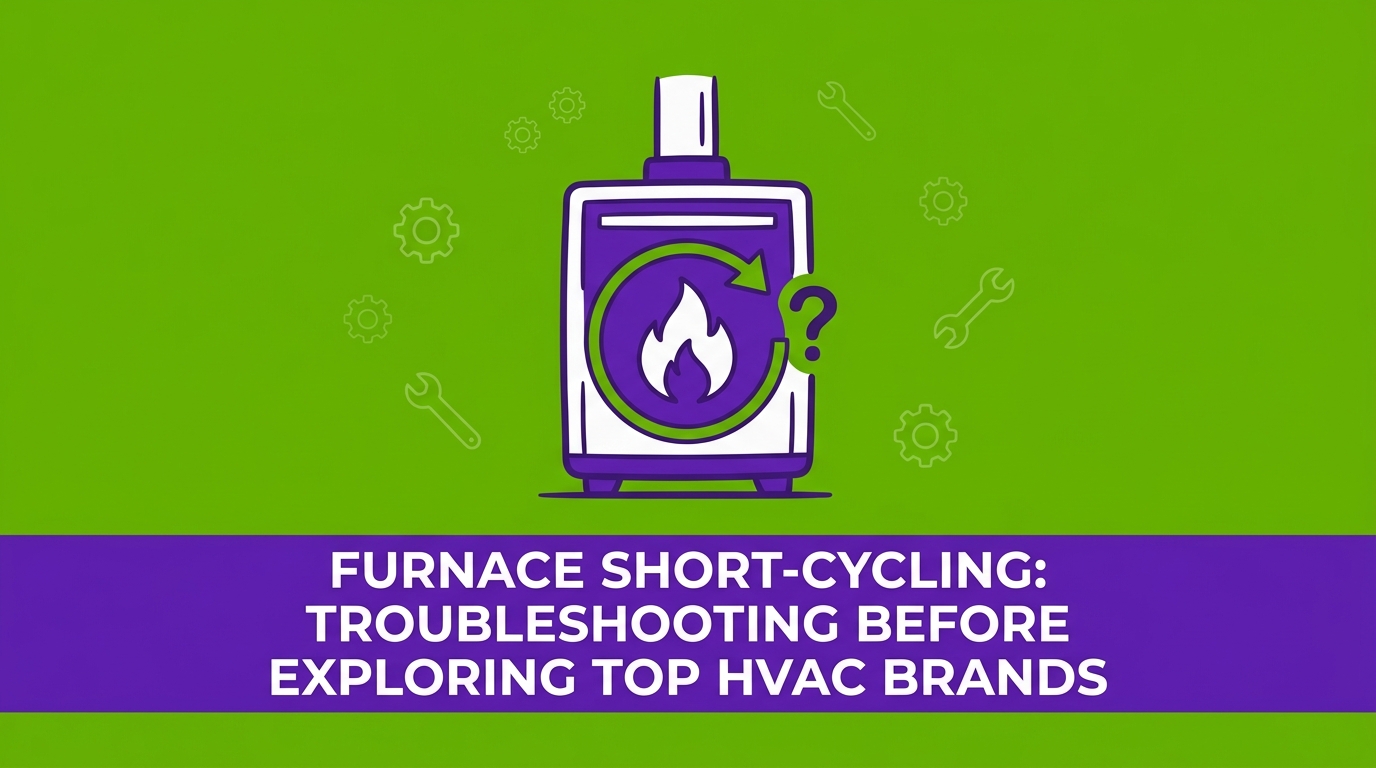
Furnace Short-Cycling: Troubleshooting Before Exploring Top HVAC Brands
The Frustration of a Furnace That Won't Stay On
Your thermostat is calling for heat, but your system keeps shutting off before the house actually gets warm—a scenario that makes home maintenance tips and troubleshooting suddenly feel very urgent. It is incredibly frustrating when your heating system fails right when the seasonal transition demands it. In our years of serving the local community, our team at Plum HVAC frequently sees homeowners during a typical mid-fall heating startup expecting a smooth transition from cooling to heating, only to be met with a furnace that runs for two minutes and abruptly powers down. If you need immediate professional assistance, our Heating Services team can help diagnose the underlying issue.
This rapid on-and-off behavior is known in the HVAC industry as "short-cycling." It occurs when a furnace shuts down prematurely before the ambient room temperature matches the thermostat's set point. While the immediate symptom is a chilly house, our technicians find that the root causes range from simple, easily correctable airflow restrictions to complex mechanical safety mechanisms kicking in to prevent catastrophic failure.
When you are shivering in your living room, the immediate instinct might be to assume the entire unit is broken. However, short-cycling is a symptom, not a standalone disease. It is the system's way of signaling that something is interrupting its normal sequence of operations. This guide will help you understand the mechanics behind the malfunction, navigate safe checks you can perform yourself, and determine when it is time to call our professionals before considering a costly repair or a full system replacement.
Understanding the Anatomy of a Short Cycle
To recognize why a furnace is failing, you first need to understand how it is supposed to operate. A normal heating cycle in a well-maintained Mountain View home typically lasts anywhere from ten to fifteen minutes, depending on the outdoor temperature and the home's insulation. During this time, the furnace ignites, the heat exchanger warms up, and the blower motor distributes that warm air evenly throughout the ductwork until the thermostat is completely satisfied.
A short cycle, by contrast, interrupts this process almost immediately. The sequence of a short cycle usually follows these numbered steps:
1. The Call for Heat: The thermostat detects a drop in temperature and signals the furnace control board to begin the heating sequence.
2. Initial Startup: The draft inducer motor turns on to clear combustion gases, and the igniter glows or sparks.
3. Brief Ignition: The gas valve opens, the burners light, and the blower motor may begin to push air.
4. Premature Shutdown: Within minutes—or sometimes mere seconds—an internal sensor detects a fault, instantly cutting power to the gas valve and shutting the system down before the house warms up.
This rapid cycling prevents the home from warming evenly, leaving uncomfortable cold spots in distant rooms. Beyond the immediate discomfort, short-cycling carries hidden penalties. The most energy-intensive part of running a furnace is the startup phase. When a unit starts and stops dozens of times an hour, it consumes significantly more energy, driving up utility bills. Furthermore, this constant starting and stopping accelerates wear and tear on expensive internal components like the igniter, the blower motor, and the heat exchanger.
How a Healthy Heating Cycle Should Sound
Homeowners can often diagnose the severity of a problem simply by listening to their system. A healthy heating cycle has a distinct, predictable rhythm. You should hear a steady ignition sequence without any stuttering or hesitation. Once the burners are lit, there should be a continuous, uninterrupted hum of the blower operation until the thermostat is satisfied. Finally, you should hear a smooth shutdown process where the burners turn off first, followed by the blower motor running for a few extra moments to clear the remaining warm air from the ducts. If this rhythm is broken by abrupt clicks and sudden silence, your system is short-cycling.
How Summer Neglect Leads to Fall Airflow Restrictions
One of the most common causes of a furnace failing during a mid-fall heating startup has nothing to do with the furnace itself, but rather how the HVAC system was treated during the summer. Central heating and cooling systems share the same ductwork, the same blower motor, and most importantly, the same air filter. The components that worked overtime to keep your home cool in July are the exact same components tasked with keeping it warm in November.
The Problem: Over the course of a long cooling season, the air filter captures massive amounts of dust, pet dander, pollen, and airborne debris. If that filter is not replaced at the end of the summer, it becomes a dense, impenetrable wall. Our technicians consistently notice that Mountain View's sudden transition to cool, damp October evenings exposes these unresolved summer maintenance issues immediately when the heat is first turned on. The system suddenly demands high-volume airflow to distribute heat, but the clogged filter prevents the blower motor from pulling in enough return air.
The Cause: When a furnace cannot pull enough cool air across its internal components, a dangerous chain reaction occurs. The heat generated by the burners has nowhere to go. It remains trapped inside the furnace cabinet, causing the internal temperature to spike rapidly. This severe airflow blockage forces the system into an overheating scenario.
The Solution: The furnace control board recognizes this dangerous temperature spike and immediately shuts down the burners to prevent a fire hazard. In this scenario, the furnace shutting down is actually a protective measure, working exactly as designed to keep your home safe from extreme thermal damage.
The Role of the Heat Exchanger
The heat exchanger is the metal shield that separates the toxic combustion gases of the burners from the clean air being blown into your home. Airflow is absolutely critical for heat transfer; the cool return air must constantly wash over the heat exchanger to absorb its heat and carry it away. The danger of trapped heat inside the unit is profound. If the heat exchanger gets too hot because of restricted airflow, the metal can warp, crack, or fail entirely. Therefore, a restricted airflow issue perfectly mimics a severe mechanical failure, triggering the system to short-cycle to protect this vital component.
Mechanical Safety Trips: When the System Protects Itself
While airflow restrictions are the most common culprit, a pattern we see often is a furnace repeatedly short-cycling due to a genuine mechanical failure. Modern furnaces are equipped with an array of sensitive safety switches designed to monitor every phase of the combustion process. When these sensors detect an anomaly, they instantly cut the power. Understanding these components helps Mountain View homeowners realize why our team insists that professional diagnostics are mandatory for certain issues.
The Flame Sensor: This small metallic rod sits directly in the path of the burner flame. Its sole job is to verify that a flame actually exists when the gas valve is open. Over time, the sensor can become coated in microscopic carbon soot or oxidation. When this happens, it fails to detect the flame, assuming that raw, unburned gas is pouring into your home. It shuts off the gas valve instantly, usually within three to five seconds of ignition.
The High Limit Switch: This is the component responsible for detecting the overheating caused by poor airflow or a failing blower motor. If the internal cabinet temperature exceeds a safe threshold, the high limit switch trips, cutting power to the burners while usually leaving the blower fan running to cool the system down. If this switch trips repeatedly, it can become permanently stuck in the open position.
Thermostat and Control Board Errors: Sometimes the mechanical components of the furnace are perfectly fine, but the brain of the system is failing. Thermostat communication errors, weak batteries, or faulty low-voltage wiring can send rapid, conflicting signals to the control board, telling the furnace to turn on and off in erratic bursts.
Why DIY Repairs on Safety Switches are Dangerous
Internet tutorials often suggest that homeowners can fix short-cycling by removing and scrubbing the flame sensor or bypassing the high limit switch. We strictly advise against bypassing safety switches or attempting to clean sensitive internal sensors without proper licensing. The risk of gas leaks or carbon monoxide exposure is severe if the combustion chamber is improperly reassembled. Furthermore, tampering with internal safety mechanisms is a guaranteed way to void active manufacturer warranties. Proper diagnostic tools, such as digital multimeters and manometers, are required to test these switches safely and accurately.
Safe Troubleshooting Steps for Homeowners
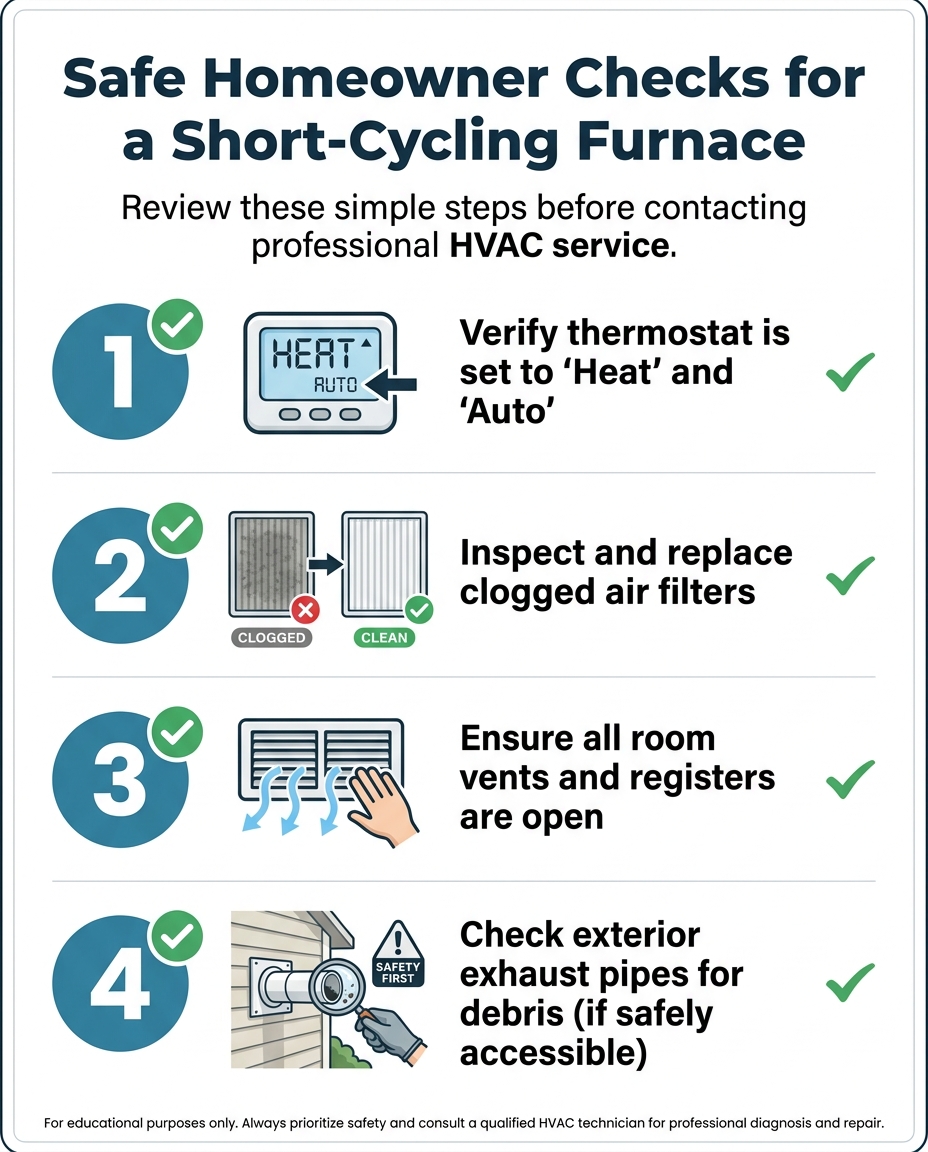
Before you request professional Mountain View HVAC Services, there are several safe, non-technical checks you should perform. Often, a mid-fall heating startup issue can be resolved without ever opening the furnace cabinet. Follow this checklist to rule out the most common external causes of short-cycling:
• Verify thermostat settings: Ensure the thermostat is firmly set to "Heat" and the fan setting is on "Auto" rather than "On." A fan set to "On" will blow continuously, which can sometimes be mistaken for a short-cycling furnace when the burners are actually functioning normally. Replace the thermostat batteries if the display is fading.
• Inspect and replace the air filter: This is the most common and easily fixable culprit for restricted airflow. Pull the filter out and hold it up to a light source. If you cannot see light shining through the media, it is completely clogged and must be replaced immediately with a clean filter of the correct size.
• Check all room vents and registers: Walk through every room in your home and ensure that all supply and return vents are fully open. Ensure that heavy furniture, thick rugs, or long drapes are not blocking airflow. Closing vents in unused rooms actually increases static pressure inside the ductwork, leading to overheating.
• Observe the exhaust vent: If you have a high-efficiency furnace with PVC exhaust pipes venting out the side of your house, inspect the exterior pipes (only if accessible safely from the ground). Look for dry leaves, insect nests, or debris blocking the exterior pipe, which will cause the pressure switch to trip and shut down the furnace.
Evaluating Repair Versus System Replacement
If you have completed the safe troubleshooting checklist and your furnace is still short-cycling during the mid-fall heating startup, you are facing a critical decision. You must determine whether it makes financial sense to repair the current unit or if it is time to evaluate a full system replacement.
A standard "rule of thumb" we recommend for aging furnaces is to weigh the repair costs against the benefits of keeping an older, inefficient unit. If a furnace is nearing the end of its expected lifespan and the cost to repair a major component (like a cracked heat exchanger or a failing blower motor) is substantial, investing that money into a new system is often the wiser choice. Chronic short-cycling in an older unit frequently indicates that these major components are beginning to fail irreparably.
When replacement becomes the more economical and safer choice, there is immense value in comparing top residential HVAC brands. Modern systems offer advanced onboard diagnostics that prevent the ambiguous short-cycling issues of older models. Instead of guessing why the system shut down, modern control boards display specific fault codes that pinpoint the exact sensor or airflow issue, saving hours of diagnostic time.
• System Age — Professional Repair: Best for units under 10 years old with isolated component failures. — System Replacement: Recommended for units over 12-15 years old experiencing chronic issues.
• Short-Cycling Cause — Professional Repair: Ideal for replacing a single faulty flame sensor or limit switch. — System Replacement: Necessary if short-cycling is caused by a cracked heat exchanger.
• Energy Efficiency — Professional Repair: Maintains the current efficiency rating of your older equipment. — System Replacement: Provides a significant upgrade in AFUE ratings, lowering monthly utility bills.
• Long-Term Reliability — Professional Repair: Fixes the immediate symptom but leaves older parts vulnerable to future failure. — System Replacement: Resets the lifespan of your heating infrastructure with comprehensive warranties.
When to Explore Heat Pump Alternatives
If replacement is the best path forward, you are not limited to traditional gas furnaces. Many homeowners are transitioning to Heat Pump Systems. Heat pumps offer incredible energy efficiency benefits for mild winter climates, making them an excellent match for our region. Their dual-purpose functionality allows them to provide both robust heating in the winter and high-efficiency cooling in the summer from a single unit. Additionally, federal tax credits and local utility rebates may apply to qualifying heat pump installations, making the initial upgrade highly cost-effective. Always verify current incentive programs with your utility provider or a tax professional.
Securing Parts and Navigating Manufacturer Warranties
Diagnosing a short cycle often leads to the realization that specific Original Equipment Manufacturer (OEM) parts are required to restore the system. Whether it is a proprietary control board, a specific draft inducer motor, or a specialized high limit switch, using the correct parts is essential for the safety and longevity of the furnace.
During the peak seasonal transition, homeowners often face the frustration of supply chain delays. When thousands of heating systems are turned on simultaneously across Mountain View, the demand for replacement parts skyrockets. This is where our local expertise becomes invaluable. Our team at Plum HVAC leverages our deep knowledge of local parts availability and experience navigating manufacturer warranties specifically for Silicon Valley residents, ensuring that your repair is not delayed by logistical hurdles.
Having a local expert who can expedite parts and handle the complex warranty paperwork on your behalf removes the stress from an already frustrating situation. Manufacturer warranties often contain strict clauses requiring professional installation and ongoing maintenance records to remain valid. A professional diagnostic visit reassures you by pinpointing the exact point of failure, saving you money by preventing the unnecessary replacement of perfectly good components based on guesswork.
Restore Your Home's Comfort This Season
A short-cycling furnace is a highly solvable problem, whether the solution requires a simple filter change or professional mechanical intervention. The most important takeaway is that you should never ignore a furnace that repeatedly turns on and off. Allowing a system to short-cycle continuously throughout the Mountain View winter will inevitably lead to higher utility bills, compromised indoor comfort, and eventual total system failure.
If you have completed the safe homeowner troubleshooting steps and your system is still struggling to maintain a steady heating cycle, it is time to bring in the experts. Reach out today to schedule a comprehensive evaluation of your heating system, and explore our selection of reliable Furnaces to ensure your home remains warm, safe, and comfortable all season long.
Frequently Asked Questions
Why is my furnace turning on and off rapidly?
This rapid cycling, known as short-cycling, happens when a system shuts down before reaching the thermostat's set temperature. It is typically caused by restricted airflow, a malfunctioning thermostat, or a tripped internal safety switch. The system shuts down prematurely to protect itself from overheating or mechanical damage. Identifying the exact cause is crucial to preventing long-term wear on the unit.
Can a dirty filter cause a furnace to short cycle?
Yes, a dirty air filter is the most common cause of furnace short-cycling. When a filter is clogged with dust and debris, it chokes off the return air supply to the blower motor. Without enough cool air moving over the heat exchanger, the furnace rapidly overheats and trips the high limit safety switch, shutting the system down.
How do I fix a short cycling furnace?
The first and safest step is to check and replace your air filter if it is dirty. Next, verify that your thermostat is set correctly to "Heat" and that all room vents are open and unobstructed. If these basic airflow checks do not resolve the issue, the problem is likely mechanical, and you will need a licensed technician to diagnose the internal components.
Is it dangerous if my furnace short cycles?
The short-cycling itself is usually a safety mechanism working exactly as intended to prevent danger, such as overheating or gas buildup. However, ignoring the symptom can be dangerous. Continual short-cycling stresses the heat exchanger, which can eventually crack and leak carbon monoxide into the home.
How do I know if my flame sensor is failing?
If your furnace ignites, burns for only three to five seconds, and then abruptly shuts off the gas, a dirty or failing flame sensor is a highly likely culprit. The sensor fails to detect the flame and shuts the system down as a safety precaution. Because cleaning the sensor involves opening the combustion chamber, it should be handled by a professional.
When should I consider replacing my furnace instead of repairing it?
You should consider replacement if your furnace is over 12 to 15 years old and requires a major, expensive repair like a new heat exchanger or control board. If the system has a history of chronic breakdowns, poor energy efficiency, or uneven heating, investing in a modern, highly efficient unit is often more cost-effective than continually repairing an obsolete system.
hear what our satisfied clients have to say

.svg)
Service areas
.avif)