

Comparing Daikin Heat Pumps to Traditional Furnaces for Mild California Winters
Are You Choosing the Right Heating Technology for Your Home This Fall?
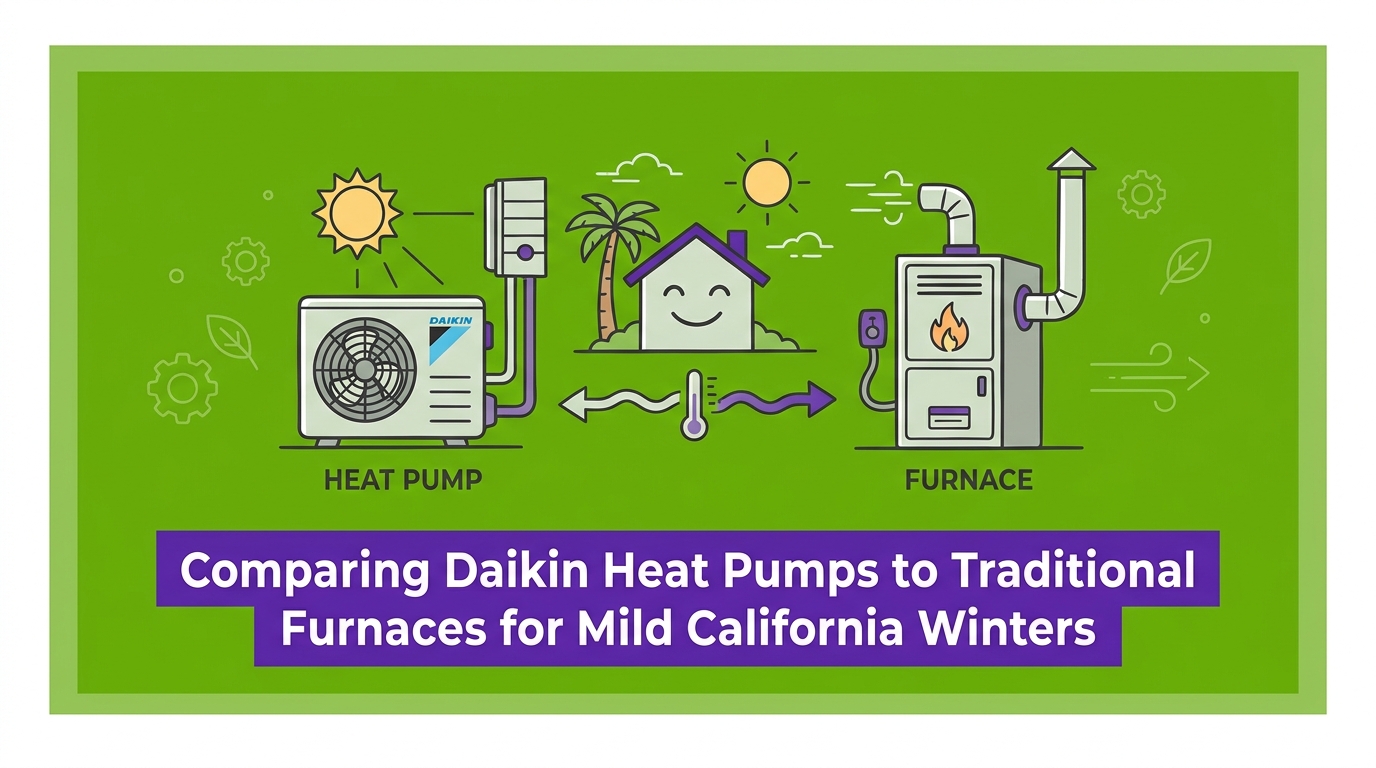
Is your aging heating system ready for another winter, or are you wondering if it is finally time to upgrade? If you are evaluating a replacement during the September pre-heating season, you are likely weighing two very different paths: sticking with familiar combustion technology or upgrading to modern electric heating. When Comparing Daikin Heat Pumps to Traditional Furnaces for Mild California Winters, our team at Plum HVAC always emphasizes that the decision ultimately comes down to matching the equipment's mechanical capabilities to our specific local climate.
For decades, residential heating meant burning natural gas. However, as technology has advanced and state-wide efficiency standards have evolved, we are seeing homeowners increasingly explore high-efficiency alternatives. Understanding the fundamental differences between advanced heat pump systems and traditional gas furnaces is the first step toward securing long-term comfort and managing your household energy consumption. The choices you make now, before the temperatures drop, will dictate your indoor comfort for the next ten to fifteen years.
Why Traditional Gas Combustion is Often Oversized Overkill
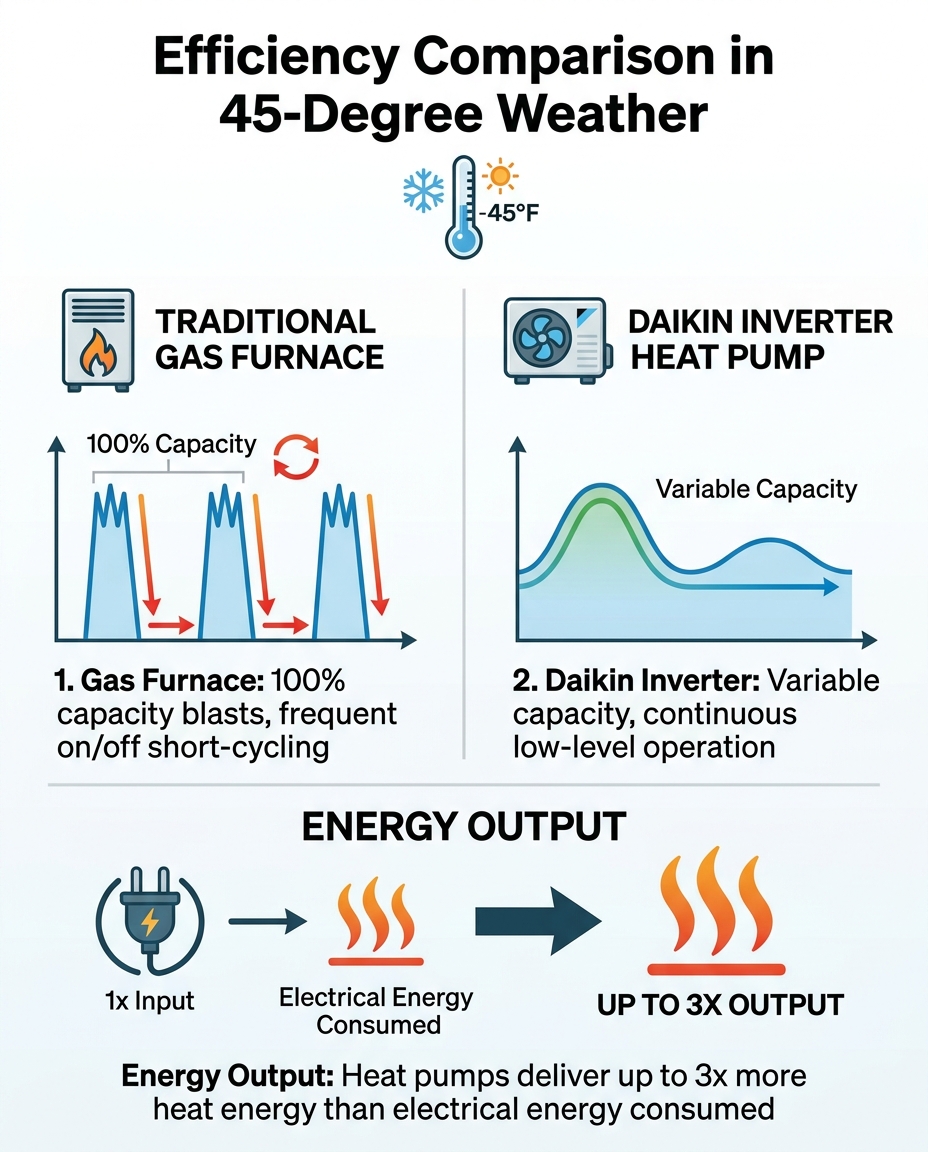
To understand why a different approach to heating is gaining traction, you first have to look at how conventional systems operate. Traditional gas furnaces are engineered for extreme, freezing climates. They generate heat by igniting fossil fuels in a combustion chamber, and they operate in a binary fashion: they are either running at 100% maximum capacity, or they are completely off.
The Problem with 100% Capacity in Mild Weather
With average winter lows in the low 40s across Mountain View and the Peninsula, our technicians frequently notice that a traditional gas furnace rarely operates in its ideal efficiency zone. Because the outside air is relatively mild, a furnace running at full blast will heat the indoor space incredibly fast. While rapid heating sounds beneficial, we often find it actually creates a mechanical problem known as short-cycling.
Short-cycling occurs when a powerful furnace turns on, aggressively blasts the home with hot air, reaches the thermostat's setpoint in a matter of minutes, and shuts down abruptly. A short time later, as the house naturally cools, the system fires up again. This constant on-and-off cycle leads to severe temperature swings—leaving some rooms sweltering while others remain chilly.
Unnecessary Wear and Tear
Beyond uneven indoor temperatures, we see firsthand on our service calls how short-cycling introduces immense physical stress to the HVAC equipment. Thermal shock affects the heat exchanger as it rapidly heats up and cools down multiple times an hour, accelerating metal fatigue. Furthermore, the blower motor consumes the most electricity during the initial startup phase. By constantly starting and stopping, an oversized gas furnace wastes a significant amount of energy and drastically shortens the lifespan of its own internal components. Burning natural gas at maximum capacity is simply an unnecessary extreme for regions that rarely see freezing temperatures.
The Mechanics of Inverter Technology in Moderate Weather
If traditional gas combustion is a blunt instrument, modern variable-speed technology is a precision tool. Rather than generating heat through combustion, we highly recommend systems like a Daikin inverter heat pump because they extract existing ambient thermal energy from the outdoor air and transfer it inside your home. Even when it is 45 degrees outside, there is still an abundant amount of heat energy in the air waiting to be captured and compressed.
Continuous Operation vs. Stop-and-Go Heating
The secret to this system's efficiency lies in the inverter-driven compressor. You can compare the inverter mechanism to the accelerator pedal of a car. Instead of flooring the gas pedal to 100% and then slamming on the brakes (which is how a standard single-stage furnace operates), an inverter compressor continuously adjusts its rotational speed to match the exact heating demand of the home.
If the temperature drops slightly, the Daikin inverter heat pump gently ramps up its speed to provide a steady, low-level stream of warm air. Once the desired indoor temperature is achieved, it dials back its power output, cruising at a highly efficient, low speed to maintain that exact temperature.
Maximizing Energy Transfer
Because these systems are moving heat rather than creating it from scratch, their efficiency ratings are exceptional. Air-source heat pumps can deliver up to three times more heat energy than the electrical energy they consume. This continuous, low-level operation eliminates the abrupt temperature swings associated with gas furnaces, providing superior indoor comfort, whisper-quiet operation, and a consistently warm environment throughout the entire house.
Side-by-Side Comparison: Efficiency, Fuel, and Performance
When evaluating these two distinct technologies side by side, the differences in how they consume energy and deliver comfort become starkly apparent. A Daikin inverter heat pump and a traditional gas furnace utilize entirely different metrics for measuring efficiency, rely on different fuel sources, and employ contrasting mechanical operations.
Understanding the Efficiency Metrics
Gas furnaces are measured by Annual Fuel Utilization Efficiency (AFUE), which represents the percentage of fuel converted directly into usable heat. Even the highest-efficiency condensing gas furnaces max out just below 100% AFUE, because some energy is always lost through the exhaust flue. Conversely, heat pumps are measured by Heating Seasonal Performance Factor (HSPF). Because heat pumps transfer existing heat rather than burning fuel, they frequently operate at efficiency levels equivalent to 300% or higher, meaning they output significantly more thermal energy than the electrical energy they draw from the grid.
• Energy Metric — Traditional Gas Furnace: AFUE (Maximum ~98% efficiency) — Daikin Inverter Heat Pump: HSPF (Can exceed 300% equivalent efficiency)
• Fuel Source — Traditional Gas Furnace: Natural Gas (Fossil fuel combustion) — Daikin Inverter Heat Pump: Electricity (Grid or solar powered)
• Operational Style — Traditional Gas Furnace: Single-stage (100% on or completely off) — Daikin Inverter Heat Pump: Variable-speed (Continuous, precise adjustments)
• Climate Suitability — Traditional Gas Furnace: Extreme, freezing climates (often oversized for CA) — Daikin Inverter Heat Pump: Moderate, mild climates (peak efficiency in CA)
• Temperature Control — Traditional Gas Furnace: Prone to temperature swings and hot/cold spots — Daikin Inverter Heat Pump: Consistent, even temperatures throughout the home

Environmental Impact and the Shift Toward Electrification
The decision to upgrade your HVAC equipment does not happen in a vacuum. California is currently undergoing a massive shift toward residential electrification, driven by broader environmental goals and a state-wide initiative to reduce reliance on natural gas. For the homeowners we serve throughout Mountain View and the Peninsula, transitioning away from on-site fossil fuel combustion aligns perfectly with these long-term sustainability targets.
Reducing Your Carbon Footprint
By eliminating the combustion chamber, a heat pump produces zero direct emissions at the home level. There is no exhaust flue, no carbon monoxide risk, and no natural gas lines required for operation. As the local electrical grid continues to incorporate higher percentages of renewable energy sources—such as wind and solar—the environmental footprint of operating an electric heat pump shrinks even further. For homes equipped with rooftop solar panels, the ability to power your heating system using energy generated on your own property is a massive advantage over paying monthly natural gas utility bills.
A Year-Round Climate Solution
Another major factor driving the shift away from standalone gas furnaces is the versatility of modern electric systems. A heat pump is not just a heater; it is a complete, two-in-one climate control solution. During the summer months, the system simply reverses its operation, extracting heat from inside your home and dumping it outside to provide high-efficiency air conditioning. If you are comparing Daikin and traditional AC systems in Mountain View, you will find that upgrading to a heat pump solves both your winter heating and summer cooling needs with a single, highly advanced piece of equipment.
Navigating High-Efficiency Upgrades and Incentives
While the mechanical and environmental benefits of inverter technology are clear, the initial transition away from a traditional gas furnace represents a significant investment in your home's infrastructure. Fortunately, making the switch to a high-efficiency Daikin inverter heat pump is more financially accessible than ever, thanks to a variety of incentive programs designed to encourage residential electrification.
The Long-Term Return on Investment
Federal tax credits may apply to qualifying high-efficiency heat pump installations, allowing homeowners to offset a portion of their tax liability when they upgrade their primary residence. Additionally, generic state and local utility incentive programs frequently offer rebates for replacing aging, inefficient gas appliances with advanced electric alternatives. These programs exist because utility companies recognize that reducing overall energy consumption through highly efficient variable-speed technology benefits the entire electrical grid.
Because incentive programs, tax codes, and utility rebates change frequently, it is important to consult with your local utility provider or a qualified tax professional to verify current program details and your specific eligibility. Beyond the initial incentives, the true financial advantage of an inverter heat pump lies in its long-term operational savings. By operating continuously in its peak efficiency zone, the system minimizes energy waste, keeping your monthly utility costs manageable even during the coldest weeks of the year.
Making Your Replacement Decision Before the Winter Rush
Timing is everything when it comes to major home upgrades. The September pre-heating season is the absolute best time to evaluate your equipment. Waiting until late fall or winter for a heating replacement invariably leads to scheduling delays, limited equipment availability, and the stress of dealing with an emergency service call when your aging furnace finally fails on a cold night.
Why Precise Sizing Matters More Than Ever
Selecting the right brand is only half the equation; installing the right size system is just as critical. An oversized heat pump will short-cycle just like an oversized gas furnace, negating the benefits of inverter technology. A professional assessment of your home's specific layout, thermal envelope, insulation levels, and ductwork condition is mandatory for achieving optimal performance.
Working with a local team that has a deep understanding of Silicon Valley microclimates ensures that you get precise sizing and the exact right technology for your local weather patterns. A system we design for the coastal fog of the Peninsula requires different calibration than one we install for the extreme heat of the inland valleys. By scheduling a professional evaluation of your Mountain View heating services needs with Plum HVAC now, you can explore all your options, calculate your potential energy savings, and have a new, highly efficient system installed long before the winter chill sets in.
Frequently Asked Questions About Heating in California
Are heat pumps effective in California winters?
Yes, they are highly effective. Because temperatures in the region rarely drop below freezing, air-source heat pumps operate at absolute peak efficiency. They do not experience the severe performance drop-offs that occur in extreme, sub-zero climates, making them the ideal heating solution for mild California winters.
How does a Daikin inverter heat pump compare to a gas furnace?
A gas furnace burns fossil fuel to create heat, blasting air at a single, high speed until the thermostat is satisfied. In contrast, a Daikin inverter heat pump transfers existing heat from the outside air into your home, continuously adjusting its compressor speed to maintain precise comfort without wasting energy on constant stop-and-go cycles.
Do I need backup heat with a heat pump in California?
In moderate regions like Mountain View and the Peninsula, backup heating strips or dual-fuel systems are generally unnecessary. Modern inverter heat pumps are incredibly powerful and can easily handle the mild winter lows of the Bay Area without needing a secondary heat source to supplement their output.
Do I need a gas furnace if I have a heat pump in California?
No, you do not need a gas furnace if you install a properly sized heat pump. An advanced heat pump provides 100% of the heating required for mild California winters, allowing homeowners to cap their gas lines and completely transition away from natural gas for their indoor climate control.
Why are heat pumps replacing gas furnaces?
Heat pumps are replacing gas furnaces because they offer significantly higher energy efficiency and provide both heating and cooling in a single unit. Furthermore, they align with state-wide environmental goals by eliminating on-site fossil fuel combustion, reducing household carbon footprints, and integrating perfectly with renewable energy sources like solar power.
Let Us Help You Weigh Your Heating Options
When Comparing Daikin Heat Pumps to Traditional Furnaces for Mild California Winters, the best choice always comes down to matching the technology to the local climate. While gas furnaces have served homes well for decades, the continuous comfort, safety, and efficiency of inverter technology make it the clear frontrunner for homeowners in Mountain View and the Peninsula. You do not have to make this important decision alone. Reach out to our professionals at Plum HVAC to receive a personalized assessment of your home's thermal envelope and heating needs, ensuring you invest in a system that will deliver reliable, efficient comfort for years to come.
hear what our satisfied clients have to say

.svg)
Service areas
.avif)