
Is It Worth Repairing a 10-Year-Old Air Conditioner in August?
The Late-Summer AC Breakdown Dilemma
Is your 10-year-old air conditioner struggling to keep up, or worse, completely dead just as the late summer heat peaks? When a decade-old system breaks down in August, it forces a frustrating and sudden choice. You are suddenly stuck deciding whether to patch up an aging unit just to survive the rest of the season, or if it is finally time to plan for a full replacement. Searching for answers to "Is It Worth Repairing a 10-Year-Old Air Conditioner in August?" usually leaves homeowners with more questions than clarity, especially when the house is growing warmer by the hour.
If you find yourself in this situation, you need a professional assessment to weigh your options. You can explore our air conditioning services to see how an expert evaluation can help clear up the confusion.
Losing your cooling capacity when the summer heat is still peaking is incredibly stressful. You want immediate relief, but you also want to avoid throwing good resources after bad. Making the right choice requires a logical framework. By evaluating the system's viability, warranty status, and the severity of the failure, a skilled technician can help you determine the smartest path forward without relying on guesswork.
Why the 10-Year Milestone Matters for Air Conditioners
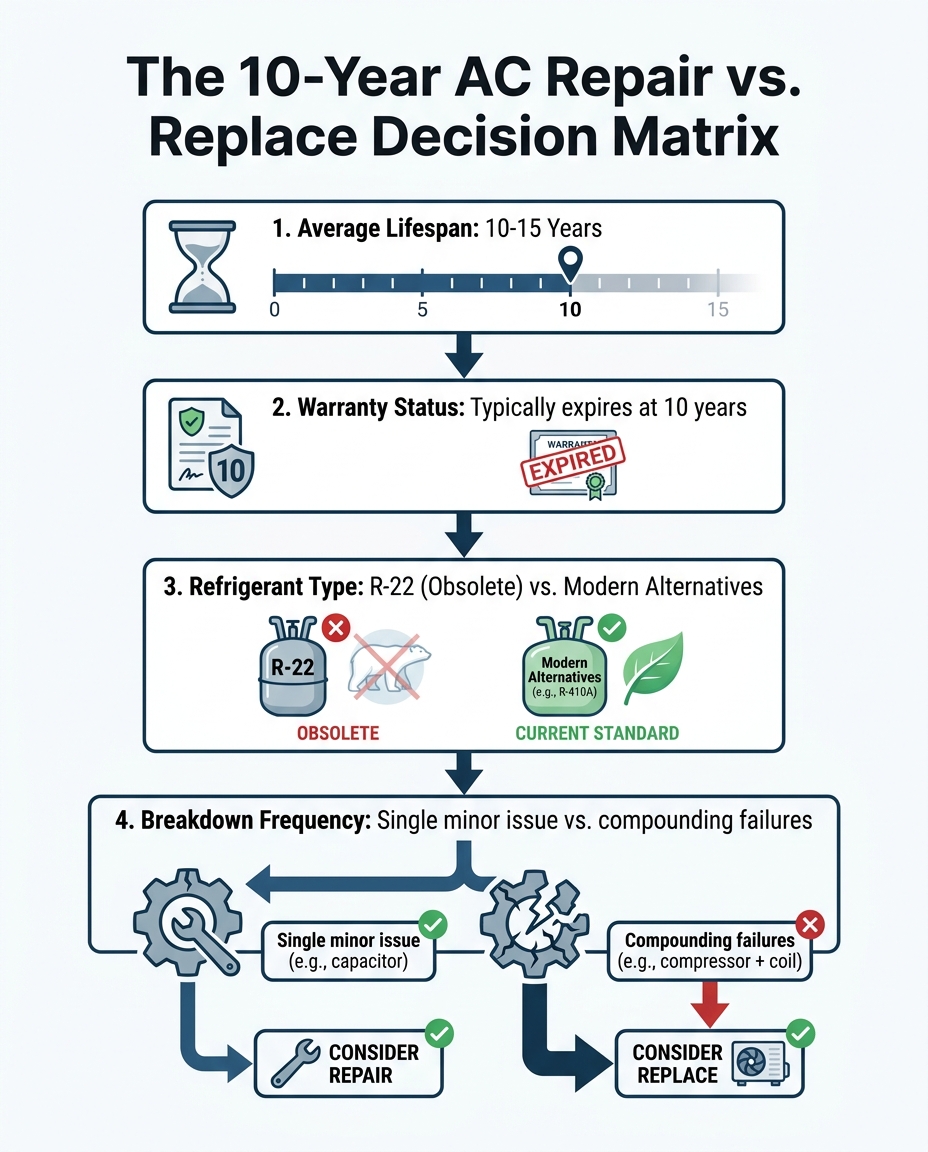
Age is one of the most critical factors when evaluating any mechanical system. The average lifespan of a central air conditioning unit ranges from 10 to 15 years. Once a system reaches that decade mark, it enters the final stage of its life cycle. The wear and tear of thousands of operating hours begin to take a toll on internal components, shifting the system from reliable operation into a period of unpredictable performance.
Warranty Expirations and Out-of-Pocket Risks
The 10-year mark is significant primarily because it is the exact point when most manufacturer warranties expire. When you first install a system, major components like the compressor and the evaporator coil are typically covered against premature failure. Once that warranty lapses, the full burden of any major component failure shifts entirely onto the homeowner.
This creates a compounding risk. If you replace a failing blower motor on an out-of-warranty system, there is no guarantee that the aging compressor will not fail a few weeks later. You risk paying for multiple significant repairs in a short timeframe, none of which add to the overall lifespan or efficiency of the unit.
The R-22 Refrigerant Phase-Out
Older systems face an additional, significant hurdle: the type of refrigerant they use. If your air conditioner is a decade old or older, there is a strong possibility it utilizes R-22 refrigerant. The Environmental Protection Agency officially phased out R-22 in 2020 due to environmental concerns, meaning it can no longer be manufactured or imported.
Because of this phase-out, servicing obsolete refrigerant systems is highly impractical. If your aging unit develops a refrigerant leak, simply "topping it off" is no longer a viable or sensible option. Repairing leaks and sourcing reclaimed R-22 is an extensive process, making major repairs on these older systems difficult to justify.
• Under 5 Years — Typical Warranty Status: Fully Covered (Parts/Compressor) — Refrigerant Type: Modern (R-410A or newer) — Failure Risk Profile: Low (Mostly minor wear)
• 5 to 9 Years — Typical Warranty Status: Covered (Varies by registration) — Refrigerant Type: Modern (R-410A or newer) — Failure Risk Profile: Moderate (Component fatigue)
• 10+ Years — Typical Warranty Status: Expired — Refrigerant Type: Likely R-22 (Obsolete) — Failure Risk Profile: High (Major systemic failures)
The Bay Area Climate Factor: Cooling Needs Beyond August
When an air conditioner breaks down late in the summer, a common reaction is to wonder if you can just wait it out until winter. However, the regional climate reality dictates otherwise. In our area, August is rarely the end of the cooling season. The Bay Area climate is known for its shifting weather patterns, meaning that late summer heat extends well into autumn.
Mountain View and the surrounding communities frequently experience an "Indian Summer" effect. High temperatures and lingering heat waves often persist into September and even October. The misconception that a homeowner can simply open a few windows and comfortably wait for winter without reliable cooling quickly fades when a late-season heat wave strikes. The indoor temperature can rapidly become uncomfortable and disruptive to your daily life.
Because the demand for cooling stretches far beyond August, "toughing it out" is generally unfeasible. You need a system that can reliably handle weeks or even months of continued operation. Upgrading to a new unit ensures you are prepared for these extended warm periods. Planning an AC replacement in Mountain View addresses this immediate need while preparing your home for the years ahead.
Diagnosing the Severity of Late-Summer Failures
Not every breakdown means the end of your air conditioner's life. Helping you understand the difference between a minor end-of-season fix and a catastrophic failure is a crucial part of the evaluation process. The severity of the diagnosis heavily influences whether a repair is a sensible bridge to the next season or a poor investment.
Minor Fixes vs. Major Overhauls
Identifying simple wear-and-tear components is the first step a technician takes. Minor electrical issues are common after a long, hot summer of heavy usage. Parts like capacitors, contactors, and sometimes even fan motors can fail due to heat and continuous operation. These are relatively straightforward components that are easily swapped out. If your 10-year-old system is otherwise in good condition, replacing a failed capacitor might be all it takes to restore cooling.
On the other hand, recognizing signs of deep systemic failure is vital. Major mechanical failures require extensive labor and parts. If the system has a severe refrigerant leak in the evaporator coil, or if the compressor has locked up, the required intervention is massive. We often see late August AC compressor failures because the system has been pushed to its absolute limit for months. When a compressor fails on a decade-old unit, the impact on the entire system's viability is usually fatal.
Signs of a minor fix:
• Electrical buzzing: Often points to a failing capacitor or contactor.
• Tripped breakers: Can sometimes be resolved with simple electrical component replacements.
• Clogged drains: A common late-summer issue that causes the system to shut down safely but is easily cleared.
Signs of a major overhaul:
• Hissing or bubbling sounds: Strongly indicates a significant refrigerant leak.
• Grinding metal noises: Usually points to internal compressor damage or complete motor failure.
• Frequent, repeated breakdowns: If the system has broken down multiple times this season, the core components are actively failing.
Avoiding the Sunk Cost Trap at the End of the Season
When you have already spent resources maintaining a system over the years, it is easy to fall into the sunk cost fallacy. This is the belief that because you have invested heavily in the past, you must continue investing to "save" the unit, even when it no longer makes logical sense. At the end of the season, this trap is especially dangerous.
A helpful framework is the percentage-of-replacement-value concept. Rather than looking at raw numbers, consider the repair as a fraction of a brand-new system. If repairing your decade-old unit requires a significant percentage of what a highly efficient, fully warrantied new system would require, the repair is likely a poor investment. Applying a "band-aid" fix in late summer often leads to a frustrating reality: the patched-up unit limps through October, sits idle all winter, and immediately fails again when you turn it on the following spring, leading to a full replacement anyway.
This is why a comprehensive, honest system assessment is so valuable. Getting a transparent, honest technician assessment that prioritizes your long-term value over pushing for a quick, expensive end-of-season band-aid is the best way to protect your home. A reliable professional will tell you when it is time to walk away from a dying unit.

Exploring the Long-Term Advantages of a Planned Replacement
If the assessment reveals that repairing the unit is a sunk cost, it is time to shift the perspective from immediate panic to strategic planning. Upgrading your system now offers significant long-term benefits that a patched-up old unit simply cannot provide.
Consider these advantages of a planned replacement:
• Massive leaps in energy efficiency: Technology has advanced rapidly over the last decade. A new unit will have a much higher SEER (Seasonal Energy Efficiency Ratio) rating, meaning it uses significantly less energy to cool your home compared to decade-old technology.
• Access to modern incentives: Depending on the efficiency of the new system, generic federal tax credits and local utility rebates may apply to qualifying high-efficiency installations. (Always verify current programs with your utility provider or a tax professional).
• Flexible payment solutions: A planned replacement allows you to explore HVAC financing options that fit your household budget, rather than scrambling for emergency repair funds.
• Restored peace of mind: A new installation comes with a fresh, comprehensive warranty. You can enjoy reliable performance for the next decade without worrying about when the next breakdown will occur.
Frequently Asked Questions About Aging AC Units
Before diving into specific questions, keeping up with regular AC maintenance is always the best way to monitor your system's health and prevent sudden late-summer surprises. Here are the most common questions homeowners ask when facing the 10-year milestone.
Is it worth fixing a 10-year-old air conditioner?
It depends on the severity of the repair, your current warranty status, and the type of refrigerant the system uses. Minor repairs, such as replacing a capacitor or clearing a drain line, are usually worth it to keep the system running. However, major failures—like a dead compressor or a massive R-22 refrigerant leak—usually dictate that a replacement is the smarter financial move.
Should I wait until fall to replace my AC?
Waiting until fall can be beneficial for scheduling, but only if your current system can safely and reliably cool your home through lingering late-summer heat. If your system is completely dead in August and your region experiences hot weather through October, waiting is often not feasible. A planned replacement now ensures your home remains livable during the transition of seasons.
What is the rule of thumb for replacing an air conditioner?
A common industry framework involves multiplying the system's age by the estimated repair cost percentage to determine if replacement is the smarter long-term investment. If the resulting calculation represents a significant portion of a new system's value, it is generally recommended to replace the unit. This helps homeowners avoid pouring resources into a system that is nearing the end of its functional lifespan.
Is it cheaper to replace an AC in the fall?
Off-season installations can sometimes offer more flexible scheduling and seasonal promotions, making planned replacements advantageous over emergency summer swaps. Because emergency demand drops after the peak summer heat subsides, installation teams often have greater availability. However, the best time to replace a unit is before a catastrophic failure forces an emergency decision.
Can regular upkeep extend a 10-year-old system's life?
Consistent professional tune-ups can maximize the lifespan of an older unit, though they cannot reverse fundamental mechanical wear. Routine upkeep keeps coils clean, ensures proper airflow, and catches minor electrical issues before they cascade into major failures. While it won't make a 10-year-old system immortal, it ensures the unit operates as efficiently and reliably as possible in its final years.
Making a Confident Choice for Your Home's Comfort
Navigating an August breakdown does not have to be a stressful guessing game. The right choice ultimately depends on balancing the severity of the required repair against the system's age, warranty status, and the remaining weeks of the cooling season. Understanding this framework allows you to view the situation clearly, avoiding the trap of sunk costs and endless patch-ups.
A clear, actionable assessment removes the guesswork from the equation entirely. By having a skilled professional evaluate the exact condition of your equipment, you gain the insights needed to make an informed decision. Whether that means a minor late-summer fix or planning a strategic upgrade, you can move forward with a clear, actionable framework to confidently make the repair-or-replace decision without worrying if you are throwing good resources after bad.
hear what our satisfied clients have to say

.svg)
Service areas
.avif)