

Why Late August is the Most Common Time for AC Compressor Failures in Milpitas
The Breaking Point: Why South Bay Summers Push AC Units to the Edge
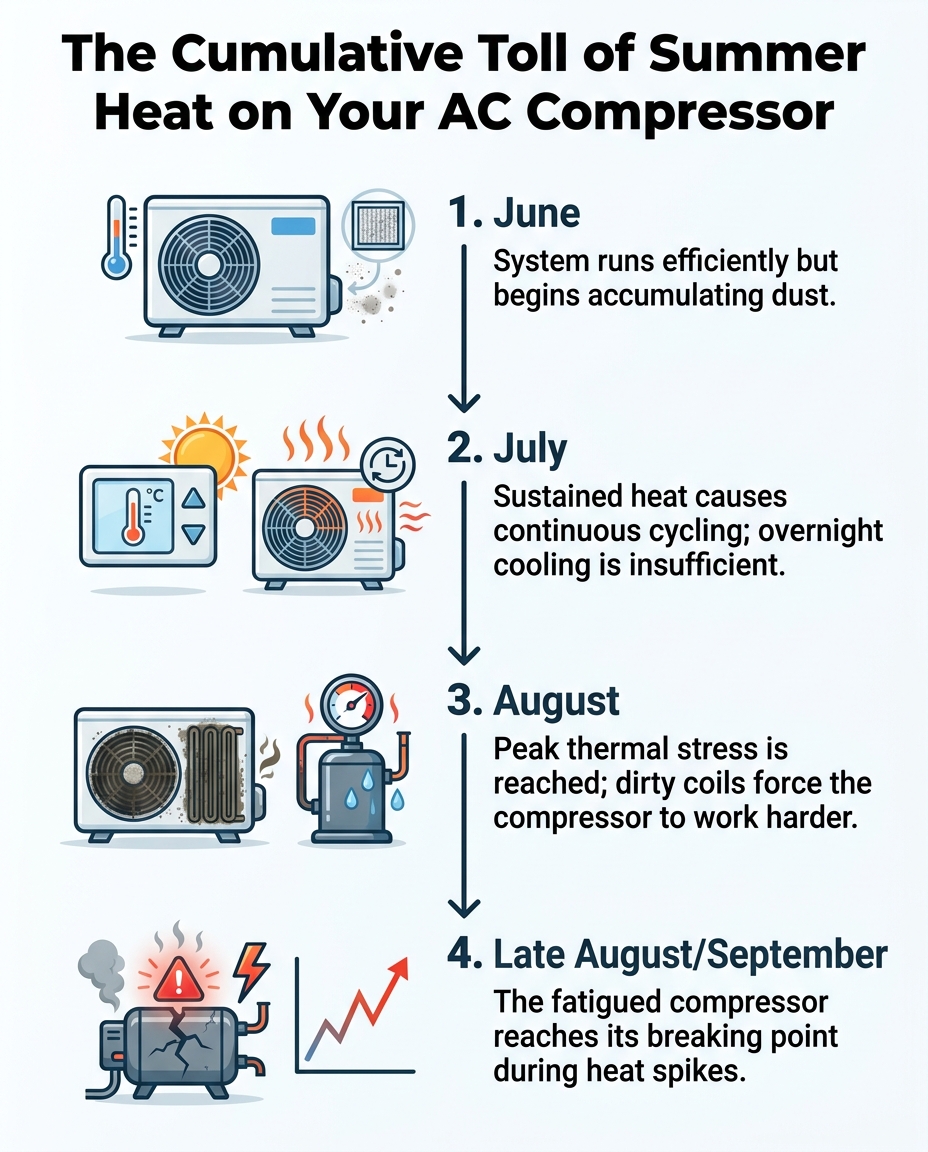
Late summer heat is settling in across the valley, and if you are wondering why late August is the most common time for AC compressor failures in Milpitas, the answer lies in the relentless workload your system has endured since June. Most homeowners assume that an air conditioner breaks down simply because it is exceptionally hot on one specific afternoon. In reality, a late-summer breakdown is rarely the result of a single hot day. Instead, it is the culmination of months of continuous thermal stress, friction, and electrical fatigue.
By the time late August arrives, your cooling system has been running almost non-stop for weeks. The compressor, which serves as the heart of your entire HVAC system, has been pumping refrigerant and expelling heat day after day. When a system struggles just as the back-to-school season begins, it is experiencing severe seasonal fatigue. Recognizing this pattern is the first step toward preventing a total system failure before the inevitable September heat spikes arrive.
Addressing a struggling system right now is critical. Waiting for the unit to fail completely leaves your home vulnerable during some of the most uncomfortable weeks of the year. That is exactly why comprehensive air conditioning services are so essential for homeowners in Milpitas and the surrounding South Bay area. Taking proactive steps today allows you to evaluate your system's health, understand the cumulative wear-and-tear it has sustained, and make an informed decision about whether a repair or a full replacement makes the most sense for your home.
The Mechanics of Cumulative Thermal Stress
To understand why systems fail late in the season, you have to look at the physical toll continuous operation takes on the equipment. The compressor is responsible for compressing low-pressure refrigerant gas into a high-pressure, high-temperature gas, which then flows to the condenser coil to release heat outside. This process naturally generates a significant amount of heat within the compressor itself. When the system operates under continuous thermal stress without adequate cool-down periods, the internal components begin to degrade.
According to Department of Energy (DOE) cooling efficiency guidelines, residential cooling systems are designed to cycle on and off, allowing the equipment to rest and dissipate internal heat. However, during the intense summer months, these natural resting periods vanish, leading to a compounding problem that peaks just as we enter the late August to early September heatwaves.
Continuous Cycling Without Rest
When your air conditioner runs continuously from late morning until well after sunset, the internal motor windings inside the compressor are subjected to relentless heat. These windings are coated with a thin layer of insulation. Over time, sustained high temperatures cause this insulation to break down, increasing the risk of an electrical short.
Furthermore, the compressor relies on specialized oil for lubrication, much like the engine in your car. Under normal operating conditions, this oil maintains the perfect viscosity to keep moving parts sliding smoothly. However, extreme and prolonged thermal stress causes the oil to break down and thin out. When the lubrication fails, internal friction skyrockets. This friction generates even more heat, creating a destructive cycle that rapidly accelerates mechanical wear and tear. By late August, a compressor that has been running on degraded oil for two months is highly susceptible to locking up entirely.
Inadequate Overnight Heat Dissipation
One of the unique challenges of living in Milpitas and the surrounding South Bay area is the regional climate pattern during peak summer. While the daytime temperatures are punishing, the overnight temperatures often remain uncomfortably warm. This sustained heat prevents the outdoor unit from properly dissipating the thermal energy it built up during the day.
Because the ambient outdoor air remains warm, the condenser coil struggles to dump heat efficiently. As a result, the compressor never fully cools down overnight. When the thermostat calls for cooling the next morning, the compressor starts the new day already thermally stressed. This compounding effect means that by the time August ends, the unit is operating at a severe disadvantage, pushing it closer to the breaking point with every cycle.

Warning Signs Your Compressor is Fatigued
A compressor rarely fails without giving you a few warning signs first. Because replacing this component is a major undertaking, catching the symptoms of fatigue early can sometimes save the unit, or at least give you time to plan for a replacement rather than scrambling during a late August to early September heatwave. If you need ac repair Milpitas residents trust, the first step is knowing exactly what symptoms to report to your technician.
Here are the primary indicators that your system is struggling under the weight of late-summer cumulative stress:
• Auditory Alerts: Listen closely to the outdoor unit when it starts up. If you hear loud grinding, screeching, or clanking metal-on-metal noises, the internal lubrication has likely failed, or internal components have broken loose.
• Hard Starting: If your air conditioner shudders violently when turning on, or if you notice the lights in your house dimming momentarily when the system kicks in, the compressor is drawing excessive electrical current to overcome mechanical resistance.
• Continuous Operation with Lukewarm Air: A system that runs for hours but fails to lower the indoor temperature is a classic sign of a failing compressor that can no longer pump refrigerant efficiently.
• Frequent Tripped Breakers: When a compressor overheats and pulls too much amperage, it will trip your electrical panel's circuit breaker to prevent a fire hazard. If this happens repeatedly, do not just reset the breaker—the system requires professional attention.
If you notice any of these symptoms, scheduling prompt AC maintenance in Milpitas is the best way to get a definitive diagnosis before the system locks up completely.
Auditory Alerts: Grinding and Screeching
The sounds your air conditioner makes are often the most reliable diagnostic tools you have as a homeowner. A healthy compressor operates with a steady, consistent hum. When the internal bearings begin to fail due to heat degradation, you will hear a distinct grinding noise. A high-pitched screeching or squealing sound, on the other hand, often points to a dangerous buildup of internal pressure. These auditory alerts indicate severe mechanical distress and should never be ignored, as allowing the unit to continue running will almost certainly result in catastrophic failure.
Electrical Strain and Hard Starting
"Hard starting" is a phenomenon that occurs when the compressor struggles to overcome the initial mechanical inertia required to begin pumping refrigerant. Because the internal components are swollen from heat or starved of lubrication, the motor requires a massive surge of electricity to get moving. This excessive amperage draw is what causes the lights in your home to dim. Over time, this electrical strain damages the run capacitor, the contactor, and the wiring, putting the entire electrical side of your HVAC system at risk.
The Role of Deferred Maintenance in Late-Summer Burnouts
A typical pattern we see often in Milpitas and the surrounding South Bay area is that end-of-season breakdowns heavily correlate with a lack of early-season preparation. Energy Star HVAC maintenance recommendations strongly emphasize the importance of airflow and efficiency, noting that even minor restrictions can force a system to work exponentially harder.
The impact of dirty condenser coils: Throughout the spring and early summer, your outdoor unit pulls in massive amounts of air to dissipate heat. Along with that air comes dust, pollen, grass clippings, and dirt. By late August, this debris forms an insulating blanket over the condenser coils. Instead of releasing heat into the outdoor air, the heat is trapped inside the unit, forcing the compressor to operate at dangerously high temperatures just to achieve the same cooling output inside your home.
The danger of undetected refrigerant leaks: Another major factor in late-summer burnouts is operating the system with a low refrigerant charge. Refrigerant is the lifeblood of the cooling process; it also plays a critical role in cooling the compressor motor itself. If a tiny, undetected leak developed in the spring, the system may have had just enough refrigerant to keep you comfortable in June. But by August, the depleted refrigerant levels mean the compressor has to run twice as long to cool the house, all while being deprived of the cooling effect the refrigerant normally provides.
Routine professional care acts as a preventative buffer against this severe seasonal strain. Enrolling in a routine maintenance plan ensures that coils are cleaned, electrical connections are tightened, and refrigerant levels are precisely calibrated long before the peak heat arrives.
Navigating the Repair vs. Replacement Decision
Facing a major system failure at the end of the cooling season puts homeowners in a tough position. You need immediate relief from the heat, but you also want to make a smart, long-term financial decision. Deciding whether to salvage a stressed unit or invest in a brand-new system requires a careful evaluation of the equipment's age, condition, and warranty status.
To help you weigh your options, consider the following framework when evaluating a compressor failure in the South Bay climate:
• System Age — Consider Repairing If...: The air conditioner is under 10 years old and has a solid history of routine maintenance. — Consider Replacing If...: The unit is over 10 to 12 years old and has been struggling to keep up with Milpitas summers.
• Warranty Status — Consider Repairing If...: The compressor part is still fully covered under the manufacturer's original warranty. — Consider Replacing If...: The warranty has expired, leaving you responsible for the full cost of the part and labor.
• Failure Cause — Consider Repairing If...: The issue is an isolated electrical component (like a bad capacitor or contactor) rather than a locked rotor. — Consider Replacing If...: The compressor has suffered a catastrophic mechanical failure or there are severe refrigerant leaks in the coils.
• Overall Efficiency — Consider Repairing If...: Your current energy bills are reasonable and the system cools the home evenly. — Consider Replacing If...: You are experiencing high utility bills and uneven cooling, indicating the system is fundamentally inefficient.
Assessing the Age and Condition of Your Unit
In the demanding South Bay climate, a typical residential air conditioner has a functional lifespan of about 12 to 15 years. If your system is approaching or exceeding this age range, investing in a major repair like a compressor replacement is often a losing battle. Older systems use outdated refrigerants and less efficient technology. Factoring in the history of previous repairs is also vital; if you have already replaced the blower motor and patched refrigerant leaks in recent years, a compressor failure is a strong signal that it is time to move on.
Weighing Warranty Status and Efficiency Upgrades
Before making any decisions, you must verify the warranty status of your equipment. Many reputable manufacturers offer 10-year warranties on the compressor, provided the system was registered and maintained properly. If the part is covered, a repair becomes a much more viable option. However, if you are looking at an out-of-warranty replacement, upgrading to a newer, high-efficiency system is usually the wiser investment. Modern systems offer superior humidity control, quieter operation, and significantly lower energy consumption. Additionally, upgrading to a qualifying high-efficiency system or heat pump may make you eligible for federal tax credits or local utility energy rebates (we always advise verifying current programs and eligibility with a tax professional or your utility provider). For a deeper dive into your equipment options, review our residential HVAC brands warranty comparison guide.
Prompt Relief for End-of-Season AC Emergencies
Losing your air conditioning in late August is not just an inconvenience; in a well-insulated modern home, indoor temperatures can rise to uncomfortable and even unsafe levels within a matter of hours. When a compressor locks up, you need a team that understands the urgency of the situation and has the local resources to respond quickly.
Plum HVAC's Local Expertise: Working with a team deeply rooted in the community means you benefit from localized expertise. Plum HVAC understands the specific climate demands, building codes, and architectural styles of Milpitas and the surrounding South Bay area. When end-of-season burnouts happen, our prompt emergency repair and replacement availability ensures that you are not left waiting for days on end while parts are shipped from across the country.
Whether the solution requires swapping out a failed capacitor, replacing an under-warranty compressor, or executing a full system upgrade, professional assessment is the fastest route to restoring your home's comfort. An expert technician can accurately diagnose the root cause of the failure, ensuring that if a new system is installed, it won't fall victim to the same airflow or electrical issues that doomed the previous unit. If you are facing a total breakdown, securing professional AC installation in Milpitas can get your home back to a comfortable temperature before the next major heatwave strikes.
Frequently Asked Questions About Late-Summer AC Failures
Why did my AC compressor suddenly stop working?
While it may seem sudden, a compressor failure in late summer is usually the result of cumulative thermal stress and continuous operation over several months. Components like motor windings and internal lubrication degrade slowly under intense heat. Eventually, the mechanical friction or electrical strain becomes too great, and the compressor locks up or shorts out without any immediate prior warning.
How do you know if your home AC compressor is bad?
The most common indicators of a bad compressor include loud grinding or screeching noises from the outdoor unit, the system tripping your electrical breaker repeatedly, or the air conditioner running continuously while only blowing lukewarm air indoors. Additionally, if you notice the lights in your home dimming when the system tries to start, the compressor is likely pulling excessive amperage because it is mechanically stuck.
Should I repair or replace my AC compressor?
This decision depends heavily on the age of your system and its warranty status. If the unit is under 10 years old and the compressor is covered by a manufacturer warranty, repairing it is usually the most cost-effective choice. However, if the system is older, out of warranty, and uses outdated refrigerant, investing that money into a new, high-efficiency replacement is generally the smarter long-term financial decision.
Why do AC compressors fail in summer?
Compressors fail in the summer because they are subjected to peak thermal stress and continuous cycling without adequate rest periods. In regions with warm overnight temperatures, the outdoor unit cannot fully dissipate the heat it accumulated during the day. This compounding heat breaks down internal lubrication and electrical insulation, leading to premature mechanical and electrical failure.
Can a dirty condenser coil cause a compressor to overheat?
Yes, a dirty condenser coil is one of the leading causes of compressor overheating. The outdoor coil is responsible for releasing the heat absorbed from your home into the outside air. When the coil is covered in a blanket of dust, dirt, and debris, the heat remains trapped inside the unit, forcing the compressor to operate at dangerously high temperatures until it eventually fails.
How long does a typical residential AC compressor last in the South Bay?
In the Milpitas and surrounding South Bay area, a well-maintained residential AC compressor typically lasts between 12 and 15 years. The exact lifespan depends heavily on how often the system is serviced, the quality of the original installation, and whether the unit is properly sized for the home. Systems that skip annual maintenance often see compressor failures well before the 10-year mark due to accelerated wear and tear.
Secure Your Comfort Before the Next Heat Spike Hits
Understanding why late August is the most common time for AC compressor failures in Milpitas empowers you to take control of your home's comfort. The breakdowns we see late in the season are the direct result of months of hard work, continuous cycling, and cumulative thermal stress. Your air conditioner has battled the heat tirelessly since June, and ignoring the warning signs of fatigue now will only lead to more severe problems down the road.
You do not have to endure the late August to early September heatwaves with a struggling, unreliable cooling system. Recognizing the symptoms of a failing compressor and understanding the framework for repairing versus replacing allows you to make the right choice for your family and your budget. Take action today by scheduling a professional evaluation to restore your peace of mind and ensure your home remains an oasis of cool, reliable comfort, no matter how high the temperatures climb.
hear what our satisfied clients have to say

.svg)
Service areas
.avif)