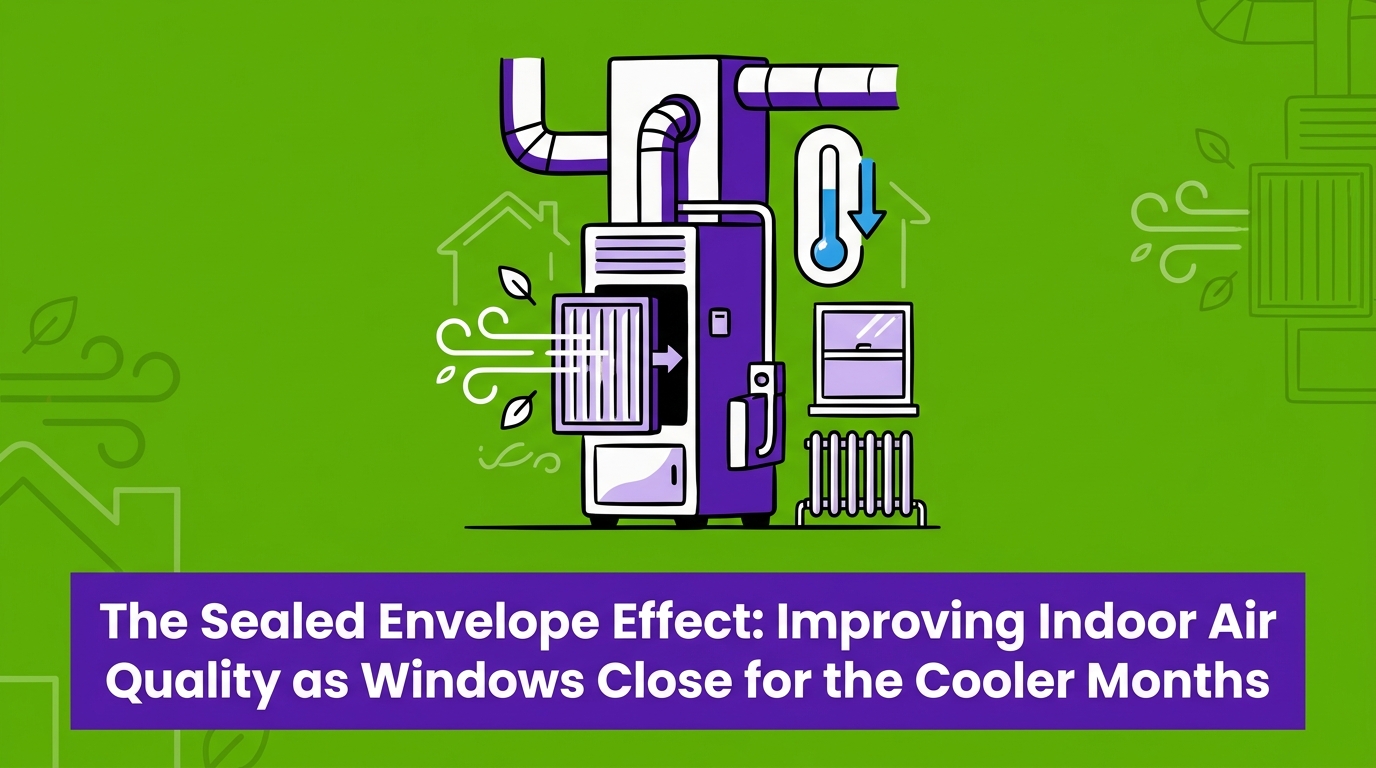
Improving Indoor Air Quality as Windows Close for the Cooler Months
The Shift to Fall: When Closed Windows Trap Stale Air
The early fall/September transition is finally bringing those welcome, cooler evening temperatures, which means it is time to start thinking about improving indoor air quality as windows close for the cooler months. You shut the glass to keep the evening chill out, which feels great for your comfort, but it inadvertently creates what building scientists call a 'sealed envelope' effect inside your living space. Without the natural breeze flowing through your screens, stagnant air, daily household allergens, and lingering odors get trapped indoors with nowhere to go. You are now faced with a distinct decision point: how do you maintain fresh, breathable air without sacrificing your indoor comfort or letting the cold take over your house?
Before you switch over to your heating systems for the winter, preparing your home's air management strategy is the smartest move you can make. Taking proactive steps now ensures that your indoor environment remains healthy and comfortable long before the heavy winter chill sets in. Here is what you need to know about navigating this seasonal shift.
Understanding the 'Sealed Envelope' in Modern Homes
Modern homes are constructed very differently than the houses built fifty years ago. Today, builders use advanced weatherstripping, specialized vapor barriers, and expanding spray foam insulation to create an incredibly tight building envelope. This tight construction is excellent for preventing heat loss and keeping your utility bills low, especially under strict local mandates like the California Title 24 energy standards. These regulations make tight building envelopes common across the region to maximize energy efficiency. However, that tight seal comes with a significant side effect: it traps everything inside.
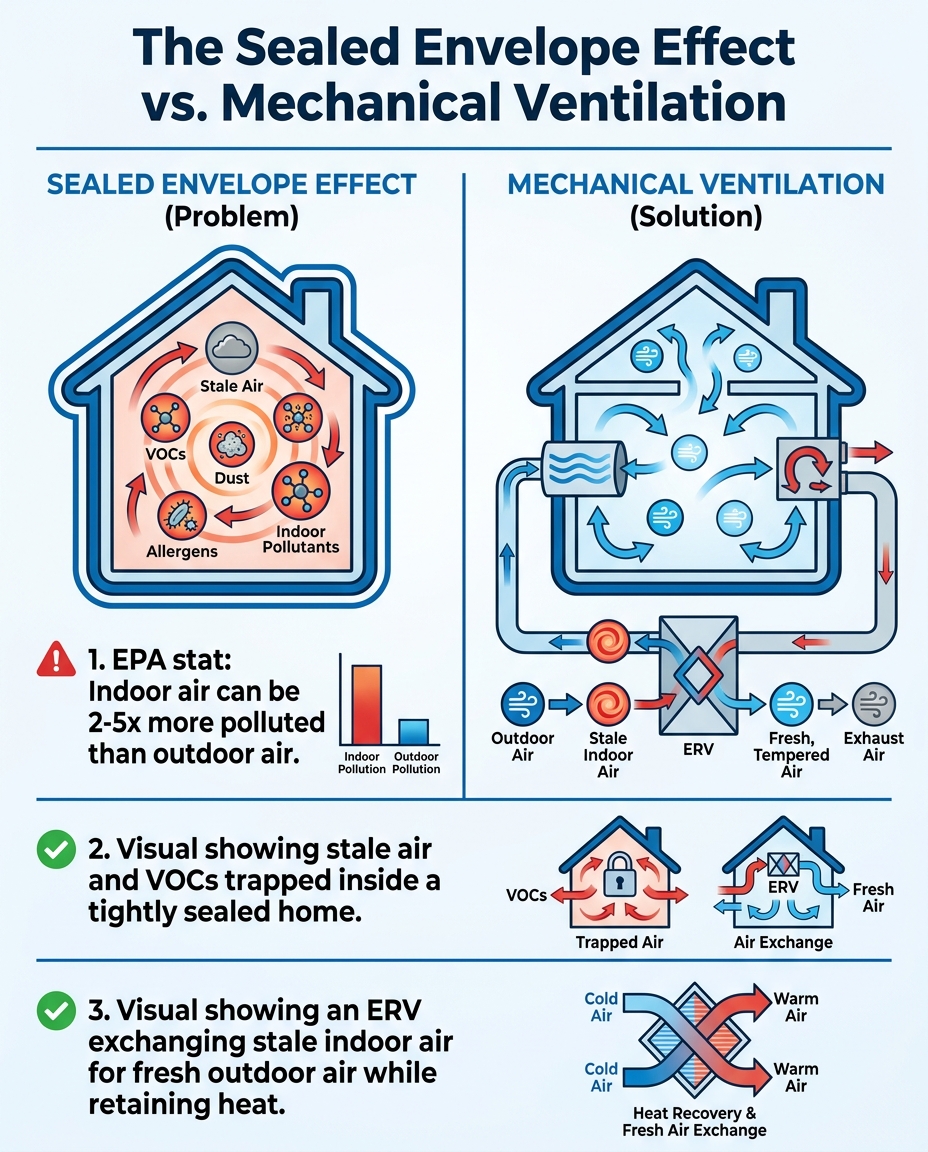
The indoor air reality: The EPA notes that indoor air can be 2 to 5 times more polluted than outdoor air. When your home cannot naturally "breathe" through small gaps and drafts, airborne contaminants accumulate rapidly.
• Volatile Organic Compounds (VOCs): Gases released by fresh paint, new furniture, cleaning supplies, and even cooking.
• Biological contaminants: Pet dander, dust mites, and seasonal pollen that settle into carpets and upholstery.
• Excess moisture: Humidity generated from hot showers, boiling water, and simple breathing, which can encourage mold growth if left unmanaged.
While energy efficiency is incredible for your monthly utility bills, it requires an active strategy to prevent the air from becoming stagnant. You cannot rely on a leaky house to provide your fresh air anymore.
The Hidden Cost of Energy Efficiency
Older, drafty homes naturally exchanged indoor and outdoor air multiple times a day. If you burned toast or used strong cleaning chemicals, the odors dissipated quickly through poorly sealed windows and uninsulated attics. Modern airtight construction stops this natural air exchange entirely. Without a dedicated pathway for fresh air to enter and stale air to exit, your home effectively becomes a closed loop. The very features that keep your conditioned air inside are the same features that trap indoor pollutants, leading to stuffy rooms, lingering smells, and increased allergy symptoms as the season progresses.
The Double Threat: Cooler Evenings and Lingering Wildfire Smoke
The shift into fall brings a unique set of challenges, particularly for homeowners dealing with regional climate realities. In the Bay Area and Silicon Valley, early fall brings those much-needed cooler nights, but it also remains prime time for late-season wildfire smoke. This creates a frustrating double threat for your indoor air quality.
During the day, you might open your windows to catch a breeze, unknowingly allowing fine smoke particulates and ash to drift into your living room. When the sun goes down and the temperature drops, you close the windows to keep out the chill. Now, those smoke particles are locked inside your tightly sealed home. Because the natural ventilation pathway is shut, the smoke lingers in your air, settles on your furniture, and circulates through your ductwork every time the blower motor kicks on.
Relying on natural ventilation by opening windows is no longer a viable strategy when outdoor air quality is compromised by regional fires. You need a way to filter out those particulates actively. Understanding how wildfire smoke changes your filter schedule is a crucial part of managing this transition. When the outdoor air is thick with smoke, your home must serve as a safe, clean sanctuary, which requires moving away from open windows and toward mechanical filtration.
Why Natural Ventilation Isn't Enough Anymore
For generations, the standard advice for a stuffy house was simple: just crack a window. In today's tightly sealed homes, that outdated method simply does not work efficiently. Cracking a window provides inconsistent, localized air movement. The room with the open window might feel a bit fresher, but the bedrooms down the hall remain completely stagnant.
Relying on open windows also introduces severe temperature fluctuations. You are letting your carefully conditioned, expensive warm air escape right out the window, forcing your heating system to work overtime to compensate for the incoming cold draft. This completely defeats the purpose of having an energy-efficient home.
The drawbacks of open-window ventilation:
• Unfiltered air entry: Open windows invite pollen, dust, and exhaust fumes directly into your living space without any filtration barrier.
• Security concerns: Leaving windows cracked overnight or while you are away from home poses a clear security risk.
• Humidity loss: Cold fall air is naturally drier. Letting it flood your home unmanaged can drop your indoor humidity to uncomfortable levels, leading to dry skin and static shocks.
Whole-home mechanical ventilation is the modern standard for energy-efficient properties. It provides a controlled, filtered, and consistent exchange of air that reaches every room in the house, setting the stage for advanced technologies that solve the sealed envelope issue without compromising your thermal comfort.
How Mechanical Ventilation Transforms Stale Air
When you cannot open a window, you need your home to breathe for you. This is where Energy Recovery Ventilators (ERVs) and high-MERV filtration come into play as the premier mechanical solutions for the sealed envelope effect. An ERV is an advanced piece of HVAC equipment that integrates directly into your existing ductwork. Its job is simple but highly effective: it continuously exhausts stale, polluted indoor air to the outside while simultaneously drawing in fresh, clean outdoor air.
Our deep understanding of Silicon Valley's modern, tightly sealed homes shows us that tailored mechanical ventilation is a necessity, not a luxury. Without it, you are simply recirculating the same tired air all winter long. An ERV provides continuous fresh air without the massive energy penalty of opening a window, making it the perfect partner for an airtight home.
The Mechanics of Energy Recovery
The magic of an ERV happens inside its specialized heat exchange core. As the warm, stale indoor air crosses paths with the cool, fresh outdoor air inside the unit, they never actually mix. Instead, the ERV transfers the thermal energy (the heat) from the outgoing air into the incoming air.
• Open Windows — Energy Efficiency: Very Low (Heat escapes) — Air Quality Control: Poor (Lets in unfiltered dust/smoke) — Comfort Impact: High drafts and cold spots
• Exhaust Fans Only — Energy Efficiency: Low (Pulls unconditioned air in through leaks) — Air Quality Control: Moderate (Removes localized odors) — Comfort Impact: Can create negative pressure
• ERV System — Energy Efficiency: Very High (Recovers thermal energy) — Air Quality Control: Excellent (Filters incoming fresh air) — Comfort Impact: Maintains even, comfortable temperatures
This sensible and latent heat transfer keeps the home comfortable while ventilating. It pre-conditions the fresh air before it ever reaches your vents, meaning your heating system does not have to work nearly as hard. Additionally, ERVs help balance indoor humidity levels during the seasonal transition, transferring moisture to keep your home from feeling too dry or too clammy.
Upgrading HVAC Filtration to Capture Trapped Particulates
Mechanical ventilation brings fresh air in, but you also need to scrub the air currently circulating within your sealed envelope. This makes upgrading your HVAC filtration the essential partner to mechanical ventilation. Standard 1-inch fiberglass filters, often found at local hardware stores, are designed to do one thing: protect your HVAC equipment from large debris like hair and heavy dust. They do absolutely nothing to improve your indoor air quality.
To capture fine particulates like late-season smoke, pet dander, and microscopic allergens, you need a filter with a higher Minimum Efficiency Reporting Value (MERV). The MERV rating system measures how effectively a filter traps tiny particles. Upgrading to high-MERV filtration (typically MERV 11 through MERV 13 for residential use) actively scrubs the air circulating within the sealed envelope, pulling irritants out of your breathing space.
Important considerations for filter upgrades:
• Static pressure: Denser filters restrict airflow. You cannot simply slide a MERV 16 hospital-grade filter into a standard system without risking severe damage to your blower motor.
• System compatibility: Matching the right filter density to the HVAC system's blower capacity is critical to avoid airflow restriction and frozen coils.
• Cabinet retrofits: Many modern IAQ solutions involve installing a wider, 4-inch or 5-inch media cabinet that accommodates high-MERV filters with greater surface area, reducing strain on the system.
Proper filtration works in tandem with ERVs for comprehensive air management. The ERV handles the fresh air exchange, while the high-MERV filter scrubs the circulating air, creating a pristine indoor environment.
Proactive Steps for the Pre-Heating Season Transition
Preparing your home's air systems for the cooler months requires a bit of proactive planning. Waiting until the first freezing night to discover your system is circulating dusty, stale air puts you at a severe disadvantage. Taking action during the early fall transition ensures your equipment is ready to handle the heavy lifting of winter.
Follow these actionable steps to prepare your home:
1. Evaluate your current filtration setup: Check the MERV rating on your current filter. If you are still using a flimsy 1-inch fiberglass screen, it is time to plan an upgrade to a thicker media filter that can handle fine particulates.
2. Clear your fresh air intakes: Fall brings falling leaves and swirling debris. Walk around the exterior of your home and verify that any fresh air intakes or exhaust vents are completely clear of blockages.
3. Schedule a comprehensive system inspection: Before the heavy heating season begins, have a professional evaluate your entire setup. A technician can identify weaknesses in your home's air strategy, measure static pressure, and ensure your blower motor can handle upgraded filtration.
4. Maintain existing IAQ equipment: If you already have an ERV, UV light, or whole-home air purifier, early fall is the time to clean the exchange cores and replace specialized bulbs.
Professional tune-ups ensure that blowers and existing air purifiers are operating at peak efficiency. Enrolling in a comprehensive HVAC maintenance plan takes the guesswork out of this seasonal transition, ensuring your system is professionally calibrated for the months ahead.
Breathe Easier This Fall with Active Air Management: Improving Indoor Air Quality as Windows Close for the Cooler Months
Closing your windows for the fall season doesn't have to mean settling for a stuffy house filled with stale, polluted indoor air. While the sealed envelope of a modern, energy-efficient home is great for keeping the cold out, it requires a thoughtful, active approach to keep your breathing air fresh. Relying on outdated methods like cracking a window simply won't cut it against cooler temperatures and lingering outdoor particulates.
By understanding the mechanics of your home's airflow, you can take control of your environment. Integrating Energy Recovery Ventilators and upgrading to high-MERV filtration are the definitive answers to the sealed envelope effect. These technologies work together to provide a continuous supply of fresh, filtered, and temperature-balanced air in every room. If you are ready to stop breathing stale air, explore professional indoor air quality solutions to maintain a healthy, comfortable home environment throughout the cooler months.
Frequently Asked Questions
How do you ventilate a house in the winter or late fall?
The most effective way to ventilate a house during colder months is by using an Energy Recovery Ventilator (ERV) or Heat Recovery Ventilator (HRV). These mechanical systems pull fresh air in and push stale air out without losing your home's heat. Opening windows causes too much heat loss and creates uncomfortable drafts, making mechanical ventilation the superior choice for winter.
What is the sealed envelope effect in homes?
The sealed envelope effect refers to how modern, energy-efficient homes are built so tightly that little to no natural air exchange occurs. While this prevents heat from escaping, it also traps stale air, humidity, volatile organic compounds (VOCs), and allergens inside. Without mechanical ventilation, the indoor air continuously recirculates and degrades in quality.
How do I get rid of stale air in my house when windows are closed?
Getting rid of stale air requires active mechanical ventilation and proper filtration. Installing an ERV ensures a constant exchange of indoor and outdoor air, physically removing the stale air from your living space. Pairing this with a high-quality HVAC media filter helps scrub the remaining circulating air of lingering odors and dust.
Why is my house so dusty in the fall?
Your house often feels dustier in the fall because you have closed the windows, trapping summer dust, pet dander, and incoming fall allergens inside the sealed envelope. Additionally, when you turn on your heating system for the first time, it blows settled dust out of the ductwork and into your rooms. Upgrading your HVAC filter can significantly reduce this seasonal dust buildup.
Do energy recovery ventilators (ERVs) really work for indoor air quality?
Yes, ERVs are highly effective at improving indoor air quality. They provide a continuous supply of fresh outdoor air while exhausting indoor pollutants, all without putting a massive strain on your heating system. By transferring heat and moisture between the outgoing and incoming air streams, they keep your air fresh and your temperatures stable.
What MERV rating is best for capturing late-season wildfire smoke indoors?
To effectively capture the fine particulates found in wildfire smoke, you generally need a filter rated between MERV 11 and MERV 13. These filters are dense enough to trap microscopic smoke particles before they circulate through your vents. However, you must always consult a professional to ensure your specific HVAC blower motor can handle the increased airflow resistance of a high-MERV filter.
hear what our satisfied clients have to say

.svg)
Service areas
.avif)