
Managing Indoor Temperatures When the Evening Cool Down Stops Happening
When the Late Summer Heat Outlasts the Daylight
The late August stagnant heat and the back-to-school transition often bring a frustrating shift in our local weather patterns. If you find yourself managing indoor temperatures when the evening cool down stops happening, you already know how uncomfortable a house can get when the expected natural breeze fails to arrive. For most of the summer, opening the windows after sunset provides immediate relief. But when high-pressure systems stall over the region, that reliable coastal air simply vanishes, leaving your home trapping daytime heat long into the night.
This sudden shift in comfort forces your cooling equipment to work overtime just to maintain a livable environment. When the natural evening cool-down doesn't materialize, indoor temperatures can remain stubbornly high long after the sun goes down. Adapting your home habits and ensuring you have reliable air conditioning solutions are critical during these stagnant weather patterns. Proactive AC maintenance in Mountain View is essential to prevent sudden breakdowns when systems are forced to run continuously into the night.
The late-summer reality check: Relying on an evening breeze is a great strategy until the weather stops cooperating. When the air outside is just as warm and still as the air inside, your home's thermal dynamics change completely. Understanding why this happens is the first step to regaining control over your indoor comfort.
Why Your Home Stays Hot: The Breakdown of Natural Ventilation
To understand why opening your windows suddenly feels like opening an oven door, you have to look at the specific Mountain View / Peninsula micro-climate. We usually benefit from a natural marine layer that pushes cool air inland as the sun sets. However, during late summer, high-pressure systems act like a dome over the Santa Clara Valley. This heat trap effect blocks coastal breezes from reaching inland valleys, completely shutting down the natural ventilation you rely on.
When this micro-climate phenomenon occurs, the physics of your home work against you. Here is exactly how that heat remains trapped inside your living spaces:
1. Solar heat absorption: Throughout the day, your roof, exterior walls, and attic insulation absorb intense radiant heat from the sun. This is known as "thermal mass."
2. Delayed heat transfer: Building materials hold onto this thermal mass for hours. As the outside temperature very slowly dips, all that stored heat begins radiating inward, pushing through your ceiling and walls into your living areas.
3. The failure of cross-ventilation: Normally, a strong evening breeze sweeps this radiating heat out of your open windows. Without the breeze, the heat simply pools in your rooms, creating a stagnant, stuffy environment.
4. Humidity intrusion: Opening windows during a stagnant heatwave often pulls in humid, warm outdoor air rather than providing relief. This added humidity makes the indoor air feel even hotter and heavier than the thermometer indicates.
Understanding this localized weather pattern across the Mountain View service area helps homeowners adapt their cooling strategies. When the natural ventilation breaks down, you can no longer rely on passive cooling. You have to actively manage your home's thermal boundaries and adjust how you use your mechanical cooling systems to compensate for the missing breeze.
The Hidden Strain on Your Cooling Equipment
When the evening breeze disappears during the late August stagnant heat and back-to-school transition, your air conditioner takes the brunt of the impact. Systems are generally sized and installed with the assumption of cooler evening temperatures. Engineers expect the equipment to cycle on and off, getting a much-needed resting period after the sun sets. When constant nighttime operation pushes them past their intended duty cycles, the mechanical strain multiplies rapidly.
The problem: Air conditioners consume up to 6 percent of all electricity produced in the US, making extended runtimes a significant efficiency and wear-and-tear issue. When a unit runs continuously from mid-afternoon until midnight without its usual evening break, internal components generate excess heat that they cannot easily shed.
The cause: This relentless operation leads to severe thermal fatigue on critical components. Compressor motors run hotter, pulling more electrical current to do the same amount of work. Capacitors, which store the electrical charge needed to start the motors, degrade much faster when subjected to continuous high heat. The blower motor inside your furnace or air handler also works without pause, pushing air through a filter that is rapidly filling with dust from the extended runtime.
The solution: Recognizing this strain is the key to preventing catastrophic hardware failure. This continuous, unyielding workload is one of the primary reasons why late August AC compressor failures happen so frequently. By adjusting your thermostat strategies and removing additional heat loads from the house, you can force your system to cycle off, giving those overheated components a chance to cool down before permanent damage occurs.
Immediate Steps to Reduce Indoor Heat Retention
Mitigating heat buildup before the sun sets is the most effective way to reduce the evening load on your AC when the Mountain View / Peninsula micro-climate turns stagnant. If you wait until 6:00 PM to start managing the temperature, the thermal mass of your home has already absorbed too much energy.
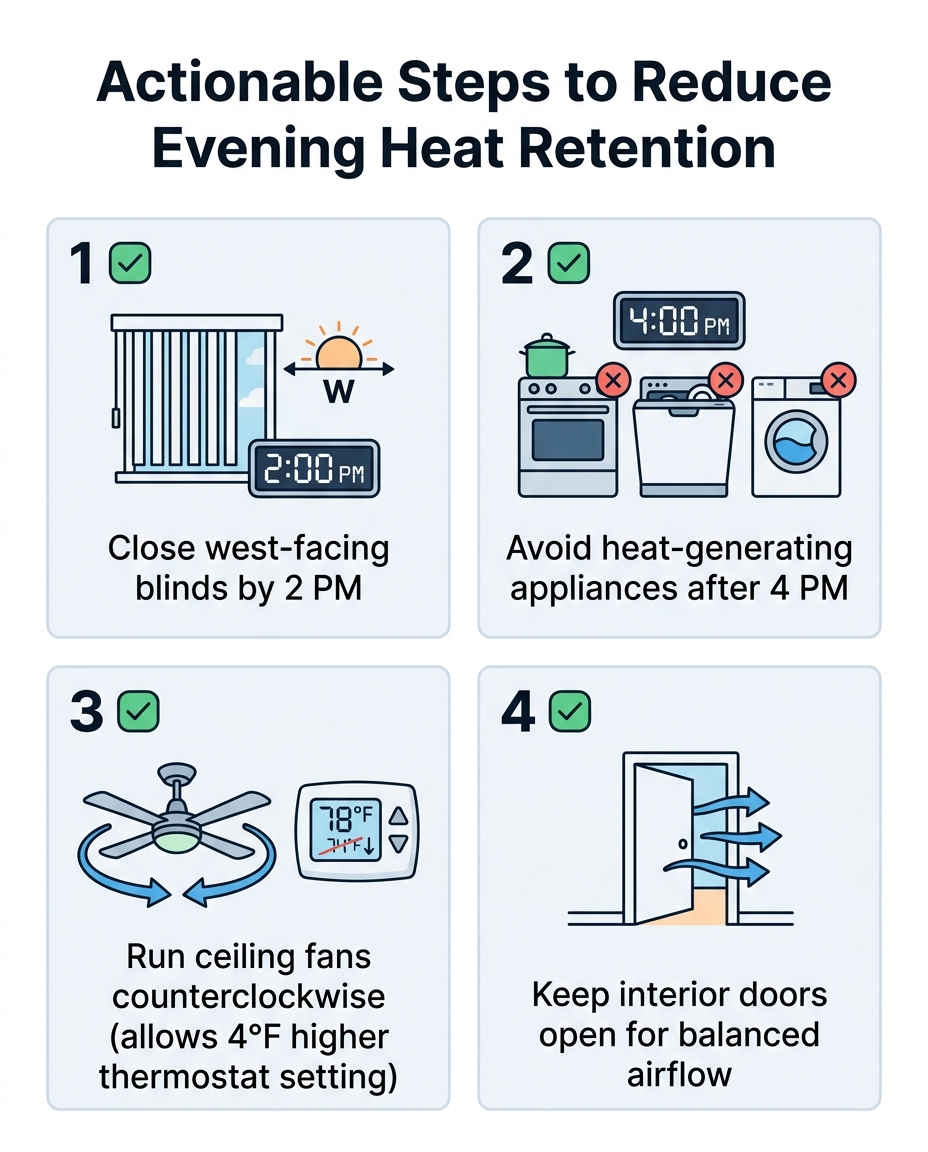
Use this checklist of actionable steps to lock heat out of your living spaces early in the day:
• Deploy window treatments early: Close blackout curtains and pull down thermal shades on west-facing and south-facing windows by early afternoon. Blocking direct sunlight prevents the greenhouse effect from superheating your rooms.
• Shift appliance usage: Avoid using heat-generating appliances like ovens, stoves, and clothes dryers during the late afternoon and early evening. Opt for outdoor grilling, microwave meals, or slow cookers, and run your dryer early in the morning.
• Leverage the wind chill effect: Utilize ceiling fans effectively. The U.S. Department of Energy notes that running fans allows you to raise the thermostat setting by about 4 degrees Fahrenheit without sacrificing comfort, taking a massive load off your AC compressor.
• Balance the airflow: Ensure interior doors remain open to allow the central air system to balance temperatures evenly across the house. Closed doors create hot zones and disrupt the return airflow to your system.
• Turn off incandescent lights: While LEDs run cool, older incandescent bulbs generate significant heat. Keep unnecessary lighting turned off during the warmest parts of the day.
Optimizing Airflow Without the Breeze
When the air outside is completely still, you have to manufacture your own airflow indoors. Verify that your ceiling fans are rotating counterclockwise. This specific direction creates a downdraft, pushing a column of air past your skin to evaporate moisture and create a cooling sensation.
Additionally, keep return air vents completely unblocked by furniture, bookshelves, or heavy rugs. Your air conditioner needs to pull in enough warm air to push out cool air. Starving the system of return air forces the blower motor to work harder and reduces the overall cooling capacity of the equipment right when you need it most.

Adjusting Your Thermostat Strategy for Stagnant Nights
Managing your thermostat during the late August stagnant heat and back-to-school transition requires a different approach than a standard summer day. When the natural cool-down isn't helping, aggressive temperature adjustments will only frustrate you and overwork your equipment.
Pre-cool the home slightly during the late morning or early afternoon before peak outdoor temperatures hit. By dropping the thermostat a degree or two while the outside air is still relatively mild, you build a buffer of cool air inside the house. This helps offset the intense heat transfer that happens later in the afternoon.
Avoid aggressive temperature drops in the evening. It is a common misconception that setting the thermostat drastically lower (like dropping it to 68°F when the house is 78°F) will cool the house faster. It will not. The system cools at the same steady rate regardless of the setting. A drastic drop simply forces the system to run endlessly, risking a frozen evaporator coil or an overheated compressor.
• Morning (8 AM) — Standard Summer Schedule: Moderate (e.g., 76°F) — Stagnant Heatwave Strategy: Slightly Lower (Pre-cooling)
• Afternoon (3 PM) — Standard Summer Schedule: Warmer (e.g., 78°F) — Stagnant Heatwave Strategy: Hold Steady (Preventing heat buildup)
• Evening (7 PM) — Standard Summer Schedule: Cooler (e.g., 72°F) — Stagnant Heatwave Strategy: Moderate (Avoid drastic drops)
• Overnight (11 PM) — Standard Summer Schedule: Coolest (e.g., 70°F) — Stagnant Heatwave Strategy: Consistent (Focus on dehumidification)
Use smart thermostat scheduling to gradually adjust temperatures, accommodating the lack of a natural outdoor temperature drop. Maintain a consistent, moderate setting overnight to keep humidity in check while preventing continuous compressor operation. A steady, achievable temperature is much healthier for your mechanical systems than an impossibly low target.
Protecting Your System During Extended Heatwaves
Bridging these behavioral changes to your system's long-term health is crucial when dealing with the Mountain View / Peninsula micro-climate. With deep local expertise in Silicon Valley micro-climates, we know that tailored maintenance strategies are specifically designed to help systems survive these localized extended evening runtimes. Without proper oversight, a stagnant heatwave can easily turn into an emergency breakdown.
Here are the necessary steps to protect your equipment when it is running harder than usual:
1. Check and replace air filters frequently: During periods of heavy, extended use, your filter traps significantly more dust and particulate matter. A clogged filter chokes the airflow, causing the blower motor to overheat and potentially freezing the indoor coil. Check the filter every few weeks during a heatwave.
2. Keep the outdoor condenser unit clear: Efficient heat exhaust is critical when the system runs non-stop. Ensure the outdoor unit is completely clear of fallen leaves, yard debris, and encroaching vegetation. There should be at least two feet of clear space around all sides of the unit to allow the fan to expel heat effectively.
3. Recognize the warning signs: Pay attention to how your system sounds and feels. Unusual grinding or squealing noises, short cycling (turning on and off rapidly), or warm air blowing from the vents are immediate red flags that the system is failing under the strain.
4. Stay proactive with professional care: Rely on a robust preventative maintenance plan to keep the system calibrated for extended runtimes without premature component failure. Professional technicians can measure electrical draws, check refrigerant levels, and clean internal coils to ensure the system operates at peak efficiency.
The bottom line on system protection: You cannot control the weather, but you can control the environment in which your air conditioner operates. Keeping the airflow clear and the components clean gives your system a fighting chance during the toughest weeks of the year.
Frequently Asked Questions About Evening Heat Retention
Why is my house hotter than outside at night?
Your house absorbs solar radiation all day through the roof and walls, storing it as thermal mass. When the sun goes down, this stored heat slowly radiates into your living spaces. If there is no breeze to push that warm air out, your well-insulated home acts like a thermos, keeping the interior hotter than the dropping outdoor temperatures.
How to get trapped heat out of a house when there is no breeze?
Without natural wind, you must create mechanical airflow to exhaust trapped heat. Place box fans securely in upper-floor windows facing outward to blow the hot indoor air outside. Simultaneously, open windows on the lower level on the coolest side of the house to draw in fresh air, creating an artificial cross-breeze.
Should I leave my AC on all night during a heatwave?
Yes, but at a moderate, consistent setting rather than a drastically low temperature. Turning the AC completely off allows humidity and heat to build up rapidly, making the system work twice as hard to recover the next morning. A moderate setting maintains comfort and dehumidifies the air without overworking the compressor.
How can I cool a room facing the evening sun?
The most effective method is preventing the heat from entering in the first place. Install thermal blackout curtains or reflective window films, and ensure they are drawn tightly by early afternoon. Running a ceiling fan in that specific room will also help disperse the localized heat buildup into the rest of the home's return air system.
Does running ceiling fans actually lower the room temperature?
No, ceiling fans do not lower the actual temperature of the room; they cool the people inside it. By creating a downdraft, fans evaporate moisture from your skin, creating a wind chill effect that makes the room feel several degrees cooler. Always turn fans off when you leave the room to save energy.
Maintain Indoor Comfort When the Weather Shifts
The late August stagnant heat and back-to-school transition can be a challenging time for indoor comfort, especially when the reliable coastal breeze disappears. While you cannot control the arrival of the evening breeze, you absolutely have control over your home's thermal efficiency and how your cooling equipment responds to the strain.
By deploying window treatments early, adjusting your thermostat strategy to prevent endless runtimes, and keeping your air filters clean, you can mitigate the worst effects of stagnant heat retention. There is immense peace of mind that comes from knowing your home is optimized for the weather and your cooling system is resilient enough to handle the workload. If your system has been struggling to keep up during these windless nights, explore professional maintenance options to prepare your equipment for the remainder of the season safely and efficiently.
hear what our satisfied clients have to say

.svg)
Service areas
.avif)