

Clearing Fall Debris from Your Outdoor AC Unit to Prevent Off-Season Damage
The Hidden Threat to Your AC When Cooling Season Ends
As September arrives and the days begin to cool, clearing fall debris from your outdoor AC unit to prevent off-season damage becomes an urgent priority for homeowners. You might think that once you turn off the thermostat for the year, your cooling equipment is safe and sound. However, shutting off the system does not protect it from the elements. In fact, an idle air conditioner is often more vulnerable to environmental damage than one that is running every day.
During the peak of summer, the upward draft from your condenser fan helps blow away loose leaves and dirt. But once the system sits quiet, September and early fall shedding creates a steady blanket of dry leaves, twigs, and pine needles that settle directly onto and inside your equipment. This creates a clear decision point for homeowners: you can either take proactive steps to clear this landscaping debris now, or risk severe, moisture-trapping corrosion during the long off-season.
For comprehensive care of your air conditioning systems, scheduling professional AC maintenance in Mountain View is the smartest way to protect your investment before the cold weather sets in.
How Leaves and Pine Needles Accelerate Condenser Rust
It is easy to look at a few dry leaves resting on your air conditioner and assume they are harmless. After all, they are just organic matter. But when organic matter gets trapped inside a metal cabinet, it initiates a destructive physical and chemical process that can drastically shorten the lifespan of your cooling equipment.
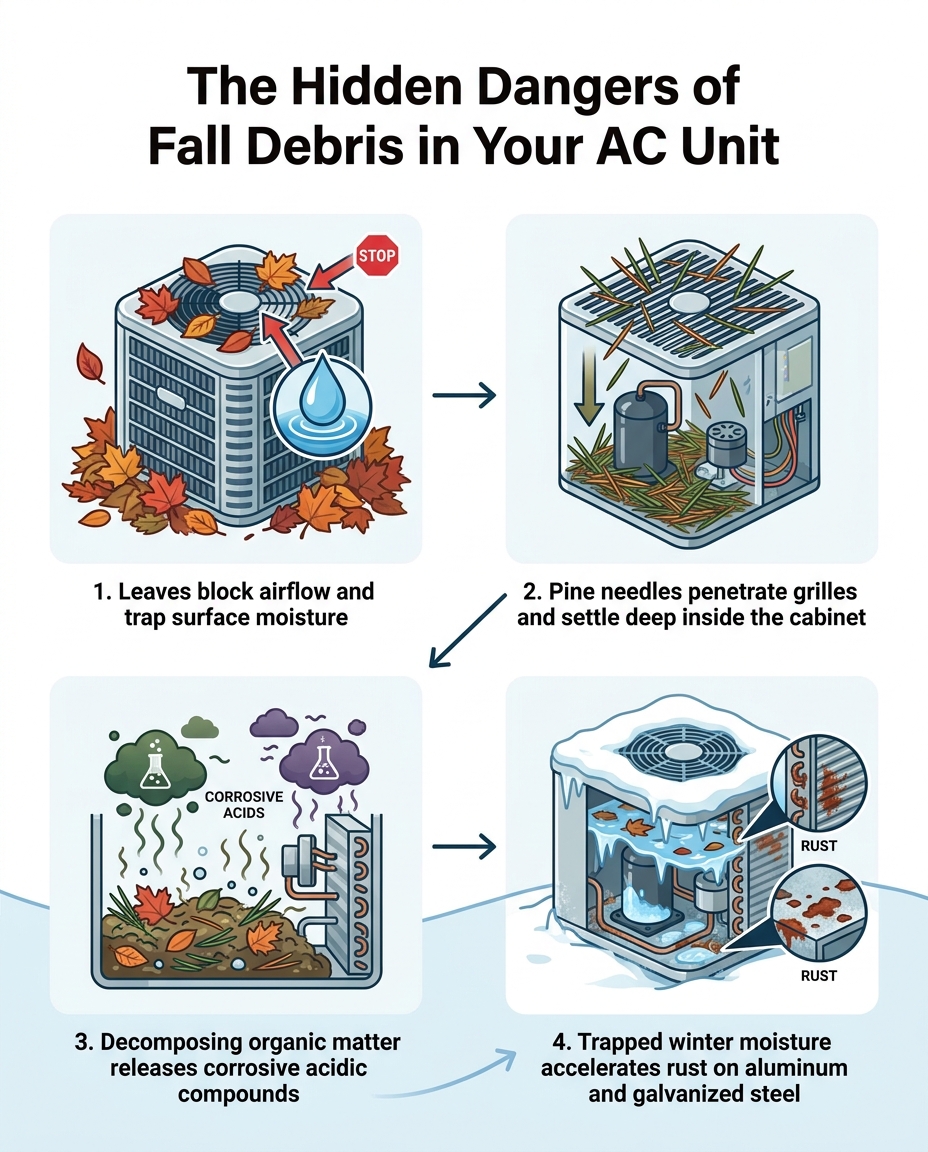
When September and early fall shedding occurs, the debris creates a dense micro-environment inside the condenser. This layer of yard waste acts like a sponge, holding moisture directly against the sensitive galvanized steel and aluminum components of your system. Instead of drying out naturally in the breeze, the internal parts remain constantly damp.
Different types of yard waste pose unique threats to your system. Here is how various materials impact your equipment:
• Broad Leaves (Oak, Maple) — How It Behaves: Plaster flat against the exterior grilles and top fan guard. — Primary Risk to Your AC: Blocks airflow, traps surface water, and creates a heavy, wet blanket that encourages rust on the outer casing.
• Pine Needles — How It Behaves: Slip easily through the narrowest grilles and fan guards. — Primary Risk to Your AC: Pile up deep inside the base pan, clogging critical drainage holes and trapping internal moisture.
• Twigs and Bark — How It Behaves: Fall through the top grate and wedge into moving parts. — Primary Risk to Your AC: Can jam the fan motor or bend the delicate aluminum fins if the system is unexpectedly turned on.
The Chemistry of Decaying Yard Debris
The damage goes beyond just trapped water. As organic matter decomposes, it undergoes a chemical change. Wet leaves and pine needles naturally release acidic byproducts, such as tannic acid, during the breakdown process. When these acidic compounds remain in prolonged contact with the metal fins and copper tubing inside your air conditioner, they begin to eat away at the protective factory coatings.
This process accelerates oxidation and rust. Over a single off-season, this acidic sludge can weaken the structural integrity of the coils, leading to microscopic refrigerant leaks that will not be discovered until you try to turn the system back on next summer.

The Danger of Transitioning from Dry Autumns to Wet Winters
Timing your yard cleanup is critical, especially when you factor in the local climate. In the Bay Area, we experience a very distinct shift in the weather. We typically enjoy long, dry autumns followed by a sharp transition into wet, rainy winter months. This specific weather pattern creates a "perfect storm" for air conditioning damage if you are not prepared.
During the dry months, deciduous trees and older evergreens drop significant amounts of debris right as the active cooling season ends. Because the weather is dry, this September and early fall shedding easily blows around your yard, slipping through the grilles and settling at the bottom of your condenser unit. Because it is dry, you might not notice any immediate issue.
However, when the seasonal shift happens and the heavy winter rains begin, that dry debris acts like a magnet for water. The rain washes into the unit, soaking the leaves and needles. Because the debris is blocking the weep holes at the bottom of the unit, the water cannot drain out. It sits there for months, creating a swampy, corrosive mess right at the base of your expensive cooling equipment. This is why off-season preservation is so critical. If you wait too long, you will need to rely on professional AC maintenance in Palo Alto to undo the damage that could have been prevented with early intervention.
Safe Exterior Perimeter Clearing for Homeowners
Taking care of the outside of your air conditioner is a highly effective way to protect it. While the inside of the cabinet is strictly off-limits for do-it-yourself projects, there is plenty you can do around the perimeter to keep your system safe from September and early fall shedding. Following a safe, proactive landscaping routine is the best defense against off-season degradation.
Here is a safe, step-by-step process for clearing the exterior of your unit:
1. Turn off the power: Before you begin any work near your air conditioner, locate the electrical disconnect box near the unit and switch it to the "off" position. This ensures the fan will not kick on while you are working nearby.
2. Establish a two-foot clearance zone: Use pruning shears to trim back any bushes, shrubs, or ornamental grasses so they are at least two feet away from the unit on all sides. This allows the equipment to breathe and gives moisture a chance to evaporate.
3. Rake the surrounding area: Thoroughly rake away all loose leaves, pine needles, and mulch from the base of the concrete pad. Bare dirt or decorative gravel is much safer around an AC unit than moisture-retaining wood chips or dead grass.
4. Gently brush the top grille: Use a soft-bristled broom to lightly sweep away any leaves resting on the top of the unit. Pull the debris outward, away from the fan guard. Be extremely careful not to push needles or small twigs further down into the machine.
What NOT to do: Never use a high-pressure hose or a pressure washer to clean the outside of your unit. The water pressure will easily bend the delicate aluminum fins, which restricts airflow and ruins the system's efficiency. Furthermore, never attempt to unscrew the panels or open the cabinet yourself. There are high-voltage capacitors and sensitive electrical components inside that require a licensed professional to handle safely. For more guidance on what you can safely handle yourself, review a complete seasonal AC maintenance checklist.
Should You Cover Your Outdoor AC Unit in the Fall?
One of the most common questions homeowners ask as the weather cools down is whether they should wrap their outdoor air conditioner to protect it from the elements. It seems logical—if you want to keep September and early fall shedding out of the machine, simply throw a heavy tarp over it, right? Unfortunately, this is one of the most damaging things you can do to your system.
Wrapping an AC unit tightly in a solid plastic tarp creates a greenhouse effect. While it might keep leaves out, it traps ground moisture inside. As moisture evaporates from the soil, it rises, hits the underside of the tarp, and rains back down onto your equipment. This constant, trapped humidity accelerates rust faster than if the unit were left completely exposed to the rain.
Additionally, a heavily wrapped, dark, and protected space is highly attractive to rodents. Mice and rats looking for a warm place to survive the winter will happily nest under your tarp, often chewing through the internal wiring of your AC unit in the process.
Breathable Guards vs. Solid Tarps
Modern outdoor units are engineered to withstand rain, snow, and direct sunlight. The exterior casing does not need to be hidden from the weather. The true danger is what gets trapped inside the cabinet. If your yard has heavy tree coverage and you are concerned about falling debris, you should choose your protection carefully.
• Solid Tarps: Restrict airflow, create a humid micro-climate, trap ground moisture, and invite pest infestations. Avoid these entirely.
• Breathable Mesh Covers: Allow air to circulate and moisture to evaporate while keeping broad leaves out.
• Top-Only Guards: These heavy-duty mesh screens cover only the top fan exhaust. They offer the best balance, deflecting falling leaves and twigs while leaving the sides completely open for maximum airflow and evaporation.
Why Internal Cabinet Cleaning Requires a Professional
While clearing the exterior perimeter is a great weekend project, it only solves half the problem. No matter how diligent you are with a rake, small debris will inevitably bypass the outer grilles. Pine needles, small seeds, and dirt dust will eventually settle at the base of the condenser, mixing with rainwater to form a thick, corrosive sludge.
Removing this internal sludge is not a DIY job. The inside of your air conditioner is a tightly packed environment containing delicate aluminum fins, copper refrigerant lines, and high-voltage electrical connections. Attempting to vacuum or scoop out wet leaves from the bottom of the pan can easily result in bent fins, crimped lines, or damaged sensors.
This is where professional fall maintenance comes in. It should be viewed as a vital off-season preservation tactic rather than just a performance booster. When a licensed technician opens the cabinet, they know exactly how to safely extract the organic material without disturbing the sensitive components. They will clear the internal weep holes to ensure that when winter rains arrive, the water drains harmlessly away instead of pooling inside the machine.
By enrolling in a comprehensive HVAC maintenance plan, you ensure that your system receives this critical, proactive cleaning. A professional technician will remove the lingering September and early fall shedding from the interior, wash away the acidic residue, and inspect the electrical contacts to ensure everything is secure and protected before the long, wet winter begins.
Common Questions About Fall AC Protection
Can leaves damage an AC unit?
Yes, leaves can cause severe damage to an air conditioning unit if left unaddressed. When leaves pile up against the exterior, they block vital airflow, making the system work much harder if it is turned on. More importantly, when leaves get trapped inside the unit, they hold moisture against the metal components, releasing acidic compounds as they decay, which rapidly accelerates rust and corrosion.
Should I cover my outside AC unit in the fall?
You should never cover your entire AC unit with a solid tarp or plastic wrap. Solid covers trap rising ground moisture, creating a humid environment that causes the internal parts to rust, and they provide a perfect, sheltered nesting ground for rodents. If you must protect the unit from heavy tree debris, use a breathable, top-only mesh guard that allows moisture to evaporate freely.
How do you safely clean leaves from around an AC condenser?
The safest method is to turn off the power to the unit, then use pruning shears to clear a two-foot space around the entire system. Rake away all loose debris from the ground, and use a soft broom to gently brush leaves off the top grille. Never use a pressure washer or attempt to open the metal casing yourself, as this can easily damage the delicate internal fins.
What happens if pine needles get inside the AC unit?
Pine needles are particularly dangerous because they are small enough to slip through the protective grilles and pile up deep inside the base pan. Once inside, they block the system's drainage holes. When it rains, the water cannot escape, creating a swampy, acidic sludge that rots the bottom of the condenser and corrodes the copper refrigerant lines over the winter.
Is it necessary to schedule AC maintenance in the fall if I only use it in summer?
Yes, fall maintenance is a critical preservation step. Even though you are not actively using the system to cool your home, removing the September and early fall shedding from the interior cabinet prevents off-season corrosion. A professional cleaning ensures that wet debris does not sit inside the machine all winter, protecting the delicate components so the system is ready to run flawlessly next summer.
Protect Your Cooling Investment Before Winter Arrives
Your air conditioner is one of the most significant investments in your home, and protecting it requires more than just turning off the thermostat. Clearing away organic debris prevents the insidious buildup of rust and extends the overall lifespan of the equipment. Remember that while safe exterior perimeter clearing is something you can manage on your own, professional internal maintenance provides the complete protection your system needs.
Do not let a buildup of September and early fall shedding rot your system from the inside out. By taking action now, you can stop the cycle of moisture and corrosion before it starts. Schedule your off-season preservation today, and ensure your cooling system is fully protected before the wet winter weather sets in.
hear what our satisfied clients have to say

.svg)
Service areas
.avif)