

Understanding the True Price Breakdown of a 1.5 Ton AC Installation

Decoding Your Late-Summer AC Replacement Quote
Your air conditioner has finally quit in the middle of the August late-summer cooling season, and understanding the true price breakdown of a 1.5 ton AC installation is suddenly your top priority as you stare at a stack of estimates. When your home is uncomfortably warm and you need emergency cooling, reviewing technical proposals can feel incredibly overwhelming. Most homeowners look straight at the bottom line, trying to figure out why one contractor's number looks so different from another's. The secret to making a smart decision is recognizing that an installation quote is not just a price tag for a metal box—it is a comprehensive blueprint for your home's future comfort.
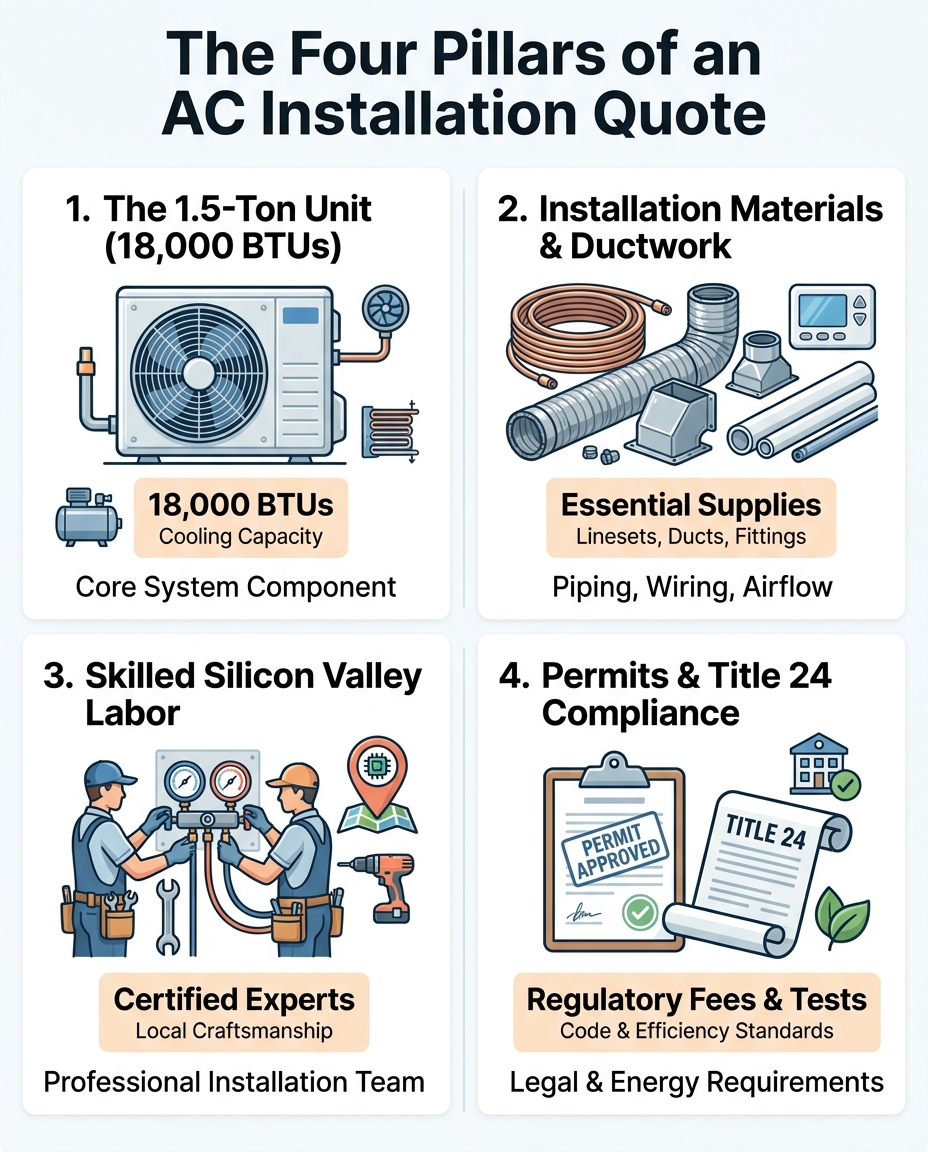
A professional installation quote rests on four main pillars: the physical equipment, the necessary supplementary materials, the skilled labor required to put it all together, and the strict local compliance standards that ensure it operates safely. When you learn how to read these proportional costs, you shift from simply shopping for the lowest number to actually evaluating the long-term value of the work being proposed. Breaking down these components empowers you to ask the right questions before you sign on the dotted line.
Ready to explore your options? Learn more about our comprehensive air conditioning solutions to keep your home comfortable.

The Physical Equipment: Analyzing a 1.5-Ton Residential AC
The most visible part of your estimate is the equipment itself. When a quote specifies a 1.5-ton residential AC, it is referring to the system's cooling capacity, not its physical weight. In HVAC terms, one "ton" equals 12,000 British Thermal Units (BTUs) of heat removal per hour. Therefore, a 1.5-ton unit provides 18,000 BTUs of cooling power. This size is typically ideal for smaller homes, zoned floors, or standard condominiums where a massive system would actually cause comfort problems by short-cycling.
Decoding Cooling Capacity and Efficiency
Beyond the size of the unit, the baseline value of the equipment is heavily influenced by its energy efficiency rating. Modern systems are measured by their SEER2 (Seasonal Energy Efficiency Ratio 2) rating. A higher SEER2 rating indicates that the unit uses less electricity to produce the same 18,000 BTUs of cooling. If you are reading up on how a 1.5 ton AC unit actually performs in a standard condo, you will notice that higher-efficiency models often feature advanced technology like two-stage or variable-speed compressors, which adjust their output to match your home's exact needs.
However, it is a common misconception that the physical box accounts for the vast majority of your quote. In reality, the condenser sitting outside and the evaporator coil sitting inside represent only a fraction of the total installation scope. Buying the most advanced, high-efficiency equipment on the market will not deliver the comfort or energy savings you expect if the rest of the installation components are ignored.
• Compressor Type — Standard Efficiency Models: Single-stage (always runs at 100% capacity) — High-Efficiency Models: Two-stage or variable-speed (adjusts to demand)
• Sound Levels — Standard Efficiency Models: Noticeable operational noise when running — High-Efficiency Models: Significantly quieter operation, often with sound blankets
• Energy Consumption — Standard Efficiency Models: Meets minimum regional efficiency standards — High-Efficiency Models: Exceeds standards, reducing long-term energy usage
• Dehumidification — Standard Efficiency Models: Basic moisture removal during standard cycles — High-Efficiency Models: Enhanced moisture control through longer, slower run times
Beyond the Box: Essential Installation Materials and Ductwork
If you look closely at a comprehensive estimate, you will see a list of line items that have nothing to do with the main air conditioning unit. These are the unseen physical materials required to connect your new system safely to your home. Skipping or cheaping out on these supplementary materials is a guaranteed way to reduce the lifespan of your new equipment.
The Hidden Hardware
A proper installation requires a wide array of specialized components. Every home is slightly different, meaning the connection points between the new unit and your existing infrastructure must be custom-fitted.
• Sheet metal transitions: The new indoor coil rarely matches the exact dimensions of your old furnace or air handler. Custom sheet metal plenums must be fabricated to ensure smooth airflow without turbulence.
• Refrigerant lines: The copper pipes connecting the indoor and outdoor units often need to be replaced, especially if your old system used outdated R-22 refrigerant, to prevent contamination and leaks.
• Electrical components: Safety regulations require new electrical whips (the conduit carrying power to the unit) and often a new disconnect box mounted on the exterior wall.
• Condensate management: New PVC drain lines, safety overflow switches, and sometimes condensate pumps are required to safely route moisture away from your home.
With Mountain View's late-summer dry heat demanding perfectly calibrated systems, unseen items like meticulous ductwork sealing become absolutely critical. A 1.5-ton unit is designed for precision; if your ductwork is leaking 20% of the conditioned air into your attic, that 18,000 BTU system will struggle to keep your living room cool. A thorough quote will always include provisions for inspecting, modifying, and properly sealing the duct transitions to prevent costly cooling loss.
The Value of Expertise: Skilled Silicon Valley Labor
One thing we see often is homeowners expressing surprise at the proportional cost of labor on their installation quote. It is important to understand that installing a modern air conditioning system is not a plug-and-play appliance delivery. It is a complex construction and engineering project taking place inside your home.
Why Precision Matters More Than Speed
The specialized training required to properly install an AC system takes years to master. During the August late-summer cooling season, the temptation to rush through a job is high for inexperienced contractors. However, rushed labor leads to critical errors. A skilled technician must perform a series of exacting steps to ensure the system operates correctly. They must braze copper lines while flowing nitrogen to prevent internal oxidation. They must pull a deep vacuum on the system to remove microscopic moisture that could destroy the compressor. Finally, they must weigh in the exact refrigerant charge based on the specific length of your copper lines.
The long-term impact: Investing in highly skilled labor directly correlates to the longevity and reliability of your system. A poorly installed premium unit will break down faster than a perfectly installed standard unit. When you review quotes for AC installation in Mountain View, you are not just paying for someone to move heavy boxes; you are securing the technical expertise required to calibrate a closed-loop refrigeration cycle safely.
Navigating California Title 24 Compliance and Local Permits
If you live in California, your installation quote must account for strict state and local regulations. A legitimate estimate will clearly outline the costs associated with remaining compliant with the law. If these items are missing from a quote, it is a major warning sign.
Understanding HERS Testing and Title 24
The California Energy Commission established Title 24 energy efficiency standards to ensure that homes are not needlessly wasting power. For most HVAC alterations, including a residential AC replacement, Title 24 requires third-party HERS (Home Energy Rating System) verification. This means an independent, certified rater will visit your home after the installation is complete to test the system.
• Duct leakage testing: The rater pressurizes your ductwork to ensure air is not escaping into unconditioned spaces like attics or crawlspaces.
• Refrigerant charge verification: They confirm that the installer added the precise amount of refrigerant required for peak efficiency.
• Airflow measurements: They verify that the system is moving the correct volume of air across the indoor coil to prevent freezing and ensure comfort.
In addition to HERS testing, local building permits are mandatory in Mountain View for residential AC replacements. Permits ensure that the electrical and structural work meets municipal safety codes. Beware of contractors who omit permit fees and HERS testing from their quotes to appear artificially cheaper. Skipping these legal requirements can result in heavy fines, issues when trying to sell your home, and even voided homeowners insurance claims if an unpermitted electrical connection causes a fire.
Spotting Red Flags vs. Valuing Upfront Transparency
Armed with an understanding of the equipment, materials, labor, and compliance factors, you are now in a strong position to compare contractor value. The format and detail of the quote itself will tell you a lot about the company you are dealing with.
The Importance of an Itemized Breakdown
A trustworthy estimate will clearly outline what is included in the scope of work. You should see specific model numbers for the 1.5-ton residential AC, a clear list of the supplementary materials being provided, and explicit confirmation that permits and Title 24 testing are handled. Plum HVAC's transparent, upfront pricing model is built on educating the homeowner on the "why" behind the numbers, ensuring there are never any hidden fees or surprise charges on installation day.
• Lists exact equipment model numbers and SEER2 ratings — Red Flag Quotes: Only says "1.5-ton AC unit" with no brand or model specified
• Includes line items for new sheet metal and duct transitions — Red Flag Quotes: Assumes existing connections will work without inspection
• Explicitly includes local permit pulling and HERS testing — Red Flag Quotes: Tells the homeowner to "handle the permits later"
• Provides a comprehensive, final installation number upfront — Red Flag Quotes: Offers a low base price with a warning about "unforeseen extra costs"
When you value thoroughness over a suspiciously low bottom line, you eliminate the anxiety of hidden fees. You can also confidently evaluate current AC installation promotions knowing exactly what baseline value you are receiving.
Managing Your Investment Without Compromising Quality
Understanding the breakdown of your quote is the first step; managing the investment is the next. Fortunately, choosing a high-quality, compliant installation often opens the door to financial strategies that make upgrading more accessible.
Maximizing Available Incentives
Upgrading to a new, efficient 1.5-ton residential AC may qualify you for various generic energy rebates or utility incentive programs. Many local utility companies offer incentives for homeowners who replace aging, inefficient systems with modern equipment that reduces strain on the power grid. Additionally, it is always wise to consult with a tax professional regarding generic federal tax credits that may apply to qualifying high-efficiency installations, such as certain heat pump systems.
Because a proper installation requires a significant commitment of resources, reputable contractors offer flexible payment solutions. Exploring HVAC financing options allows you to spread the investment out over time, meaning you do not have to compromise on skilled labor or quality materials just to fit an immediate budget constraint.
Frequently Asked Questions About AC Installation Quotes
What is included in a standard AC installation quote?
A comprehensive quote includes the physical equipment, supplementary materials, skilled labor, and necessary compliance fees. You should expect to see the condenser, evaporator coil, new refrigerant lines, custom sheet metal transitions, and electrical components listed. Furthermore, a standard quote from a reputable contractor will always factor in local building permits and third-party energy testing.
Why is AC installation labor a significant factor?
Labor reflects the highly specialized technical expertise required to safely build a refrigeration system inside your home. Technicians must perform precise tasks like brazing copper with nitrogen, pulling deep vacuums to remove moisture, and calculating exact refrigerant charges. Rushing these steps leads to premature equipment failure, making skilled labor a necessary investment for system longevity.
How do California Title 24 requirements affect AC replacement?
Title 24 mandates that new HVAC installations meet strict state energy efficiency standards to reduce power grid strain. This requires a third-party HERS rater to test your system's duct leakage, airflow, and refrigerant charge after installation. These mandatory testing fees must be included in your quote to ensure your new system is legally compliant and operating efficiently.
What materials are needed for a 1.5 ton AC installation?
Beyond the main outdoor and indoor units, a 1.5-ton residential AC requires specific hardware to integrate with your home. This includes new copper refrigerant line sets, custom-fabricated sheet metal plenums for smooth airflow, PVC piping for condensate drainage, and updated electrical whips. Proper duct sealing mastic and insulation are also necessary to prevent cooling loss.
What hidden factors impact AC installation quality?
The biggest hidden factors are the quality of the ductwork connections and the precision of the system calibration. If the installer uses your old, leaky duct transitions or fails to properly evacuate the refrigerant lines, the system will struggle to cool your home regardless of how efficient the unit is. Upfront transparency about these hidden steps is the hallmark of a quality contractor.
Make a Confident Decision on Your AC Replacement
A true quote breakdown goes far beyond the physical metal box sitting outside your window. It encompasses the advanced technology of the unit, the essential supplementary materials, the highly skilled labor required for precision calibration, and the local compliance steps necessary to protect your home. When you understand how these four pillars work together, you are no longer just looking at a bottom-line number—you are evaluating the comprehensive blueprint for your Mountain View home's long-term comfort.
By recognizing the value of unseen components like proper ductwork transitions, strict local permit adherence, and expert refrigerant handling, you protect yourself from the pitfalls of rushed, cut-rate work. Ultimately, understanding the true price breakdown of a 1.5 ton AC installation ensures you receive a reliable, efficient cooling solution. Seek out an educational, transparent partner for your home comfort needs, and you can make your final decision with complete confidence.
hear what our satisfied clients have to say

.svg)
Service areas
.avif)