Diagnosing Mid-July Air Conditioner Short-Cycling in Older Santa Clara Homes
The Mid-July Cooling Struggle in Mid-Century Homes
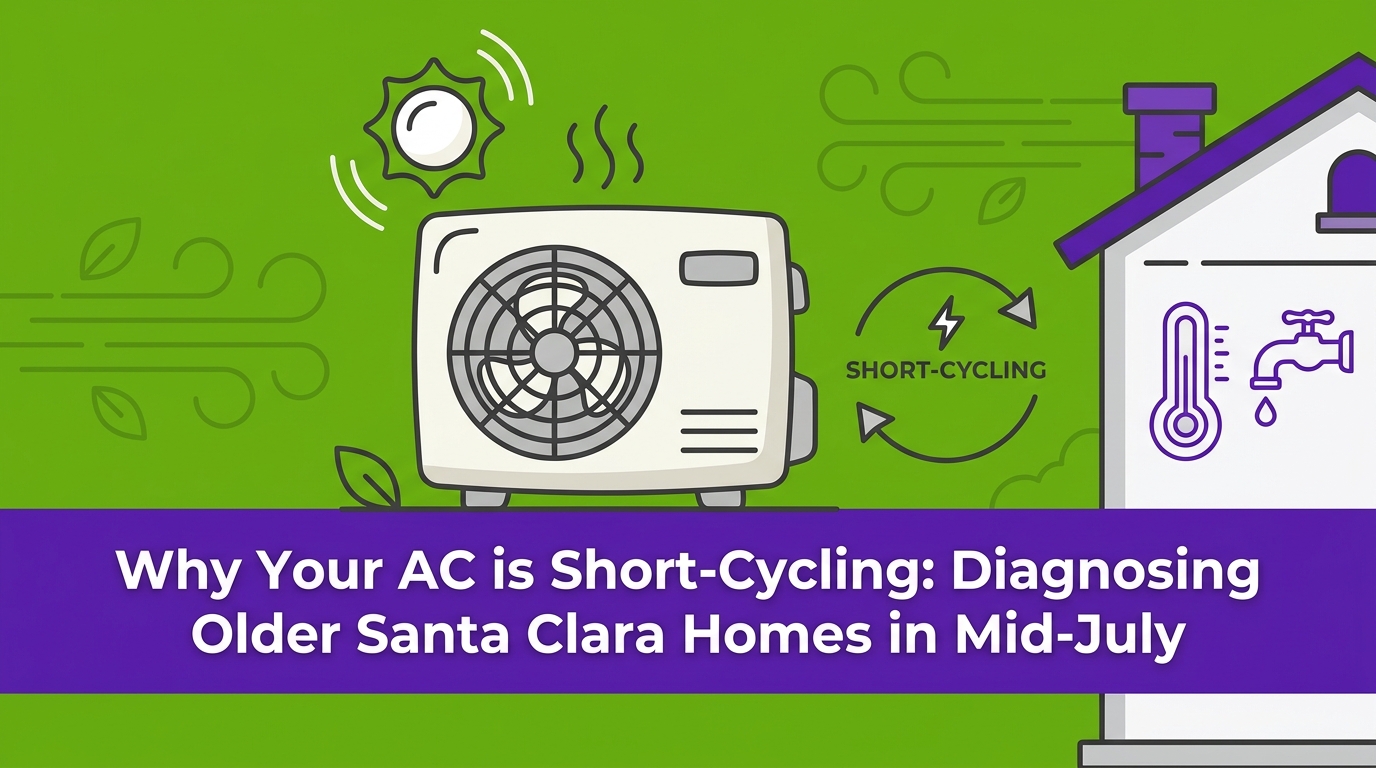
The Mid-July peak summer heat has settled over the valley, and your air conditioner has one primary job: to keep your home comfortable. But instead of delivering a steady, reliable stream of cool air, your newly installed high-efficiency unit keeps shutting down after just a few minutes of operation. Diagnosing mid-July air conditioner short-cycling in older Santa Clara homes requires looking beyond the AC unit itself. A modern system should provide consistent comfort, making rapid on-and-off cycling highly frustrating when temperatures soar.
During extreme summer weather, older residential infrastructure is pushed to its absolute limits. Understanding whether the rapid cycling stems from electrical supply issues or airflow restrictions is the first step toward a safe resolution. This guide bridges the gap between modern cooling technology and legacy home construction, helping you understand exactly what your system is fighting against.
Need help restoring your comfort right away? Explore our air conditioning services to get your system evaluated safely by a professional.
The Frustration of a New System Underperforming
Most homeowners assume that upgrading to a brand-new, high-efficiency air conditioner guarantees a flawless summer. You expect the system to turn on, run smoothly, and maintain the exact temperature set on the thermostat. When a new unit begins rapid cycling, it often feels like a defect in the equipment. However, the short answer is that the AC is usually functioning exactly as designed—it is shutting itself down to prevent internal damage caused by external bottlenecks.
Your home operates as an interconnected ecosystem. The air conditioner relies heavily on the electrical panel to deliver a massive surge of clean power, and it relies on the ductwork to distribute specific volumes of air. When either of those legacy systems fails to support the new technology, the air conditioner triggers an automatic safety shutdown. Identifying the exact nature of that bottleneck is the only way to stop the cycle.
Defining the Short-Cycle: When Rapid Shut-Offs Signal Trouble
Before diving into the specific infrastructure challenges of older homes, it helps to understand what a short-cycle actually is. A normal cooling cycle should last anywhere from 15 to 20 minutes, depending on the severity of the outdoor heat. This duration allows the system to effectively remove humidity from the air while steadily lowering the indoor temperature.
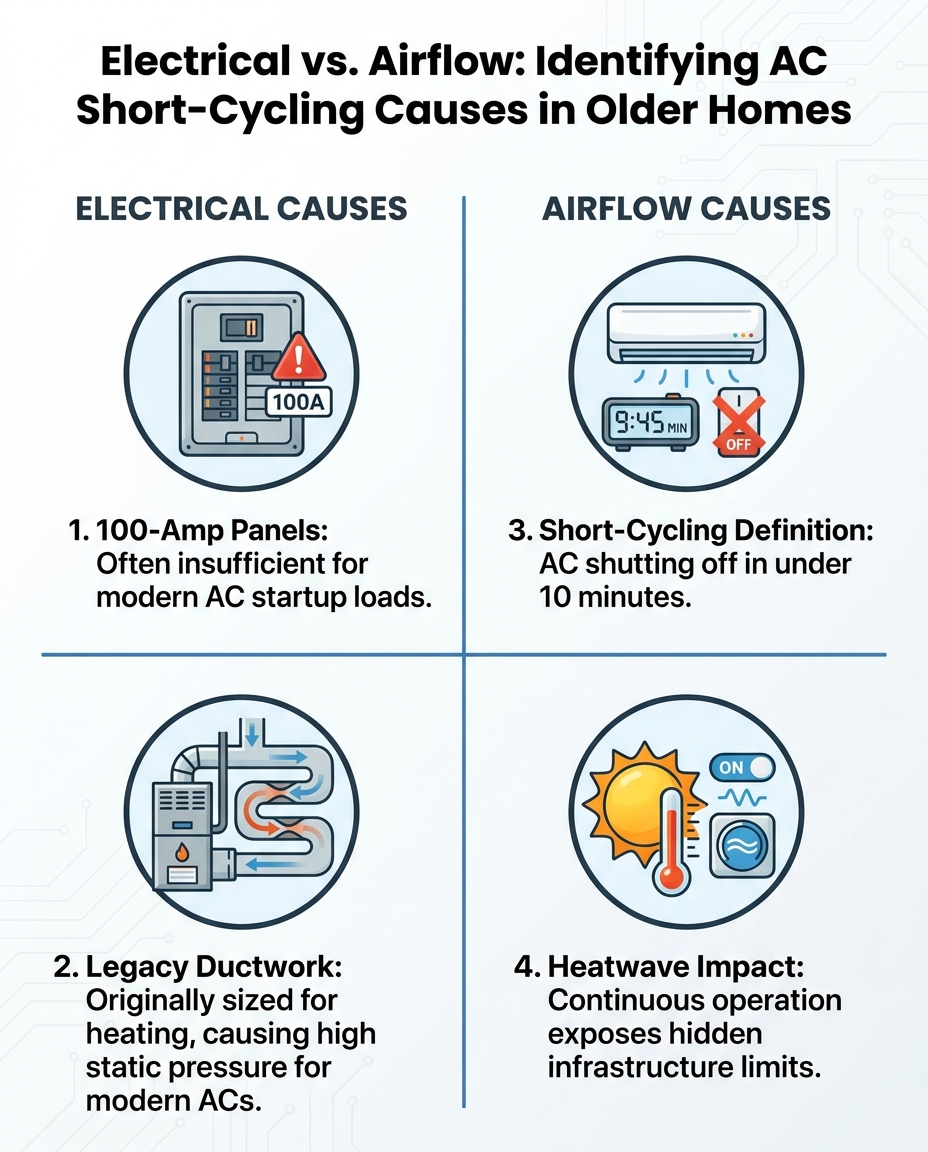
A short-cycle occurs when the air conditioner turns on, runs for a brief period—typically under 10 minutes—and then abruptly shuts off before the home has reached the target temperature. Shortly after, the system attempts to start again, repeating the rapid loop.
The Hidden Toll on Your Equipment
Here's the thing: air conditioners consume the most energy and endure the most mechanical stress during the startup phase. You can think of it like driving a car in heavy, stop-and-go traffic. A vehicle cruising on the highway operates efficiently, but a car constantly accelerating and braking burns excess fuel and wears down the transmission.
When an AC short-cycles, the compressor—the most expensive component in the system—is forced to endure continuous, punishing startup surges. Over time, this rapid cycling leads to premature mechanical wear, inflated energy bills, and a complete failure to dehumidify the home. If you notice this pattern, professional AC maintenance in Santa Clara is highly recommended to assess the underlying strain on the unit.
• Run Duration — Normal Cooling Cycle: 15 to 25 minutes per cycle — Short-Cycling System: Less than 10 minutes per cycle
• Compressor Stress — Normal Cooling Cycle: Low to moderate wear — Short-Cycling System: Severe, continuous mechanical strain
• Energy Consumption — Normal Cooling Cycle: Efficient, stabilized power draw — Short-Cycling System: High energy waste from repeated startups
• Indoor Comfort — Normal Cooling Cycle: Even temperatures, low humidity — Short-Cycling System: Hot and cold spots, clammy indoor air
The Infrastructure Mismatch in Silicon Valley's Historic Housing
To understand why modern air conditioners struggle in older homes, you have to look at the architectural history of the region. Many of the homes in older Santa Clara neighborhoods were built during the post-war housing boom between the 1950s and the 1970s. During this era, residential construction was designed around entirely different comfort and power standards.
These mid-century homes were primarily built to support basic heating systems and a fraction of the electrical appliances we use today. Central air conditioning was considered a rare luxury, not a standard building requirement. As a result, the structural bones of these houses—specifically the electrical panels and the hidden ductwork—were never sized to accommodate the precise, high-demand operational requirements of modern cooling technology.
The Evolution of Cooling Technology
Today's high-efficiency air conditioners are engineering marvels. They utilize advanced refrigerants, powerful blower motors, and sensitive electronic control boards. However, this precision means they are highly intolerant of poor operating conditions. Upgrading an AC unit without evaluating the surrounding infrastructure often leads to performance bottlenecks.
If you live in the Santa Clara HVAC service area, recognizing these inherent structural limitations is vital. A new air conditioner cannot simply be dropped into a 1960s home without a thorough assessment of the systems that support it. When the infrastructure cannot keep up with the equipment, the equipment protects itself by shutting down.
Electrical Supply Bottlenecks: When 100-Amp Panels Struggle
The Problem: One of the most common causes of short-cycling in older homes relates directly to the electrical supply. Many mid-century homes still operate on their original 100-amp electrical panels. While a 100-amp service was perfectly adequate for a home in 1965 running a refrigerator, a few televisions, and some incandescent lights, it is often vastly underpowered for modern living.
The Cause: Modern air conditioners require a massive initial surge of electricity to jump-start the compressor. This is known as the inrush current, or Locked Rotor Amps (LRA). When the thermostat calls for cooling, the AC demands this high initial draw of electricity. If the home is simultaneously running a dishwasher, an electric dryer, and a modern home office, an outdated 100-amp panel simply cannot deliver the required power.
When the panel is overloaded, it causes a momentary voltage drop. The sensitive electronics inside your new air conditioner detect this power instability and immediately shut the system down to protect the compressor from electrical damage. In other cases, the surge may cause the circuit breaker to trip entirely.
The Solution: Resolving an electrical bottleneck requires professional intervention. Upgrading electrical infrastructure often intersects with modern safety regulations and requires permitted, heavily regulated work. Navigating local HVAC permits and building codes is a mandatory part of ensuring that any panel upgrades or dedicated circuit installations are performed safely and legally.
Airflow Restrictions: The Hidden Threat of Legacy Ductwork
If the electrical panel is delivering clean, consistent power, the next major bottleneck to investigate is the ductwork. Airflow restrictions are a massive driver of short-cycling, and legacy ductwork is almost always the culprit in mid-century homes.
Ductwork installed decades ago was primarily sized for heating. Furnaces push very hot air, which naturally rises and requires less airflow volume to warm a room. Modern central air conditioning, however, relies on pushing large volumes of heavy, cold air. This requires a much higher CFM (Cubic Feet per Minute) rating.
The Danger of High Static Pressure
When a powerful new blower motor tries to force high volumes of cold air through narrow, aging ducts, it creates a phenomenon known as static pressure. You can visualize this by imagining the effort required to breathe heavily through a narrow drinking straw. The pressure builds up rapidly inside the system.
• Coil Freezing: Because the cold air cannot escape the ductwork fast enough, it backs up over the indoor evaporator coil. The coil temperature drops below freezing, turning the ambient condensation into a block of solid ice.
• Safety Switch Activation: Modern blower motors are equipped with sensors that detect excessive static pressure. When the strain becomes too high, the motor shuts itself off to prevent burning out.
• Limit Switch Tripping: The extreme pressure imbalance can trigger internal safety limits, halting the cooling cycle abruptly.
Resolving airflow restrictions requires a professional static pressure test to measure the exact resistance within the ducts. It is not something that can be fixed by simply swapping out an air filter.
Why Sustained Heatwaves Expose Hidden Vulnerabilities
Many homeowners wonder why their system worked perfectly well in May, only to start short-cycling in July. The answer lies in the specific, sustained nature of a mid-July Santa Clara Valley heatwave. Mild spring weather often masks infrastructure mismatches because the AC only needs to run in short, infrequent bursts to keep the house comfortable.
When temperatures soar and remain high for consecutive days, the system is forced into maximum continuous operation. This relentless demand pushes 100-amp panels past their safe operational limits as the constant electrical draw generates excess heat within the breaker box itself. Similarly, continuous operation maximizes the static pressure strain on legacy ductwork, never giving the evaporator coil time to thaw out between cycles.
The combination of peak load and legacy infrastructure inevitably triggers protective short-cycling. The Mid-July peak summer heat doesn't necessarily break the air conditioner; rather, it exposes the pre-existing weaknesses in the home's ability to support the equipment under stress.
Safe Professional Diagnostics Over DIY Guesswork
When an air conditioner begins short-cycling, the temptation to troubleshoot the issue yourself can be strong. However, dealing with legacy electrical panels and modifying residential ductwork carry significant safety and compliance risks. High-voltage electrical panels are incredibly dangerous, and attempting to diagnose voltage drops without specialized training can result in severe injury or catastrophic property damage.
A licensed technician has the specialized tools—such as digital manometers to measure ductwork static pressure, and true-RMS multimeters to safely measure electrical draw—required to pinpoint the exact bottleneck. Professional diagnostics ensure that the root cause is correctly identified, preventing costly damage to a new AC compressor.
The Value of Local Expertise
Working with local specialists ensures that any necessary modifications align with the unique structural constraints of older regional homes. Plum HVAC brings specialized local expertise in navigating the unique architectural, ductwork, and electrical panel constraints of older Silicon Valley homes. Whether the solution involves adjusting blower speeds, expanding return air drops, or coordinating a panel upgrade, professional guidance is essential. If you are considering a system replacement, evaluating the infrastructure for an AC installation for older Santa Clara homes is a mandatory first step.
Restore Consistent Cooling to Your Home
Your modern air conditioner shouldn't have to fight your home's older infrastructure to keep you comfortable. Identifying the specific bottleneck—whether it is an electrical supply issue at the panel or an airflow restriction in the legacy ductwork—is the key to stopping the short-cycle and protecting your equipment.
Don't let your system tear itself apart through rapid on-and-off cycling. Schedule a comprehensive diagnostic evaluation today to identify the root cause and protect your investment before the next major heatwave hits.
Frequently Asked Questions
Why is my new AC short cycling in my older home?
A new AC short-cycles in an older home when the legacy infrastructure cannot support the modern equipment's demands. This usually happens when the original 100-amp electrical panel cannot handle the startup power surge, or when the older, narrower ductwork restricts the high volume of airflow required by the new blower motor. The system shuts itself down rapidly to prevent internal damage.
How do I know if my electrical panel is causing AC problems?
Signs of an electrical bottleneck include the AC shutting off immediately after startup, lights dimming when the compressor kicks on, or circuit breakers tripping frequently. Older 100-amp panels often struggle to deliver the required inrush current for modern compressors. Because high voltage is dangerous, a licensed technician must test the electrical draw to confirm if the panel is the root cause.
Can undersized ducts cause AC short cycling?
Yes, undersized ducts are a leading cause of short-cycling. Modern air conditioners push a much higher volume of air than older heating systems. When this massive volume of air is forced into narrow legacy ducts, it creates severe static pressure, which can cause the evaporator coil to freeze or trigger the blower motor's internal safety switches to shut the system down.
Is AC short cycling dangerous for the system?
Short-cycling is highly damaging to the air conditioning system over time. The startup phase is the most mechanically stressful part of the cooling cycle, and forcing the compressor to start and stop continuously causes rapid wear and tear. Ignoring a short-cycling issue often leads to premature compressor failure and significantly higher monthly energy bills.
What is the difference between normal cycling and short-cycling during a heatwave?
During a heatwave, a normal cooling cycle will run continuously for 15 to 25 minutes to effectively remove heat and humidity from the home. A short-cycle, by contrast, occurs when the system turns on and abruptly shuts off in under 10 minutes without reaching the target temperature on the thermostat. Normal cycling manages the heat, while short-cycling indicates the system is failing to operate safely under the load.
hear what our satisfied clients have to say

.svg)
Service areas
.avif)