
How Clogged Condensate Drains from Summer Cause Fall HVAC Headaches
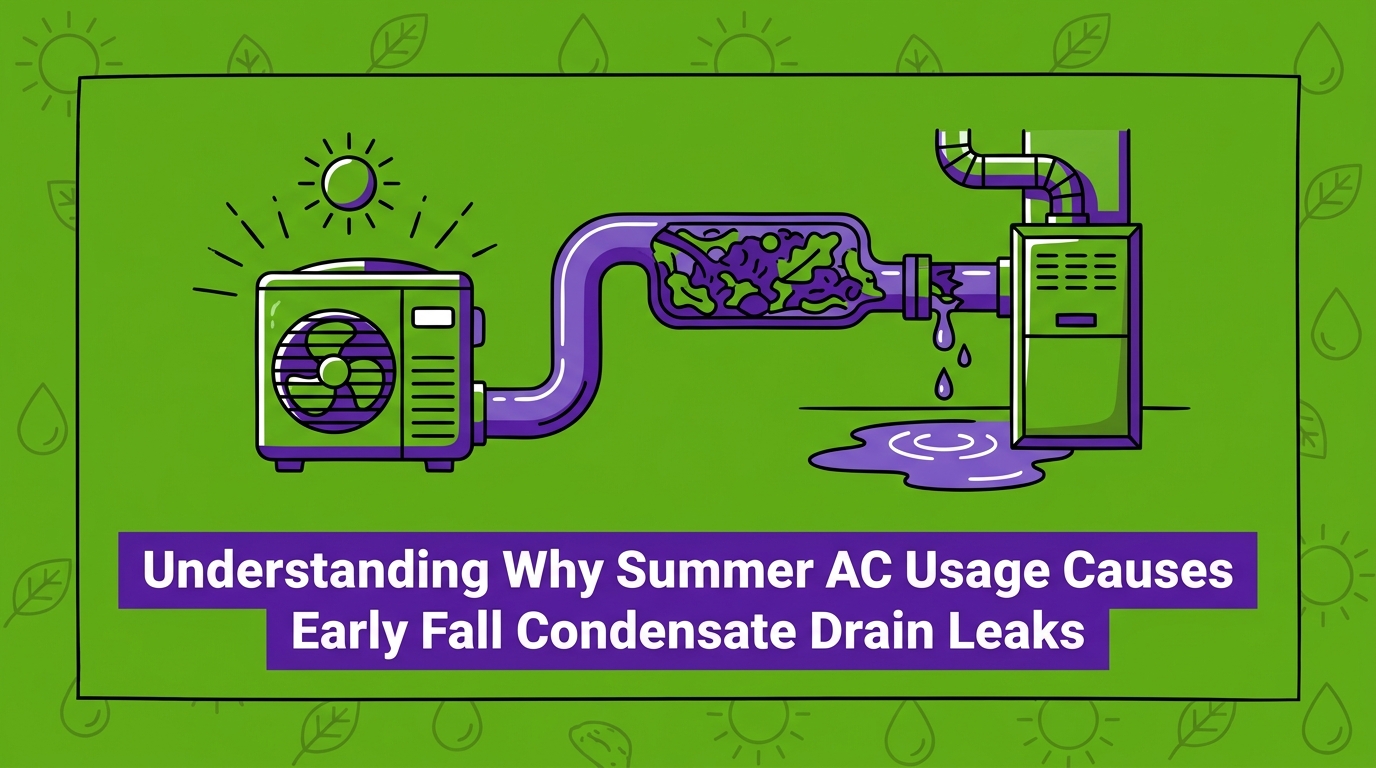
The Shock of an Unexpected Early Fall HVAC Leak
For our team at Plum HVAC, helping Mountain View homeowners understand exactly how clogged condensate drains from summer cause fall HVAC headaches usually begins with a sudden, stressful discovery: a spreading puddle where your floor should be dry. You walk past your utility closet, garage, or hallway, only to find water pooling around the indoor air handler. Because this often happens right as the weather begins to cool down, your first thought is likely panic. You might wonder if your entire heating and cooling system has suffered a major mechanical failure just weeks before you need to switch on the heat.
The good news is that a sudden puddle is rarely a sign of a dead compressor or a ruined system. Instead, it is almost always a delayed reaction to the months of heavy cooling your system just completed. If you want to protect your home and get your system back on track, exploring professional air conditioning services is the safest first step we recommend.
What you should know right now:
• It is a drainage issue, not a mechanical failure: The water you see is condensation that belongs outside, but has lost its escape route.
• It is a symptom of success: Your system successfully pulled gallons of humidity out of your home all summer; the drain simply could not keep up with the byproduct.
• It is entirely fixable: With the right professional attention, this issue can be resolved quickly without requiring major parts replacement.
To understand why this leak waited until the early fall transition (September) to finally show up, we have to look inside the dark, damp environment of your HVAC cabinet and trace the path of the water.
The Role of the Condensate Drain in Moisture Removal
Your air conditioner does more than just pump cold air into your living space; it is also a powerful dehumidifier. As warm, humid indoor air blows across the freezing cold evaporator coil inside your air handler, the moisture in that air rapidly condenses into liquid water. This is the exact same physical process that causes water droplets to form on the outside of a glass of ice water on a warm day.
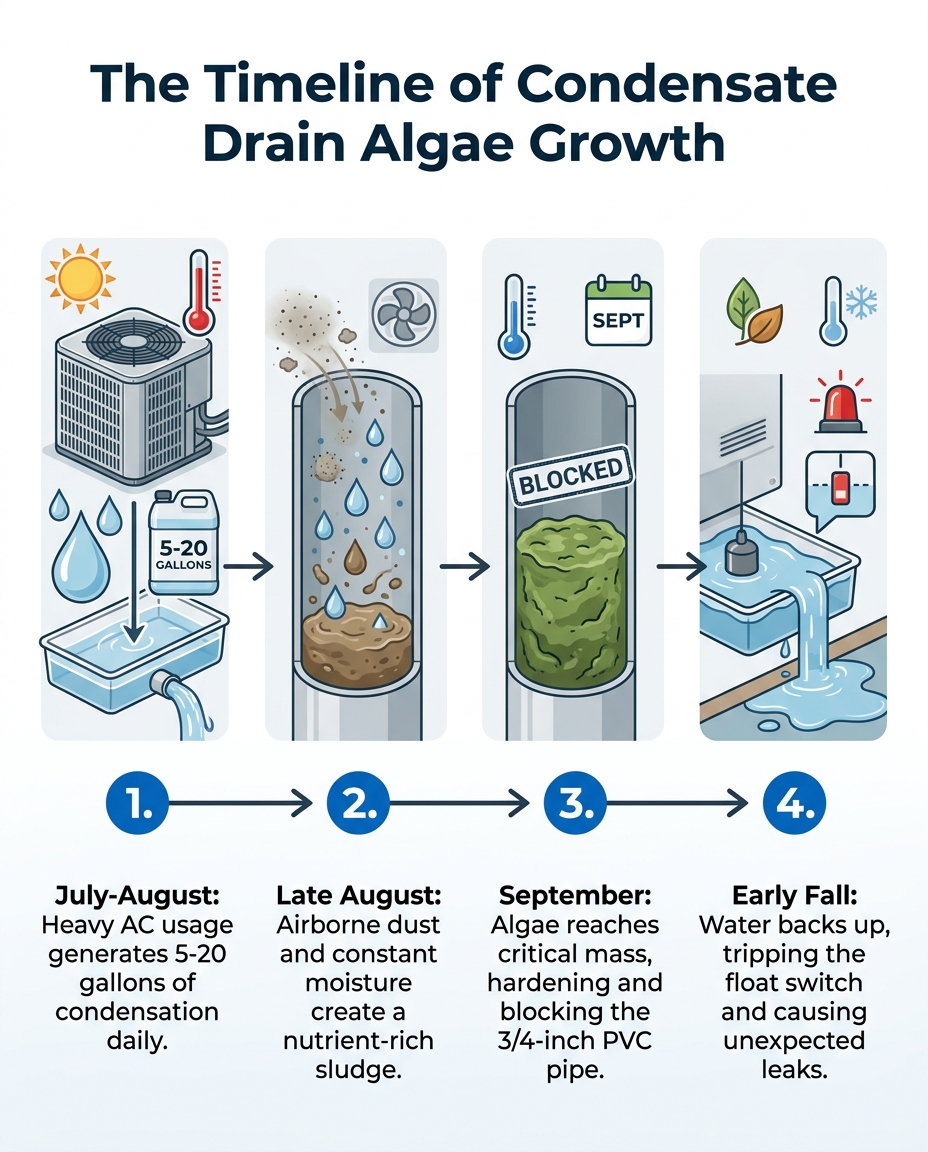
However, the sheer volume of water your HVAC system produces is staggering. During peak operation, a standard residential central air conditioning system can extract anywhere from 5 to 20 gallons of water from your indoor air every single day. All of this water drips off the evaporator coil and falls into a shallow metal or plastic tray known as the primary drain pan.
From the drain pan, gravity takes over. The water flows into the condensate drain line—a narrow pipe, typically made of 3/4-inch PVC, that routes the moisture safely out of your home. Keeping this specific pipeline clear is a core component of professional AC maintenance in Mountain View. In our daily service calls, we see firsthand how that 3/4-inch diameter leaves very little room for error.
The Volume of Summer Condensation
According to Department of Energy guidelines, proper moisture removal is critical for maintaining healthy indoor air quality and preventing structural humidity damage. Because the condensate drain line is tasked with moving up to 20 gallons of water a day, the inside of that PVC pipe remains permanently wet from June through September. This constant flow of water creates an environment that is perfectly suited for unwanted biological growth.
How Heavy Summer Cooling Creates the Perfect Algae Habitat
To understand why the pipe clogs, you have to look at the environment inside the HVAC cabinet. It is pitch black, constantly damp, and relatively cool. While your air filter catches the vast majority of airborne particulates, microscopic dust, dirt, and pet dander inevitably slip through and settle into the condensation draining off the coil.
When you combine constant moisture, darkness, and a steady supply of organic dust, you create the ultimate breeding ground for biological growth. In the Bay Area, microclimates often require extended cooling periods from July through September. As local HVAC experts, we know this means your air conditioner is running for months on end, generating a nonstop flow of condensation that keeps the drain line wet and highly hospitable to algae, mold, and mildew.
The Biological Mechanics of Slime Growth
The blockage does not form overnight. Instead, a pattern we see often is a slow, biological accumulation that follows a specific pattern:
1. Adhesion: Microscopic algae spores enter the system and stick to the wet inner walls of the PVC pipe.
2. Feeding: The constant flow of water and trapped household dust provides a continuous food source for the biological matter.
3. Layering: A sticky, jelly-like slime begins to coat the inside of the pipe, slowly reducing the 3/4-inch diameter to a 1/2-inch, then a 1/4-inch.
4. Hardening: As the slime grows thicker, it catches larger debris, creating a dense, stubborn sludge that clings tightly to the PVC walls.
Because this growth process is gradual, the pipe can continue to drain water even when it is 80% blocked. The system will appear to be functioning perfectly normally throughout the hottest days of summer, masking the growing problem inside the plumbing.
The September Shift: Why Leaks Wait Until Early Fall
The most confusing part of a condensate drain clog for most homeowners is the timing. If the air conditioner was working its absolute hardest in July and August, why didn't the pipe overflow then? Why does the puddle suddenly appear in the early fall transition (September)? It is a question our technicians hear constantly when responding to early fall emergency calls.
The answer lies in the slow accumulation of the biological matter. Throughout the summer, the algae was growing thicker and thicker, gradually choking off the flow of water. By the time September arrives, the algae has accumulated for months and finally reaches a critical mass. The pipe goes from being severely restricted to completely blocked.
Furthermore, the shift in weather plays a role. As the days begin to cool slightly, your air conditioner might run in shorter cycles rather than running continuously. These pauses in the water flow can cause the thick biological slime to dry out slightly, shift, and harden into a solid plug. When the AC kicks back on during a warm afternoon, the water hits this solid wall of algae, backs up into the drain pan, and quickly overflows onto your floor.
This timing is particularly frustrating because it often coincides exactly with the weeks when homeowners are preparing to switch over to their heating systems for the upcoming winter. Finding a puddle right before heating season naturally causes alarm, but it is simply the final tipping point of a summer-long buildup.
The Accumulation Tipping Point
When the pipe finally chokes, the backup is immediate. The 5 to 20 gallons of daily water production has nowhere to go. The primary drain pan fills to the brim within hours. Once the water breaches the edge of the pan, it spills down into the air handler cabinet, soaking the sensitive internal components before pooling on the floor around the unit.

Float Switches and System Lockouts: Built-In Safety Mechanisms
In many cases, an overflowing drain pan will trigger a secondary symptom that is just as alarming as the puddle itself: your air conditioner will suddenly shut down completely and refuse to turn back on. The thermostat might go blank, or it might say "cooling" while the system remains completely silent.
While a sudden shutdown feels like a catastrophic mechanical failure, it is actually a highly effective built-in safety mechanism doing exactly what it was designed to do. Modern HVAC systems are equipped with a condensate overflow switch, commonly called a float switch. This small device sits either inside the primary drain pan or on the secondary drain line.
When the condensate line clogs and water begins to rise in the pan, a small magnetic float inside the switch rises with the water level. Once the water reaches a dangerous height, the float trips a mechanism that immediately breaks the low-voltage electrical circuit communicating with your thermostat. This instantly shuts down the outdoor compressor and the indoor blower motor.
Differentiating a Lockout from a Mechanical Breakdown
The float switch is there to protect your home. By shutting the system off, it stops the production of condensation, preventing gallons of water from destroying your drywall, flooring, and electrical components. If your system has locked out due to a tripped float switch, you might notice a few accompanying signs:
• Blank Thermostat Screen — What It Means: The float switch has broken the 24-volt circuit, cutting power to the thermostat display.
• Musty, Mildew Smell — What It Means: Stagnant water has been sitting in the drain pan, allowing biological growth to off-gas into your ductwork.
• System Ignores Breaker Reset — What It Means: Resetting the electrical breaker will not fix the issue; as long as the switch is floating in water, the system remains locked out.
Why Clearing a Clogged Drain Requires Professional Intervention
When faced with a clogged drain line, many homeowners turn to the internet for quick fixes. Unfortunately, the most common DIY advice we see homeowners try before calling us is often ineffective and, in many cases, highly damaging to the HVAC system.
One of the most persistent myths is that pouring bleach down the condensate drain will dissolve the algae. While bleach does kill biological matter, it is a harsh oxidizing agent. When poured into the PVC drain line, bleach can chemically attack and degrade the PVC cement holding the pipe joints together. Over time, this causes the plumbing joints to fail, creating permanent leaks inside your walls. Furthermore, if bleach fumes back up into the cabinet, they can severely corrode the delicate copper evaporator coil, leading to massive refrigerant leaks.
Vinegar is another common DIY suggestion, but it is simply too weak to dissolve a hardened, critical-mass algae plug that has been growing since July.
The Dangers of Improper Clearing Techniques
Attempting to clear the line with a standard wet/dry shop vacuum is another common mistake. While a vacuum might suck out the loose standing water, it rarely has the static pressure required to dislodge the sticky, adhered core of the algae blockage deep inside the pipe. The system might run for a few days, only to back up and overflow again a week later.
More importantly, accessing the drain pan and the float switch requires interacting directly with the internal components of your air handler. The cabinet houses high-voltage electrical wiring, sensitive circuit boards, and sharp sheet metal. Poking around inside the cabinet without proper training not only risks severe electrical shock, but can also easily void your manufacturer's warranty. Clearing a critical-mass clog safely requires specialized tools and professional expertise.
Preventing Fall HVAC Headaches with Proactive Maintenance
The most frustrating aspect of early-fall water leaks is that they are entirely preventable. You do not have to wait for your floor to flood or your system to lock out before taking action. The key to avoiding this seasonal headache is proactive, professional care as the seasons change.
When you rely on Plum HVAC's comprehensive seasonal maintenance plans, our technicians proactively clear these lines before they have a chance to cause unexpected water damage. A professional pre-heating-season tune-up bridges the gap between the heavy cooling of summer and the heavy heating of winter. During this service, the technician will address the condensate system directly, ensuring that the months of built-up summer algae are safely and completely removed.
The Professional Drain Clearing Process
A licensed professional uses specialized techniques that go far beyond pouring liquids down a pipe. The professional drain clearing process typically involves:
• High-Pressure Clearing: Technicians use regulated blasts of compressed nitrogen to safely force the hardened algae plug entirely out of the PVC line without damaging the pipe joints.
• System Flushing: The line is thoroughly flushed to ensure smooth, unobstructed water flow from the pan to the exterior of the home.
• Float Switch Verification: The technician will manually test the float switch to ensure the magnetic contacts are clean and the safety lockout function operates correctly.
• Preventative Treatments: A professional-grade, time-release algaecide tablet is often placed in the drain pan. This safely prevents new biological growth for months without emitting corrosive fumes.
By scheduling a routine maintenance plan visit, you ensure that the system is completely dried out, cleaned, and safely transitioned for the cooler months ahead.
Ensure a Dry, Comfortable Transition into Fall
Finding water pooling around the indoor air handler in the early fall transition (September) is a stressful experience, but it is ultimately just a sign of a hard-working summer system that needs a little professional attention. You do not have to live with the anxiety of wondering if your system will overflow again or if a hidden mechanical issue is lurking just before winter.
Addressing the clog now prevents costly property damage and guarantees your equipment is clean, safe, and ready for the changing weather. To safely resolve the blockage and restore your peace of mind, review our seasonal AC maintenance checklist and schedule your professional tune-up today. A clear drain line is the best foundation for a comfortable, worry-free fall.
Frequently Asked Questions
Why is my AC leaking water inside the house?
Your AC is leaking inside because the condensate drain line, which normally carries moisture outside, has become blocked. This forces the water to back up into the primary drain pan and overflow into your home. It is a common issue caused by months of dust and algae buildup.
Can a clogged AC drain line cause a leak?
Yes, a clogged drain line is the most common cause of an indoor HVAC leak. When the 3/4-inch PVC pipe becomes choked with biological slime, the 5 to 20 gallons of water your system produces daily has nowhere else to go but onto your floor.
Why did my AC suddenly shut off and leak water?
Your system shut off because a built-in safety device, called a float switch, detected rising water in the drain pan. When the water level gets too high, the switch trips and cuts power to the system to prevent a massive flood in your home.
How do you know if your condensate drain is clogged?
You will usually notice water pooling around the indoor unit, a musty smell coming from your vents, or a completely blank thermostat screen. If your system refuses to turn on despite the breaker being set, a tripped float switch from a clogged drain is a highly likely culprit.
Why is my AC leaking water in the fall?
Fall leaks occur because the algae and slime that grew inside the drain pipe all summer finally reach critical mass. As the weather cools and usage patterns change, this summer buildup hardens into a total blockage, causing an unexpected overflow.
What happens if my AC condensate drain is completely blocked?
If the drain is completely blocked, the water will rapidly fill the drain pan. If your system has a working float switch, it will lock out and shut down; if the switch fails or is missing, the water will overflow, potentially causing severe damage to your drywall, electrical components, and flooring.
hear what our satisfied clients have to say

.svg)
Service areas
.avif)