

Upgrading Heating Systems in Historic Milpitas Homes Without Destroying Plaster
The Dilemma of Modernizing Comfort in Classic Architecture
Upgrading heating systems in historic Milpitas homes without destroying plaster is a challenge that leaves many homeowners shivering through the winter rather than risking a major renovation. At Plum HVAC, we understand that your vintage home likely features beautiful architectural details, but the outdated heating system is struggling to keep up with the cold. The thought of tearing into those original walls feels like a guaranteed path to ruining the very character that made you fall in love with the property.
Our team often meets homeowners at a difficult crossroad. You need reliable warmth, but you also want to protect the ornate molding, solid wood floors, and delicate plasterwork that define your living space. Standard forced-air retrofits typically require extensive demolition, creating massive dust storms and permanent structural alterations.
Fortunately, specialized, minimally invasive heating systems exist that treat your home's structural integrity with the exact same priority as the HVAC performance itself. By understanding the vulnerabilities of older construction and exploring modern technological alternatives, you can achieve efficient, whole-home comfort without sacrificing your home's historic charm. The key is knowing what options are available for Historic Milpitas properties before the early fall weather forces a hasty decision.
Why Traditional Ductwork Threatens Lath and Plaster Walls
To understand why standard heating retrofits are so destructive, you have to look behind the walls. Homes built before the 1950s generally rely on lath and plaster construction. This method involves nailing thin horizontal strips of wood (lath) to the wall studs, then pushing wet plaster over them. As the plaster oozes through the gaps in the wood and dries, it forms "keys" that lock the wall surface firmly in place.
This mechanical bond is incredibly strong but highly sensitive to vibration and moisture. When contractors attempt to install standard metal ductwork, they use heavy reciprocating saws and drills. The aggressive vibration from these tools easily snaps the brittle plaster keys hidden behind the wall.
Hidden dangers our technicians frequently encounter inside older walls:
• Asbestos insulation: Many older homes contain asbestos in wall cavities or around old piping. Opening large sections of the wall can release hazardous fibers into your living space.
• Lead-based paint: Demolition creates fine dust. If your walls have layers of lead paint, large-scale cutting turns that paint into an airborne health hazard.
• Structural surprises: Early 20th-century framing rarely follows modern spacing rules. Contractors often cut into a wall expecting a clear path, only to find solid fire blocking that requires even more demolition.
Because of these risks, applying a one-size-fits-all approach to a vintage property is a recipe for disaster. In our years of experience, we've learned that you need specialized HVAC services in Milpitas provided by technicians who truly understand the delicate nature of historic construction.
The Mechanics of Plaster Failure
Through our extensive work in Bay Area historic districts, we've seen that the cascading effect of a single improper cut cannot be overstated. When structural vibration from traditional HVAC retrofits breaks a cluster of plaster keys, the plaster on the front of the wall detaches from the lath. Initially, you might only see a hairline crack. However, because the wall has lost its anchor, gravity and seasonal temperature shifts will cause that crack to spiderweb across the entire surface.
Fixing this damage isn't as simple as patching drywall. Repairing broken lath and plaster requires specialized artisans, adding significant delays and massive unexpected costs to your heating project.
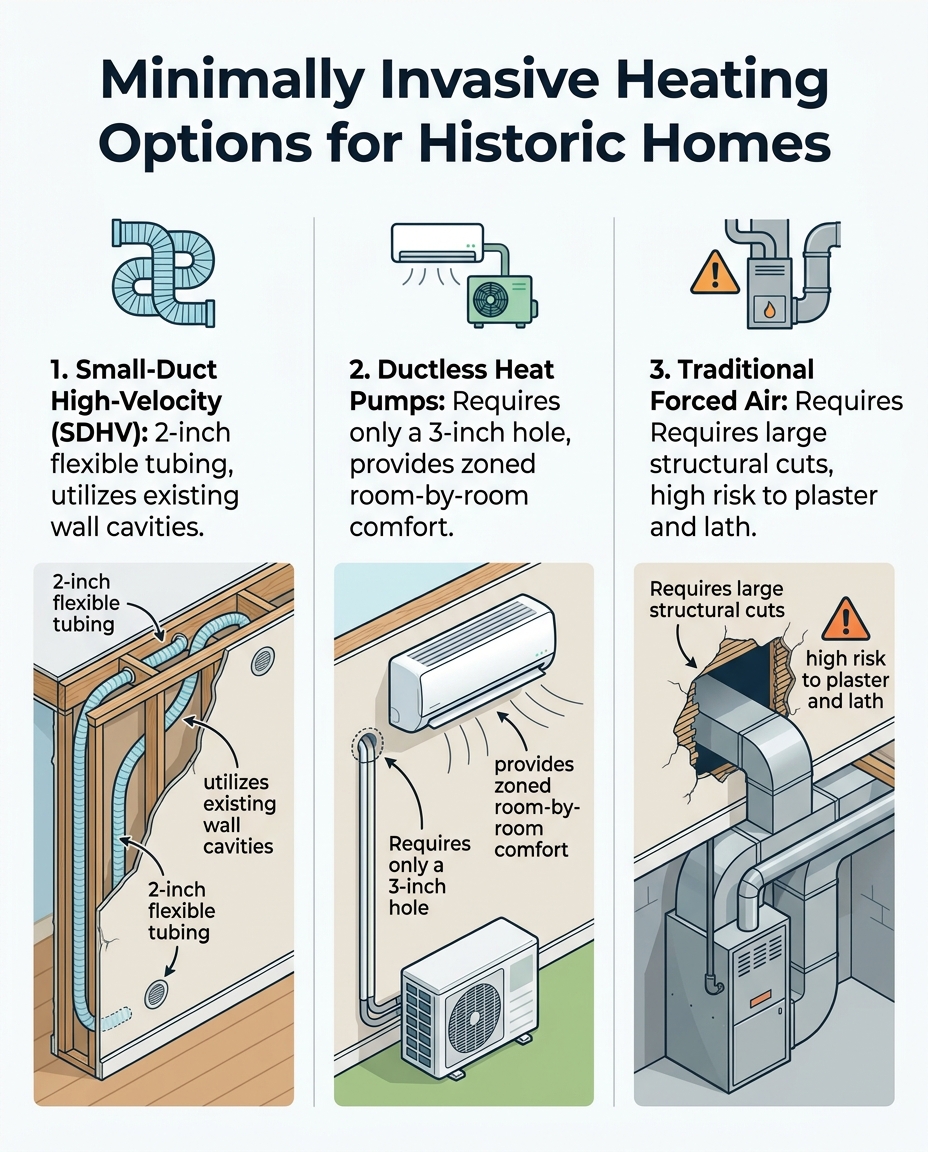
• Traditional Forced Air — Wall Impact: Requires large chases and soffits — Structural Risk: High vibration, severe risk of cracking plaster
• High-Velocity Systems — Wall Impact: Uses existing wall cavities — Structural Risk: Minimal vibration, preserves plaster keys
• Ductless Heat Pumps — Wall Impact: Requires one 3-inch exterior hole — Structural Risk: Virtually zero internal wall disruption
Minimally Invasive Solutions: The Power of Small-Duct Technology
If traditional metal ducts are too large and destructive, our team frequently recommends utilizing small-duct high-velocity (SDHV) systems as the most effective alternative. These specialized heating and cooling units are designed specifically for older homes that lack existing ductwork.
Instead of bulky metal rectangles, small-duct high-velocity (SDHV) systems use flexible, insulated tubing that is typically just two inches in diameter. The central air handler is compact enough to fit in an attic, basement, or crawlspace. From there, the flexible tubing snakes through the existing voids in your home's architecture.
How high-velocity technology works:
• Aspiration over airflow: Traditional systems dump air into a room, creating drafts. SDHV systems shoot a high-speed jet of air into the room, creating a gentle suction (aspiration) that mixes the room's air evenly from floor to ceiling.
• Unobtrusive outlets: Instead of large metal floor registers, the air enters the room through small, round outlets that can be painted or stained to match your original wood floors or ceiling plaster perfectly.
• Preservation approved: The Department of Energy (DOE) and the National Park Service (NPS) frequently recommend these systems in their preservation guidelines because they allow for modern climate control without altering historic floor plans.

Routing Without Ruin
The true genius of SDHV technology lies in the routing process. Our installers utilize existing architectural voids—such as the back corners of closets, spaces behind staircases, or the gaps between floor joists—rather than creating new ones. The precision required to snake 2-inch flexible tubing behind 20th-century walls means your original plaster surfaces and ornate molding remain completely untouched.
Zoned Comfort and Preservation Without Ductwork
Another powerful preservation strategy involves eliminating internal ductwork entirely. For homes where our assessment shows even small-duct routing is impractical due to solid masonry or complex framing, we consistently recommend ductless mini-split systems as an elegant solution.
Ductless technology connects a quiet outdoor compressor to one or more indoor air handlers using a small bundle of refrigerant lines and electrical cables. The footprint required to connect these units is incredibly small—typically just a single 3-inch hole drilled through the exterior wall. This bypasses the interior lath and plaster completely.
Aesthetic considerations for historic spaces:
• Low-profile wall units: Modern indoor handlers feature sleek, minimalist designs that can be mounted high on the wall, out of the direct line of sight.
• Floor-mounted consoles: If you have tall, historic windows and limited wall space, floor-mounted units can be installed above the baseboards, resembling traditional radiators.
• Ceiling cassettes: For rooms with accessible attic space above, flush-mounted ceiling cassettes sit perfectly flat, hiding the mechanical components completely out of view.
Beyond preserving your walls, ductless systems provide the distinct advantage of room-by-room zoned heating. Older homes often suffer from uneven insulation, meaning the upstairs bedrooms might be freezing while the downstairs living room is stifling. Zoned technology allows you to set different temperatures for different areas, ensuring targeted comfort exactly where you need it.
Combating Damp Winters with Efficient Technology
The local climate plays a massive role in how older homes behave during the colder months. Milpitas winters frequently see temperatures dipping into the low 40s, accompanied by high humidity. This damp, chilly air is particularly aggressive when it interacts with 20th-century construction.
During our early fall tune-ups, our team routinely notices how uninsulated plaster walls are notorious for feeling cold to the touch. When damp winter air infiltrates through drafty window frames and unsealed baseboards, it creates deep cold spots. If the heating system cannot keep up, this temperature differential can lead to condensation and moisture buildup on the inside of your plaster walls, potentially causing long-term structural damage.
Modern heat pump installation directly combats these specific climate challenges. Heat pumps provide a consistent, even warmth that gently radiates through the space, eliminating the harsh temperature swings associated with older furnaces. Furthermore, heat pumps naturally dehumidify the air as they operate, keeping your indoor environment dry and protecting your vintage woodwork from moisture-related warping.
The financial upside: Because heat pump technology is highly energy-efficient, upgrading your historic home's heating system often qualifies for generally applicable federal tax credits or local utility incentive programs. Always consult with a tax professional or your local utility provider to see what general energy rebates apply to your specific upgrade.
Compliance and Preservation: Navigating Bay Area Codes
Upgrading the mechanical systems in an older property isn't just a matter of choosing the right equipment; it requires strict adherence to local regulations. Our team navigates California Title 24 energy efficiency standards daily, which apply to all new heating installations, regardless of the home's age.
Navigating the intersection of historic preservation guidelines and strict municipal building codes requires deep local expertise. Pulling the proper permits is non-negotiable. Unpermitted work is especially risky in architecturally sensitive homes, as improper electrical loads or incorrect structural modifications can void your homeowner's insurance and result in heavy municipal fines.
Working with Plum HVAC means partnering with a team that holds dual expertise in both advanced small-duct technology and local compliance. We understand how to design systems that meet rigorous modern efficiency standards while satisfying the specific preservation requirements of Historic Milpitas properties.
Title 24 in Historic Applications
Applying modern efficiency standards to older homes involves balancing energy requirements with structural limitations. Title 24 mandates specific load calculations and airflow verifications. Because vintage homes are inherently "leakier" than modern builds, the equipment sizing and duct sealing must be calculated with extreme precision. Understanding the nuances of local HVAC permits and building codes ensures your project moves forward without costly delays or failed inspections.
Strategic Timing for Your Historic Home Retrofit
Planning a specialized retrofit requires far more logistical coordination than a standard equipment swap-out. Custom ordering materials, designing non-destructive routing paths, and securing permits takes time. That is why we constantly remind our clients that early fall heating prep is so critical for owners of older properties.
Key planning steps for the transitional season:
1. Evaluate the building envelope: Use the mild fall weather to check for drafts around historic windows and doors.
2. Schedule a structural assessment: Have our specialized technicians map out potential routing paths for small-duct or ductless lines before finalizing the design.
3. Secure contractor availability: Specialized preservation HVAC teams book up quickly. Getting on the schedule in September ensures your project is completed before the deep winter chill sets in.
Rushing a historic home project during a peak winter breakdown often leads to compromised architectural integrity. When you wait until the furnace completely fails in January, the desperation for heat can push homeowners into accepting destructive, fast-tracked installations. Using the fall season to plan allows you to protect your home's legacy while upgrading its comfort.
Frequently Asked Questions
Can you put central air or heating in a house with plaster walls?
Yes, you can install central heating and cooling in a house with plaster walls without destroying them. We find the best approach is to use small-duct high-velocity systems or ductless heat pumps. These technologies bypass the need for large metal ductwork, preserving the delicate lath and plaster construction.
How do you heat an old house without traditional ductwork?
Heating an old house without traditional ductwork is easily achieved using ductless mini-split systems or high-velocity HVAC units. Ductless systems use small, wall-mounted air handlers connected directly to an outdoor unit. High-velocity systems use flexible, two-inch tubing that snakes through existing wall cavities to deliver heat discreetly.
Are ductless mini-splits a good option for historic homes?
Ductless mini-splits are an excellent option for historic homes because they require almost no demolition. Installers only need to drill a small three-inch hole through the exterior wall to connect the system. This preserves original molding and plaster while providing the added benefit of room-by-room zoned temperature control.
What is a small-duct high-velocity (SDHV) heating system?
A small-duct high-velocity system is a specialized HVAC unit designed to fit into tight architectural spaces. It uses a compact air handler and two-inch flexible tubing to deliver high-speed air into rooms. Our team frequently recommends this technology for older properties because it routes through existing voids without requiring torn-down walls.
Will installing a new heating system damage my original molding?
Installing a new heating system will not damage your original molding if you choose minimally invasive technologies. Standard forced-air retrofits pose a high risk to original woodwork, but ductless and small-duct solutions are specifically designed to avoid structural disruption. Our specialized contractors will map out routes that protect your home's historic details.
Do I need special permits to upgrade HVAC in an older Bay Area home?
Yes, you must pull appropriate local permits and comply with California Title 24 energy standards when upgrading HVAC in any Bay Area home. Older properties may also be subject to specific historic preservation guidelines depending on your municipality. Working with a contractor like Plum HVAC who understands local building codes is necessary to ensure compliance.
Partner with Specialists in Architectural Preservation
Modernizing the comfort of your vintage property shouldn't mean sacrificing its character. By planning your early fall heating prep with us now, you can secure a minimally invasive solution that keeps your home warm and your original plaster pristine. For expert HVAC services in Milpitas that respect your home's history, schedule a specialized consultation with Plum HVAC today to explore your ductless and small-duct options.
hear what our satisfied clients have to say

.svg)
Service areas
.avif)