
Ductwork Installation in Santa Clara, CA
Our Santa Clara team provides complete ductwork design and installation to optimize airflow, energy efficiency, and indoor comfort. Services include precise load calculations, material selection, layout planning, sealing, insulation, and full code-compliant commissioning. We manage every step—from site preparation and coordination with HVAC equipment to post-install testing, warranties, and timeline management—ensuring long-term reliability, reduced energy use, and balanced, efficient home heating and cooling.
Ductwork Installation in Santa Clara, CA
Well-designed ductwork is the backbone of any efficient heating, ventilation, and air conditioning system. For homes in Santa Clara, CA, proper ductwork installation not only ensures consistent comfort during warm summers and mild winters but also reduces energy use, improves indoor air quality, and helps meet California efficiency and code requirements. This page walks through the complete ductwork design and installation process, what to expect on site, common issues found in Santa Clara homes, and how professional installation protects airflow and energy performance.
Why proper ductwork matters in Santa Clara homes
- Santa Clara’s Mediterranean climate means higher cooling loads in summer. Undersized or leaky ducts limit airflow to living spaces, forcing air conditioners to run longer and raising utility bills.
- Many local homes have attics, crawlspaces, or older systems where ducts were added without modern sealing or insulation standards. That increases heat gain or loss before conditioned air reaches rooms.
- California energy codes and Title 24 efficiency expectations make correct sizing, sealing, and testing important for compliance and performance.
Common ductwork issues in Santa Clara
- Leaky connections and joints allowing conditioned air loss into attics or crawlspaces.
- Undersized ducts or poorly planned layouts that produce uneven airflow and hot or cold rooms.
- Insufficient insulation in attic duct runs leading to heat gain in summer.
- Incompatible duct transitions when replacing HVAC equipment, causing pressure imbalances.
- Flexible duct kinks, sharp bends, or long runs that increase static pressure and reduce system capacity.
Typical ductwork installation process
The installation process is systematic and focused on delivering balanced, efficient airflow while meeting code. Key steps include:
- Load calculation and system sizing
- Perform a room-by-room heat gain/heat loss load calculation using industry-accepted methods. This determines required airflow (CFM) per room and the overall system capacity.
- Size duct trunk, branch, and register terminal connections to deliver calculated airflow with acceptable static pressure.
- Material selection and planning
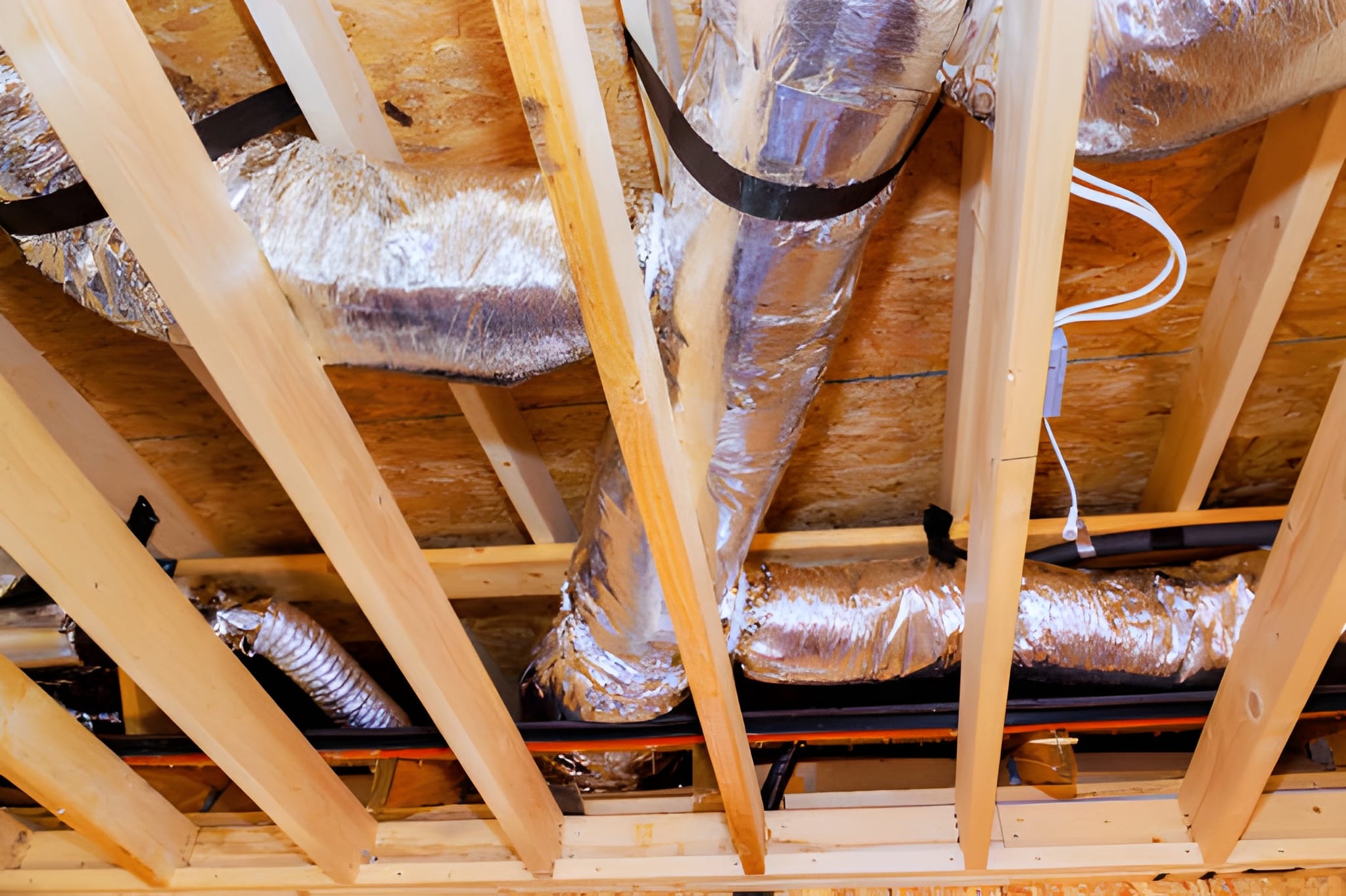
- Choose materials suited to the house layout and performance goals: galvanized sheet metal for main trunks, insulated flexible duct for branch runs where appropriate, and metal plenums for equipment connection.
- Specify insulation levels appropriate for attic or unconditioned space runs to limit thermal transfer and condensation risk.
- Duct layout planning
- Create a detailed layout that minimizes long runs, avoids sharp bends, and locates returns and supply registers for balanced airflow.
- Plan for zoning or multiple thermostats where load variability across the house warrants it.
- Sealing and insulation
- Seal all seams and connections with approved mastic or UL-rated tapes and gasketing. Mechanical fasteners should be backed by mastic to prevent leakage.
- Insulate ducts in unconditioned spaces to meet local code and reduce energy loss.
- Code compliance and permitting
- Prepare plans and documentation required for local permitting, following California energy efficiency rules and municipal building codes.
- Coordinate necessary inspections and HERS or duct leakage testing when project scope or local requirements call for verification.
- Equipment coordination and installation
- Coordinate duct connections with new or existing HVAC equipment placement to ensure proper plenum sizing, return locations, and thermal separation where needed.
- Verify airflow after equipment installation and adjust register dampers or add balancing fixtures to achieve design CFM.
- Commissioning and testing
- Perform duct leakage testing and measure system airflow and static pressures. Adjust and rebalance to meet performance targets.
- Document test results and leave a commissioning summary with the homeowner.
Site preparation and realistic timeline
- Site prep generally includes clearing attic or crawlspace access, protecting flooring and finishes, and providing space for material staging.
- For a typical single-family home, new duct design and installation often progresses through inspection and commissioning in phased work days rather than a single continuous day. Complexity, home access, and whether walls need modifications will affect timeline.
- Expect scheduling for permits and inspections to add to the calendar; plan for coordination with HVAC equipment delivery and installation.
Sealing, insulation, and performance standards
- Use industry-recognized sealing methods: mastic, approved tapes, and gasketing on plenums and equipment connections. Mechanical fasteners alone are not sufficient.
- Insulate ducts in unconditioned spaces to the level required by local code and to reduce energy loss and condensation risks during Santa Clara’s warm months.
- Verify performance with leakage testing and airflow measurements so the finished system meets both comfort and efficiency objectives.
Before-and-after examples (typical outcomes)
- Example 1: Older bungalow with undersized, leaky attic ducts. After redesign and replacement with properly sized metal trunking, sealed connections, and insulated runs, rooms received balanced airflow, AC run-times dropped, and temperature variance across rooms decreased noticeably.
- Example 2: Two-story home with long flexible runs and high static pressure. Replacing long runs with shorter metal trunks and properly supported insulated flex branches improved airflow to second-floor bedrooms and eliminated the need for repeated thermostat setbacks.
Warranty and quality assurance
- Professional installations typically involve two layers of protection: manufacturer warranties for materials and equipment, and an installer workmanship warranty that covers labor and installation-related issues.
- Warranty durations and coverage vary. Confirm which elements are covered (duct materials, seams, insulation, workmanship) and whether commissioning and test reports are provided as part of final documentation.
Cost and quote expectations (what a quote should include)
A thorough quote for ductwork installation in Santa Clara should be transparent and itemized. Expect to see:
- Scope of work with clear descriptions of demolition (if any), new ductwork type and routing, insulation levels, and sealing methods.
- Load calculation summary and system sizing rationale.
- Materials list (sheet metal, flex duct, insulation, sealants) and labor line items.
- Permit and inspection fees, and any required testing or commissioning services.
- Timeline and milestones tied to permitting and inspections.
- Warranty terms covering materials and workmanship.
Factors that influence total cost include house size, number of zones, attic accessibility, existing duct removal, code-required testing, and the need for structural modifications.
Maintenance and long-term benefits
- Proper installation reduces energy waste, improves indoor comfort, and decreases strain on HVAC equipment—extending equipment life and lowering repair frequency.
- Routine checks every few years to inspect seals, insulation, and connections keep the system performing.
- For Santa Clara homeowners, improved duct performance means better cooling efficiency during hot months and more consistent comfort year-round.
Well-planned ductwork installation delivers measurable comfort and efficiency gains while meeting local code expectations. A complete project includes careful load calculations, material and layout choices, professional sealing and insulation, coordinated HVAC equipment integration, and documented testing and warranties to protect performance over time.
hear what our satisfied clients have to say

.svg)
Service areas
.avif)