
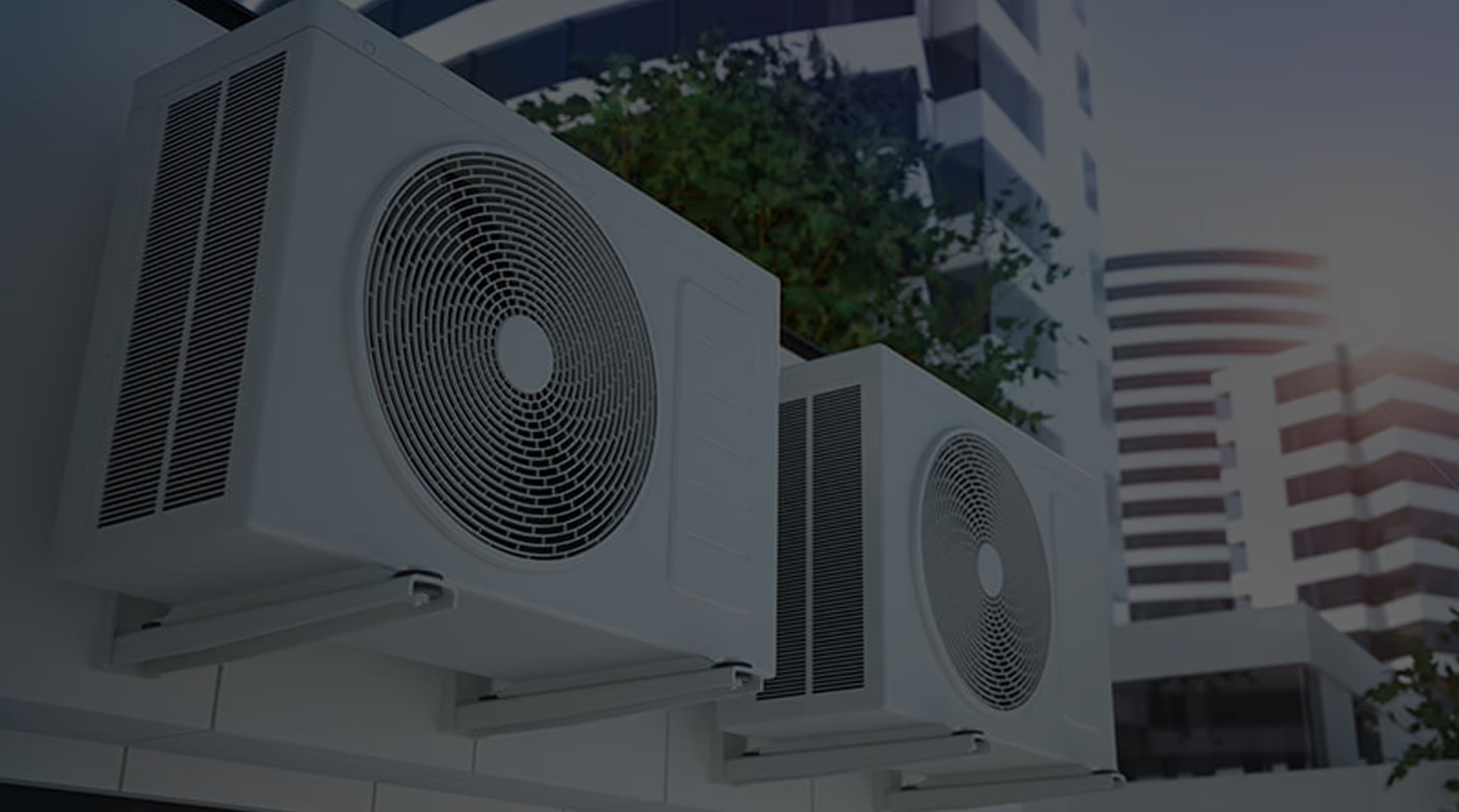
Heat Pump Replacement in Union City, CA
For Union City residents looking for heat pump replacement, we'll show you how a professional evaluation guides correct sizing, equipment selection, and risk mitigation – from removal to installation and warranty coverage. We highlight common triggers such as aging systems, declining efficiency, inadequate performance, refrigerant phase-out, and local climate considerations. We outline available systems (air-source, ductless, ducted, and dual-fuel) and emphasize proper load calculations, duct integrity, and post-installation support to ensure long-term comfort and energy savings. We also cover rebates and warranties.
.jpeg)
Heat Pump Replacement in Union City, CA
Replacing an aging or failing heat pump is one of the most effective ways to improve home comfort, reduce utility bills, and prepare your Union City home for California’s ongoing energy-efficiency and electrification trends. This page explains why homeowners pursue a complete heat pump replacement, how a professional evaluation leads to the right equipment and sizing, what to expect during removal and installation, and the warranty and post-installation support options that protect your investment in Union City, CA.
Why replace your heat pump: common triggers in Union City
Homes in Union City face particular drivers for replacement that affect long-term comfort and operating cost:
- Age and recurring failures: Systems older than 10 to 15 years often experience frequent breakdowns and rising repair costs. Replacing rather than repairing becomes more economical.
- Declining efficiency: Older equipment loses efficiency, increasing electricity use in a region with above-average energy costs compared with national averages.
- Inadequate performance: Poor heating on cool Bay Area nights or inefficient cooling during warm spells can indicate undersized or failing equipment.
- Refrigerant phase-out: Older units using phased-out refrigerants may be costly or impossible to service.
- Home upgrades: Ductwork changes, attic insulation improvements, or moving to all-electric systems often make a new heat pump the smart choice.
- Corrosion and environment: Homes closer to the Bay may experience accelerated outdoor unit corrosion; modern units have better protective coatings.
Types of heat pump replacements commonly chosen
- Air-source heat pumps: The most common upgrade with high efficiency and variable-speed compressor options.
- Ductless mini-splits: Ideal for homes without ducts, room additions, or targeted comfort control.
- Ducted variable-speed systems: Good for whole-home replacements where existing ductwork can be sealed and optimized.
- Dual-fuel or hybrid systems: Pair heat pumps with gas furnaces in cases where extreme cold or specific usage patterns make a backup heat source desirable.
System evaluation and reasons to replace
A thorough pre-replacement evaluation includes:
- Load calculation (Manual J) to determine correct capacity based on home size, orientation, insulation, and occupancy.
- Assessment of existing ductwork for leakage, insulation, and airflow balance.
- Refrigerant and compressor condition check, including whether R-22 or other phased-out refrigerants are present.
- Electrical panel capacity and disconnects to confirm compatibility with modern equipment.
- Inspection for outdoor-unit corrosion, mounting condition, and equipment placement constraints.
Common replacement reasons uncovered during evaluation:
- Oversized or undersized system causing short cycling or poor comfort.
- Leaky ducts contributing to higher energy use.
- Frequent compressor or capacitor failures signaling impending system failure.
- Old refrigerant types that are becoming impossible to service.
Equipment selection and sizing
Proper equipment selection balances efficiency, comfort, and lifecycle cost:
- Right-sizing is essential: Too large leads to short cycling and humidity problems; too small leads to continuous operation and wear.
- Look for high SEER2 and HSPF2 ratings or high COP at expected operating conditions to maximize savings in Union City’s mild climate.
- Consider variable-speed inverter compressors for quieter operation, better humidity control, and higher seasonal efficiency.
- Choose units with coastal-grade coatings if your property is near the Bay to reduce corrosion risk.
Energy-efficiency comparisons
When comparing replacement options:
- Compare SEER and HSPF ratings, but also review seasonal performance and part-load efficiency—most homes operate at partial load.
- Evaluate expected annual energy use based on local climate patterns and typical thermostat settings in Union City.
- Consider noise levels and vibration ratings for outdoor units; quieter units can matter in dense neighborhoods.
Removal and disposal of old units
Professional removal follows environmental and safety rules:
- Refrigerant recovery per EPA rules to avoid releases.
- Safe disconnection of electrical and refrigerant lines.
- Responsible disposal or recycling of metal, compressors, and insulation.
- Permitting and municipal disposal requirements are handled as part of the replacement process in Union City to ensure compliance.
Installation process and timeline
Typical steps and realistic timelines for a complete replacement:
- Pre-installation planning: final equipment selection, permitting, and scheduling (1 to 2 weeks depending on permit timelines).
- Day-of removal and installation: remove old equipment, modify or install new pads and mounting, set new indoor and outdoor components, connect refrigerant and electrical (1 to 3 days for a standard whole-home replacement).
- System charging and commissioning: vacuum, charge to specification, test operation across modes, adjust airflow and thermostats (same day as installation).
- Final walkthrough and documentation: show operation, provide warranty and maintenance information, and leave commissioning data.
Complex jobs (duct replacement, major electrical upgrades, or multi-zone mini-split installs) may extend the timeline. Permits and utility inspections can also affect schedule.
Available rebates and financing options
Union City homeowners can often offset replacement costs through multiple channels:
- Federal, state, and local incentives for high-efficiency heat pumps and electrification measures.
- Utility rebates from regional providers for qualifying equipment, duct sealing, and whole-home upgrades.
- Manufacturer incentives or extended warranty packages.
- Financing options that spread payments over time, including energy-efficiency loan programs or contractor financing plans.
A replacement assessment will identify which incentives your home and chosen equipment qualify for and factor them into the projected lifecycle cost.
Warranties and post-installation support
Protecting the new system is crucial for long-term value:
- Manufacturer warranties typically cover compressor and parts for set terms; review what is included and any required registration.
- Labor warranties from installers cover workmanship for a defined period.
- Recommended routine maintenance: annual tune-ups, refrigerant checks, filter changes, and duct inspections to maintain efficiency and preserve warranty compliance.
- Post-installation support often includes system monitoring, thermostat setup, and seasonal performance checks to ensure expected savings and comfort.
Maximizing performance in Union City
- Seal and insulate ducts, especially in attics or crawlspaces, to reduce losses.
- Install a programmable or smart thermostat to take advantage of variable rates and optimize runtime.
- Maintain moderate setpoints: small changes can yield meaningful savings without sacrificing comfort.
- Use shading and ceiling fans during warmer months to reduce cooling load.
Replacing your heat pump in Union City, CA is a strategic decision that impacts comfort, energy bills, and home value. A professional evaluation, proper equipment selection and sizing, compliant removal, careful installation, and ongoing support combine to deliver reliable performance and long-term savings tailored to local climate and regulatory conditions.
hear what our satisfied clients have to say

.svg)
Service areas
.avif)