
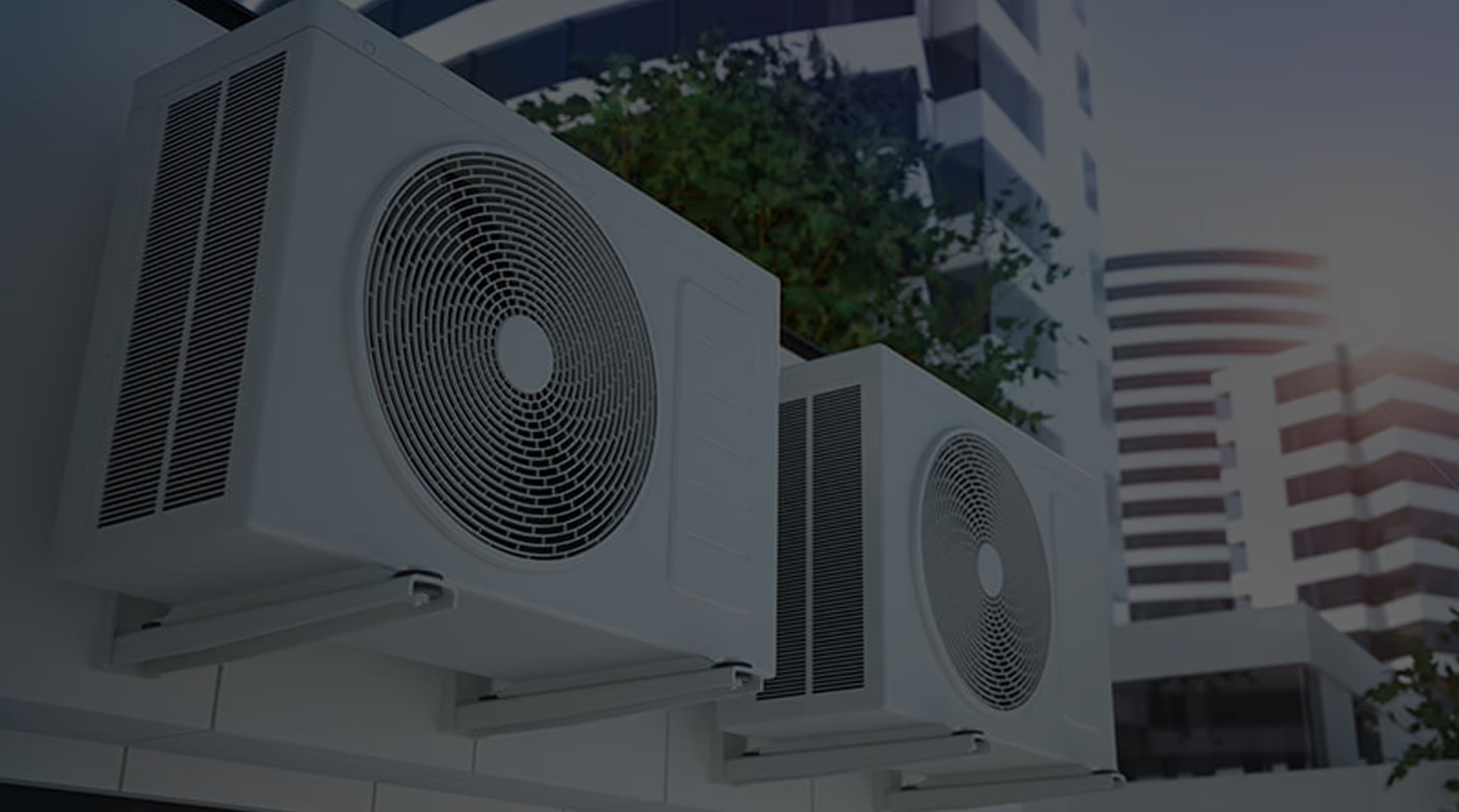
Mini Split Repair in San Jose, CA
At Plum HVAC, we offer a clear understanding of mini split repair in San Jose, with a detailed look at common failure points, a step-by-step diagnostic workflow, and practical solutions for efficient fixes. We address refrigerant leaks, compressor and electrical faults, sensor issues, airflow restrictions, drain clogs, and environmental damage, explaining how our skilled technicians pinpoint root causes and verify repairs.
We'll also outline typical repair timelines, warranty factors, and how to prepare for a service visit, along with tips for deciding when to call for emergency service versus routine maintenance in the South Bay. Plum HVAC is here to ensure your comfort.
-min.jpeg)
Mini Split Repair in San Jose, CA
Mini split systems are a common, energy-efficient choice for San Jose homes and businesses. When a ductless unit fails or underperforms, it affects comfort and energy bills quickly—especially during late spring and summer heat spikes in the South Bay. This page explains common mini split repair services, the diagnostic and troubleshooting process for issues like refrigerant leaks and electrical faults, parts replacement and warranty considerations, typical repair timelines, and practical guidance for arranging emergency or routine repairs in San Jose, CA.
Common mini split repair issues in San Jose
- Refrigerant leaks: Low refrigerant reduces cooling capacity and can cause icing or compressor stress. Leaks are more likely where older copper lines have been disturbed during remodeling or where outdoor units sit near irrigation or landscaping.
- Compressor failures: Overheating, age, or repeated low-refrigerant operation can damage compressors. Symptoms include loud starting noises, frequent short cycling, or no cooling from the outdoor unit.
- Electrical faults: Tripped breakers, failed contactors, capacitor issues, or damaged control boards can cause intermittent operation or complete system failure. Power quality issues and summer demand spikes in San Jose neighborhoods sometimes reveal weak components.
- Sensor and control problems: Faulty room or evaporator temperature sensors, communication errors between indoor and outdoor units, and remote-control faults produce inaccurate temperature control, erratic fan behavior, or error codes.
- Airflow restrictions and drain issues: Dirty filters, blocked indoor blowers, or clogged condensate drains lead to reduced airflow, dripping, or secondary water damage in attics or wall cavities.
- Animal or environmental damage: In-ground rodents, wasps, or plant growth near indoor units and outdoor condensers can affect wiring, coils, or line sets.
Diagnostic and troubleshooting procedures
Diagnostic work aims to isolate the root cause quickly and avoid unnecessary part replacement. A typical diagnostic flow includes:
- Visual inspection: Check indoor and outdoor units for obvious damage, loose wiring, filter condition, and condensate drain status.
- System startup and error-code reading: Power cycle and review the unit’s error codes or LED indicators to narrow the fault to refrigerant, electrical, or communication issues.
- Electrical testing: Measure incoming voltage, inspect breakers and fuses, test run capacitors, contactors, and control boards for proper function.
- Refrigerant and pressure testing: Use gauges and leak-detection tools to verify pressures. If pressures are low, perform a targeted leak search with electronic detectors or dye. Do not add refrigerant without fixing leaks first.
- Component isolation: Temporarily bypass or test individual components (fan motors, compressors, sensors) to determine if the issue is mechanical or electronic.
- Functional run test: After repairs or adjustments, run the system through heating and cooling cycles to confirm resolution and stable operation.
Technicians in San Jose will consider local conditions—higher daytime cooling loads and occasional particulate dust from construction—when interpreting symptoms.
Repairs, parts replacement, and warranty considerations
Common repairs and replacements include:
- Refrigerant leak repair and recharge: Locate and repair the leak, recover and evacuate system, vacuum, then recharge with the correct refrigerant spec. Modern mini splits use specific refrigerants and require proper recovery equipment.
- Compressor replacement: Replacing a compressor or entire outdoor condensing unit may be necessary for catastrophic failure. This can involve brazing line sets and ensuring oil and refrigerant compatibility.
- Electrical component replacement: Contactors, capacitors, control boards, and relays are frequently replaced to restore reliable operation.
- Sensor and PCB replacement: Faulty sensors or printed circuit boards are swapped with OEM-approved parts to maintain communication and control accuracy.
- Coil cleaning and drain servicing: Clean indoor evaporator coils, clear drain lines, and replace or clean filters to restore airflow and prevent moisture issues.
Warranty coverage varies by manufacturer and by the original installer. Typical considerations:
- Manufacturer warranty may cover compressors, parts, and heat exchangers for set terms. Proof of installation date and maintenance history helps validate claims.
- Many warranties require registered installation and documented annual maintenance.
- Aftermarket or extended warranties purchased at installation may affect who pays for parts or labor.
When arranging repairs, confirm that replacement parts are OEM or manufacturer-approved to maintain warranty validity and system efficiency.
Typical timelines for mini split repairs in San Jose
- Diagnostic visit: 30–90 minutes depending on accessibility and whether multiple indoor units are affected.
- Minor electrical or control repairs: Often completed the same day (1–3 hours) if parts are on-hand.
- Refrigerant leak detection and repair: 2–6 hours typically, depending on leak location. If line-set repairs or hard-to-access piping are involved, additional time may be required.
- Compressor or outdoor unit replacement: 4–8 hours for a straightforward swap; longer if new line sets, brazing, or permits are necessary.
- Parts lead times: Common electrical parts and sensors are usually available locally. Larger items like compressors or replacement condensing units may require ordering and can extend repair timelines by days to a week.
San Jose homeowners should plan scheduling around workday accessibility and any HOA or building access requirements.
What to prepare for a service visit
When preparing for a technician visit, having the following information speeds diagnostics and scheduling:
- Make and model numbers for indoor and outdoor units (usually on the side panels).
- A clear description of symptoms and when they occur (times of day, weather conditions).
- Any recent work near the unit (remodeling, landscaping) that could have disturbed lines or wiring.
- Accessible entry to indoor units and clear space around outdoor condensers.
- Maintenance history or recent invoices, which help establish warranty and prior interventions.
If multiple indoor heads are affected, note whether all heads show similar behavior or individual variations.
Emergency vs routine repair guidance
Emergency repair scenarios in San Jose include complete system failure during extreme heat, active water leakage causing property risk, burning smells or visible smoke, and tripped electrical panels that won’t reset. For those situations, prioritize safety: isolate power to the unit at the breaker if you suspect electrical faults, and address active water to prevent further damage.
For routine repairs or non-critical issues (reduced cooling, intermittent errors, noisy fans), schedule diagnostic service during normal business hours and provide the technician with the details above so they arrive prepared.
When arranging a repair appointment, request that the technician confirm required access, any necessary permits for refrigerant work, and expected on-site durations. Keep documentation handy for warranty or insurer follow-up.
Benefits of timely mini split repair and maintenance in San Jose
Prompt repairs restore comfort, reduce energy use during San Jose’s warm months, and extend equipment life. Addressing refrigerant leaks or failing electrical parts early prevents secondary damage like compressor burnout or water infiltration. Regular maintenance—cleaning filters, checking drain lines, and annual system checks—keeps multi-zone mini split systems balanced and efficient in a region where day-to-day temperatures can swing seasonally.
Maintenance tips specific to San Jose homes
- Clean or replace filters every 1–3 months during the heavy-use season to combat dust from urban and construction activity.
- Keep outdoor condensers free of debris and vegetation; San Jose landscaping seasons can quickly encroach on equipment.
- Inspect indoor unit proximity to southern or west-facing windows—excess solar load raises cooling demand and can highlight inefficiencies.
- Maintain documented annual maintenance to support warranty claims and to catch issues before summer peak demand.
This information is intended to help San Jose homeowners and property managers understand what to expect from mini split repair services, how diagnostics are performed, what typical repairs involve, and how to prepare for both emergency and routine service visits.
hear what our satisfied clients have to say

.svg)
Service areas
.avif)