
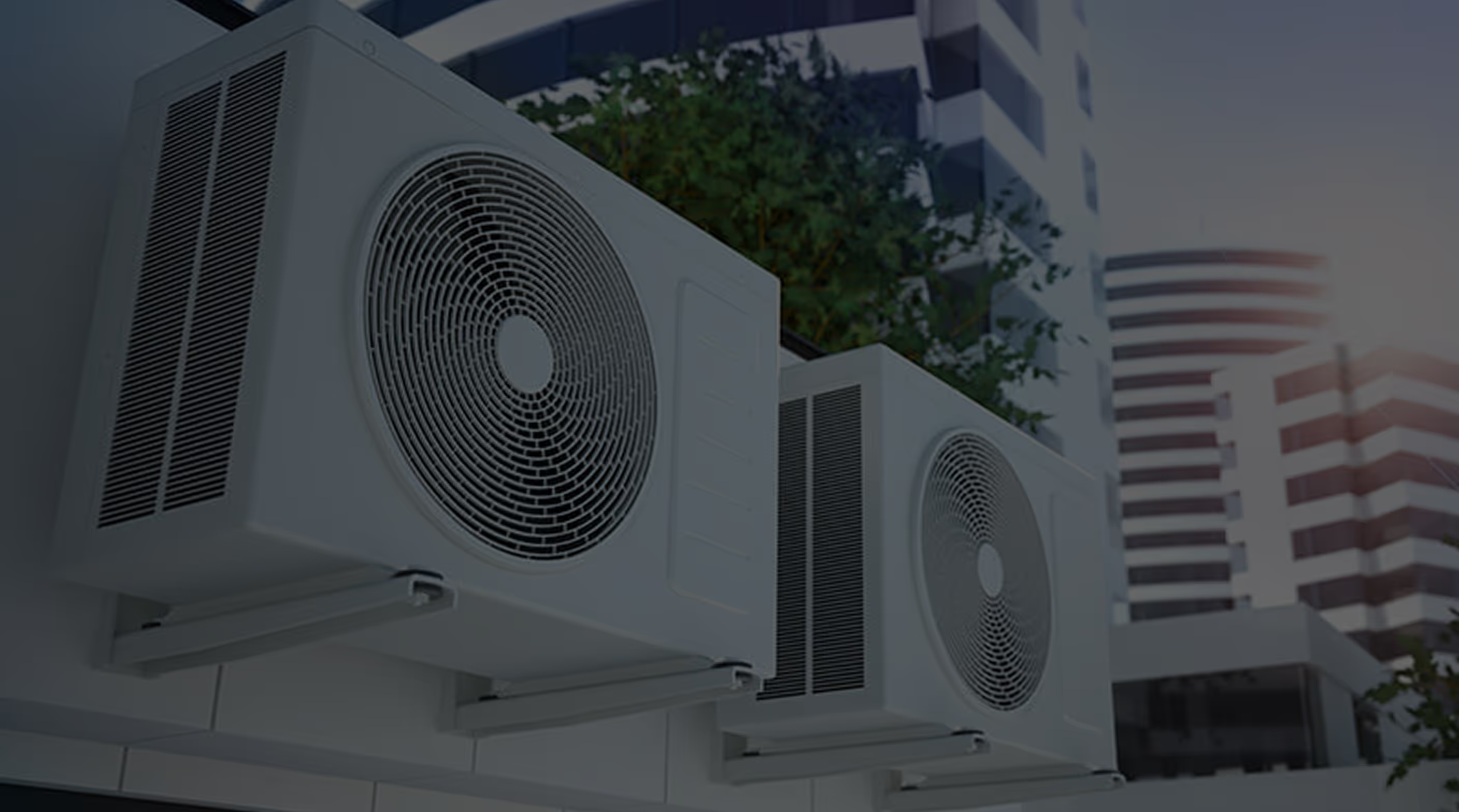
Mini Split Installation in Redwood City, CA
Mini split installation in Redwood City, CA is explained end-to-end, from initial consultation to post-installation care. Our guide covers selecting single- or multi-zone heat pump systems, calculating loads with Manual J, sizing outdoor units and indoor heads, and choosing head styles. We detail site surveys, placement, refrigerant lines, electrical work, and seismic considerations, plus condensate management and drainage. We also outline commissioning, performance testing, permits, inspections, warranty information, and a typical project timeline, with maintenance tips to maximize long-term efficiency.
-min.jpeg)
Mini Split Installation in Redwood City, CA
Mini split installation in Redwood City, CA delivers efficient, flexible heating and cooling for homes where extending or installing ductwork is impractical. For homeowners ready to replace noisy window units, add climate control to an addition, or improve comfort zone-by-zone, a properly executed ductless mini split provides quiet cooling, year-round heat pump performance, and lower energy use when sized and installed to current standards. Below is an end-to-end overview of the process, common system choices and issues in Redwood City homes, what to expect during installation, and post-installation care and compliance considerations.
Why choose a mini split in Redwood City
- Redwood City has warm Mediterranean summers and mild winters, so many homes benefit most from high-efficiency cooling with supplemental heating. Modern mini split heat pumps are effective for both.
- Coastal proximity and occasional marine layer mean corrosion-resistant outdoor units and proper siting are important for longevity.
- Ductless systems avoid the energy losses and disruption of duct retrofits in older Peninsula homes, making them a practical upgrade for bedrooms, additions, attics converted to living space, and multi-family units.
Common mini split types and selection factors
- Single-zone vs multi-zone: Single-zone systems serve one room; multi-zone systems use one outdoor unit to power multiple indoor heads. Choose based on how many rooms need independent control.
- Heat pump vs cooling-only: Heat pump mini splits provide year-round climate control. In Redwood City, heat pumps are often the most cost-effective choice because winters are mild.
- Efficiency and capacity: Look for inverter-driven compressors with high SEER and HSPF ratings to maximize energy savings in California climates.
- Indoor head styles: Wall-mounted, ceiling cassette, floor console, and ducted indoor units are available. Wall-mounted heads are most common for quick installs and strong airflow.
Initial consultation and site survey
A thorough site survey is the foundation of a successful installation. Typical steps:
- Walk-through of the home to identify desired zones, wall space, and routes for line sets.
- Measurement of room dimensions, insulation, window orientation, and sun exposure to inform load calculations.
- Visual inspection for obstructions, electrical capacity, and outdoor unit location options (roof, side yard, or balcony).
- Discussion about aesthetics, WiFi control, and integration with existing systems.
Load calculations and system selection
Accurate load calculations ensure the system is neither undersized nor oversized:
- A Manual J style heat/cool load calculation takes into account insulation, glazing, occupancy, and local climate conditions in Redwood City.
- Results guide the selection of outdoor unit capacity and number/type of indoor heads.
- Consider local factors such as afternoon heat gain from west-facing windows and the insulation levels common in Peninsula-era homes.
Indoor and outdoor unit placement
Correct placement optimizes comfort and performance:
- Indoor units should be mounted to deliver even airflow without blowing directly on sleeping areas.
- Outdoor units require clearance for airflow, level mounting, vibration isolation, and protection from salt air if located near the bay.
- Routing of refrigerant and condensate lines is planned to minimize visible runs and penetrations through exterior walls.
Refrigerant lines, electrical work, and seismic considerations
Professional installation covers refrigerant plumbing and safe electrical connections:
- Refrigerant line sets and communication wiring run through a small, professionally sealed wall sleeve. Line lengths and vertical separation affect charge and performance.
- Systems are evacuated and pressure-tested. Technicians use vacuum pumps and gauges to achieve deep vacuum levels before charging refrigerant.
- Electrical work typically requires a dedicated circuit, disconnect, and sometimes a subpanel upgrade depending on panel capacity.
- Redwood City is in an active seismic region; outdoor units and piping are secured with seismic straps and flexible connections to reduce damage risk during earthquakes.
Condensate management and drain solutions
Effective condensate handling prevents leaks and moisture problems:
- Gravity drains are preferred when possible, routed to exterior grade, a drain stack, or existing condensate lines.
- Where gravity is not available, a condensate pump or condensate overflow safety switch is used.
- Proper traps and cleanouts are installed to prevent sewer gas backflow and odors.
Commissioning, performance testing, and controls
Commissioning verifies the system operates to specification:
- Leak tests, vacuuming to specified microns, and correct refrigerant charge are confirmed.
- Technicians check airflow, temperature split, electrical load, and control communication.
- Performance testing includes measuring superheat/subcooling and verifying each indoor unit reaches setpoints.
- WiFi-enabled systems are connected and basic app training is provided so homeowners can manage zones remotely.
Permits, inspections, and code compliance
Permitting and inspection support is part of a compliant installation:
- Most mini split installations in Redwood City require a building permit and final inspection. Installers often prepare permit documentation and coordinate with the Redwood City permitting office.
- Installations must meet California Title 24 energy efficiency and local building code requirements. Proper documentation of equipment efficiency and load calculations helps streamline approvals.
- Inspectors typically check electrical work, refrigerant handling practices, and final unit placement.
Post-installation walkthrough and warranty information
A professional post-installation process includes:
- Walkthrough demonstrating controls, filter access, condensate points, and basic troubleshooting.
- Instruction on filter cleaning intervals, recommended maintenance schedule, and seasonal settings to optimize efficiency.
- Warranty details: manufacturers commonly provide limited warranties on compressors and parts, and many installers include workmanship warranties. Registering equipment and keeping service records preserves warranty eligibility.
Typical project timeline and factors affecting cost
While every project is unique, a general timeline looks like this:
- Site survey and quote: 1 visit, 1 to 2 hours.
- Design, equipment selection, and permit submission: a few days to a few weeks depending on permit processing times.
- Equipment lead time: varies by model availability.
- Installation: 1 to 3 days for most single or two-zone jobs; larger multi-zone installations may take 2 to 5 days.
- Final inspection: scheduling varies with the local permitting office.
Factors that influence timeline and cost include number of zones, length and complexity of line runs, need for electrical upgrades, permit turnaround, and accessibility of mounting locations. Coastal exposure may require upgraded finishes or elevated outdoor mounts that increase labor.
Maintenance tips and long-term benefits
- Schedule annual maintenance to check refrigerant levels, clean coils, and confirm condensate drainage. Regular filter cleaning improves performance and indoor air quality.
- Properly sized and installed systems reduce energy bills, provide quieter operation than window units or portable ACs, and give precise comfort control per room.
- For Redwood City homes, choosing corrosion-resistant outdoor units and ensuring good airflow around the condenser will extend service life in the marine-influenced environment.
This overview outlines what a thorough mini split installation in Redwood City, CA entails, from initial survey to final inspection and maintenance. When systems are properly designed, permitted, and commissioned, homeowners gain efficient, reliable comfort tailored to local climate and home specifics.
hear what our satisfied clients have to say

.svg)
Service areas
.avif)