
Ductwork Repair in Stanford, CA
Stanford ductwork repair addresses leaks, disconnected runs, insulation gaps, blockages, deteriorated ducts, and moisture or mold concerns to restore airflow and efficiency. A professional diagnosis combines visual inspection, duct leakage tests, airflow measurements, smoke tests, thermal imaging, and static pressure analysis to prioritize repairs. Methods include sealing with mastic, patching sheet metal, reconnecting runs, reinsulating, upgrading boots and transitions, removing blockages, and cleaning. Expect improved comfort, lower energy use, quieter operation, and longer equipment life with proper maintenance and warranties.
Ductwork Repair in Stanford, CA
Ductwork repair in Stanford, CA addresses the hidden problems that undermine home comfort and drive up energy bills. In this region—where mild winters and warm summers, combined with a strong interest in energy efficiency and low-emission homes—leaky or poorly insulated ducts reduce HVAC performance and can create uneven temperatures, higher utility costs, and poorer indoor air quality. This page explains common duct problems in Stanford homes, how professionals diagnose them, the repair options available, expected improvements, typical turnaround times, preventive maintenance, and common warranty practices.
Common ductwork problems in Stanford homes
Homes in Stanford and the surrounding Bay Area often face specific duct issues driven by older construction, compact attics, and the desire for high-efficiency systems. Typical problems include:
- Leaks and gaps at seams, boot connections, and register collars that allow conditioned air to escape into attics or crawlspaces.
- Disconnected runs after renovations or settling, causing whole-room comfort issues.
- Poor insulation on ducts running through unconditioned attics or open soffits, leading to heat gain in summer and heat loss in winter.
- Blockages and restrictions from debris, collapsed flexible ducts, or wildlife nesting, which reduce airflow and strain equipment.
- Deteriorated flex ducts and damaged sheet metal from age, rodents, or corrosion in coastal-influenced areas.
- Mold or moisture issues in ducts where condensation forms, especially near poorly insulated surfaces or in systems with improper airflow.
How professionals diagnose duct problems
Accurate diagnosis is the foundation of effective ductwork repair. Typical diagnostic steps you can expect:
- Visual inspection of accessible duct runs, boots, seams, and connections to identify obvious damage, loose joints, or crushed sections.
- Pressure testing (duct leakage test) using a duct blaster to measure total leakage relative to system size and to locate major leak sources. This provides a quantifiable leakage percentage.
- Airflow measurement at supply and return registers with anemometers or flow hoods to detect imbalances and low-air zones.
- Smoke or theatrical fog testing to visualize airflow paths and pinpoint hidden leaks or disconnected sections.
- Thermal imaging and temperature differentials to locate poorly insulated ducts or thermal losses during operation.
- Static pressure measurement to determine if restrictions are causing excessive system strain.
These diagnostics together create a prioritized repair plan focused on the areas delivering the greatest comfort and efficiency gains.
Common repair methods and what each fixes
Depending on the diagnosis, technicians will select repair methods that restore airflow, seal leaks, and improve thermal performance:
- Sealing with mastic or UL 181-rated metal-backed tape — a durable solution for seams, joints, and register collars that eliminates leakage better than cloth-backed tapes.
- Patching or replacing damaged sheet metal ducts — for large holes, crushed sections, or corroded metal, patching or section replacement restores structural integrity.
- Reconnecting and rerouting runs — reattaching disconnected ducts and, when necessary, rerouting runs to improve airflow balance and reduce bends that create resistance.
- Re-insulating duct runs — adding or replacing insulation (appropriate R-value for unconditioned spaces) reduces thermal losses in Stan ford attics and improves system efficiency.
- Installing rigid boots and improved transitions — replacing worn boot connections and smoothing transitions to increase airflow and reduce noise.
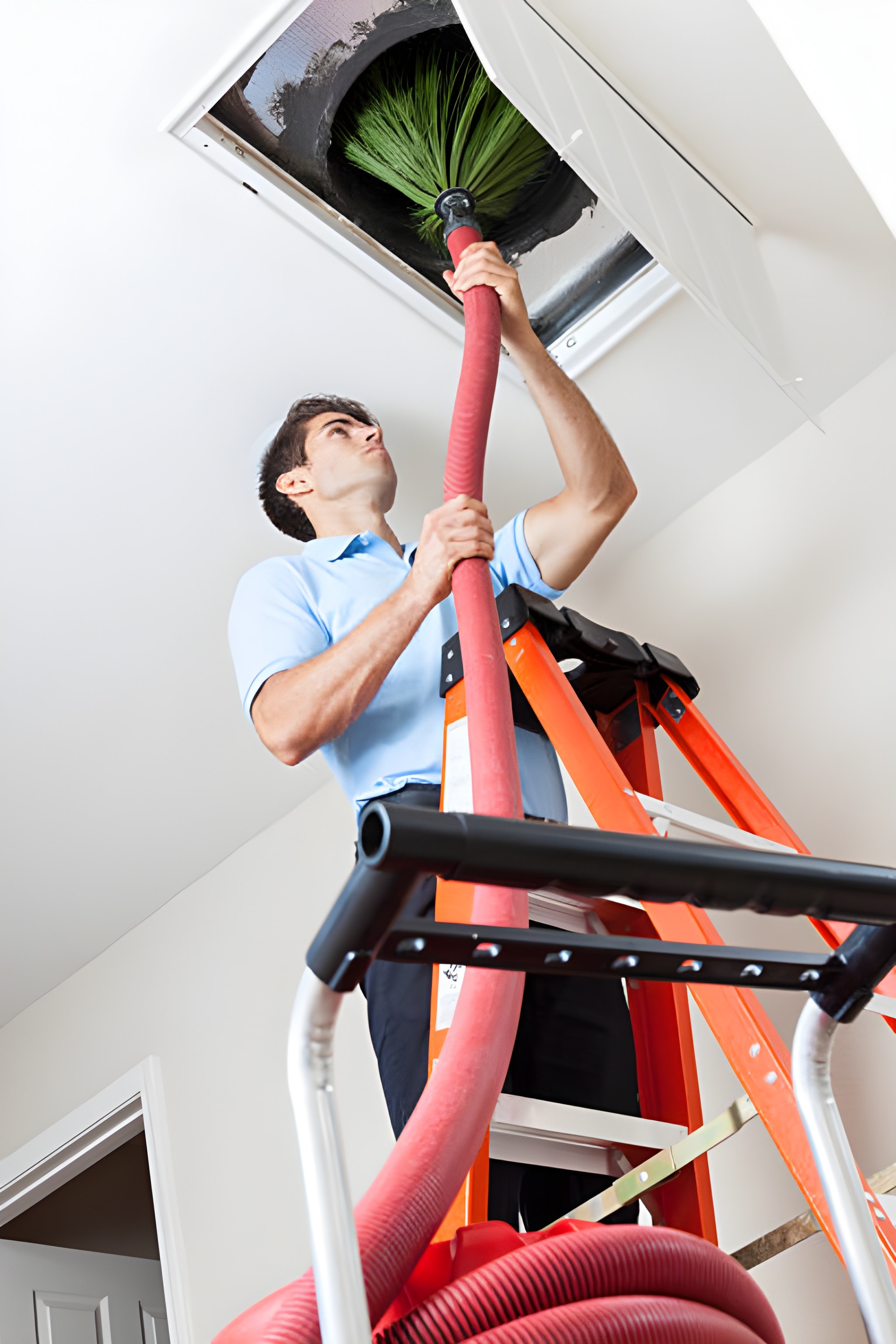
- Removing blockages and repairing flex duct form — clearing nests, debris, and reshaping or replacing collapsed flex runs to restore designed airflow.
- Access panels and cleaning — creating access for cleaning or future inspections where needed to maintain indoor air quality.
Each repair is sized to the problem: isolated leaks may take a few hours, while rerouting or section replacements can require more labor and coordination.
Expected improvements after repair
After professional ductwork repair you can expect measurable and perceptible benefits:
- More consistent room temperatures and fewer hot or cold spots throughout your home.
- Lower HVAC runtime and improved energy efficiency, especially during Stanford’s peak summer cooling or seasonal heating periods.
- Reduced utility costs through decreased wasted conditioned air.
- Improved indoor air quality when leaks that draw attic dust or contaminants into the system are sealed and blockages removed.
- Quieter operation if noisy leaks and rattling loose ducts are addressed.
- Longer HVAC equipment life due to reduced system strain and more balanced airflow.
Quantitative results depend on the extent of leakage and insulation issues identified during diagnostics, but many homes see significant comfort and efficiency gains after targeted repairs.
Typical turnaround times
Turnaround depends on scope:
- Minor sealing and insulation work: most jobs can be completed in half a day to a full day.
- Moderate repairs (multiple seals, small section replacements, or re-insulation of attic runs): typically one to two days.
- Major reroutes or full-system overhauls: may require several days and coordination with other trades if access or structural modifications are needed.
Scheduling often factors in attic access, permits for larger alterations, and weather for attic work. In Stanford, mild weather helps keep delays minimal compared to more seasonal climates.
Maintenance tips to prevent future issues
Regular maintenance reduces the chance of future duct problems and preserves efficiency:
- Inspect visible ducts and registers at least once a year for loose connections, visible damage, or debris.
- Keep attic and crawlspace areas clean, dry, and sealed to limit pests and moisture that damage ducts.
- Replace HVAC filters on schedule to reduce dust buildup in duct interiors.
- When renovating, protect and inspect ducts near work areas to prevent accidental disconnections.
- Consider periodic professional duct testing every few years or when you notice comfort or energy usage changes.
These simple steps help maintain performance and avoid more costly repairs.
Warranty and guarantee practices
Professional ductwork repair typically includes two warranty layers:
- Workmanship warranty: a service warranty covering the specific repairs performed for a defined period—commonly several months to a few years depending on the scope.
- Manufacturer warranties: for any replacement components such as insulated duct sections or fittings, manufacturer warranties apply to the parts themselves.
Ask for clear documentation of what the workmanship warranty covers (e.g., resealing, rework) and any exclusions related to future renovations or pest damage. Properly documented repairs also help meet California energy code expectations and can support future home performance assessments.
Ductwork repair in Stanford, CA restores comfort, lowers energy waste, and supports healthier indoor air—important outcomes for Bay Area homes that value efficiency and comfort. A focused diagnostic approach, durable sealing and insulation methods, and a plan for ongoing maintenance deliver the best long-term results.
hear what our satisfied clients have to say

.svg)
Service areas
.avif)