
Heating Tune-up in Emmerald Hills, CA
Plum HVAC offers a professional heating tune-up for Emmerald Hills homeowners, covering safety checks, cleaning, performance testing, and recommended upgrades. We outline a step-by-step procedure from visual inspections and gas safety checks to thermostat calibration and final reporting, all designed to improve efficiency, extend equipment life, and reduce mid-season breakdowns. Typical duration ranges 60 to 120 minutes, influenced by your system type and cleanliness. Plum HVAC's seasonal recommendations emphasize annual autumn tune-ups, air-quality considerations after wildfires, and maintenance plans for predictable energy use.
Heating Tune-up in Emmerald Hills, CA
A professional heating tune-up keeps your furnace or heat pump running safely, efficiently, and reliably through the cooler months in Emmerald Hills, CA. With mild coastal winters, frequent temperature swings between day and night, and periodic wildfire smoke that affects indoor air quality, a focused seasonal tune-up addresses performance, safety, and comfort issues before they become urgent and costly. This page outlines exactly what a heating tune-up includes, common local problems, the step-by-step checklist technicians follow, expected duration, seasonal recommendations, and the practical benefits homeowners can expect.
Why a heating tune-up matters in Emmerald Hills, CA
- Emmerald Hills homes often experience cool nights even after warm afternoons. That cycling increases system runtime and wear if components are out of tune.
- Wildfire smoke and regional dust can load filters and coils faster, reducing airflow and indoor air quality.
- California energy costs and local efficiency expectations make routine maintenance an effective way to lower operating costs and avoid mid-season breakdowns.A tune-up combines cleaning, adjustments, testing, and safety checks to restore efficiency, lower risk of failure, and extend equipment life.
Common heating issues in Emmerald Hills homes
- Reduced airflow from clogged filters or dirty blower assemblies
- Short-cycling caused by thermostat or ignition issues
- Delayed or inconsistent heat output from miscalibrated thermostats or duct leaks
- Safety concerns such as cracked heat exchangers or gas leaks (for gas systems)
- Poor indoor air quality from accumulated dust and smoke particulates
- Noisy operation due to loose belts, bearings, or motor wear
What a complete heating tune-up includes
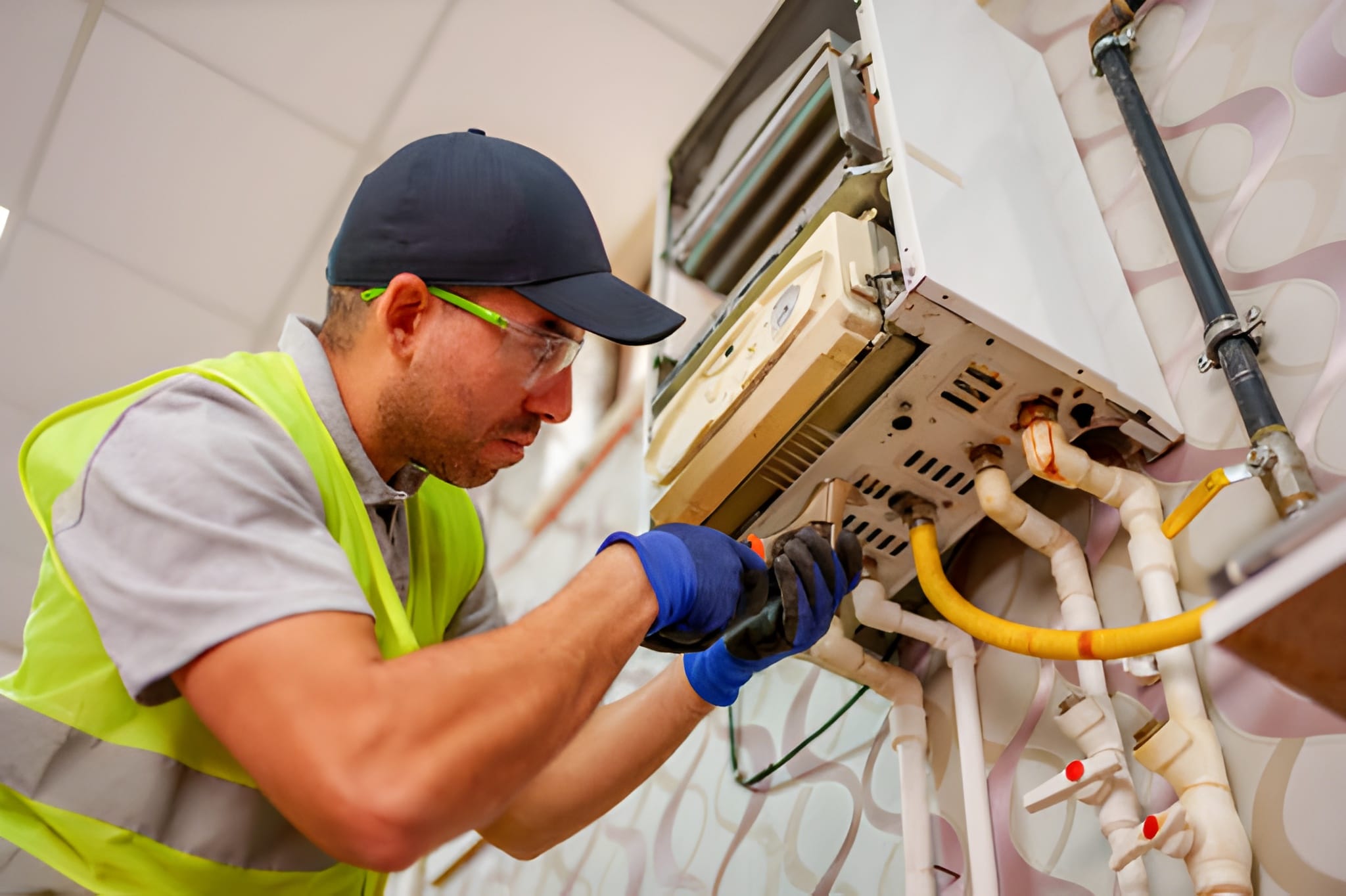
Below is a step-by-step breakdown of the tasks that should be performed during a professional heating tune-up. Each step focuses on performance, efficiency, and safety.
- Visual inspection and system history review
- Inspect the unit, vents, and accessible ducts visually for obvious damage, corrosion, or rodent activity.
- Review any recent service history or homeowner notes about unusual behavior.
- Safety checks
- Check for gas leaks and proper gas pressure on gas-fired furnaces.
- Inspect the heat exchanger for cracks or signs of deterioration (visual and, where applicable, via combustion analysis).
- Verify proper operation of the flame sensor, ignition system, and safety interlocks.
- Cleaning and filter service
- Replace or recommend the correct HVAC filter and show where the filter sits.
- Clean the blower assembly, motor housing, and accessible internal panels to remove dust and smoke residue.
- Clear condensate drains and pans on heat pumps or high-efficiency systems.
- Mechanical adjustments and lubrication
- Tighten electrical connections and test starting capacitors and contactors.
- Lubricate motors and moving parts if the equipment design requires it.
- Adjust and align belts and pulleys where applicable.
- Airflow and duct assessment
- Measure and evaluate supply and return airflow qualitatively and, when needed, quantitatively.
- Inspect accessible ductwork for obvious leaks or disconnections and note areas that reduce efficiency.
- Controls and thermostat calibration
- Calibrate the thermostat and confirm setpoints match actual room temperatures.
- Check wiring and program settings for proper system sequencing and zoning controls.
- Performance testing
- Run the system through a full cycle to observe ignition, heat rise, cycling behavior, and response times.
- Measure temperature differentials and combustion efficiency where applicable.
- Verify electrical loads and that the system is operating within manufacturer specifications.
- Final report and recommendations
- Provide a clear summary of findings, any safety concerns, and prioritized repair or replacement suggestions.
- Recommend filter type, frequency of service, and any upgrades (e.g., programmable thermostat, sealing ducts) to improve efficiency.
Typical checklist items (quick view)
- Replace or inspect air filter
- Clean blower wheel and housing
- Inspect heat exchanger and combustion components
- Test ignition, flame sensor, and safety switches
- Verify thermostat calibration and programming
- Check electrical connections and capacitors
- Inspect ductwork where accessible
- Measure system performance (temperature rise, airflow)
- Note required repairs or parts that may soon fail
Expected duration
A standard heating tune-up typically takes between 60 and 120 minutes depending on system type, age, accessibility, and whether any repairs are required. Older systems or units with heavy smoke/dust buildup may require additional time for cleaning and testing.
Seasonal recommendations for Emmerald Hills
- Schedule annual tune-ups in early fall before sustained cool nights. This ensures the system is ready for the first prolonged use.
- If local air quality has been affected by wildfire smoke, consider a tune-up sooner to address particulate buildup and indoor air quality concerns.
- For homes with heat pumps, schedule both an early fall check (heating mode) and a spring inspection (cooling mode) if the system performs both functions.
Benefits of timely tune-ups
- Improved energy efficiency and lower utility costs by restoring optimal combustion and airflow
- Reduced risk of mid-season breakdowns that often occur when systems have been idle
- Longer equipment life through routine lubrication, cleaning, and early fault detection
- Improved indoor comfort and more consistent room temperatures
- Enhanced safety by identifying gas issues, cracked heat exchangers, or malfunctioning safety controls
- Better indoor air quality after removal of dust and smoke particulates
Membership and maintenance plan options (what to expect)
Many homeowners choose an annual maintenance plan that includes one or two tune-ups per year, priority scheduling during peak season, and diagnostic discounts on needed repairs. Plans commonly cover seasonal inspections, filter reminders or replacements, and a final report after each visit. These options help spread out maintenance across the year and ensure predictable system care without surprise service gaps.
How to prepare and what to expect at the appointment
- Ensure clear access to the furnace or heat pump and to attic or closet doors where equipment is located.
- Replace or have on hand any unusually large or specialty filters so the technician can install the correct size.
- Make note of any recent symptoms: noises, odors, uneven heating, cycling patterns, or recent filter restrictions due to smoke.
- Expect a written summary of findings and recommendations at the end of the visit so you can make informed decisions about repairs or upgrades.
Regular heating tune-ups are a practical investment for Emmerald Hills homeowners who want reliable comfort, predictable energy use, and safer operation of their heating systems. A detailed, professional tune-up addresses local challenges like temperature swings and airborne particulates, helping systems perform better when you need them most.
hear what our satisfied clients have to say

.svg)
Service areas
.avif)