
Mini Split Installation in Woodside, CA
Considering mini-split installation for your Woodside, CA home? These systems are fantastic for homes without ducts, giving you precise climate control, great energy efficiency, and flexible zoning. At Plum HVAC, we start with thorough site assessments and load calculations. We'll walk you through single-zone versus multi-zone options and help you decide on the best indoor and outdoor unit placement, especially with Woodside's hilly, wooded terrain in mind. Our team takes care of all the details, including permitting, coordinating inspections, system start-up, and performance testing. We also cover warranties and offer guidance for ongoing care. By tailoring your mini-split design specifically to Woodside's unique conditions, we ensure your professional Plum HVAC installation delivers reliable comfort and long-term savings.
-min%2520(1).jpeg)
Mini Split Installation in Woodside, CA
Ductless mini-split installation in Woodside, CA is a smart, efficient alternative to traditional central HVAC for homes that lack ductwork, have zoned comfort needs, or require a less-invasive cooling and heating solution. Woodside residences often face a mix of warm inland summers, cool marine nights, and seasonal wildfire smoke. A properly designed ductless system provides precise temperature control, improved indoor air quality, and energy savings — when the installation is sized and executed correctly for the home and local conditions.
Why Woodside homes choose ductless mini-splits
- Homes without ducts or with limited attic space where ductwork would be disruptive or costly
- Multi-level or sprawling properties where different rooms require different temperatures
- Additions, home offices, garages, guest suites, and accessory dwelling units that need independent climate control
- Desire for high-efficiency heating and cooling to reduce energy use and respond to seasonal temperature swings
- Need for improved filtration to reduce wildfire smoke and local outdoor pollutants
Common mini split issues in Woodside and what proper installation prevents
- Oversized or undersized systems causing short-cycling or inadequate comfort
- Poorly routed refrigerant lines on hilly or heavily treed properties leading to aesthetic or performance issues
- Inadequate electrical capacity or improperly sized circuits creating reliability problems
- Improper condensate handling causing moisture or staining on siding
- Lack of local permitting or inspection coordination delaying occupancy or sale processes
Site assessment and load calculations
A reliable installation starts with a thorough site assessment and professional load calculations (Manual J style). For Woodside homes this includes:
- Evaluating home orientation, insulation levels, window types, ceiling heights, and sun exposure
- Considering local microclimates such as valley heat pockets or fog-cooled areas
- Accounting for wildfire smoke season when planning filtration or ventilation strategies
- Determining heat loss and gain for each zone to select correctly sized indoor and outdoor units
Accurate load calculations prevent oversized systems that short-cycle and undersized systems that cannot maintain comfort during peak summer days.
Single- and multi-zone options
- Single-zone mini splits: Ideal for a single room, garage conversion, ADU, or an isolated office. They offer a compact indoor unit and one outdoor compressor.
- Multi-zone mini splits: Support 2 to 8+ indoor heads connected to a single outdoor compressor for whole-house or multi-room zoning. Multi-zone systems are common in Woodside where homeowners want individualized control for bedrooms, living areas, and additions.
Choosing between single- and multi-zone depends on occupancy patterns, room layouts, and budget tradeoffs. Multi-zone systems provide centralized compressor efficiency with personalized thermostats per space.
Indoor and outdoor unit placement
Correct placement affects comfort, noise, and curb appeal:
- Indoor units: Mounted on walls, ceilings, or recessed cassettes to provide even airflow without blocking sight lines. Bedrooms benefit from quiet, low-profile units; living rooms often use higher-capacity or larger-throw units.
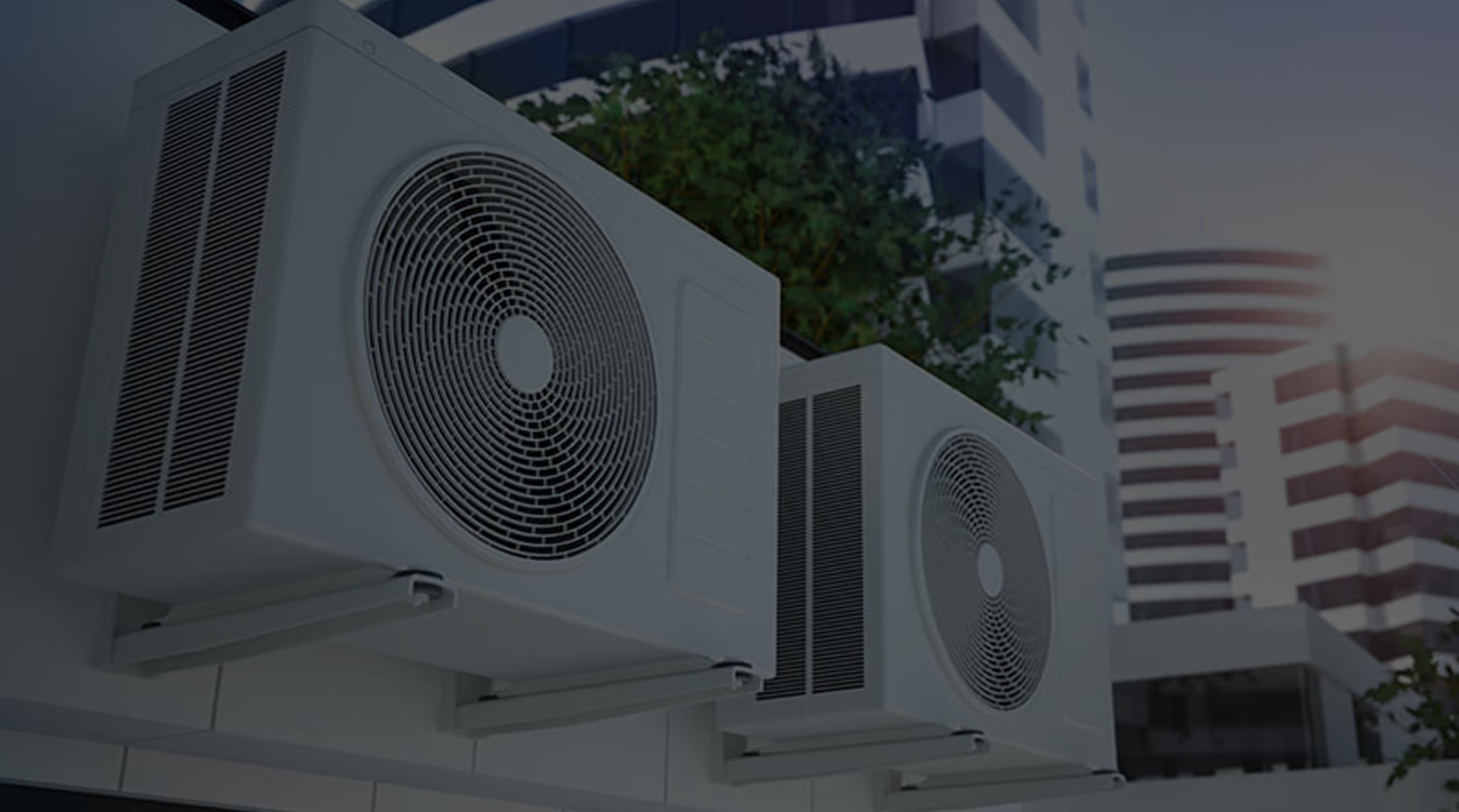
- Outdoor units: Located on stable, level pads or wall brackets, positioned for airflow and service access, and sited to minimize noise to neighbors. In Woodside, installers also consider wildfire defensible space and tree cover for debris management.
For hillside properties, installers plan refrigerant line routing carefully to accommodate elevation changes while keeping line-set lengths within manufacturer limits.
Refrigerant lines and electrical work
Essential technical elements handled by qualified technicians:
- Refrigerant line sets: Routed through the shortest practical path, insulated, and pressure-tested for leaks. Long runs common in Woodside require attention to manufacturer length and elevation limits.
- Electrical work: Dedicated circuits, correct breaker sizing, and code-compliant disconnects. Low-voltage wiring for controls and optional Wi Fi or smart thermostats is installed per manufacturer specs.
- Condensate drainage: Gravity drains or condensate pumps are selected based on unit location and plumbing access to avoid nuisance leaks.
All refrigerant handling follows environmental regulations and safe charging practices to ensure system longevity.
Mounting and finished-concealment best practices
A professional finish blends functionality with aesthetics:
- Concealing line sets with narrow raceways or painted channels to match siding or trim
- Using recessed or flush-mounted indoor units where possible for a cleaner look
- Securing outdoor units to vibration isolators and concrete or composite pads to reduce noise and movement
- Preserving landscaping and minimizing wall penetrations, especially on historic or high-end Woodside properties
The goal is an installation that performs optimally and respects the home’s architectural character.
Permitting and inspection coordination
Local permitting and inspections are necessary to meet code and resale requirements. Coordinated permit handling includes:
- Preparing electrical, mechanical, and plumbing permit applications as required by local authorities
- Scheduling inspections for rough-in, electrical, and final system commissioning
- Providing documentation of equipment specs, load calculations, and as-built diagrams for property records
Proper permit coordination protects homeowners from delays and ensures installations pass inspection the first time.
Start-up and performance testing
Commissioning validates system performance:
- Evacuation and refrigerant charge are completed to manufacturer specifications
- Electrical checks for correct voltage, amperage, and secure connections
- Airflow and temperature split testing to confirm capacity and efficiency
- Controller setup and Wi Fi connectivity verification where applicable
- Demonstration of system operation and basic care guidance for occupants
Performance testing ensures the mini split meets the designed comfort profile for each zone.
Warranties and care instructions
Most systems include manufacturer warranties on compressors and parts; installers often provide workmanship guarantees as well. Care instructions tailored for Woodside homes include:
- Cleaning or replacing washable filters every 1 to 3 months during heavy use or wildfire smoke events
- Annual maintenance checks focusing on refrigerant charge, condensate drainage, fan motors, and electrical connections
- Keeping outdoor units clear of leaves, pine needles, and debris; maintaining required clearances
- Monitoring for unusual noises, decreased airflow, or higher energy use which can indicate issues
Registering equipment with the manufacturer and keeping a maintenance log protects warranty coverage and equipment life.
Scheduling and quote process
A transparent quote includes the scope of work based on the site assessment: recommended system size, indoor unit types and placement, line-set lengths, electrical upgrades, permitting fees, and commissioning. Estimates should specify equipment model numbers, warranty terms, and timeline for permitting and installation.
Long-term benefits for Woodside homeowners include improved comfort year-round, lower energy bills compared to some electric resistance systems, reduced HVAC footprint, and better indoor air quality during smoke events. With careful planning for local terrain, aesthetics, and permitting, a professionally installed ductless mini-split system delivers reliable, efficient climate control tailored to Woodside homes and lifestyles.
hear what our satisfied clients have to say

.svg)
Service areas
.avif)