

Ductwork Repair in Cupertino, CA
Our Cupertino duct repair services address common issues such as air leaks, disconnected runs, poor insulation, mold, blockages, and aging ducts that reduce comfort and efficiency. Using thorough inspections, leakage testing, and IAQ assessments, we pinpoint root causes and provide solutions including sealing, rerouting, insulation upgrades, selective replacement, sanitization, and airflow balancing. With clear timelines, cost guidance, and maintenance recommendations, we help homeowners restore energy efficiency, indoor air quality, and long-term system performance.
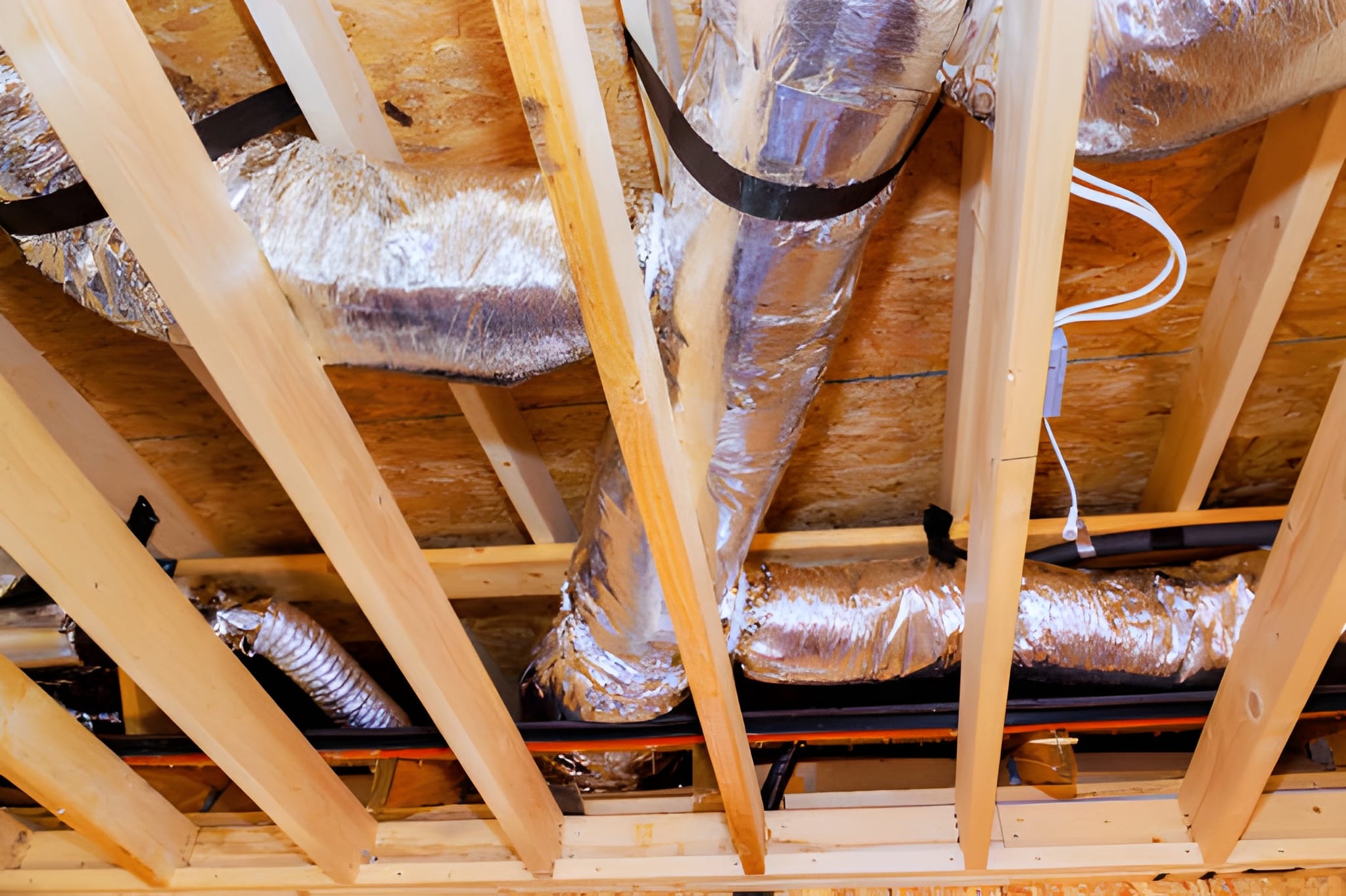
Ductwork Repair in Cupertino, CA
Ductwork Repair in Cupertino, CA is essential for maintaining efficient, healthy HVAC performance in local homes. Cupertino’s mild Mediterranean climate, seasonal heat spikes, and occasional poor-air-quality days from regional wildfire smoke mean well-sealed, insulated, and sanitized ducts are more important than ever. Whether your house is a mid-century ranch with attic ducts or a newer multi-level home with duct runs through conditioned space, diagnosing and repairing duct problems restores comfort, lowers energy use, and protects indoor air quality.
Common ductwork repair issues in Cupertino
- Air leaks and poor seals
- Cracked seams, poorly joined collars, or torn flex duct can leak significant conditioned air into unconditioned attics or crawlspaces. Leaks are a leading cause of uneven rooms and extra runtime for your HVAC.
- Disconnected runs and crushed ducts
- During service, renovations, or settling, ducts can become disconnected or kinked. Disconnected runs deliver little or no airflow to rooms and create zones of poor comfort.
- Insufficient insulation
- Ducts routed through hot attics or unconditioned garages without proper insulation lose cooling in summer and gain heat in winter, reducing system efficiency.
- Mold and microbial growth
- Condensation on cold ducts or persistent humidity in parts of a duct system can allow mold growth. In Cupertino, humidity swings combined with attic temperature differentials can create these conditions.
- Restricted airflow and blockages
- Debris, animal intrusion, or collapsed flexible ducting restricts flow and stresses the blower motor.
- Aging materials and corrosion
- Older sheet-metal ducts may develop small holes or rusted seams that worsen over time.
Inspection and diagnostic services
A thorough duct inspection identifies root causes before repairs begin. Typical diagnostic steps include:
- Visual inspection of accessible ducts, seams, insulation, and boot connections to identify obvious damage, disconnections, or mold.
- Pressure testing (duct leakage testing) to quantify how much conditioned air is escaping and which zones are affected. This is essential for determining whether sealing or rerouting will deliver measurable savings.
- Leak detection using smoke or tracer gas to pinpoint hard-to-find gaps in attic or concealed runs.
- Camera inspection for long runs, bends, or ducts buried behind finishes. Cameras reveal blockages, pests, or internal damage without invasive demolition.
- Airflow measurement and balancing to determine supply/return imbalances and to size corrective measures accurately.
- Indoor air quality (IAQ) assessment if mold, odor, or smoke infiltration is suspected—particularly relevant during wildfire smoke events.
Repair solutions explained
Repair plans are tailored to the diagnostic findings and the layout of Cupertino homes. Common solutions include:
- Sealing and gasketing
- Permanently sealing seams and joints with approved mastic or metal-backed tapes reduces leakage and improves pressure balance. Gaskets at connections prevent re-separation.
- Re-routing and reconnecting
- Disconnected or poorly routed ducts are re-run or re-supported to eliminate sags and crushes. Proper fasteners and hangers restore designed airflow.
- Insulation upgrades
- Adding or replacing duct insulation (R-value appropriate) for attic or garage runs reduces thermal loss. Insulating exposed plenums and boots also minimizes condensation and cooling loss.
- Duct replacement
- In cases of extensive corrosion, recurring mold, or irreparable damage, selective replacement of sections or entire runs ensures long-term reliability.
- Sanitization and microbial remediation
- For confirmed mold or persistent odors, professional cleaning and sanitization remove contaminants. Repairs to eliminate moisture sources follow to prevent regrowth.
- Airflow balancing and terminal adjustments
- Dampers and registers are adjusted or upgraded to restore even temperature distribution and reduce pressure-related noise.
Expected benefits of timely ductwork repair
- Improved airflow and comfort—rooms heat and cool more evenly with proper supply and return balance.
- Better energy efficiency—reducing leakage and thermal loss lowers system runtime and energy waste, an important consideration for Cupertino homeowners focused on energy performance.
- Enhanced indoor air quality—properly sealed, clean ducts cut down on dust, allergens, and smoke infiltration during poor-air-quality events.
- Longer HVAC lifespan—reduced system strain from improved airflow and lower run times helps avoid premature repairs.
Typical timelines and cost factors
- Timelines
- Simple repairs (sealing seams, reconnecting runs): commonly completed in a few hours to a single day.
- Moderate jobs (insulation upgrades, partial reroutes, cleaning small sections): typically 1 to 2 days.
- Larger projects (extensive rerouting, whole-system replacement, major remediation): may take several days to a week depending on access and complexity.
- Cost factors to consider
- Extent and location of damage (attic vs. in-wall access)
- Type of duct (sheet metal vs. flexible)
- Need for additional measures (insulation, sanitization, airflow balancing)
- Accessibility and any required demolition or restoration work
- Local permitting or code compliance for significant modifications
Note: Instead of focusing on price quotes here, assess these cost factors to compare proposals accurately and choose the repair scope that matches your long-term efficiency and air-quality goals.
Maintenance recommendations for Cupertino homes
- Schedule a professional duct inspection every 3 to 5 years, or sooner if you notice reduced airflow, unusual dust, or persistent odors.
- Replace HVAC filters on the manufacturer’s recommended schedule, and consider higher-MERV filters during wildfire smoke season to limit particulate load on ducts.
- Ensure attic ducts are fully insulated and supported—attics in the area can reach high summer temperatures that increase cooling load dramatically.
- Address moisture sources immediately: fix roof or HVAC condensation issues that could lead to mold formation.
- Keep supply and return registers clean and unobstructed; periodic vacuuming can reduce dust accumulation that eventually migrates into ductwork.
Scheduling emergency or routine repair: what to expect
When arranging emergency or routine ductwork repair in Cupertino, expect professionals to first perform a focused assessment to confirm safety and urgency—especially if mold, water damage, or loss of heating/cooling is involved. For emergencies, experienced teams prioritize isolating the problem (reconnecting a run, stopping a major leak, or addressing a contamination source) to restore system function quickly. Routine repairs typically follow a staged approach: diagnostic testing, repair plan presentation, and scheduled implementation that limits disruption to your home.
Prepare a list of observed symptoms (uneven rooms, noises, odors, visible dust), note the affected rooms and any recent home changes (renovations, animal activity), and be ready to provide access to attics, basements, or closets where ducts run. Expect written documentation of findings and recommended repairs, and clarity on whether follow-up inspections are advised.
Maintaining healthy, efficient ductwork in Cupertino, CA protects home comfort, lowers energy use, and safeguards indoor air—particularly with the region’s seasonal air-quality challenges and broad range of home types. Proper diagnosis, targeted repairs, and regular maintenance restore performance and extend the effective life of your HVAC system.
hear what our satisfied clients have to say

.svg)
Service areas
.avif)