
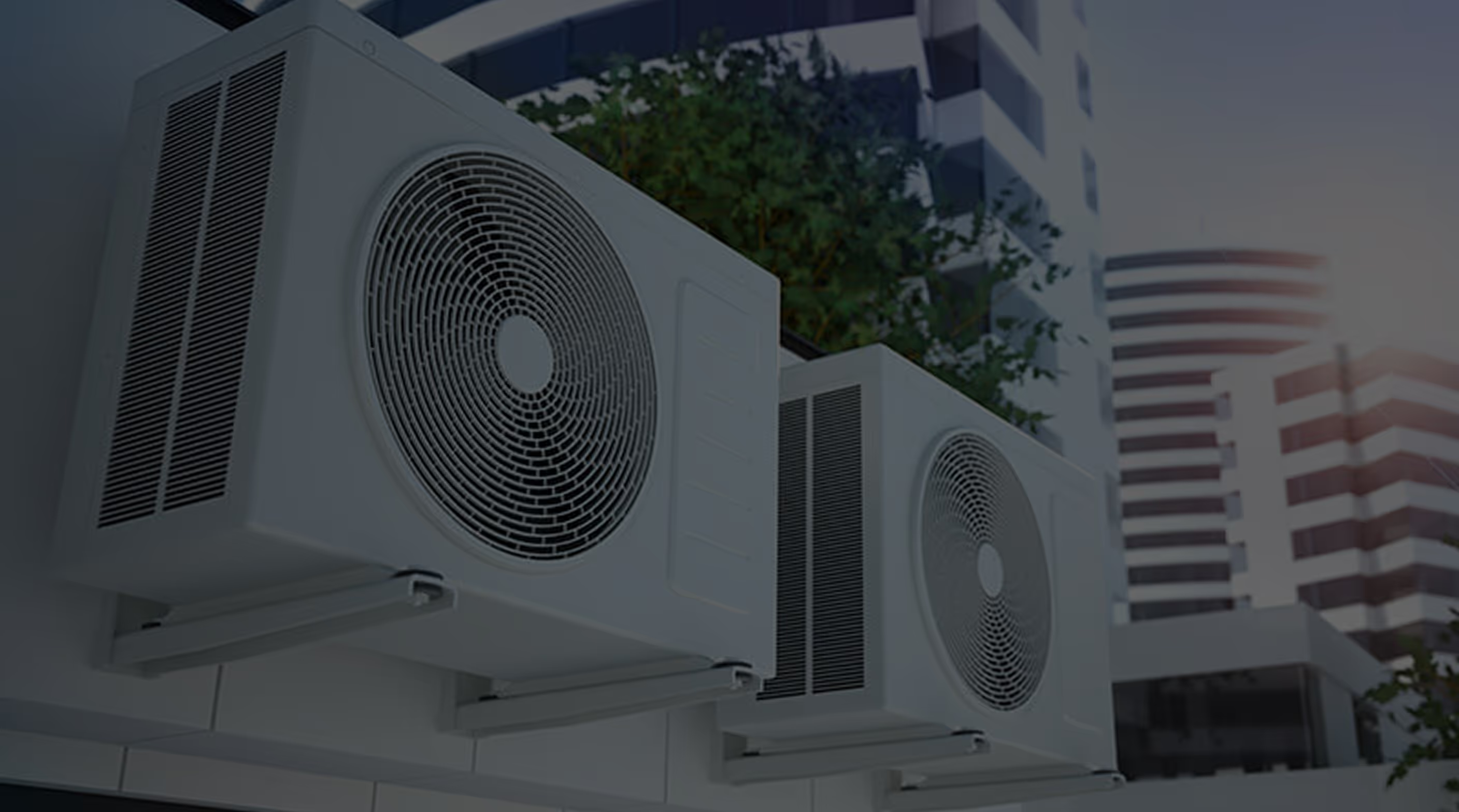
Heating Tune-up in San Jose, CA
At Plum HVAC, our heating tune-up services in San Jose, CA are all about preventative maintenance designed to boost your comfort, safety, and energy efficiency. We achieve this by thoroughly inspecting, cleaning, and calibrating your heating system. Our service includes detailed furnace and heat pump checks, ensuring ignition safety, verifying duct cleanliness, precise thermostat calibration, and comprehensive performance testing. After our assessment, we'll provide prioritized repair recommendations. Plum HVAC emphasizes scheduled maintenance because it helps you avoid those inconvenient mid-season breakdowns, extends your equipment's life, reduces utility costs, and ensures reliable warmth during cold spells. We also empower our customers with tips on maintaining efficiency, safety, and comfort between our visits.

Heating Tune-up in San Jose, CA
Keeping your heating system tuned and tested is one of the most effective ways to improve comfort, safety, and energy efficiency in San Jose homes. A professional heating tune-up in San Jose, CA focuses on preventive maintenance: identifying worn parts, optimizing combustion and airflow, and calibrating controls so your system runs reliably during the cooler months and uses less energy throughout the year. Because our region has mild winters with occasional cold spells, many homeowners defer maintenance until a problem arises. Annual tune-ups prevent unexpected breakdowns during those rare cold snaps and help systems that also function as central HVAC units perform more efficiently all year.
What a complete heating tune-up includes
A thorough heating tune-up is a multi-point inspection and service package designed to address performance, safety, and longevity. Typical components include:
- Multi-point system inspection
- Visual and operational check of the furnace or heat pump, cabinet, vents, and accessible ductwork.
- Verify controls, safety switches, and thermostat operation.
- Cleaning of key components
- Remove dust and debris from burners, heat exchanger access areas, blower assembly, and return grills.
- Clean or replace air filters as appropriate.
- Safety and combustion checks (for gas or oil systems)
- Combustion analysis to verify efficient fuel burn and safe flue performance.
- Inspect heat exchanger for cracks or corrosion and check venting for blockages or leaks.
- Check for signs of carbon monoxide risk and verify detector readiness.
- Electrical and mechanical inspection
- Tighten electrical connections, test capacitors, motor bearings, belts, and blower wheel balance.
- Thermostat calibration and control checks
- Verify thermostat accuracy and reprogram or calibrate temperature differential to reduce short-cycling.
- Performance testing
- Measure temperature rise across the heat exchanger, airflow, system cycling, and amp draw under load.
- Confirm overall system responsiveness and distribution balance.
- Recommendations and minor repairs
- Provide a prioritized list of recommended repairs or parts replacement with explanations and expected benefits.
Common heating tune-up issues in San Jose homes
San Jose homes frequently have HVAC systems that serve both heating and cooling. These combined-use systems present specific issues:
- Dirty filters and restricted return airflow from long warm seasons of cooling use.
- Ignition or pilot control wear on gas furnaces after years of intermittent use.
- Blower motor strain due to dust buildup, worn belts, or failed capacitors.
- Thermostat drift and miscalibration after household reprogramming or battery changes.
- Minor venting or flue obstruction from pests or debris that reduce combustion efficiency.
- Heat exchanger deterioration in older systems that threatens safety and reliability.
Addressing these during a tune-up prevents poor comfort, higher utility bills, and emergency repairs when temperatures dip.
Inspection and tune-up process — what to expect
A professional tune-up follows a clear diagnostic and service sequence so you know exactly what was checked and why:
- Initial system evaluation
- Review system age, service history, and recent performance complaints.
- Visually inspect the unit, ducts, vents, and thermostat.
- Safety and combustion diagnostics
- For fuel-burning systems run a combustion analysis, inspect the flue and heat exchanger, and test safety controls.
- Mechanical and electrical servicing
- Clean accessible components, tighten electrical connections, lubricate motors where applicable, and test capacitors and relays.
- Airflow and performance testing
- Measure static pressure, temperature rise, and blower performance to confirm proper heat transfer and distribution.
- Thermostat calibration and control tuning
- Recalibrate or reprogram thermostat settings and confirm correct cycle timing.
- Final report and recommendations
- Provide a clear list of findings, recommended repairs, and expected impact on performance and efficiency.
Repairs and parts commonly recommended
During a tune-up, technicians may identify small items that are inexpensive to fix but have big impacts on reliability:
- Air filter replacement or upgrading to higher-efficiency filters for improved indoor air quality.
- Igniter or flame sensor replacement to prevent ignition failure.
- Blower motor capacitor replacement to restore efficient motor start and run performance.
- Belt replacement and blower wheel cleaning to reduce noise and improve airflow.
- Thermostat upgrade or recalibration to avoid short-cycling and improve comfort control.
- Minor duct sealing or return-vent adjustments to improve balanced airflow.
Each recommendation should be explained with the expected benefits so you can prioritize based on safety and budget.
Estimated duration and timing
A standard residential heating tune-up typically takes 60 to 90 minutes for a single-stage furnace or heat pump system. Older systems, multi-stage units, or homes with complex ductwork may require up to two hours. For reliability in San Jose, schedule tune-ups in early fall before the heating season begins so your system is ready for cold snaps and peak winter nights.
Expected improvements after a tune-up
After a professional tune-up you should notice measurable and practical benefits:
- Improved reliability and fewer mid-season breakdowns, especially during sudden cold periods.
- Better energy efficiency and potentially lower utility usage; many systems run 10 to 20 percent more efficiently after cleaning and tuning.
- More consistent indoor comfort with reduced temperature swings and shorter run times.
- Extended equipment life by reducing wear on motors, ignition components, and heat exchangers.
- Enhanced safety thanks to combustion and venting checks and verification of safety controls.
- Cleaner indoor air when filters and return pathways are addressed.
Maintenance tips for San Jose homeowners
- Schedule an annual tune-up before fall to catch issues caused by prolonged summer use of cooling systems that share components with heating systems.
- Change or check filters every 1 to 3 months, especially after wildfire smoke events or if you have pets.
- Keep vents and returns unobstructed by furniture or storage for balanced airflow.
- Monitor carbon monoxide alarms and battery status; if you smell gas or suspect CO, seek immediate professional attention.
- Consider a thermostat upgrade to a programmable or smart thermostat for better control and incremental efficiency gains.
A comprehensive heating tune-up in San Jose, CA is a cost-effective step to protect your home, improve comfort, and reduce long-term operating costs. Regular maintenance keeps systems safe and dependable so your home stays comfortable year-round.
hear what our satisfied clients have to say

.svg)
Service areas
.avif)