Air Conditioning Service in Fremont, CA
Fremont residents can expect comprehensive residential air conditioning service from Plum HVAC that covers diagnostics, repairs, installations, and ongoing maintenance tailored to the Bay Area climate. We outline a thorough diagnostic process, common issues, and stepwise repair options, plus guidance on proper load calculations, permits, and commissioning for installations. Plum HVAC also highlights maintenance plans, indoor air quality upgrades, zoning and thermostat upgrades, technician qualifications, scheduling, warranties, and customer satisfaction practices designed to maximize comfort, efficiency, and long-term system performance.
Air Conditioning Service in Fremont, CA
Keeping your home comfortable and healthy through Fremont's warm summers, occasional heat spikes, and seasonal air-quality challenges requires a comprehensive, professional air conditioning service. This page explains the full range of services offered for residential AC systems in Fremont, CA — diagnostics, repairs, installations, maintenance plans, indoor air quality add-ons, and zoning or thermostat upgrades — plus how service work is performed, expected scheduling and response times, technician qualifications and licensing, and warranty and satisfaction practices.
Why local AC service matters in Fremont, CA
Fremont sits in a Bay Area microclimate zone where inland heat can push temperatures well above typical coastal values, and nearby wildfires can cause significant smoke and particulate matter to impact indoor air. That combination makes both reliable cooling and effective filtration a priority for homes in Niles, Warm Springs, Irvington, and surrounding neighborhoods. Local technicians know the climate patterns, common system stress points in Fremont homes, and local permit and inspection requirements, which helps ensure systems are correctly sized, installed, and maintained for long-term performance.
Common AC issues in Fremont homes
- Poor cooling or uneven temperatures between rooms
- Short cycling or frequent system start/stop
- Weak airflow due to blocked ducts or failing fans
- Refrigerant leaks or low charge
- Condensate drain clogs and secondary water damage risk
- Electrical faults: capacitors, contactors, or breakers
- Reduced indoor air quality from smoke, pollen, and fine particles
- Aging systems needing replacement to meet efficiency and reliability expectations
Diagnostic process: how problems are identified
A thorough diagnostic focuses on safety, root causes, and clear options:
- Customer interview to confirm symptoms and usage patterns.
- Visual inspection of outdoor condenser, indoor evaporator coil, condensate drain, and ductwork.
- Thermostat verification and electrical safety checks.
- Airflow measurements at registers and static pressure assessment.
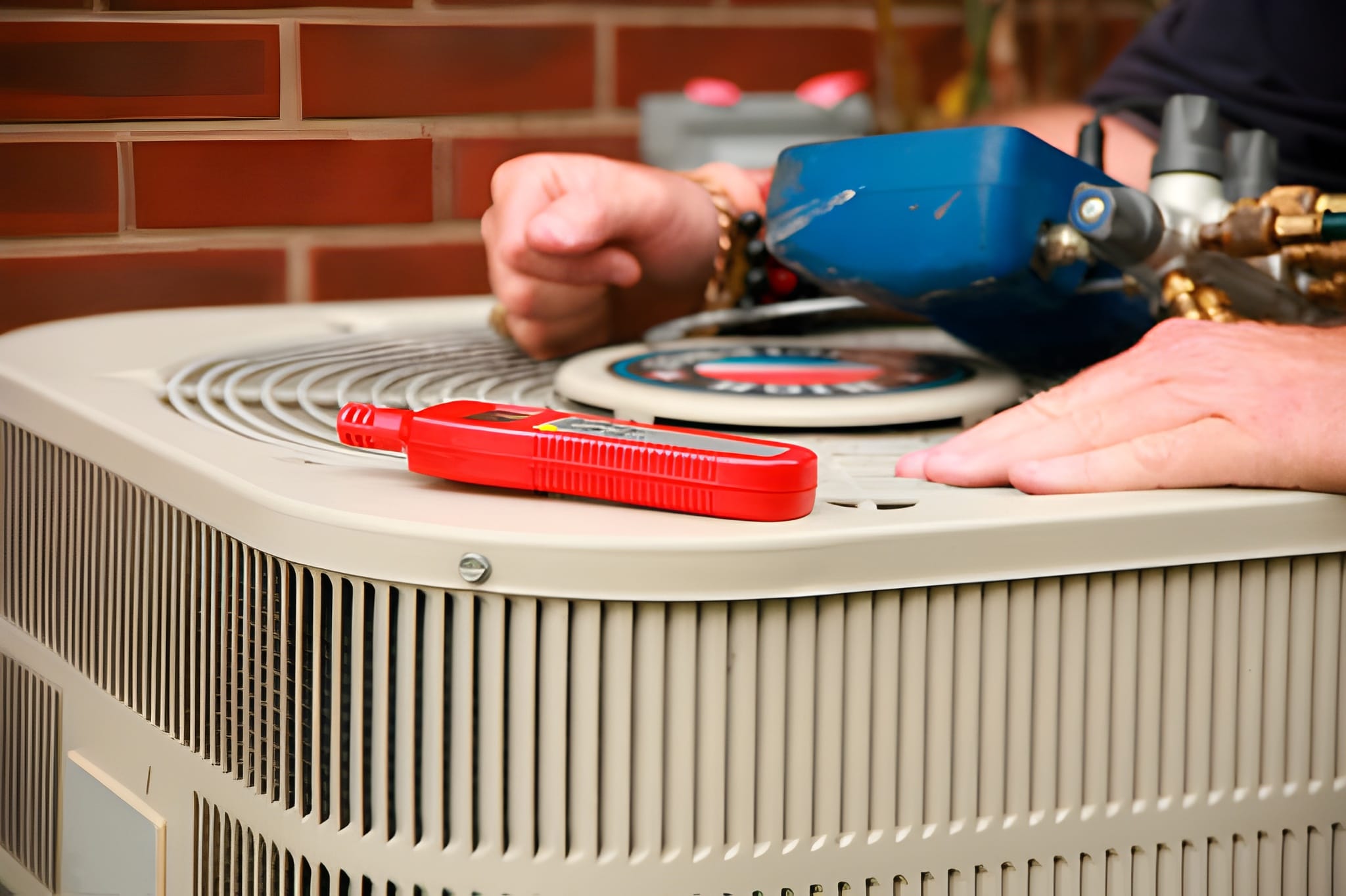
- Refrigerant pressure readings and leak detection if needed.
- Motor, compressor, capacitor, and control board testing.
- Optional indoor air quality testing for PM2.5, VOCs, humidity, and CO2 when requested.
Diagnostics conclude with a clear explanation of findings, repair options with scope of work, and an estimated timeline for completion.
Repairs: what is commonly fixed and how
Repairs focus on restoring safe, efficient operation while addressing root causes:
- Refrigerant leak repair, recovery, and recharge following EPA requirements.
- Replacement of worn electrical components (capacitors, contactors, relays).
- Motor and blower repair or replacement to restore airflow.
- Condensate drain clearing and installation of overflow safeguards.
- Coil cleaning and fin straightening to improve heat transfer.
- Duct sealing and simple repairs to reduce loss and balance airflow.
All repair work follows manufacturer guidelines and industry best practices, with parts matched to system specifications to preserve efficiency and longevity.
Installations: sizing, permits, and commissioning
Proper installation begins with an accurate load calculation (Manual J) and duct analysis (Manual D) to avoid oversizing or undersizing equipment. Installation process highlights:
- Equipment selection based on capacity needs and efficiency goals (SEER ratings).
- Local code compliance and proper permits for the City of Fremont and Alameda County.
- Correct refrigerant line sizing, insulation, and safe brazing practices.
- Proper condensate management and secondary pan installation where required.
- Electrical hookups meeting code and including required disconnects and surge protection.
- Start-up, system charging, performance verification, and homeowner orientation.
Commissioning ensures the new system performs as designed and that controls are calibrated for comfort and efficiency.
Maintenance plans and seasonal tune-ups
Regular maintenance reduces breakdown risk and preserves efficiency—crucial in Fremont when heat waves or smoke events create high demand. Typical maintenance plan features:
- Semiannual or annual tune-ups before cooling season.
- Filter checks and replacement guidance (MERV recommendations for IAQ).
- Coil cleaning, blower wheel cleaning, and lubrication of moving parts.
- Refrigerant level verification and electrical safety inspections.
- Thermostat calibration and airflow balancing.
- Priority scheduling and documented service history for each visit.
Planned maintenance helps identify small issues before they become major failures and supports warranty compliance for some equipment.
Indoor air quality add-ons for wildfire-prone seasons
Fremont homeowners facing seasonal smoke and Bay Area pollution benefit from targeted IAQ upgrades:
- High-efficiency filtration (MERV 13+ or true HEPA in duct- or room-based solutions).
- UV germicidal lights for microbial control on coils.
- Whole-house air cleaners and electronic filtration options with particulate monitoring.
- Energy recovery ventilators (ERVs) or heat recovery ventilators (HRVs) to manage fresh air with energy savings.
- Whole-house dehumidifiers or humidifiers to control indoor humidity and comfort.
IAQ add-ons are integrated with the HVAC system and selected based on home layout, existing ductwork, and occupant health needs.
Zoning and thermostat upgrades
Zoning systems and smart thermostats increase comfort while reducing energy waste:
- Motorized dampers and multi-zone thermostats to control temperatures by area.
- Smart thermostats with learning capabilities, remote access, and geofencing to tailor comfort schedules.
- Integration with existing HVAC components and verification of compatibility.
- Benefits include improved comfort for multi-level Fremont homes and better conditioning during partial-occupancy periods.
Zoning installations include system design, damper placement, layout testing, and occupant orientation so each zone performs as intended.
Technician qualifications and licensing
Technicians servicing Fremont homes carry the credentials and training required by California and industry standards:
- California C-20 HVAC contractor classification or work under a licensed C-20 contractor for installation work.
- EPA Section 608 certification for refrigerant handling and recovery.
- Preferably NATE certification or manufacturer-specific training for equipment expertise.
- Proof of liability insurance and worker’s compensation coverage.
- Background checks and continuing education to stay current with codes and technologies.
These qualifications protect homeowners and ensure code-compliant, safe workmanship.
Scheduling, response times, warranty, and satisfaction
Service providers typically offer structured scheduling and clear timelines:
- Standard diagnostic appointments with same-day or next-day availability when possible.
- Emergency response for system failures during heat events, often with prioritized dispatching.
- Diagnostic reports that include recommended repairs and estimated completion windows.
Warranty and satisfaction practices commonly include:
- Manufacturer warranties on new equipment and parts.
- Labor warranties for a defined period after repairs or installations.
- Transparent explanations of what warranties cover and what maintenance is required to keep coverage valid.
- Commitment to resolving work that does not meet expected performance or workmanship standards.
For Fremont homeowners, reliable scheduling, clear documentation, and well-defined warranty terms provide confidence that the HVAC investment is protected and that support is available when needed.
Final considerations
A well-serviced HVAC system in Fremont means reliable cooling during heat spikes, improved protection against wildfire smoke, and lower lifetime operating costs. Professional diagnostics, timely repairs, correct installations, proactive maintenance, targeted IAQ upgrades, and thoughtful zoning create a comfortable, healthy home environment tailored to the Bay Area climate and local building requirements.
hear what our satisfied clients have to say

.svg)
Service areas
.avif)