
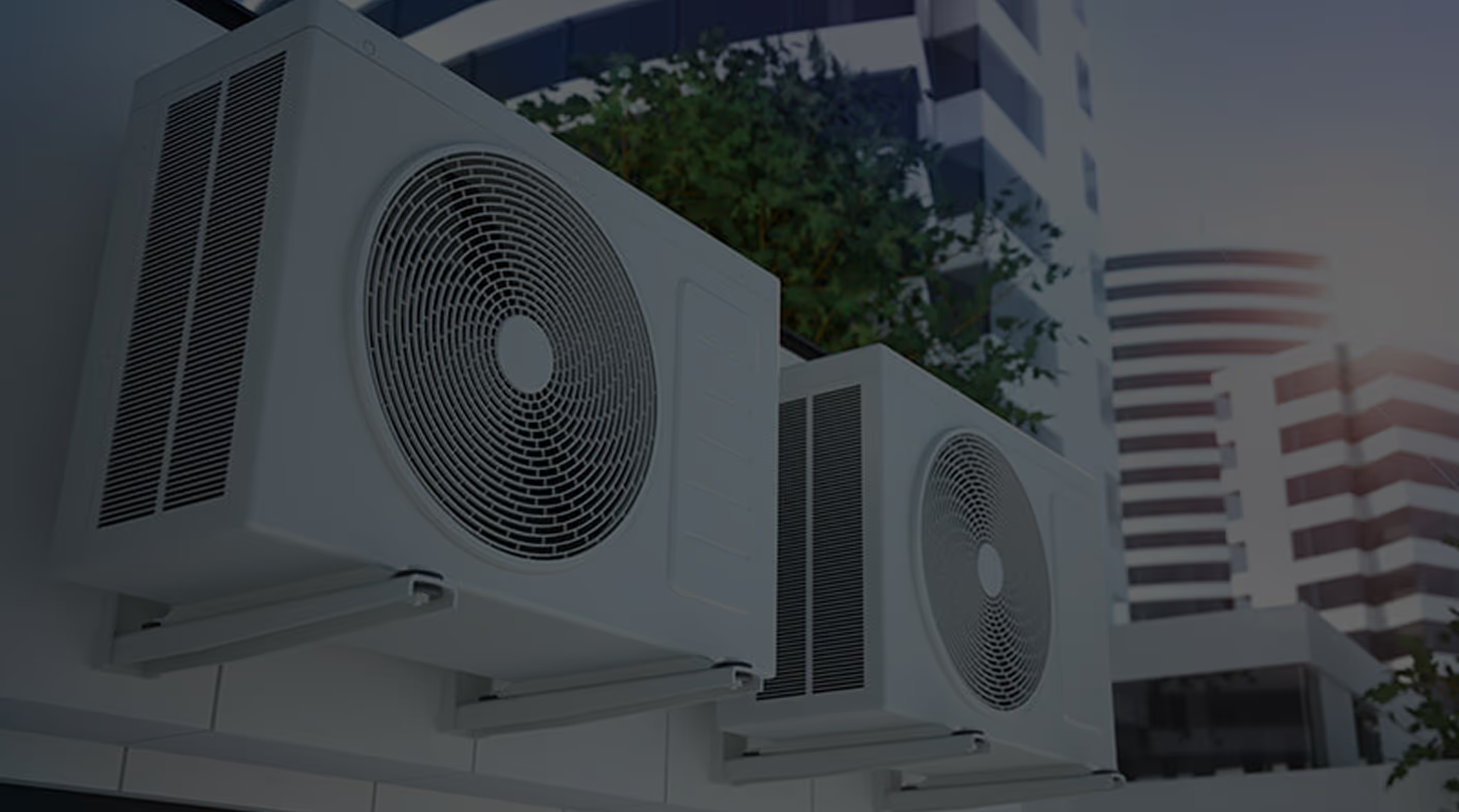
Air Conditioning Replacement in San Mateo, CA
Plum HVAC's guide to Air Conditioning Replacement in San Mateo, CA, provides a comprehensive overview for deciding between repair and replacement, evaluating unit age and efficiency, and selecting properly sized, high-efficiency systems for local conditions. We cover removal and disposal, permit and code considerations, financing and rebates, installation timelines, and warranty expectations. Plum HVAC also outlines expected performance improvements, including steadier temperatures, improved humidity control, quieter operation, and meaningful energy savings compared with older equipment.
.jpeg)
Air Conditioning Replacement in San Mateo, CA
Replacing your air conditioning system is a major decision for San Mateo homes. With a mild Mediterranean climate, coastal fog, occasional heat waves, and salt air exposure near the bay, equipment in this area faces unique stressors. This page explains when replacement is recommended versus repair, how technicians evaluate age and efficiency, how to choose the right high-efficiency model and size it correctly, what removal and disposal involve, important permit and code requirements for San Mateo, financing and rebate options, typical installation timelines and warranties, and realistic performance improvements and cost savings you can expect.
When to replace versus repair
Deciding between repair and replacement comes down to age, frequency of breakdowns, efficiency, and cost of upcoming repairs.
Common signs replacement is recommended
- System age 10 to 15 years or older, especially if it uses R-22 refrigerant.
- Repeated breakdowns or increasing repair costs over the last 12 to 24 months.
- Poor cooling performance, uneven temperatures, or persistent humidity problems.
- Rising energy bills despite regular maintenance.
- Compressor failure or major component replacement needed.
- Obsolete equipment that lacks required efficiency ratings or replacement parts.
Why San Mateo homes often choose replacement
- Older Bay Area homes commonly have units near the end of life and ductwork that needs updating.
- Salt air can accelerate outdoor coil corrosion, reducing efficiency and lifespan.
- During regional heat waves, an undersized or poor-efficiency unit will struggle to keep indoor comfort.
How technicians assess system age and efficiency
A professional assessment balances measurable data with on-site inspection.
Typical assessment checklist
- Confirm the unit manufacture date and refrigerant type from nameplate.
- Measure current energy use, refrigerant pressure, and airflow.
- Inspect compressor, evaporator and condenser coils, and electrical components.
- Test thermostat performance and zoning controls.
- Evaluate ductwork condition and insulation levels.
- Perform a Manual J load calculation when replacement is under consideration.
What technicians look for in San Mateo
- Signs of coastal corrosion on outdoor coils and fasteners.
- Evidence of poor humidity control or short cycling caused by oversizing or duct leakage.
- Compatibility issues when proposing higher-efficiency condensers with existing indoor coils.
Selecting energy-efficient models and proper sizing
Right-sizing and efficiency choices are critical for comfort, longevity, and lower operating costs.
Energy efficiency and model selection
- Compare SEER ratings and ENERGY STAR qualifications to identify high-efficiency options. Higher SEER units save more energy but consider payback based on local energy rates.
- Look at humidity control capability and variable-speed compressors for improved comfort in San Mateo’s humid marine air at times.
- Consider corrosion-resistant coatings or stainless-steel coil options for near-bay installations.
Proper sizing and system design
- Require a Manual J load calculation to determine cooling load based on home size, orientation, insulation, windows, occupancy, and local climate.
- Use Manual S for matching equipment to calculated loads and Manual D for any ductwork redesign.
- Avoid oversizing. An oversized system cycles frequently, which reduces dehumidification and increases wear. Undersizing leads to poor comfort and higher runtime.
Alternative solutions
- Ductless mini-splits for older homes without practical ductwork.
- Zoned systems for multi-level San Mateo homes with varied sun exposure.
Removal and disposal of old equipment
Safe removal protects your home and the environment.
Key steps involved
- Recover refrigerant using EPA-compliant recovery equipment and certified technicians.
- Disconnect and remove indoor and outdoor units, safely managing electrical and refrigerant lines.
- Dispose of or recycle metal, plastic, and insulation according to local waste rules.
- Provide documentation of refrigerant recovery and disposal for permits or rebates.
Why older units can be costly
- Units using R-22 refrigerant are increasingly expensive to service due to phasedown rules and limited supply, making replacement a more economical long-term choice.
Permit and code considerations in San Mateo, CA
Permits and code compliance protect property value and ensure safe, efficient operation.
What to expect
- Most AC replacements require a building or mechanical permit from the City of San Mateo or San Mateo County depending on location.
- Systems must comply with California energy standards (Title 24) and local ordinances for efficiency, equipment installation, and ventilation.
- Inspections verify proper installation, refrigerant handling, electrical connections, and duct sealing.
Documentation to keep
- Permit approval, final inspection sign-off, equipment model numbers, and energy compliance documents for future resale or rebate applications.
Financing and rebate assistance
Replacing an AC unit is an investment. Several pathways can reduce upfront cost.
Typical options and incentives
- Utility and state rebates for high-efficiency systems and heat pump conversions are commonly available; eligibility often depends on model efficiency and installation documentation.
- Manufacturer and third-party financing programs can spread payments over time.
- Federal or state tax incentives may apply for qualifying energy-efficient upgrades; retain invoices and equipment specifications.
Tip
- Verify rebate and financing eligibility before purchase and save all invoices, permit copies, and equipment labels needed for applications.
Installation timeline and warranties
Knowing expectations helps with planning and minimizes disruption.
Typical timeline
- Simple like-for-like replacements are often completed in one day.
- Replacements requiring ductwork changes, permitting, or roof access can take 2 to 4 days or longer.
- Allow additional time for permit approval and final inspection.
Warranties to review
- Manufacturer warranties for compressors and major components, often 5 to 10 years.
- Parts and labor warranties from the installer; confirm length and what is covered.
- Requirement to register the product with the manufacturer promptly to secure full warranty benefits.
Expected performance improvements and cost savings
Replacement should deliver measurable benefits.
Performance and comfort gains
- More consistent temperatures, improved humidity control, and quieter operation.
- Better indoor air quality when combined with updated filtration and sealed ducts.
Energy and cost savings
- Replacing a 10 to 15 year old unit with a modern high-efficiency system commonly reduces cooling energy use by 15 to 40 percent, depending on home usage, system sizing, and local electricity rates.
- Typical payback varies widely; many homeowners see payback in several years when factoring energy savings, avoided repairs, and increased home value.
Maintenance and extending system life
Regular care maximizes your investment.
Recommended ongoing steps
- Schedule annual tune-ups before the cooling season to verify refrigerant charge, clean coils, and test components.
- Change filters regularly and confirm proper condensate drainage.
- Inspect outdoor unit location for corroding elements and ensure adequate airflow.
- Seal and insulate ducts and add attic insulation if needed for the best efficiency in San Mateo homes.
Replacing your air conditioning system is a technical and financial decision that pays off when matched to your home and local conditions. A thoughtful assessment, proper sizing, attention to local code, and selection of an efficient, corrosion-resistant system will deliver reliable comfort and lower operating costs tailored to San Mateo, CA living.
hear what our satisfied clients have to say

.svg)
Service areas
.avif)