
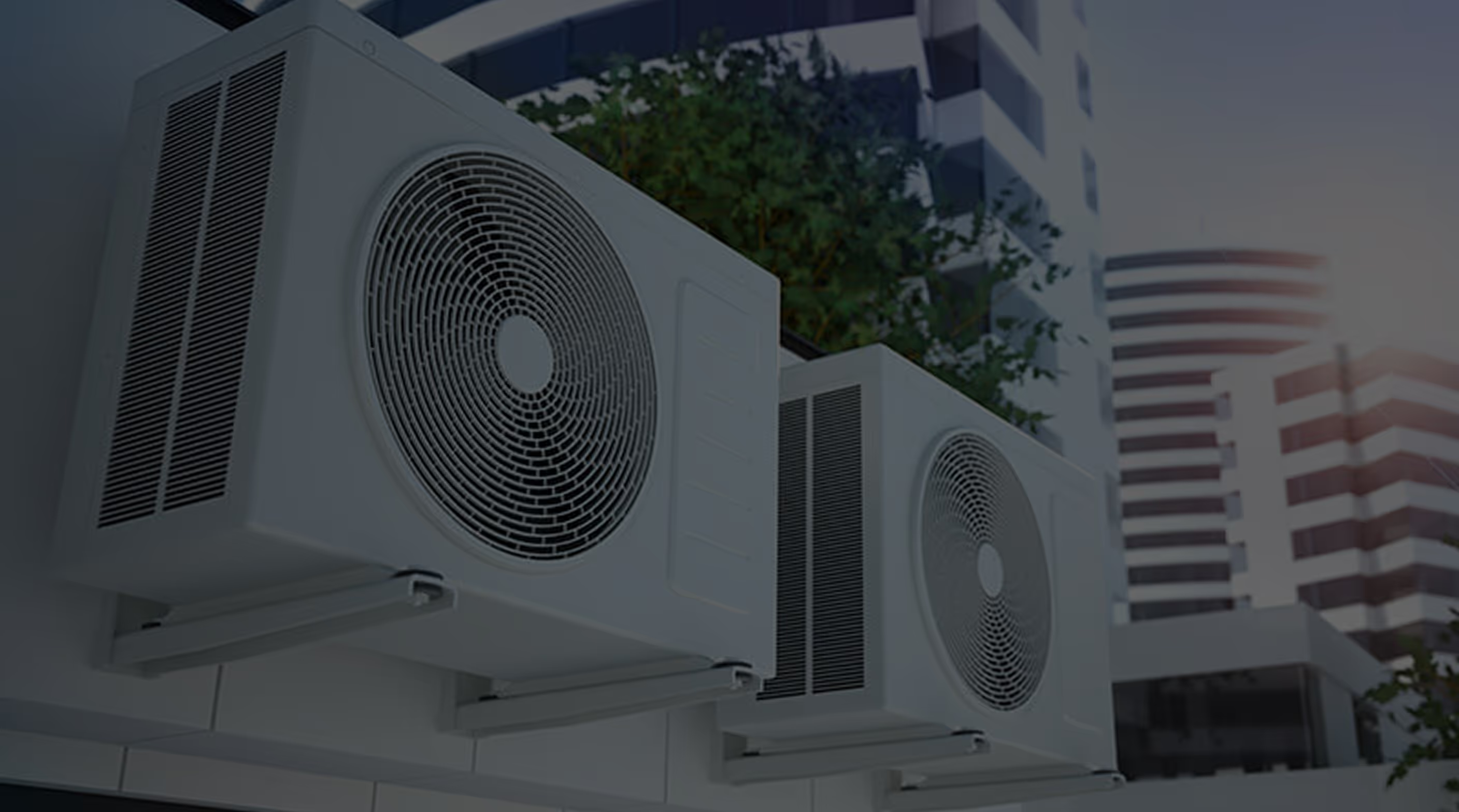
Mini Split Repair in Foster City, CA
If your mini-split isn't performing its best in Foster City, CA, Plum HVAC is here to help. We offer comprehensive repair services that address common system failures and ensure reliable operation, especially in our unique coastal conditions. Typical issues we see include compressor or refrigerant problems, electrical faults, thermostat malfunctions, and challenges with airflow or drainage.
Our skilled technicians follow a systematic process: thorough inspection, detailed diagnostics, precise repairs, performance testing, and final safety verification. We make sure you receive clear timelines and warranty guidance. Our expert service is designed to restore your comfort quickly, prevent further damage, and maintain your system's long-term efficiency.
-min%2520(1).jpeg)
Mini Split Repair in Foster City, CA
Mini split repair in Foster City, CA keeps your home comfortable year-round and protects an investment that’s often the most cost-effective way to cool and heat individual rooms. Whether your wall-mounted indoor unit is blowing warm air, the outdoor compressor is noisy, or your system cycles on and off, timely, professional repairs restore comfort, improve efficiency, and prevent more costly breakdowns—especially in coastal environments like Foster City where salt air and humidity accelerate wear.
Common mini split issues in Foster City
Foster City homes face specific stressors—marine air, occasional heat waves, and dense housing—that make certain mini split problems more likely. These are the most frequent failures we see and how they present:
- Compressor failure
- Causes: motor wear, electrical issues, or long-term refrigerant problems.
- Symptoms: outdoor unit runs but indoor air is not being cooled, loud humming or grinding noises, or system trips circuit breakers.
- Refrigerant leaks
- Causes: corrosion of line sets (exacerbated by salt air), poor fittings, or physical damage.
- Symptoms: reduced cooling capacity, longer run times, ice on evaporator coil, or visible oil stains on piping.
- Electrical faults
- Causes: corroded connections, failed capacitors, relays, or control boards impacted by moisture.
- Symptoms: intermittent operation, system not powering on, or blown fuses/tripped breakers.
- Thermostat or control issues
- Causes: sensor miscalibration, communication errors between indoor and outdoor units, or defective remotes/wall controllers.
- Symptoms: incorrect temperature reading, system running but not reaching setpoint, or error codes on display.
- Indoor airflow and drainage problems
- Causes: clogged filters, dirty coils, blocked condensate drains.
- Symptoms: weak airflow, unpleasant odors, water leaking indoors, or frozen indoor coils.
- Mechanical wear in fan motors and blowers
- Causes: age, debris buildup, or shaft corrosion.
- Symptoms: rattling, reduced airflow, or uneven air distribution in rooms.
Diagnostic process — what to expect
A systematic diagnostic approach isolates the real cause so repairs are effective and durable:
- Initial inspection and history
- Review system age, service history, and homeowner observations about when the problem occurs.
- Visual and mechanical checks
- Inspect indoor and outdoor units for corrosion, damage, and obvious leaks. Check air filters and condensate lines.
- Electrical and control testing
- Use a multimeter to test voltage, capacitors, and relays. Verify communication between indoor and outdoor modules.
- Refrigerant and pressure testing
- Attach gauges, perform leak detection, and conduct a pressure hold test. Use electronic leak detectors or UV dye as needed.
- Performance measurements
- Measure temperature differentials (supply vs return), airflow, and run-time cycles to confirm performance issues.
- Safety verification
- Check for proper grounding, safe wiring, and that protective devices are functional.
A thorough diagnostic minimizes guesswork and reduces the chance of repeated service visits.
Typical repair procedures and parts replacement
Repairs are matched to the root cause discovered during diagnosis. Common procedures include:
- Compressor repair or replacement
- Small motors or internal failures often require compressor replacement and a full system evacuation and recharge. In some cases, a hard-start device or replacing the capacitor can resolve startup issues.
- Refrigerant leak repair
- Locate and repair the leak (line seals, brazing, or component replacement), evacuate the system, perform a vacuum test, and recharge the correct refrigerant charge according to manufacturer specifications.
- Electrical component replacement
- Replace failed capacitors, contactors, relays, fuses, or circuit boards. Ensure all connections are clean, secure, and corrosion-protected—particularly important near the Bay.
- Thermostat and control fixes
- Recalibrate sensors, update software on smart controllers, replace remote receivers, or replace wall-mounted thermostats.
- Airflow and condensate maintenance
- Clean coils, replace filters, clear or replace drain pans and condensate pumps, and service blower motors or indoor fan assemblies.
- Line set and system retrofits
- Severely corroded refrigerant lines or damaged indoor units may require partial or full line-set replacement or system retrofits, often coordinated with building access constraints in Foster City townhomes and condos.
Technicians will use OEM or manufacturer-approved replacement parts when possible to maintain performance and efficiency.
Repair timelines and what affects them
Typical repair durations vary by complexity:
- Simple repairs (filter cleaning, capacitor or thermostat replacement, clearing drains): usually a few hours.
- Moderate repairs (refrigerant leak repair, fan motor replacement, control board swap): commonly same-day to next-day service, depending on parts.
- Major repairs (compressor replacement, line-set replacement, full system retrofit): may require multi-day scheduling, part ordering, and on-site refrigerant recovery.
Factors that affect timelines: parts availability, need for special ordering, building access or permits, extent of corrosion from coastal exposure, and whether additional containment or brazing work is required.
Technician qualifications and safety / COVID precautions
Professional mini split repair requires licensed, certified technicians:
- Technicians hold EPA 608 certification for refrigerant handling and typically have state or contractor licensing appropriate for HVAC work.
- Manufacturer training or certification for common mini split brands ensures correct diagnostics and warranty-friendly repairs.
- Technicians follow electrical safety protocols and use proper PPE such as gloves, eye protection, and electrical-rated tools.
Safety and public health practices include adherence to current public health guidance: wearing masks when requested, hand hygiene, surface disinfection around work areas, and minimizing indoor disruption while maintaining clear communication about service steps.
Warranty, post-repair testing, and verification
After any repair, comprehensive testing confirms the system is restored:
- Pressure hold and leak testing to confirm integrity of repairs.
- Performance validation: measure temperature split, airflow, and run cycles to ensure the unit meets manufacturer specifications.
- Electrical load checks to verify safe operation under expected conditions.
- Documentation of work performed, replaced parts, and operational readings for homeowner records and any warranty obligations.
Many repairs include limited warranties on parts and labor; confirm the scope and duration of coverage in writing prior to work when possible. Scheduling regular maintenance after repair helps prevent repeat failures—important in Foster City where marine conditions accelerate wear.
Why prompt mini split repair matters in Foster City
Prompt repair protects comfort, indoor air quality, and long-term system value. Fixing refrigerant leaks or electrical faults quickly prevents compressor damage, reduces energy waste, and avoids costly replacements. In Foster City, attention to corrosive salt air, accessible unit placement in condo communities, and seasonally variable cooling demands makes timely, skilled repairs especially important for reliable year-round performance.
hear what our satisfied clients have to say

.svg)
Service areas
.avif)