Ductwork Repair in Sunnyvale, CA
An overview of ductwork repair for Sunnyvale, CA homes, this page explains common duct issues, diagnostic methods, and practical repair options. It covers leaky seams, disconnected or crushed sections, insulation gaps, airflow imbalances, contamination, corrosion, and pest intrusion, plus how professionals locate problems using visual inspection, pressure testing, CFM measurements, thermal imaging, and tracer techniques. It outlines repair services, from leak sealing and section replacement to insulation upgrades and airflow balancing, plus maintenance tips and expectations for post-repair testing.
Ductwork Repair in Sunnyvale, CA
Your home’s ductwork is the hidden engine of heating and cooling. In Sunnyvale, CA, where warm summers and mild winters mean year-round HVAC use, compromised ducts quickly show up as higher energy bills, uneven comfort, and extra strain on equipment. This page explains common ductwork problems in Sunnyvale homes, how professionals diagnose and repair them, when repair makes sense versus replacement, and practical maintenance steps to keep ducts performing efficiently.
Common ductwork problems in Sunnyvale homes
Sunnyvale’s climate and housing stock create a predictable set of duct issues:
- Leaky seams and joints: Temperature-driven expansion and contraction, plus age-related wear, cause gaps at connections. Leaks reduce conditioned air delivered to living spaces and increase energy use.
- Disconnected or crushed sections: Attic access and occasional attic work can displace ducts. Flex ducts are particularly prone to kinks and crushing when not supported correctly.
- Poor insulation: Hot attic spaces can heat ducts in summer. Under-insulated ducts lose cooling before air reaches rooms, making AC systems work harder.
- Airflow imbalances: Improperly sized ducts, closed or misadjusted dampers, or partial blockages create hot and cold spots across a home.
- Contamination and microbial growth: Dust, pollen, and intermittent moisture can lead to dust buildup or mold in poorly sealed or insulated systems.
- Aging or corroded metal ducts: Older sheet metal can corrode or develop pinhole leaks, especially where condensation occurs.
- Pest intrusion: Rodents and insects can chew through flexible ducts or create holes at access points.
How technicians diagnose duct problems
Professional duct diagnostics identify the causes and quantify losses so repairs are targeted and verifiable:
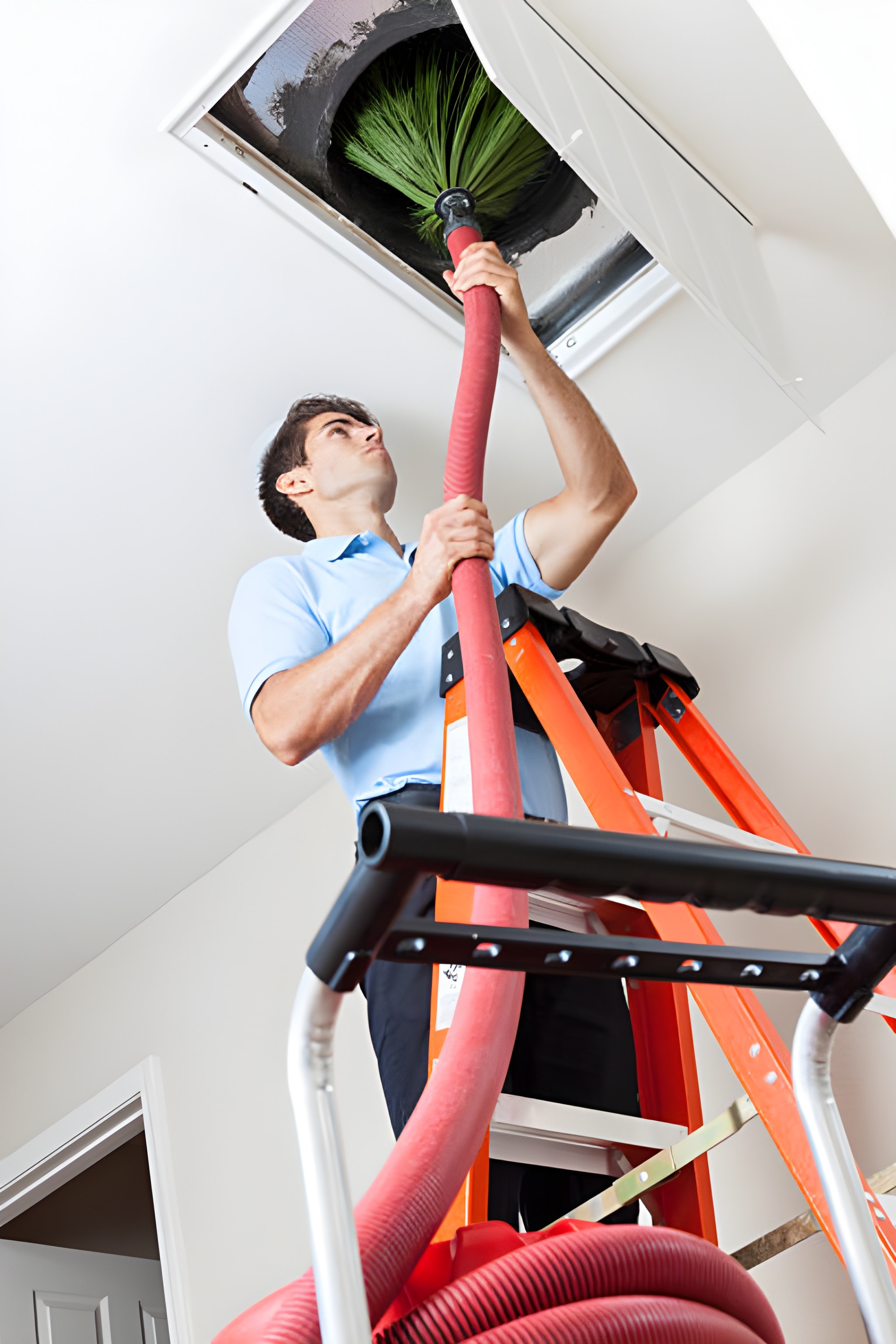
- Visual inspection: Technicians inspect attics, crawlspaces, and mechanical closets for disconnected runs, crushed ducts, poor supports, or visible leaks.
- Pressure and leakage testing: A duct pressurization test measures total leakage relative to the system’s size to estimate energy loss and show where sealing will help most.
- Airflow measurement (CFM testing): Measuring cubic feet per minute at registers reveals imbalances and helps size corrective changes.
- Thermal imaging and surface temperature checks: Infrared scans show where ducts are overheating or cooling excessively, pinpointing insulation or leak issues.
- Smoke or tracer testing: Useful for locating individual leaks and verifying sealing effectiveness after repairs.
Typical ductwork repair services
Repairs focus on stopping losses, restoring airflow, and protecting ducts from future damage:
- Leak sealing: Using mastic sealant or UL 181-rated materials for flexible duct connections. Proper sealing reduces conditioned air loss and improves system efficiency.
- Reconnect or replace damaged sections: Reattaching disconnected runs and replacing crushed or deteriorated flexible ducts restores airflow and reduces resistance.
- Improve insulation: Adding or upgrading insulation on ducts in hot attics reduces heat gain in summer. Insulation choices are matched to attic conditions and run length.
- Airflow balancing and damper adjustment: Rebalancing registers and adjusting dampers evens out temperatures across rooms and reduces system cycling.
- Repairing or replacing sheet metal: Patching corroded areas or replacing entire runs when damage is widespread ensures a durable, low-leak system.
- Pest-proofing and access sealing: Closing gaps around penetrations and adding rodent barriers protects ducts and maintains indoor air quality.
- Post-repair verification testing: Repeating pressure and CFM tests after repairs quantifies efficiency gains and confirms restored performance.
Before-and-after efficiency improvements you can expect
After targeted duct repairs in Sunnyvale homes, the most common measurable improvements include:
- Lower energy losses from leaks and poorly insulated ducts, reducing HVAC runtime.
- Improved comfort with fewer hot or cold spots and faster recovery to set temperatures.
- Reduced system wear from shorter runtime and fewer short-cycling events.
- Better indoor air delivery and potential improvements in air quality when leaks that pulled in attic dust are sealed.
Specific gains depend on how extensive the original issues were. In many cases, sealing major leaks plus insulation and balancing produces noticeable comfort and efficiency benefits without full system replacement.
Cost vs replacement guidance
Deciding whether to repair or replace ducts depends on condition, age, and overall efficiency goals:
- Repair is usually appropriate when problems are limited to leaks, disconnected runs, or sections of damaged flex duct. Sealing and targeted replacements often restore acceptable performance.
- Replacement should be considered when there is widespread corrosion, extensive mold contamination, repeated failures, or when the system is significantly undersized for current HVAC equipment or a remodeled home layout.
- Other factors influencing that decision in Sunnyvale include attic accessibility and whether insulation upgrades are feasible without major construction.
A professional inspection with diagnostic testing will provide a clear recommendation and an estimate of expected efficiency improvements from repair versus full replacement.
Practical maintenance tips for Sunnyvale homeowners
Regular attention prevents small duct problems from becoming big, costly ones:
- Schedule a seasonal inspection to check for displaced runs, especially after attic work or roof projects.
- Keep attic insulation in good condition and ensure ducts are routed above the insulation where possible to minimize heat gain.
- Replace HVAC filters regularly and ensure return grilles are unobstructed to reduce dust buildup in ducts.
- Secure flexible ducts with proper supports and avoid sharp bends or compressions.
- Monitor rooms for sudden comfort changes or a rise in energy bills, which often indicate developing duct issues.
- If moisture is present in the attic or duct area, address roof, plumbing, or ventilation sources promptly to prevent mold.
What to expect from a professional duct repair process
A straightforward residential duct repair project typically follows these steps:
- Initial inspection and diagnostic testing to map leaks and airflow problems.
- Written assessment describing findings, recommended repairs, and expected outcomes.
- Focused repairs: sealing, reconnecting, replacing sections, insulation upgrades, and balancing.
- Post-repair testing to verify reduced leakage and corrected airflow.
- A summary of work performed and maintenance recommendations to preserve performance.
In Sunnyvale homes, prioritizing duct health not only improves comfort during the warm summer months but also extends HVAC life and reduces energy waste year-round. Proper diagnostics and targeted repairs give homeowners a cost-effective path to better indoor comfort without unnecessary replacement.
hear what our satisfied clients have to say

.svg)
Service areas
.avif)