
Ductwork Installation in Daly City, CA
Ductwork installation in Daly City, CA focuses on designing and installing efficient, code-compliant air distribution systems suited to coastal conditions. Services include duct design, load calculations, material selection, airtight sealing, insulation, testing, and system balancing. Technicians address common issues like leaks, poor insulation, and improper sizing while considering seismic and energy standards. Properly installed ductwork enhances airflow, comfort, and energy efficiency, reducing long-term costs and maintaining consistent indoor climate control for Daly City homes year-round.
Ductwork Installation in Daly City, CA
A properly designed and installed duct system is the backbone of an efficient, comfortable home in Daly City, CA. With coastal fog, mild but often damp conditions, and homes that range from older postwar construction to newer remodels, tailored ductwork installation addresses unique local challenges: condensation prevention, energy-code compliance, and durable sealing to withstand seasonal humidity and occasional seismic activity. This page explains what a full ductwork installation involves, common duct issues in Daly City homes, the installation process, material and insulation choices, testing and balancing, and long-term care for dependable performance.
Why proper ductwork matters in Daly City homes
- Coastal humidity and frequent marine layer can increase the risk of condensation in uninsulated or poorly sealed ducts, leading to mold and energy loss.
- Many Daly City houses have attics or crawlspaces where ducts run through unconditioned space; without correct insulation and sealing, conditioned air cools or warms prematurely, wasting energy and reducing comfort.
- Modern energy standards in California require attention to duct leakage, insulation levels, and ventilation coordination to meet Title 24 and local code expectations.Proper installation improves comfort, reduces utility use, controls indoor air quality, and makes your HVAC equipment perform as intended.
Common ductwork issues in Daly City
- Leaky joints and transitions causing pressure imbalance and uneven rooms
- Inadequate insulation in attic runs leading to condensation and heat loss
- Undersized or incorrectly sized ducts creating noisy operation and poor airflow
- Duct runs shaped around obstacles or with excessive bends increasing static pressure
- Older flexible ducts that have collapsed or lost insulating properties
- Lack of proper return pathways causing reduced system efficiency and indoor air recirculation problems
Types of ductwork services offered
- New construction duct system design and installation
- Full replacement of existing ductwork during HVAC upgrades or remodels
- Retrofit and reroute services to improve airflow in remodeled rooms or additions
- Insulation and condensation control upgrades for attics and crawlspaces
- Sealing and repair of existing ducts to reduce leakage
- Ductwork coordination with new equipment installation and ventilation systems
System design and load calculations
A reliable install begins with accurate system design:
- Load calculations: We size the system based on your home layout, insulation, window exposure, and local climate — essential in Daly City where fog and coastal exposure influence heating and cooling loads.
- Duct sizing and layout: Properly sized ducts minimize static pressure and ensure each room receives the required airflow. Designs consider shortest, most efficient routing with minimal turns.
- Return-air planning: Balanced return pathways prevent negative pressure that pulls in unfiltered outside air or forces pollutants from attics and crawlspaces into living spaces.
Materials and insulation options
Choosing the right materials depends on access, performance goals, and budget:
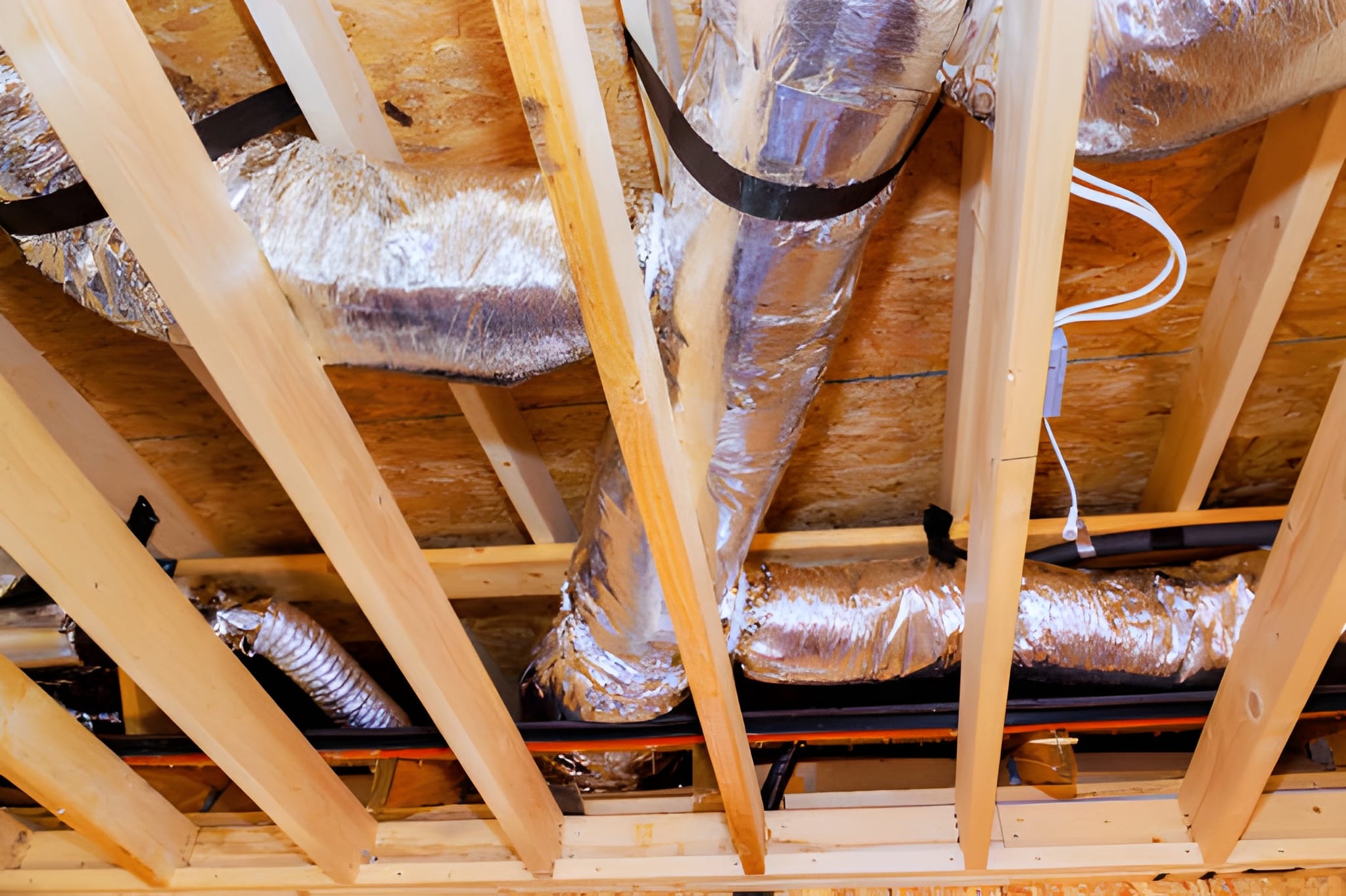
- Galvanized sheet metal: Durable, low-leakage option ideal for exposed runs, mechanical rooms, and long-lasting performance.
- Fiberglass-insulated ductboard: Lightweight and with built-in insulation, useful in confined spaces but requires careful sealing at seams.
- Flexible duct: Good for short, direct runs to registers; avoid long, twisted flexible runs that increase resistance.Insulation:
- For ducts in unconditioned attics or near the coast, use insulated ducts or apply R-rated insulation (commonly R-6 to R-8 in the region) with a proper vapor barrier to prevent condensation.
- Seal wrap or foil-faced insulation helps protect against moisture ingress in Daly City’s humid conditions.
Airtight sealing and thermal protection techniques
- Sealing: Use mastic sealant or UL-listed tapes at all joints and transitions to create an airtight system. Mechanical fasteners plus mastic offer durable, flexible connections.
- Sealing penetrations: Seal where ducts pass through walls, floors, or framing to prevent conditioned air loss and infiltration.
- Insulation continuity: Ensure insulation is continuous at fittings and plenums; avoid gaps that lead to thermal bridging and condensation.
- Seismic and mechanical durability: Secure ductwork with straps and supports designed to accommodate building movement and prevent sagging or separation over time.
Compliance with local codes
- Installations follow California energy requirements (Title 24) and Daly City/San Mateo County permitting and inspection rules. Code compliance includes duct leakage limits, required insulation levels, and documentation for larger projects.
- Proper documentation and staged inspections ensure the system meets local performance and safety standards.
Timeline and what affects scheduling
- Typical residential installations—from design through final testing—are scheduled based on project size and access. A straightforward single-story home duct run often completes in a few days once design is finalized and permits are approved.
- Factors that influence timeline: complexity of layout, attic or crawlspace access, number of supply and return registers, integration with new HVAC equipment, and any necessary structural modifications.
What affects cost estimates
While dollar figures vary, the primary cost drivers are:
- Total linear feet of duct and number of registers
- Materials chosen (sheet metal vs insulated ductboard vs flexible)
- Difficulty of access and need for structural work
- Additional services like insulation upgrades, duct sealing, or adding returns
- Required permits and testing for code compliance
Post-installation testing and balancing
- Airflow testing: Measure delivered airflow to each register and compare to design targets. Balancing dampers or register adjustments are used to achieve even distribution.
- Leakage testing: Verify leakage rates and re-seal if necessary to meet efficiency targets.
- Pressure and static checks: Confirm the system operates within safe static pressure ranges to protect equipment and ensure quiet operation.
Long-term benefits and maintenance tips
- Benefits: Improved comfort, consistent room temperatures, longer HVAC equipment life, better indoor air quality, and lower energy use.
- Seasonal maintenance: Inspect duct connections annually, check insulation for damage or moisture, and replace filters regularly to protect the duct system.
- When to consider cleaning or repair: Visible mold, persistent odors, significant airflow loss, or collapsed flexible ducts indicate the need for cleaning or replacement.
- Upgrades: Adding zoned controls, improved insulation, or converting ducts to conditioned-space routing can further increase comfort and efficiency in Daly City homes.
A well-designed and properly installed duct system tailored for Daly City’s coastal conditions makes a measurable difference in comfort and operating costs. Thoughtful material choice, airtight sealing, correct sizing, and post-installation testing ensure the system performs reliably for years while complying with local code expectations.
hear what our satisfied clients have to say

.svg)
Service areas
.avif)