
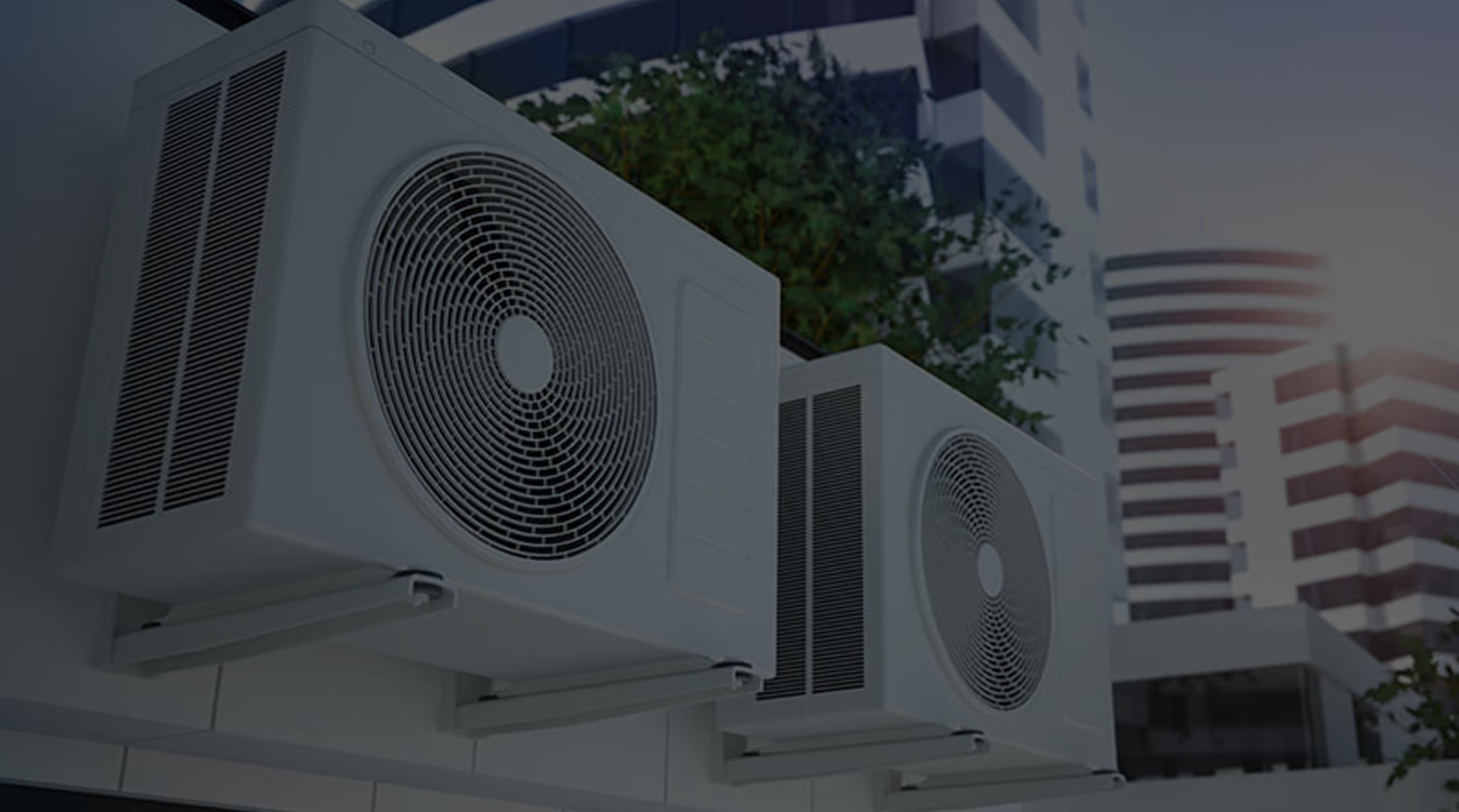
Air Conditioning Repair in Santa Clara, CA
Plum HVAC offers comprehensive air conditioning repair in Santa Clara, CA. We outline the service's importance, common issues, diagnostic steps, typical repairs and parts, emergency versus scheduled service, pricing transparency, warranties, safety, and maintenance strategies to improve efficiency and prevent future breakdowns. We detail diagnostic steps such as visual inspections, refrigerant checks, and run tests, common repair scenarios (compressor or capacitor replacements, leaks, coil work), pricing factors (diagnostic fees, labor vs parts, warranties), and emphasize safety, licensing, and preventive maintenance to extend system life in Santa Clara’s climate.
.jpeg)
Air Conditioning Repair in Santa Clara, CA
When your air conditioner fails during a hot Santa Clara stretch, fast, reliable repair is critical for comfort and safety. Professional Air Conditioning Repair in Santa Clara, CA focuses on diagnosing the root cause quickly, restoring efficient cooling, and protecting your system from repeat breakdowns. This page explains common local issues, diagnostic steps technicians use, typical repairs and parts, scheduling options, pricing practices, warranty expectations, and what to expect when you arrange service in Santa Clara.
Why timely AC repair matters in Santa Clara
Santa Clara experiences warm to hot summers and periodic heat waves, putting sustained load on residential and light commercial systems. Small problems left unaddressed can lead to larger failures, higher energy bills, poor indoor air quality, and reduced equipment life. Prompt repair preserves system efficiency, reduces utility costs, and keeps indoor environments safe for families and employees.
Common air conditioning repair issues in Santa Clara
- No cooling or weak cooling: Often caused by refrigerant leaks, compressor issues, or restricted airflow.
- Frequent cycling or short-cycling: Caused by thermostat faults, electrical issues, or oversized equipment.
- Unit not starting: Electrical failures, failed capacitors, contactor problems, or control board faults.
- Strange noises: Worn motors, failing bearings, loose components, or failing compressor.
- Water leaks or clogged drain: Blocked condensate drain, broken drain pan, or coil freeze from low refrigerant.
- High energy bills: Dirty coils, worn components, refrigerant undercharge, or inefficient controls.
- Refrigerant concerns: Leaks or undercharge caused by corrosion, aged lines, or failed fittings.
These are common air conditioning repair issues in Santa Clara homes because higher seasonal runtime, coastal humidity cycles, and older equipment in many neighborhoods increase wear on components.
Diagnostic and fault-finding process
A thorough diagnosis prevents unnecessary parts replacement and ensures the correct repair. Typical diagnostic steps include:
- Visual and safety inspection of equipment, wiring, and refrigerant lines.
- Thermostat verification and control signal checks.
- Electrical testing of capacitors, contactors, motors, and fuses.
- Refrigerant pressure checks and temperature split measurements across the evaporator coil.
- Airflow evaluation including filter, duct, and blower assessment.
- Leak detection using electronic detectors or UV dye when refrigerant loss is suspected.
- Operational run test to monitor start-up behavior and cycling.
Technicians document findings and present a clear repair plan with recommended next steps and alternatives when replacement is the better long-term option.
Typical repairs and parts replacements
- Compressor replacement or repair: When compressors fail, replacement is often required. Techs assess whether the rest of the system will support a new compressor.
- Capacitors and contactors: Common causes of no-start issues; relatively quick to replace and inexpensive compared to major components.
- Blower and condenser fan motors: Replaced when noisy, drawing excessive current, or failing to operate.
- Refrigerant leak repair and recharge: Includes locating and repairing leaks, evacuating and recharging the system with the correct refrigerant type, and leak-proof testing.
- Evaporator or condenser coil repair or replacement: Corrosion or damage may require coil replacement.
- Control board and sensor replacements: For intermittent faults or failed controls.
- Drain line and condensate pan service: Clearing clogs and repairing damaged pans to stop leaks and prevent mold.
Repair time varies by problem complexity. Simple component swaps can be completed the same day, while refrigerant leak repairs or compressor changes may require ordering parts and additional visits.
Emergency repair versus scheduled service
Emergency repair options exist for situations that present health or safety risks, such as complete system failure during extreme heat, electrical hazards, or major refrigerant leaks. Scheduled service is appropriate for non-urgent repairs, tune-ups, and diagnostics. In Santa Clara, look for service models that offer fast response windows for emergencies and clear appointment windows for scheduled work.
When you request fast service, expect to be asked about symptoms, system age and model, access instructions, and whether the issue poses immediate health or safety risk. Technicians typically provide an arrival window and preliminary troubleshooting tips to protect your home until help arrives.
Transparent pricing and estimates
Transparent pricing begins with a documented diagnostic and a written estimate. Common pricing practices include:
- Diagnostic fee or service call charge that may be applied to the final repair cost.
- Itemized estimates listing labor, parts, taxes, and any permit or disposal fees.
- Clear indication of flat-rate work versus hourly labor for non-standard repairs.
- Explanation of parts sourcing options such as manufacturer OEM parts versus compatible aftermarket parts and the cost differences.
- Disclosure of factors that affect cost: system age, accessibility, refrigerant type, permit needs, and whether additional repairs are discovered during work.
Expect a written estimate before major repairs proceed, with technicians explaining options and trade-offs for repair versus replacement.
Warranty and parts information
Warranty coverage typically includes manufacturer warranties for replacement parts and a workmanship warranty from the service provider. Typical arrangements:
- Manufacturer parts warranties vary by component and brand; compressors and coils may carry longer warranties than small electrical parts.
- Service workmanship warranties commonly range from a few weeks to a few months depending on the provider.
- Refrigerant handling and reclaiming is performed in accordance with federal regulations; technicians with proper certification should handle refrigerant.
Always ask for written warranty details for both parts and labor before work begins to understand coverage terms and any exclusions.
Technician qualifications and safety
Qualified technicians in Santa Clara should carry:
- EPA Section 608 certification for refrigerant handling.
- State or local contractor licensing appropriate for HVAC work.
- Manufacturer training or certification for specific equipment brands.
- Liability insurance and safety training records.
Technicians should follow safety protocols, use calibrated diagnostic tools, and adhere to local codes for refrigerant and electrical work.
Maintenance, efficiency gains, and long-term value
A prompt repair restores comfort and can improve energy efficiency. Follow-up recommendations often include routine maintenance checks, filter replacement schedules, thermostat upgrades, and addressing duct losses to lower operating costs. In Santa Clara, where systems run heavily during warm months, annual preseason inspection helps avoid peak-season breakdowns and spread the cost of service over time.
Understanding the diagnostic approach, typical repairs, pricing transparency, warranty protections, and technician qualifications helps you make informed decisions about air conditioning repair in Santa Clara, CA. Timely, well-documented repairs preserve comfort, improve efficiency, and reduce the risk of repeat failures during the hottest months.
hear what our satisfied clients have to say

.svg)
Service areas
.avif)