
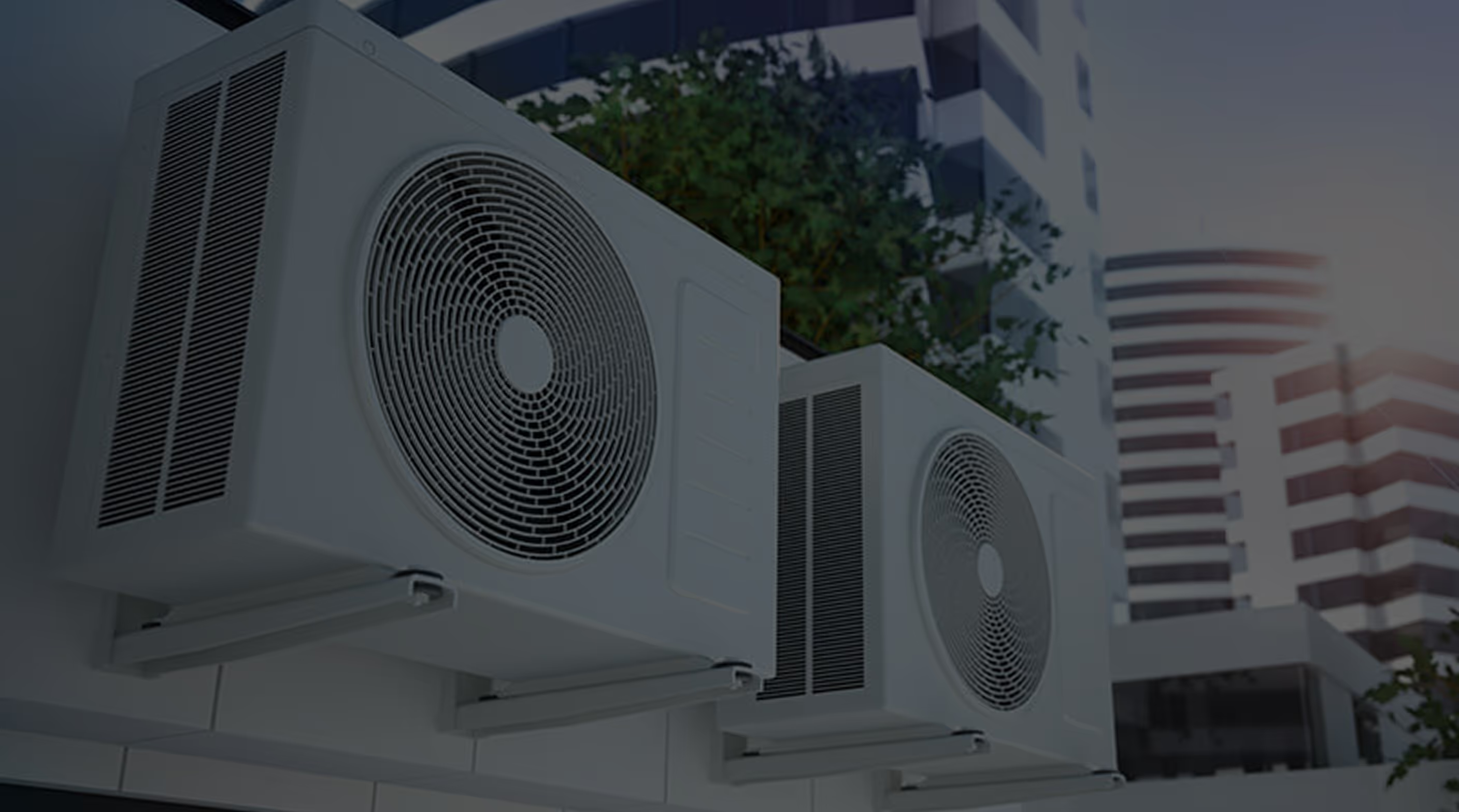
Heat Pump Installation in Redwood City, CA
Considering a heat pump for your Redwood City, CA home? Plum HVAC outlines every step, from site assessment and load calculations to right-sizing, permits, and professional installation. We’ll explain how to select efficient, inverter-driven models suitable for coastal climates, discuss ductwork and zoning options, and highlight commissioning, performance testing, and homeowner orientation. Our guide also reviews warranties, rebate assistance, and maintenance practices to maximize reliability, energy savings, and long-term value. Expect clear timelines, costs, and aftercare when you choose Plum HVAC.
.jpeg)
Heat Pump Installation in Redwood City, CA
Replacing or installing a heat pump in Redwood City, CA is a practical path to year-round comfort, lower operating costs, and reduced carbon footprint. Redwood City’s mild Mediterranean climate — warm summers, cool winters, and marine influence — makes heat pumps an especially efficient choice. This page walks through the full installation workflow: site assessment and load calculations, model recommendations and right-sizing, permit and inspection coordination, professional installation steps, commissioning and performance testing, homeowner orientation, maintenance guidance, and available warranty and rebate assistance specific to Redwood City homes.
Why a heat pump is a smart choice in Redwood City
- Consistent performance in mild coastal climates means high seasonal efficiency.
- Heating and cooling in a single system simplifies equipment and controls.
- Modern variable-speed, inverter-driven models deliver quiet operation ideal for dense neighborhoods.
- Electrification aligns with California’s energy policies and can increase home resale appeal.
Common heat pump types and common Redwood City issues
- Split-system air-source heat pump: Most common for single-family homes with existing ductwork.
- Ductless mini-split: Ideal for homes without ducts, additions, or zoned comfort solutions.
- Packaged heat pumps: Found in some multi-family or bungalow residences with rooftop equipment.
- Ground-source (geothermal) options: Rarely used due to higher upfront cost and site constraints.
Common installation issues encountered in Redwood City homes:
- Undersized systems from previous retrofits leading to poor comfort.
- Leaky or poorly insulated ductwork decreasing system efficiency.
- Coastal salt air corrosion risk requiring durable outdoor unit finishes and elevated mounting.
- Limited attic or side-yard access in older or remodeled homes.
- HOA or historic district restrictions affecting outdoor equipment placement.
Site assessment and load calculations
A professional installation begins with a thorough site assessment and an accurate load calculation (Manual J). This includes:
- Measuring conditioned floor area, orientation, window area and type, insulation levels, and air infiltration.
- Reviewing existing ductwork (if present) for leakage, insulation, and layout.
- Checking electrical service capacity and panel locations.
- Accounting for Redwood City-specific factors such as marine-layer humidity, solar gains from clear coastal days, and common building ages in the neighborhood.
A precise load calculation prevents oversizing and undersizing. Oversized systems cycle frequently, reducing comfort and efficiency; undersized systems cannot maintain set temperatures.
Right-sizing and energy-efficient model recommendations
Choosing the right equipment balances capacity, efficiency, and site constraints:
- Prioritize modern inverter-driven models with high SEER (cooling) and HSPF or HSPF2 (heating) ratings for lower bills.
- For Redwood City, standard air-source heat pumps typically deliver excellent year-round performance; cold-climate models are not usually necessary.
- Consider ductless mini-split systems for rooms without ducts or when zoning is desired.
- Look for low-GWP refrigerants and corrosion-resistant coatings on outdoor units to combat coastal exposure.
Right-sizing also considers noise levels for close-quarter installations and matching indoor units to duct runs or wall-mounted heads for minimal disruption.
Permits and inspection coordination
Heat pump installations in Redwood City require permit coordination and compliance with California Building Code and local Redwood City codes:
- Obtain mechanical, electrical, and building permits as required.
- Schedule inspections for electrical connections, refrigerant work, and final mechanical completion.
- Ensure installed equipment meets state efficiency standards and any local ordinances.Professional installers prepare permit documentation, submit plans where necessary, and coordinate inspections to prevent delays.
Professional installation workflow
A typical installation progresses through these professional steps:
- Pre-install preparation: Protect floors, plan access routes, and stage equipment.
- Removal of existing equipment (if applicable): Recover refrigerant per EPA rules and dispose of old equipment responsibly.
- Mounting and placement: Secure outdoor unit with vibration isolation and corrosion protection; place indoor units and run refrigerant and condensate lines.
- Ductwork and insulation upgrades: Repair or replace leaky ducts, add insulation, and balance airflow for even distribution.
- Electrical work: Install dedicated breakers, disconnects, and proper wiring sized to the unit’s requirements; verify panel capacity.
- Refrigerant charging and line set installation: Evacuate and charge systems to manufacturer specifications.
- Thermostat and controls: Install or upgrade thermostats, configure zoning or smart controls when applicable.
Experienced installers document each step and follow manufacturer and code requirements for safety and performance.
Commissioning and performance testing
Successful installation concludes with thorough commissioning to verify performance:
- Measure airflow and static pressure to confirm duct and fan performance.
- Verify refrigerant charge and pressures match manufacturer specifications.
- Check electrical load and verify safe wiring and breaker sizing.
- Test heating and cooling modes to confirm consistent temperature delivery and proper defrost cycles.
- Monitor system runtime and cycling to ensure efficient operation in Redwood City’s typical conditions.
Documentation of commissioning results helps with warranty registration and future troubleshooting.
Homeowner orientation and maintenance recommendations
After commissioning, homeowners receive an orientation covering:
- How the system operates in heating and cooling modes and thermostat programming for comfort and efficiency.
- Normal sounds and performance expectations, plus signs of potential problems.
- Basic maintenance tasks: replacing or cleaning filters every 1–3 months, keeping outdoor units clear of debris, and maintaining proper condensate drainage.
- Recommended professional maintenance schedule: an annual inspection and tune-up for both heating and cooling seasons to preserve efficiency and extend equipment life.
Explain warranty steps, where to record maintenance, and how to spot early warning signs like reduced airflow, unusual noises, or increased energy use.
Warranties and rebate assistance
- Manufacturer warranties typically cover major components for a specified period; labor warranties vary by installer.
- Proper permit documentation and professional commissioning are often required to keep warranties valid.
- Redwood City homeowners may qualify for federal, state, and local incentives that reduce up-front costs. Installers can assist in identifying eligible rebates, preparing required documentation, and submitting applications to local utilities and incentive programs.
Final notes on long-term benefits and upkeep
A correctly sized, professionally installed heat pump delivers consistent comfort, lower energy bills, quieter operation, and reduced emissions suited to Redwood City’s climate. Regular maintenance, attention to duct integrity, and proactive coordination with local permitting and rebate processes protect your investment and ensure dependable performance. For homes near the bay, prioritize corrosion-resistant equipment and routine checks of outdoor unit condition to extend system lifespan in the coastal environment.
hear what our satisfied clients have to say

.svg)
Service areas
.avif)